
Mariusz Szczygieł
Author of Gottland
About the Author
Image credit: Mariusz Szczygieł, Warsaw 2008. Photo via Wikipedia by Filip Sklenar.
Series
Works by Mariusz Szczygieł
Kaprysik 2 copies
Tagged
Common Knowledge
- Canonical name
- Szczygieł, Mariusz
- Birthdate
- 1966-09-05
- Gender
- male
- Occupations
- journalist
reporter
writer - Nationality
- Poland
- Birthplace
- Złotoryja, dolnośląskie, Poland
- Map Location
- Poland
Members
Reviews
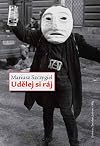
I do not know what makes Mariusz Szczygieł such a celebrity in the Czech Republic. He is invited to talk shows, his books become best sellers, and whenever I have a chance to hear him speak, he sounds... reasonable. Somehow the topic he explores, which is why Czechs are the way they are, and also who they actually are, never seemed to interest me, and for this reason I have never read his famous Gottland (also because of the stupid title).
I came across Zrób sobie raj pretty much by show more accident. Tochman's Bóg zapłać, a book consisting of long, depressive but mostly touching magazine articles, left me with a feeling that there is a great strength in what seems to be a renaissance of exhaustive and well-written journalism. Szczygieł is said to be one of the same school, so it seemed like a good idea to pick one of his books to see if this is true. Unfortunately, I have picked the wrong book, as Zrób sobie raj is another book about Czechs, Gottland 2 if you like.
There is nothing wrong with that (well, I wouldn't pick the topic, but never mind). What is wrong, is that Zrób sobie raj seems like a book written for the sake of selling some copies while the Gottland hype is on. I found it hard to find a structure, but if there is one, it can be divided into two main topics:
1. Whom Czechs adore and why
2. How the hell are they able to live without God and not kill each other twice a day
Let's look at each of those separately, even though they are weirdly mixed throughout the book.
A collection of celebrities (sort of)
Firstly, how did he choose who to include? It feels that the author had some kind of list in his head, and then he included those whom he had persuaded for interview. The length of these texts vary greatly (the shortest being two pages long, while the longest stretches way over twenty pages I believe), the style is always different (somehow always conforming with the style of the particular celebrity - weird for Teige, vulgar for Bondy...) and the structure of the texts lacks consistence (even if this was a collection of magazine articles, which it as far as I know isn't, there is simply no bond at all).
But most importantly, I just fail at trying to understand why is he writing about these people? Why them? I doubt these are the most famous people in Czech Republic, or at least the Most important people in their respective field. Certainly the people are quite interesting to read about, but that is about it. It says nothing about Czechs and I feel quite ashamed knowing that people outside Czech Republic now think that all Czechs adore Halina Pawlowska.
No God, no morals
Probably less entertaining, but definitely more important part of the book is trying to answer the following question: How do Czechs live without God. Even though Szczygieł is trying really hard, Even though he gives so much space to opinions he obviously doesn't share (Catholicism is like communism etc.), I do not feel he came even close to the answer. The problem is that, despite spending so much time in the so-called most atheistic country in the world, he still didn't manage to step out of his Christian mindset and you can see it towards the end of this part, when he is, more than anything, defending religion.
I have to admit that the chapter about dying and burying people, and the approach towards death in general, is excellent and probably highlight of the book.
In search of national identity (if there was one)
The reason why I am so harsh about Szczygieł is not because I feel offended or think he had good idea but got lost along the way. What bothers me most is that I believe he is asking completely wrong question and he is trying to build a bridge in a place where there is neither river nor cliff. He is trying to understand what it is being Czech like and then explain in to Poles, but I do not think there is such a thing as Czechishness. In a country of ten million you probably get some specific aspects of human nature that are more common than outside the ten million, but these are negligible in comparison to the vast amount of differences these ten million people have. A random Czech is probably as different from another random Czech as he is different from a random Pole, or Slovak, or German.
Szczygieł is running around, trying to answer a question which doesn't exist. I just don't see the point. show less
I came across Zrób sobie raj pretty much by show more accident. Tochman's Bóg zapłać, a book consisting of long, depressive but mostly touching magazine articles, left me with a feeling that there is a great strength in what seems to be a renaissance of exhaustive and well-written journalism. Szczygieł is said to be one of the same school, so it seemed like a good idea to pick one of his books to see if this is true. Unfortunately, I have picked the wrong book, as Zrób sobie raj is another book about Czechs, Gottland 2 if you like.
There is nothing wrong with that (well, I wouldn't pick the topic, but never mind). What is wrong, is that Zrób sobie raj seems like a book written for the sake of selling some copies while the Gottland hype is on. I found it hard to find a structure, but if there is one, it can be divided into two main topics:
1. Whom Czechs adore and why
2. How the hell are they able to live without God and not kill each other twice a day
Let's look at each of those separately, even though they are weirdly mixed throughout the book.
A collection of celebrities (sort of)
Firstly, how did he choose who to include? It feels that the author had some kind of list in his head, and then he included those whom he had persuaded for interview. The length of these texts vary greatly (the shortest being two pages long, while the longest stretches way over twenty pages I believe), the style is always different (somehow always conforming with the style of the particular celebrity - weird for Teige, vulgar for Bondy...) and the structure of the texts lacks consistence (even if this was a collection of magazine articles, which it as far as I know isn't, there is simply no bond at all).
But most importantly, I just fail at trying to understand why is he writing about these people? Why them? I doubt these are the most famous people in Czech Republic, or at least the Most important people in their respective field. Certainly the people are quite interesting to read about, but that is about it. It says nothing about Czechs and I feel quite ashamed knowing that people outside Czech Republic now think that all Czechs adore Halina Pawlowska.
No God, no morals
Probably less entertaining, but definitely more important part of the book is trying to answer the following question: How do Czechs live without God. Even though Szczygieł is trying really hard, Even though he gives so much space to opinions he obviously doesn't share (Catholicism is like communism etc.), I do not feel he came even close to the answer. The problem is that, despite spending so much time in the so-called most atheistic country in the world, he still didn't manage to step out of his Christian mindset and you can see it towards the end of this part, when he is, more than anything, defending religion.
I have to admit that the chapter about dying and burying people, and the approach towards death in general, is excellent and probably highlight of the book.
In search of national identity (if there was one)
The reason why I am so harsh about Szczygieł is not because I feel offended or think he had good idea but got lost along the way. What bothers me most is that I believe he is asking completely wrong question and he is trying to build a bridge in a place where there is neither river nor cliff. He is trying to understand what it is being Czech like and then explain in to Poles, but I do not think there is such a thing as Czechishness. In a country of ten million you probably get some specific aspects of human nature that are more common than outside the ten million, but these are negligible in comparison to the vast amount of differences these ten million people have. A random Czech is probably as different from another random Czech as he is different from a random Pole, or Slovak, or German.
Szczygieł is running around, trying to answer a question which doesn't exist. I just don't see the point. show less
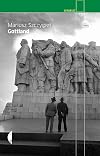
It is a very good, but profoundly depressing book. Apart from an opening essay on Bata – the Czech whose shoes became famous worldwide - it deals with the hardcore communist times in Czechoslovakia. It’s very unsettling to realize the extent of control and terror that the regime had. It eerily reminds one that it was indeed Kafka’s country- ‘where the life of the accused is the crime in itself.’ Szczygiel’s second book on Czechoslovakia, Make Yourself a Paradise, is lighter, the show more stories are more quirky. The absurdity of the communist system there is a mere absurdity, you don’t feel it as a killing force, whereas here people not only lose their freedom, they lose their sanity or their lives- they are either killed or they kill themselves. show less
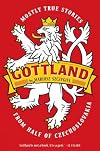
First chapter on little known (in my country these days) company Bata and its founders literally spirited me away. Alas, further chapters were far less captivating. In retrospective it looks like that first chapter didn't belong to the rest of the book, where other stories are mostly homogenious in their tone and meter. The first one surely merits a book of its own.
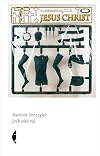
Now that I’ve read Szczygiel’s collection of essays on Czech people, Make Yourself a Pradise, I must say, I like the Czechs- the self professed most atheist society in Europe. It doesn’t really matter that it’s not entirely true, Estonians and Swedes are. Yet, this is how they feel, and this is what they boast of.
Szczygiel devotes a lot of space to Czech atheism. He examines it with tangible and visible disbelief- he is Polish after all. What fascinates him is not only how the show more Czechs cope in daily life without God, but also lack of reverence shown to Czech priests and Christian icons- Christ having sex, no first page covers for Pope Ratzinger visiting the Czech Republic, life not religious in any way, not even in the way of burial.
He introduces us to an unbelievably colourful cast of Czech characters, who happen to be real people: philosophers, photographers, writers, sculptors, and through them introduces us to the Czech national character, so different from the character of the neighbouring Poland. Whereas the Czechs like to laugh and laugh at themselves, are easy going, unassuming, valiant yet easy, the Poles are awfully solemn and full of pathos.
Yes, they have their problems too. They are not very fond of the immigration from Asia, and they have their own contingent of skinheads, yet, citing after Szczygiel- in the Czech Republic 'pohoda' is most important. "Pohoda” - good mood, calm, sunny disposition, coziness of space, peaceful relationships. In short, do not be unpleasant.
“Pohoda” likes beer. show less
Szczygiel devotes a lot of space to Czech atheism. He examines it with tangible and visible disbelief- he is Polish after all. What fascinates him is not only how the show more Czechs cope in daily life without God, but also lack of reverence shown to Czech priests and Christian icons- Christ having sex, no first page covers for Pope Ratzinger visiting the Czech Republic, life not religious in any way, not even in the way of burial.
He introduces us to an unbelievably colourful cast of Czech characters, who happen to be real people: philosophers, photographers, writers, sculptors, and through them introduces us to the Czech national character, so different from the character of the neighbouring Poland. Whereas the Czechs like to laugh and laugh at themselves, are easy going, unassuming, valiant yet easy, the Poles are awfully solemn and full of pathos.
Yes, they have their problems too. They are not very fond of the immigration from Asia, and they have their own contingent of skinheads, yet, citing after Szczygiel- in the Czech Republic 'pohoda' is most important. "Pohoda” - good mood, calm, sunny disposition, coziness of space, peaceful relationships. In short, do not be unpleasant.
“Pohoda” likes beer. show less
Awards


You May Also Like


Associated Authors
Statistics
- Works
- 28
- Members
- 345
- Popularity
- #69,184
- Rating
- 4.2
- Reviews
- 11
- ISBNs
- 58
- Languages
- 11