
Andrzej Stasiuk
Author of On the road to Babadag
About the Author
Image credit: Sławek
Works by Andrzej Stasiuk
Associated Works
The Wall in My Head: Words and Images from the Fall of the Iron Curtain (2009) — Contributor — 57 copies, 4 reviews
Suche nach Identität im kulturellen Chaos Mitteleuropas im Essay "Mein Europa" von Andrzej Stasiuk und Jurij Andruchowytsch (2020) — Associated Name — 1 copy
Tagged
Common Knowledge
- Other names
- STASIUK, Andrzej
- Birthdate
- 1960-09-25
- Gender
- male
- Occupations
- writer
sheep breeder
publisher
playwright - Awards and honors
- Vilenica International Literary Prize (2008)
Nike Literary Prize - Nationality
- Poland
- Birthplace
- Warsaw, Poland
- Places of residence
- Warsaw, Poland
Czarne, Poland - Associated Place (for map)
- Poland
Members
Reviews

Stasiuk a kelet-közép-európai bomlás első számú igrice, elbeszélései olyanok, mint utazás a térben el, de az időben vissza. Ahogy meg tudja jeleníteni a szagokat és a színeket, egészen egyedülálló: a restiben kavarog az állott sörszag, a hőségben éles kéken és éles sárgán remeg az aszfalt fölött a levegő, a palaszín novemberi ég pedig szinte széthasad az ázott rozsdaszagtól. Ez maga a posztszocialista táj, ahol a falvak minden bálabontáskor Londonnak show more álmodják magukat.
A kötet elején, a korai történetekben is ott vannak ezek az elemek – csak épp gyakran elfedi őket az, hogy Stasiuk itt még nem arról beszél, amiről tud (a romlékony emberi környezetről), hanem önmagáról. És az önmagunkról-való beszédben, úgy fest, van nála jobb is. De ahogy haladunk előre, tisztul az írói eszköztár, az elbeszélések pontosabbak, erősebbek lesznek, hogy végül tökéletesen megragadják azt, amit talán Stasiuk képes legjobban megragadni: a széthullás szépséges időnkívüliségét. show less
A kötet elején, a korai történetekben is ott vannak ezek az elemek – csak épp gyakran elfedi őket az, hogy Stasiuk itt még nem arról beszél, amiről tud (a romlékony emberi környezetről), hanem önmagáról. És az önmagunkról-való beszédben, úgy fest, van nála jobb is. De ahogy haladunk előre, tisztul az írói eszköztár, az elbeszélések pontosabbak, erősebbek lesznek, hogy végül tökéletesen megragadják azt, amit talán Stasiuk képes legjobban megragadni: a széthullás szépséges időnkívüliségét. show less

Andrzej Stasiuk writes:
It's Sunday and people are still asleep, that's why this story ought to lack a plot, because no one thing can cover up other things, when we're headed toward nothingness, toward the realization that the world is merely a momentary obstacle in the free passage of light.
and:
So I decided to try and find the house that R. and I had discovered when we were here in the summer. At that time dusk had been falling. We walked down Cergowska, turned into Podwale, then into show more Zielona. It was an inconspicuous cottage of blackened wood. It stood at the far end of an untended yard. A yellow light shone in the window. Five minutes later and everything would have been completely dark, but the remains of daylight allowed us to take a look at this yard or lot. It was laid out in a truly curious order. Scraps, pieces, and torn lengths of rusty sheet metal had been arranged in a tidy geometrical pile. Someone had gone to a lot of trouble to organize the misshapen pieces into an almost perfect cuboid. Everywhere, rocks, rubble, and brick fragments lay in a pyramidal prism smoothed into an exact cone. Shards and pebbles had been stuck in the crevices between the larger pieces as precisely as a mason would have done. Whole and half bricks had been ordered in a neat hexagonal stack. In another place, leftover roofing paper and plastic sheeting had been gathered together, rolled up and aligned according to type and size. The tubes and rolls had been placed so neatly upon one another in a tapering pile that on the top there was one roll crowning the whole. Wood too had been sorted according to size and shape. Rotten planks in one place, short lengths of thick beams elsewhere in a cubic mound, like building blocks. Next to them lay scrap iron. A snarl of rusted shapes had been disentangled. To one side pipes, rods, rails, channel bars, in other words long thin objects; to another small irregular polyhedrons, old bicycle parts, kitchen fittings, tin cans, and God knows what else. These items, whose shape prevented them from matching one another, had been tipped together to form a rounded semicircle heap, care being taken to make sure nothing jutted out to spoil the relatively even outline. Beneath the overhang of a shed built of sawmill offcuts, glass had been collected. Hundreds, maybe even thousands of bottles had been stacked on one another to form a wall of glass, necks toward the shed, bottoms facing out. Here too a rudimentary order had been maintained. Green, brown and clear glass were each kept together, in addition to which the bottles had been grouped according to size and shape: flat ones were separate from round ones, while half-liter bottles were not mixed with quarter liters, or with one-liter cola or orangeade bottles. The scheme was exceedingly complex, since three colors and multiple shapes give a dizzying number of possible combinations. Then there were jars, also sorted according to their dimensions. A little father still was an old tree with spreading branches, from which there hung loops of string, coils of electric cord, small and large lengths, and snippets, tied together, fastened tight, solid, dangling like horses’ tails. There were also stuffed plastic bags, over a dozen colored sacks filled with who knew what, but certainly something light, because they swung in the breeze. It looked like the creation of the world. A path had been trodden through the heaps of trash. It looked as if the creator of this order strolled around his work, admiring it, straightening it up from time to time.
We went toward the ruins of the synagogue. Birch saplings had taken root in the top of a wall several feet above the ground. We could hear the rustle of young leaves. At this point R. said he really liked the place we’d seen, that the person in that wretched old shack, the worst house on a whole street of big, expensive, ugly houses, that that person was just trying to give meaning to his world, and that was fine, he wasn’t trying to change it, just put it in order a little, the way you organize your thoughts, and often that’s enough to stop you from going mad. That was what R. said, so I gave up on the idea of creation, because it seemed like R. was right. show less
It's Sunday and people are still asleep, that's why this story ought to lack a plot, because no one thing can cover up other things, when we're headed toward nothingness, toward the realization that the world is merely a momentary obstacle in the free passage of light.
and:
So I decided to try and find the house that R. and I had discovered when we were here in the summer. At that time dusk had been falling. We walked down Cergowska, turned into Podwale, then into show more Zielona. It was an inconspicuous cottage of blackened wood. It stood at the far end of an untended yard. A yellow light shone in the window. Five minutes later and everything would have been completely dark, but the remains of daylight allowed us to take a look at this yard or lot. It was laid out in a truly curious order. Scraps, pieces, and torn lengths of rusty sheet metal had been arranged in a tidy geometrical pile. Someone had gone to a lot of trouble to organize the misshapen pieces into an almost perfect cuboid. Everywhere, rocks, rubble, and brick fragments lay in a pyramidal prism smoothed into an exact cone. Shards and pebbles had been stuck in the crevices between the larger pieces as precisely as a mason would have done. Whole and half bricks had been ordered in a neat hexagonal stack. In another place, leftover roofing paper and plastic sheeting had been gathered together, rolled up and aligned according to type and size. The tubes and rolls had been placed so neatly upon one another in a tapering pile that on the top there was one roll crowning the whole. Wood too had been sorted according to size and shape. Rotten planks in one place, short lengths of thick beams elsewhere in a cubic mound, like building blocks. Next to them lay scrap iron. A snarl of rusted shapes had been disentangled. To one side pipes, rods, rails, channel bars, in other words long thin objects; to another small irregular polyhedrons, old bicycle parts, kitchen fittings, tin cans, and God knows what else. These items, whose shape prevented them from matching one another, had been tipped together to form a rounded semicircle heap, care being taken to make sure nothing jutted out to spoil the relatively even outline. Beneath the overhang of a shed built of sawmill offcuts, glass had been collected. Hundreds, maybe even thousands of bottles had been stacked on one another to form a wall of glass, necks toward the shed, bottoms facing out. Here too a rudimentary order had been maintained. Green, brown and clear glass were each kept together, in addition to which the bottles had been grouped according to size and shape: flat ones were separate from round ones, while half-liter bottles were not mixed with quarter liters, or with one-liter cola or orangeade bottles. The scheme was exceedingly complex, since three colors and multiple shapes give a dizzying number of possible combinations. Then there were jars, also sorted according to their dimensions. A little father still was an old tree with spreading branches, from which there hung loops of string, coils of electric cord, small and large lengths, and snippets, tied together, fastened tight, solid, dangling like horses’ tails. There were also stuffed plastic bags, over a dozen colored sacks filled with who knew what, but certainly something light, because they swung in the breeze. It looked like the creation of the world. A path had been trodden through the heaps of trash. It looked as if the creator of this order strolled around his work, admiring it, straightening it up from time to time.
We went toward the ruins of the synagogue. Birch saplings had taken root in the top of a wall several feet above the ground. We could hear the rustle of young leaves. At this point R. said he really liked the place we’d seen, that the person in that wretched old shack, the worst house on a whole street of big, expensive, ugly houses, that that person was just trying to give meaning to his world, and that was fine, he wasn’t trying to change it, just put it in order a little, the way you organize your thoughts, and often that’s enough to stop you from going mad. That was what R. said, so I gave up on the idea of creation, because it seemed like R. was right. show less
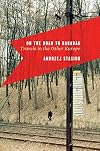
This book won't be to everyone's tastes. Travel writing typically shows the journey from A to B, and will include logical information and the events that occurred along the way. Stasiuk's approach is more to travel from A to B, while remembering a previous visit five years prior to B, and then that sparks the memory of a visit to F, where nothing actually happened, but that makes him think of G and what G means in the context of Central and Eastern Europe. This is very much my cup of tea, show more but for everyone else - you have been warned! show less
Translated by Bill Johnston.
Winner of the Vilenica International Literary Prize
My final impression, closing this book, was that Andrzej Stasiuk loves people. His essay collection, Fado, demonstrates this as he examines the peoples of the former Yugoslavia and the other regions that form Central Europe. In all, he writes with obvious affection for the human condition surviving in a complicated place and time. He quietly observes people and their activities: from children playing games, the show more routines of the working man, the women washing their steps, and the teenagers pining for escape to the West. This is not a travel journal, told by a curious visitor. Stasiuk resides there and his impressions are that much more knowledgeable and profound.
It begins with a road trip, a car driving at night in the rain. It starts out as almost a romance with the land, and he reflects on the dark houses he passes, and how no matter what ethnic heritage a person has, they are all the same when asleep in their beds. A map is essential to reading this, as he goes to a variety of cities and recounts what he sees as well as historical details and anecdotal stories from each individual place.
Much of his writing discusses the changes from Communism to newer political states, some still in their infancy (Slovakia). The past is complicated in Central Europe, and progress is equally difficult. Of Montenegro, he writes:
“Everything that was, becomes rejected in the name of a modernity that assumes the nature of a fiction, an illusion, a devilish apparition. To a greater or lesser extent this applies to all postcommunist countries. But it’s only in Montenegro that it can all be observed within the space of ten miles.”
This battle between old traditions and new identities is a continual subject, but it remains fascinating because each town he visits handles the conflict differently. He talks about the emptiness that is felt in places, where modernization has left many without a purpose. Yet he uses almost poetic words to describe these impressions:
Of Pogradec, “Pool has taken over the town. That noble game, combining geometrical abstraction with kinetics, allows a person to forget the everyday. The men circled the tables like they were hypnotized. They moved back, moved forward, judged distances, stepped on tiptoe and held their breath as if afraid that the moving spheres would change direction and the cosmic harmony of the game would be disturbed.” It’s not difficult to see the underlying correlation with the region in finding their place in history after the divisions of Russia and Yugoslavia.
In Levoka, he observes the local police, who group together in anticipation of a rebellion by Gypsy residents. The violence never occurs, but the image of the bored policemen, playing with their police dog and throwing snowballs, reveals a truism of the place: “Brute force, tedium, and play were combined in perfect proportions, but instinct told you that any one of these three elements could take over at any moment, and for no particular reason.”
In another essay he writes about the changing of the face of paper currency throughout Russia and the Slavic states. In earlier years, the images featured working men and women in simple settings. The implied meaning being hard work garnered money. Then as years passed, the illustrations became more abstract and conceptual, until they evolved into paper faces of famous heroes. There was a political meaning behind each image, and Stasiuk shows how the meaning of money changed too. Change occurred yet again, during difficult economic times, to another theme: “the patrons of this inflationary series were of course artists and writers. In my part of the world, when times are uncertain we usually turn to culture, since it’s a domain whose failures are not so glaring…”
Stasiuk’s ability to combine history with contemporary issues is amazing because it’s so readable, never dry or boring. He doesn’t get off track trying to make a political statement or place blame, and at times it’s difficult to even guess his position in the controversial matters he discusses. He never judges the people or even presumes to suggest a solution. An especially fascinating scene was played out at the end of the day in Rasinari, when the cows, oxen, and goats returned from grazing loose into the village, all on their own.
“This daily parade was like a holiday. The whole village came out of its homes onto the road and watched the passage of the livestock. Children, old women in headscarves, men in small groups smoking cigarettes-everyone watched as the animals unerringly found their way to their own farms and stood by the gate waiting to be let in. This ritual had been repeated for centuries and everything in it was self-evident, complete, and in its own way perfect.” show less
Winner of the Vilenica International Literary Prize
My final impression, closing this book, was that Andrzej Stasiuk loves people. His essay collection, Fado, demonstrates this as he examines the peoples of the former Yugoslavia and the other regions that form Central Europe. In all, he writes with obvious affection for the human condition surviving in a complicated place and time. He quietly observes people and their activities: from children playing games, the show more routines of the working man, the women washing their steps, and the teenagers pining for escape to the West. This is not a travel journal, told by a curious visitor. Stasiuk resides there and his impressions are that much more knowledgeable and profound.
It begins with a road trip, a car driving at night in the rain. It starts out as almost a romance with the land, and he reflects on the dark houses he passes, and how no matter what ethnic heritage a person has, they are all the same when asleep in their beds. A map is essential to reading this, as he goes to a variety of cities and recounts what he sees as well as historical details and anecdotal stories from each individual place.
Much of his writing discusses the changes from Communism to newer political states, some still in their infancy (Slovakia). The past is complicated in Central Europe, and progress is equally difficult. Of Montenegro, he writes:
“Everything that was, becomes rejected in the name of a modernity that assumes the nature of a fiction, an illusion, a devilish apparition. To a greater or lesser extent this applies to all postcommunist countries. But it’s only in Montenegro that it can all be observed within the space of ten miles.”
This battle between old traditions and new identities is a continual subject, but it remains fascinating because each town he visits handles the conflict differently. He talks about the emptiness that is felt in places, where modernization has left many without a purpose. Yet he uses almost poetic words to describe these impressions:
Of Pogradec, “Pool has taken over the town. That noble game, combining geometrical abstraction with kinetics, allows a person to forget the everyday. The men circled the tables like they were hypnotized. They moved back, moved forward, judged distances, stepped on tiptoe and held their breath as if afraid that the moving spheres would change direction and the cosmic harmony of the game would be disturbed.” It’s not difficult to see the underlying correlation with the region in finding their place in history after the divisions of Russia and Yugoslavia.
In Levoka, he observes the local police, who group together in anticipation of a rebellion by Gypsy residents. The violence never occurs, but the image of the bored policemen, playing with their police dog and throwing snowballs, reveals a truism of the place: “Brute force, tedium, and play were combined in perfect proportions, but instinct told you that any one of these three elements could take over at any moment, and for no particular reason.”
In another essay he writes about the changing of the face of paper currency throughout Russia and the Slavic states. In earlier years, the images featured working men and women in simple settings. The implied meaning being hard work garnered money. Then as years passed, the illustrations became more abstract and conceptual, until they evolved into paper faces of famous heroes. There was a political meaning behind each image, and Stasiuk shows how the meaning of money changed too. Change occurred yet again, during difficult economic times, to another theme: “the patrons of this inflationary series were of course artists and writers. In my part of the world, when times are uncertain we usually turn to culture, since it’s a domain whose failures are not so glaring…”
Stasiuk’s ability to combine history with contemporary issues is amazing because it’s so readable, never dry or boring. He doesn’t get off track trying to make a political statement or place blame, and at times it’s difficult to even guess his position in the controversial matters he discusses. He never judges the people or even presumes to suggest a solution. An especially fascinating scene was played out at the end of the day in Rasinari, when the cows, oxen, and goats returned from grazing loose into the village, all on their own.
“This daily parade was like a holiday. The whole village came out of its homes onto the road and watched the passage of the livestock. Children, old women in headscarves, men in small groups smoking cigarettes-everyone watched as the animals unerringly found their way to their own farms and stood by the gate waiting to be let in. This ritual had been repeated for centuries and everything in it was self-evident, complete, and in its own way perfect.” show less
Lists
Awards


You May Also Like


Associated Authors
Statistics
- Works
- 40
- Also by
- 2
- Members
- 1,049
- Popularity
- #24,562
- Rating
- 3.7
- Reviews
- 26
- ISBNs
- 184
- Languages
- 15
- Favorited
- 4

