
Czesław Miłosz (1911–2004)
Author of The Captive Mind
About the Author
Czeslaw Milosz is the recipient of the 1980 Nobel Prize in Literature. His most recent publications are Striving Towards Being: The Letters of Thomas Merton and Czeslaw Milosz (FSG, 1997) and Road-side Dog (FSG, 1998). He lives in Berkeley, California. (Publisher Provided) Czeslaw Milosz was born show more in Szetejnie, Lithuania on June 30, 1911. In 1934, he received a degree as Master of Law and traveled to Paris on a fellowship from the National Culture Fund. In 1936, he worked as a literary programmer for Radio Wilno, but was dismissed for his leftist views the following year. He then took a job with Polish Radio in Warsaw. During World War II, he was a member of the Polish resistance. He served as a Polish diplomat in the late 1940s, but defected to Paris in 1951. In 1961, he became a lecturer in Polish literature at the University of California at Berkeley and, later, a professor of Slavic languages and literatures. His works include The Captive Mind, Native Realm, Czeslaw Milosz: The Collected Poems 1931-1987, Bells in Winter, A Year of the Hunter, and Roadside Dog. He received several awards including the Prix Littéraire European from the Swiss Book Guild for The Seizure of Power in 1953, the Neustadt International Prize for Literature, and the Nobel Prize for Literature in 1980. He has also translated the works of other Polish writers into English, and has co-translated his own works. He died on August 14, 2004. (Bowker Author Biography) show less
Image credit: MDCarchives
Works by Czesław Miłosz
A Book of Luminous Things: An International Anthology of Poetry (1996) — Editor — 941 copies, 12 reviews
Wiersze Tom 1 3 copies
Wiersze Tom 2 3 copies
A Minha Intenção: Ensaios Escolhidos 3 copies
Wiersze i ćwiczenia : ...dość gruby zeszyt w czarnej oprawie wypełniony moimi wierszami... (2008) 2 copies
Euroopan lapsi : runovalikoima 2 copies
Utwory poetyckie = Poems 2 copies
Tal der Issa: Roman 1 copy
Dzieła zbiorowe 1 copy
Miasto bez imienia 1 copy
From the Rising of the Sun 1 copy
33 Poems [Printout] 1 copy
Wiersze wybrane 1 copy
Caffe Greco 1 copy
Rescue 1 copy
Second Space 1 copy
Zarobljeni um 1 copy
[Czeslaw Milosz: Selected and Last Poems, 1931-2004] (By: Czeslaw Milosz) [published: November, 2011] (2011) 1 copy
A Tomada do Poder 1 copy
Den store fristelse 1 copy
Pavergtas protas 1 copy
Zapisi na salveti 1 copy
Abecedario 1 copy
I książki mają swój los 1 copy
A special issue 1 copy
LA GRANDE TENTATION 1 copy
Swiatlo Dzienne 1 copy
Somrak in svit 1 copy
O putovanjima kroz vrijeme 1 copy
Não Mais 1 copy
poems 1 copy
Yang Terpasung 1 copy
The View 1 copy
Swiat / The World 1 copy
Associated Works
Crime and Punishment [Norton Critical Edition, 3rd ed.] (1989) — Contributor — 1,301 copies, 6 reviews
World Poetry: An Anthology of Verse from Antiquity to Our Time (1998) — Contributor — 496 copies, 2 reviews
Against Forgetting: Twentieth-Century Poetry of Witness (1993) — Contributor — 375 copies, 2 reviews
Teaching with Fire: Poetry That Sustains the Courage to Teach (2003) — Contributor — 223 copies, 1 review
The Poet's Work: 29 Poets on the Origins and Practice of Their Art (1979) — Contributor — 95 copies, 1 review
The Poem Is You: 60 Contemporary American Poems and How to Read Them (2016) — Contributor; Translator — 76 copies
Who's Writing This? Notations on the Authorial I, with Self-Portraits {not Antæus} (1995) — Contributor — 75 copies
The Immigrant Experience: The Anguish of Becoming American (1972) — Contributor — 61 copies, 3 reviews
The Poetry of Survival: Post-War Poets of Central and Eastern Europe (1991) — Contributor — 46 copies
Antaeus No. 61, Autumn 1988 - Journals, Notebooks & Diaries (1988) — Contributor — 37 copies, 2 reviews
Sunlight on the River: Poems About Paintings, Paintings About Poems (2015) — Contributor — 11 copies, 2 reviews
Antaeus No. 73/74, Spring 1994 - Who’s Writing This: Notations on the Authorial I {magazine} (1994) — Contributor — 5 copies
Tagged
Common Knowledge
- Canonical name
- Miłosz, Czesław
- Other names
- Milosz, Czeslaw
- Birthdate
- 1911-06-30
- Date of death
- 2004-08-14
- Gender
- male
- Education
- Vilnius University
- Occupations
- critic
translator
poet
diplomat
professor - Organizations
- Polish Resistance
University of California, Berkeley - Awards and honors
- Nobel Prize (Literature | 1980)
Neustadt International Prize for Literature (1978)
National Medal of Arts (1989)
Robert Kirsch Award (1990)
American Academy of Arts and Letters (Literature | 1982)
Prix Littéraire Européen (1953) (show all 10)
Order of the White Eagle (1994)
American Academy of Arts and Sciences
American Academy of Arts and Letters
Serbian Academy of Sciences and Arts - Relationships
- Milosz, O. V. de L. (second cousin)
- Nationality
- Poland
USA (naturalized 1970) - Birthplace
- Šeteniai, Lithuania, Russian Empire
- Places of residence
- Šeteniai, Lithuania, Russian Empire
Warsaw, Poland
Paris, France
Berkeley, California, USA
Kraków, Poland - Place of death
- Kraków, Poland
- Burial location
- Skalka Sanctuary, Krakow, Poland
- Associated Place (for map)
- Poland
Members
Reviews
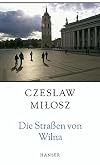
When I was looking for books about Vilnius, I came across this beautiful one published by Hanser Verlag: "Die Straßen von Wilna" by Czesław Miłosz. The curious thing is that I wasn't able to find any other information about the book and its contents. It is not included in the bibliographies of Czesław Miłosz that I found, and I don't know if it is a work standing on its own (it looks like it from the publishing information included in the book) or a collection composed by Hanser (which show more somehow seems more likely to me). Moreover, there is an English version shown on LT (Beginning with my streets), but upon a closer look, this is a different book containing different texts, at least in part.
Well, I read this German language one and I liked it very much.
This book consists of three parts that are interspersed by a couple of poems. In the first part, the author gives an overview of the history of the city, and like that, of Lithuanian history. This might sound a bit dry, but it is not, because Miłosz is a masterful storyteller and thus, this slice of history is immensely readable and highly fascinating. To be honest, I think most historical facts that I remembered during our trip came from this chapter and not from the travel guide we also had with us.
The second part is a description of some of the streets of Vilnius. Miłosz, who spent parts of his childhood and later also studied there, connects the streets with his personal memories, and thus, he paints a somewhat nostalgic picture of Vilnius before World War Two. He writes about the activities he took part in as a child, the people he met, the buildings and atmosphere of the streets.
The third part includes a letter Miłosz wrote to the writer Tomas Venclova, and Venclova's reply. Venclova is an ethnic Lithuanian, unlike Miłosz, who was of Polish descent and wrote in Polish (and is considered a Polish author). These two letters cover a lot of ground and deal with Lithuanian history, with many other writers the two have known, and especially with the ciity's position between Polish and Lithuanian culture, its unique status of being a provincial town, but also a capital, its changing hands for so many times. There are many interesting - and still relevant! - thoughts in these letters, especially when the writers reflected on possibilities of the future. The letters were written in the late 1970s, and they hoped for a democratic Lithuania with Vilnius as its capital, but also feared that nationalism would remain a danger to Europe. It was almost eerie to read their predictions now, 45 years later. show less
Well, I read this German language one and I liked it very much.
This book consists of three parts that are interspersed by a couple of poems. In the first part, the author gives an overview of the history of the city, and like that, of Lithuanian history. This might sound a bit dry, but it is not, because Miłosz is a masterful storyteller and thus, this slice of history is immensely readable and highly fascinating. To be honest, I think most historical facts that I remembered during our trip came from this chapter and not from the travel guide we also had with us.
The second part is a description of some of the streets of Vilnius. Miłosz, who spent parts of his childhood and later also studied there, connects the streets with his personal memories, and thus, he paints a somewhat nostalgic picture of Vilnius before World War Two. He writes about the activities he took part in as a child, the people he met, the buildings and atmosphere of the streets.
The third part includes a letter Miłosz wrote to the writer Tomas Venclova, and Venclova's reply. Venclova is an ethnic Lithuanian, unlike Miłosz, who was of Polish descent and wrote in Polish (and is considered a Polish author). These two letters cover a lot of ground and deal with Lithuanian history, with many other writers the two have known, and especially with the ciity's position between Polish and Lithuanian culture, its unique status of being a provincial town, but also a capital, its changing hands for so many times. There are many interesting - and still relevant! - thoughts in these letters, especially when the writers reflected on possibilities of the future. The letters were written in the late 1970s, and they hoped for a democratic Lithuania with Vilnius as its capital, but also feared that nationalism would remain a danger to Europe. It was almost eerie to read their predictions now, 45 years later. show less
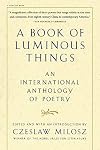
I don't write many reviews, but this book needs one. It's odd to have an editor of an anthology put so much personal commentary into it, but I have no problem with that in and of itself. What I have a problem with is a white, male author/editor consistently denigrating female poets even as he includes them in his anthology. He qualifies every compliment with its opposite, such as when Milosz praises Linda Gregg as one of America's best poets but then follows it up with his being "biased" show more since she attended his classes, to which I'm assuming he's implying that she learned such greatness from him? Even if I'm reading too deeply into that, the way in which Milosz objectifies women in general by having a section entitled "Woman's Skin" alongside others such as "Nature," "Places," and "Travel" (tell me, which one doesn't belong?) is pretty infuriating even before one realizes that one of the first poems in said section is written by a man who is reflecting in the first-person on the difficulty of women aging or in another poem's commentary where he claims that women's bellies are "emotionally different" to men's. Moreover, Milosz claims that "in some epochs of history women took an active part in literary life..." as if we have not existed as artists and writers THROUGHOUT history. I would have given this book no stars, but many of the poems included are quality, despite their unfortunate election by an obvious misogynist. Mr. Milosz, I know you're dead, but go fuck yourself. show less
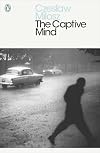
I bought this last year in an effort to widen my reading. I hadn’t realised when I purchased it that it wasn’t fiction. It’s a political diatribe written by someone who survived both WWII and the Soviet takeover of Poland, but managed to resist the blandishments of both the Underground during WWII and the Soviet occupiers afterwards. As a writer, an intellectual, with acceptable political credentials, he ended up as cultural attaché in Washington but, disgusted by the responses of his show more peers to the new regime, he chose to exile himself. Miłosz first points out that intellectuals were a peculiar class of their own in Central and East European countries, and this particularly applied to writers, one that had no equivalent in Western European – or American – societies. After discussing “ketman”, which seems to be a a misunderstanding of an historical Islamic term (now known as “taqiya”), Miłosz describes four writers of his acquaintance and their response to Soviet occupation – and this is where The Captive Mind comes into its own. I’ve no idea who the writers are he describes, although it probably isn’t difficult to figure out, but his dissection of their character and ambitions in light of Polish history during and after WWII is fascinating stuff. I don’t think for an instant that The Captive Mind is a warning against “totalitarian culture” as the book is often described. It is specific to a time and place, and I suspect some of the tactics described by Miłosz are triggered more by an institutional drive for survival than by an y kind of coherent political thought. The Captive Mind was intended to make for scary reading, but its teeth have long since been pulled – first by Solidarność, then by glasnost, although both of course were the end result of long and dangerous campaigns. On the other hand, in 2018 we seem to be staring down the throat of full-blown fascism, despite everything our parents and grandparents fought against last century, despite the clear benefits to all and sundry that progressivism and regulated economies bring… The Captive Mind is an important historical document, but its remit is too narrow, its lessons are too focused, and the passage of time has rendered its general sense of alarm both moot and badly aimed. However. Worth reading, if you’re interested in the subject. show less

What a poetic novel this is, perhaps not surprisingly so since Milosz is a poet, and a Nobel Prize-winning one at that. At least partly autobiographical, the novel is at once a coming-of-age story, a paean to nature, a study of character, a history of Lithuania, and a portrait of a rural, largely pre-industrial world that was soon to be utterly destroyed. Milosz was born in Lithuania (then part of the Russian empire) in 1911, but his family had for several generations spoken Polish, and show more while he was fluent in both languages (as well as several others), he considered himself a Polish poet and wrote in Polish.
In the novel, young Thomas has been sent to live with his maternal grandparents in the Issa Valley, a remote area in Lithuania that is filled with lakes and forests, as his father is fighting with some army (either the Russians or the Poles, who are fighting each other) and his mother is stranded over the border; his paternal grandmother is also living there. He is probably about 9 or 10 when the novel begins, but his age isn't specified until much later. The family was previously better off than it is now, but they own a "manor" house and quite a bit of land, including forests. Later on, this puts them slightly at odds with some of the local population who, inspired no doubt by what little bits of information they have heard about the Russian revolution, are itching for land distribution.
It is probably a lonely time for Thomas, and he first finds comfort in his grandfather's library, discovering books that had been gathering dust on the shelves for decades. Later he becomes completely enamored by nature, learning first about plants and then about birds, loving both his observations of them in their habitats and their names and the whole Linnean naming system. Eventually he meets a neighboring landowner who initiates Thomas into hunting. At first, Thomas is very proud to be included with the grown men, and is fascinated by how hunters creep through the woods, call to birds, and set their dogs to work. Everything about the way Milosz describes the forests and the animals is utterly lyrical. Ultimately, Thomas finds it difficult to kill the birds and other animals they are hunting.
But this novel is about much more than Thomas, and the voice of the novel is not Thomas's but someone who is able to see all of the society of the little town of Gine and its surroundings. The reader sees many of the inhabitants of the area, including the priest who is having an affair with his housekeeper (who comes back to haunt the town), a tormented forester, a bitter and cruel but persuasive poor boy, the local priests, and many others, and gains some knowledge of their histories and characters. Thomas's family is also explored: his maternal grandfather tells him about Lithuanian history, his paternal grandmother meditates on her own life story and her husband and sons, and his mother's sister, his aunt Helen, enjoys some extramarital adventures. The portrait Milosz paints of Thomas's paternal grandmother is particularly rich, and the scene where she is dying is one of the most beautiful and insightful I have read. At the same time, the novel is rich with the spirits, both good and evil, that people still believe guide the residents of the Issa Valley. All in all, this novel is poetry in prose, with much left unsaid.
I was eager to read Milosz after I read My Century, in which Milosz interviews Aleksander Wat, a Polish poet of an earlier generation, and another LTer recommended this novel. I'm glad she did, I'm glad I read it, and I will look for more of Milosz's work. show less
In the novel, young Thomas has been sent to live with his maternal grandparents in the Issa Valley, a remote area in Lithuania that is filled with lakes and forests, as his father is fighting with some army (either the Russians or the Poles, who are fighting each other) and his mother is stranded over the border; his paternal grandmother is also living there. He is probably about 9 or 10 when the novel begins, but his age isn't specified until much later. The family was previously better off than it is now, but they own a "manor" house and quite a bit of land, including forests. Later on, this puts them slightly at odds with some of the local population who, inspired no doubt by what little bits of information they have heard about the Russian revolution, are itching for land distribution.
It is probably a lonely time for Thomas, and he first finds comfort in his grandfather's library, discovering books that had been gathering dust on the shelves for decades. Later he becomes completely enamored by nature, learning first about plants and then about birds, loving both his observations of them in their habitats and their names and the whole Linnean naming system. Eventually he meets a neighboring landowner who initiates Thomas into hunting. At first, Thomas is very proud to be included with the grown men, and is fascinated by how hunters creep through the woods, call to birds, and set their dogs to work. Everything about the way Milosz describes the forests and the animals is utterly lyrical. Ultimately, Thomas finds it difficult to kill the birds and other animals they are hunting.
But this novel is about much more than Thomas, and the voice of the novel is not Thomas's but someone who is able to see all of the society of the little town of Gine and its surroundings. The reader sees many of the inhabitants of the area, including the priest who is having an affair with his housekeeper (who comes back to haunt the town), a tormented forester, a bitter and cruel but persuasive poor boy, the local priests, and many others, and gains some knowledge of their histories and characters. Thomas's family is also explored: his maternal grandfather tells him about Lithuanian history, his paternal grandmother meditates on her own life story and her husband and sons, and his mother's sister, his aunt Helen, enjoys some extramarital adventures. The portrait Milosz paints of Thomas's paternal grandmother is particularly rich, and the scene where she is dying is one of the most beautiful and insightful I have read. At the same time, the novel is rich with the spirits, both good and evil, that people still believe guide the residents of the Issa Valley. All in all, this novel is poetry in prose, with much left unsaid.
I was eager to read Milosz after I read My Century, in which Milosz interviews Aleksander Wat, a Polish poet of an earlier generation, and another LTer recommended this novel. I'm glad she did, I'm glad I read it, and I will look for more of Milosz's work. show less
Lists
Poetry Corner (1)
1950s (1)
Awards


You May Also Like


Associated Authors
Statistics
- Works
- 212
- Also by
- 37
- Members
- 8,528
- Popularity
- #2,821
- Rating
- 4.1
- Reviews
- 88
- ISBNs
- 467
- Languages
- 29
- Favorited
- 48
