
Wislawa Szymborska (1923–2012)
Author of View with a Grain of Sand
About the Author
Wislawa Szymborska was born in Bnin, Poland on July 2, 1923. After the Nazis invaded Poland in September 1939, she found work as a railway clerk to avoid deportation to Germany as a forced laborer. In her free time, she studied at illegal underground universities. After World War II, she resumed show more her formal studies in Polish literature and sociology at Jagiellonian University, but never earned a degree. In 1945, she published her first poem, I Am Looking for a Word, in a weekly supplement to the local newspaper. Her first book of poetry was published in 1952. Her other volumes of poetry include View with a Grain of Sand, People on a Bridge, Sounds, Feelings, Thoughts: Seventy Poems, and Here. In 1991 she won the Goethe Prize and in 1995 she was awarded the Herder Prize. She won the Nobel Prize for Poetry in 1996 and was awarded The Order of the White Eagle in recognition of her contribution to her country's culture in 2011. From 1953 to 1981, she worked as a poetry editor and columnist for the literary weekly Literary Life, where she wrote a column called Non-Required Reading. She died of lung cancer on February 1, 2012 at the age of 88. (Bowker Author Biography) show less
Image credit: From Owen Barfield Website
Works by Wislawa Szymborska
Elogio dei sogni 8 copies
Poems New and Selected 5 copies
En kat i en tom lejlighed 3 copies
Wislawa Szymborska, Wybor poezji 2 copies
Wisława Szymborska 2 copies
collection of poetry 1 copy
Zabawy literackie 1 copy
Tak wyglÄda prawdziwa poetka, podciÄgnij siÄ! - WisĹawa Szymborska, Joanna Kulmowa [KSIÄĹťKA] (2019) 1 copy
Sto pociech 1 copy
diVersi 1 copy
La grande poesia 1 copy
Tutaj 1 copy
Bitati Sadi Mein 1 copy
Wielka liczba 1 copy
Neobavezna lektira 1 copy
Ausgewählte Gedichte 1 copy
Leyendo a Szymborska 1 copy
Nic darowane = ḳeyn shum maśoneh = Nothing's a gift = Nichts ist geschenkt = Meʾum lo nitan be-matanah (1999) 1 copy
Nr̃a g̲at 1 copy
Svaki slučaj 1 copy
Szymborska, Wislawa Archive 1 copy
Pytania zadawane sobie 1 copy
Associated Works
A Book of Luminous Things: An International Anthology of Poetry (1996) — Contributor — 945 copies, 12 reviews
World Poetry: An Anthology of Verse from Antiquity to Our Time (1998) — Contributor — 499 copies, 2 reviews
Against Forgetting: Twentieth-Century Poetry of Witness (1993) — Contributor — 376 copies, 2 reviews
Teaching with Fire: Poetry That Sustains the Courage to Teach (2003) — Contributor — 225 copies, 1 review
The Universe in Verse: 15 Portals to Wonder through Science and Poetry (2024) — Contributor — 163 copies, 8 reviews
Leading from Within: Poetry That Sustains the Courage to Lead (2007) — Contributor — 116 copies, 3 reviews
Sunlight on the River: Poems About Paintings, Paintings About Poems (2015) — Contributor — 11 copies, 2 reviews
Die Metapher in der Übersetzung : Studien zum Transfer der Aphorismen von Stanisław Jerzy Lec und der Gedichte von Wisława Szymborska (2007) — Associated Name — 1 copy
Tagged
Common Knowledge
- Canonical name
- Szymborska, Wislawa
- Legal name
- Szymborska, Wisława
- Other names
- Stańczykówna (pseudonym)
- Birthdate
- 1923-07-02
- Date of death
- 2012-02-01
- Gender
- female
- Education
- The Jagiellonian University, Krakow, Poland (Polish literature ∙ Sociology)
- Occupations
- poet
essayist
translator
artist - Organizations
- American Academy of Arts and Letters (Foreign Honorary, Literature, 1999)
- Awards and honors
- Nobel Prize (Literature, 1996)
Goethe Prize
Herder Prize - Short biography
- Wisława Szymborska was born in a small town in western Poland. In 1931, her family moved to Kraków, where Wisława lived and worked for the rest of her life. At the outbreak of World War II, she continued her education in underground classes. From 1943, she was employed as a worker on the railroad and thus managed to avoid deportation to Germany for forced labor. During this time her career as an artist began with illustrations for an English-language textbook. She began writing stories and occasional poems. In 1945, she began studying Polish literature before switching to sociology at the Jagiellonian University. She published her first poem "Szukam słowa" (Looking for Words) in the daily newspaper Dziennik Polski in 1945. Her poems continued to be published in various newspapers and periodicals for a number of years. In 1948, she was forced to quit her studies without a degree due to financial problems. That same year, she married Adam Włodek, also a poet; the couple divorced in 1954. She worked as a secretary and illustrator for an educational biweekly magazine. Her first book was to be published in 1949, but it did not pass Communist censorship requirements. Wisława Szymborska used socialist themes in her early work, as seen in her debut collection Dlatego żyjemy (That is What We are Living For), and became a member of the ruling Polish United Workers' Party.
Like many other Polish intellectual, however, she gradually grew disillusioned by socialist ideology and renounced her earlier political work. Although she did not officially leave the party until 1966, she began to establish contacts with political and artistic dissidents.
In 1953, she joined the staff of the literary review Życie Literackie (Literary Life), where she continued to work for nearly 30 years, and from 1968 had her own book review column. Many of her essays from this period were later published in book form. She was also an editor of the monthly magazine NaGlos. In the 1980s, she intensified her oppositional activities, contributing anonymously to the samizdat literature, as well as to the Paris-based periodical Kultura. She also translated French literature into Polish, in particular the works of Agrippa d'Aubigné. She published 15 books of poetry and became internationally famous after winning the Nobel Prize for Literature in 1996. - Nationality
- Poland
- Birthplace
- Bnin, Poland (near Poznan)
- Places of residence
- Bnin, Poland (near Poznan)
Krakow, Poland - Place of death
- Krakow, Poland
- Associated Place (for map)
- Krakow, Poland
Members
Reviews
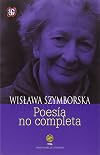
Wislawa Szymborska te habla simplemente, te muestra la magnificencia de lo cotidiano, de los principios mantenidos en las rutinas simples del día a día y no en el discurso solemne o rimbombante. Es sincera, sensata, perspicaz y nada ingenua, sin vueltas; no conmoverme, regocijarme y/o identificarme fue imposible para mí desde que la leí por primera vez unos pocos años atrás.
Since they'd never met before, they're sure
that there'd been nothing between them.
But what's the word from the streets, staircases, hallways--
perhaps they've passed by each other a million times?
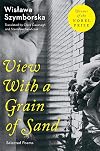
My recent bouts with verse have been belabored, not in terms of complexity or allusion but because, so often, the stanzas were heavy. The weight of history and personal affectation gave each phrase a heft. Imagine how disoriented I was when encountering Szymborska. This collection nearly bursts with show more a wild-eyed wonder. There is a freshness to almost every observation. There is a youthful lightness which appears to almost float from one stanza to the next.
It shouldn't be assumed then that this collection is childish, not without first accepting a subtle weary edge. My favorite line is "My faith is strong, blind and without foundation." That disconnect creates an opening, a fissure of sighs where wonder goes to molt. show less
that there'd been nothing between them.
But what's the word from the streets, staircases, hallways--
perhaps they've passed by each other a million times?
My recent bouts with verse have been belabored, not in terms of complexity or allusion but because, so often, the stanzas were heavy. The weight of history and personal affectation gave each phrase a heft. Imagine how disoriented I was when encountering Szymborska. This collection nearly bursts with show more a wild-eyed wonder. There is a freshness to almost every observation. There is a youthful lightness which appears to almost float from one stanza to the next.
It shouldn't be assumed then that this collection is childish, not without first accepting a subtle weary edge. My favorite line is "My faith is strong, blind and without foundation." That disconnect creates an opening, a fissure of sighs where wonder goes to molt. show less

Wisława Szymborska was on the editorial board of the Krakow-based Literary life magazine for nearly thirty years. For a large part of that time (1968-1981) she was writing a column in which the editors responded with "helpful" advice to poems and stories sent in by beginning writers: this book contains a selection of her pithy and often very funny replies. Some are quite constructive, drawing attention to the kind of basic errors almost everyone makes when starting out, like not submitting show more copy in legible form, trying to write in outdated styles, or getting tangled up in metaphors. But she can also be pretty merciless when she's riled by silly claims in covering letters, egregious errors of spelling and grammar, writers who haven't spent enough time reviewing and rewriting, or writers who take on subjects they haven't bothered to research properly. Those can expect to be demolished in a few witty sentences.
Her theory seems to be that any real writer will bounce back from this sort of treatment, perhaps having learnt something, and if she manages to divert a few dilettantes into a less demanding hobby, so much the better. Maybe not an approach that would go down well in a modern Creative Writing class, but it has its merits, and it must have been fun for spectators. show less
Her theory seems to be that any real writer will bounce back from this sort of treatment, perhaps having learnt something, and if she manages to divert a few dilettantes into a less demanding hobby, so much the better. Maybe not an approach that would go down well in a modern Creative Writing class, but it has its merits, and it must have been fun for spectators. show less

Szymborska, Premio Nobel 1996, no sólo es una poeta excelente, sino también una crítica heterodoxa, simpática y nada enigmática (véase Lecturas no obligatorias, o Prosas reunidas), pero también resulta ser una “consultora de escritores” irónica y directa. Durante años contestó un consultorio en la revista polaca Vida literaria en el que de forma anónima contestaba a las dudas de escritores en ciernes que necesitaban, a veces ser espoleados para espabilarse, y otras a alguien show more que les dijese la verdad, es decir que dejaran la escritura para el desahogo íntimo y personal.
El librito es descacharrante, y lo siento por aquellos a los que les fastidió el proyecto literario pero aunque el libro no contempla ni las poesías ni los relatos que los lectores le enviaban, salvo algunos fragmentos, por sus comentarios nos los podemos imaginar. En todo caso, el librito es un catálogo de consejos para quien quiera dedicarse a la escritura, y un test definitivo para aquellos que deben renunciar a ella. A cambio, propone a todos una mejora en cantidad y capacidad lectora. Una sabia. Y para muestra varios botones:
• Que los elogios sean relativamente pocos ya no es culpa nuestra. El talento literario no es un fenómeno de masas.
• ¿Por qué tendría que apetecernos leer eso, si todo parece indicar que al autor ni siquiera le apeteció pasarlo a limpio?
• …nos piden una relación completa de los libros que hay que leer, como si el desarrollo de un escritor no exigiera total autonomía en ese ámbito.
• Tenemos un principio. Todos los poemas sobre la primavera quedan descalificados automáticamente. Es un tema que ha dejado de existir en la poesía. En la vida sigue existiendo, claro. Pero son dos cosas distintas.
• Ha escrito usted una clamorosa sátira contra las secretarias: que si repintadas, que si repeinadas, que si con las uñas pintadas de rojo. De lo que se deduce que si tuvieran el pelo hecho un asco y llevaran un cilicio, entonces sí que trabajarían bien de verdad. Está usted hecho un carroza.
Mortal, la colega show less
El librito es descacharrante, y lo siento por aquellos a los que les fastidió el proyecto literario pero aunque el libro no contempla ni las poesías ni los relatos que los lectores le enviaban, salvo algunos fragmentos, por sus comentarios nos los podemos imaginar. En todo caso, el librito es un catálogo de consejos para quien quiera dedicarse a la escritura, y un test definitivo para aquellos que deben renunciar a ella. A cambio, propone a todos una mejora en cantidad y capacidad lectora. Una sabia. Y para muestra varios botones:
• Que los elogios sean relativamente pocos ya no es culpa nuestra. El talento literario no es un fenómeno de masas.
• ¿Por qué tendría que apetecernos leer eso, si todo parece indicar que al autor ni siquiera le apeteció pasarlo a limpio?
• …nos piden una relación completa de los libros que hay que leer, como si el desarrollo de un escritor no exigiera total autonomía en ese ámbito.
• Tenemos un principio. Todos los poemas sobre la primavera quedan descalificados automáticamente. Es un tema que ha dejado de existir en la poesía. En la vida sigue existiendo, claro. Pero son dos cosas distintas.
• Ha escrito usted una clamorosa sátira contra las secretarias: que si repintadas, que si repeinadas, que si con las uñas pintadas de rojo. De lo que se deduce que si tuvieran el pelo hecho un asco y llevaran un cilicio, entonces sí que trabajarían bien de verdad. Está usted hecho un carroza.
Mortal, la colega show less
Lists
Poetry Corner (3)
Female Author (2)
Awards


You May Also Like


Associated Authors
Statistics
- Works
- 134
- Also by
- 15
- Members
- 4,984
- Popularity
- #5,024
- Rating
- 4.2
- Reviews
- 79
- ISBNs
- 288
- Languages
- 23
- Favorited
- 44
