
Tadeusz Konwicki (1926–2015)
Author of A Minor Apocalypse
About the Author
Tadeusz Konwicki was born on June 22, 1926 in Nowa Wilejka, Wilenskie, Poland. He was raised by extended family because his father died when he was three years old and his mother was persistently ailing. With the outbreak of World War II, he was forced to leave high school when the Nazis forbade show more Poles to attend school. He finished his class work clandestinely. He was conscripted into a Nazi labor force and worked clearing a forest before escaping and joining the resistance movement. After the war, he studied in Krakow and then in Warsaw but never graduated from college. He became a reporter and critic, writing mainly about film, and began to write short stories and novels. His novels included The Hole in the Sky, The Dreambook of Our Time, The Polish Complex, and A Minor Apocalypse, which is required reading for all Polish high school students. He was also a filmmaker. His film Last Day of Summer won the Grand Prix at the International Festival of Documentary and Short Feature Films in Venice. He died on January 7, 2015 at the age of 88. (Bowker Author Biography) show less
Image credit: Tadeusz Konwicki in his flat, Warsaw, December 23, 1986. Photo: Włodzimierz Wasyluk (culture.pl)
Works by Tadeusz Konwicki
Władza 3 copies
Przy budowie 1 copy
The Last Day of Summer 1 copy
Zwierzoczłekopior 1 copy
Zorze wieczorne 1 copy
Tagged
Common Knowledge
- Canonical name
- Konwicki, Tadeusz
- Birthdate
- 1926-06-22
- Date of death
- 2015-01-07
- Gender
- male
- Education
- Uniwersytet Jagielloński, Kraków, Poland
Uniwersytet Warszawski, Warsaw, Poland - Occupations
- novelist
screenwriter
film director - Organizations
- Polish Resistance (WWII)
Polish United Workers' Party - Awards and honors
- Krzyż Kawalerski Orderu Odrodzenia Polski (1962)
Krzyż Oficerski Orderu Odrodzenia Polski (1964)
Nagroda Fundacji A. Jurzykowskiego w Nowym Jorku (1975)
Nagroda Polskiego PEN Clubu im. Jana Parandowskiego (2002) - Nationality
- Poland
- Places of residence
- Warsaw, Poland
Kraków, Poland
Nola Wilejka, Poland (birth|now Naujoji Vilnia, Lithuania) - Associated Place (for map)
- Poland
Members
Reviews
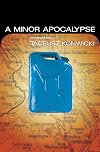
This is a novel about the "end of the world" for an aging Polish writer named Konwicki who has built a reputation as a representative of the people in their battle against the oppressive Communist government and its Soviet allies. As we meet him he thinks about his night . It was one that when he went to sleep he began to "understand the meaning of existence, time, and the life beyond this one. I understand that mystery for a fraction of a second, through an instant of distant memories, a show more brief moment of consolation or fearful foreboding , and then plunge instantly into the depths of my bad dreams. . . I would give everything I possess -- to see that mystery in all its simplicity, to see it once and then to forget it forever." (p 6)
Konwicki is in reality doomed to forfeit his life for the cause, the uprising of activists, writers like himself, and other compatriots who oppose the State in Poland at the end of the 1970s. He is approached early on this day by his friends Rhysio and Hubert with the decision , made by others in his absence, that he must that evening immolate himself in front of the Congress building of the government.
This is not an act that he can agree to but neither is it one that he rejects. He spends the rest of his day, one that may be his last, thinking about the meaning of this act. At some point he acquires a can filled with specially prepared gasoline that he carries with him like a cross. As he walks through Warsaw he is challenged several times during the day by various levels of State police to prove his identity by providing his papers and answering annoying questions. The quotidian details of his day provide a picture of the rigid society in which he lives. He also meets another friend, Tadzio Skorko, and the love of his life Nadezhda.
At one point his last two friends walk past him without saying hello and he thinks, "I really do have one foot in the grave." (p 107)
The satire is present and heavy at times. The police are portrayed as buffoons yet the one time he is interrogated the scene is filled with brutal reality, both physical and mental. The State apparatus is clearly aware that something unusual is planned for this day.
The mixture of the quotidian details of the day and Konwicki's fleeting memories of his past relationships and writing provide a fascinating background for the impending horror of his death. There are allusions to Dante and Savonarola but the most pertinent and poignant is the following literary reference:
""You were created by this regime. You were excreted by the system, you're part of this tyranny's flesh and blood. You're like a character from Dostoevsky's The Possessed*, not from a Zeromski story or one by Strug.""(p 138)
As the day proceeds Konwicki's meditations on his existence and imminent death become more serious and, for the reader, more thought-provoking.
"A reckoning with my conscience. My act of contrition. Regret for my sins. My life story in the colors of mediocrity. At first I hated that mediocrity, disdained it, but in the end I made my home in it. Greatness in mediocrity. Mediocrity as the highest form of aristocracy. Mediocrity as asceticism, as proud isolation amid vulgarity, the gray habit of a proud monk. Mediocrity as the final stage of exaltation."(p 143)
I could conclude with that statement, for it is one that includes his life - greatness - the culture in which he lives - vulgarity - and his own isolation and coming exaltation. But the novel is not without lyrical passages, in spite of the gray vulgarity of living in that society. Not surprisingly it is Nadezhda who inspires the best of his lyricism:
"Saying nothing, without a single word, we rose from the cement step which was already absorbing the late-afternoon chill and we entered the silent nave of the editorial offices' ruins. . . The remains of the walls, partitions, and ceilings were lying in the middle of the building, piles of picturesque rubble which seemed arranged by some romantic architect. Astonishingly luxuriant vegetation had entwined itself around those hunks of cement and brick, those dunes of withered lime. The sun's oblique light made the large, blackish burdocks glow; it gilded the handsome ferns and lit the deadly nightshade bushes on fire. Even fall asters had stolen into that enchanted garden, which had overgrown the junk pile of what once had been editorial offices.
The stairs invited our eyes to the sky, which had grown distinctly opalescent now." (p 170)
This is a beautiful novel about the ultimate moment in one man's life. The narrator says it best:
"My testament. My lavish legacy to those I loved."
*Also translated as The Demons. show less
Konwicki is in reality doomed to forfeit his life for the cause, the uprising of activists, writers like himself, and other compatriots who oppose the State in Poland at the end of the 1970s. He is approached early on this day by his friends Rhysio and Hubert with the decision , made by others in his absence, that he must that evening immolate himself in front of the Congress building of the government.
This is not an act that he can agree to but neither is it one that he rejects. He spends the rest of his day, one that may be his last, thinking about the meaning of this act. At some point he acquires a can filled with specially prepared gasoline that he carries with him like a cross. As he walks through Warsaw he is challenged several times during the day by various levels of State police to prove his identity by providing his papers and answering annoying questions. The quotidian details of his day provide a picture of the rigid society in which he lives. He also meets another friend, Tadzio Skorko, and the love of his life Nadezhda.
At one point his last two friends walk past him without saying hello and he thinks, "I really do have one foot in the grave." (p 107)
The satire is present and heavy at times. The police are portrayed as buffoons yet the one time he is interrogated the scene is filled with brutal reality, both physical and mental. The State apparatus is clearly aware that something unusual is planned for this day.
The mixture of the quotidian details of the day and Konwicki's fleeting memories of his past relationships and writing provide a fascinating background for the impending horror of his death. There are allusions to Dante and Savonarola but the most pertinent and poignant is the following literary reference:
""You were created by this regime. You were excreted by the system, you're part of this tyranny's flesh and blood. You're like a character from Dostoevsky's The Possessed*, not from a Zeromski story or one by Strug.""(p 138)
As the day proceeds Konwicki's meditations on his existence and imminent death become more serious and, for the reader, more thought-provoking.
"A reckoning with my conscience. My act of contrition. Regret for my sins. My life story in the colors of mediocrity. At first I hated that mediocrity, disdained it, but in the end I made my home in it. Greatness in mediocrity. Mediocrity as the highest form of aristocracy. Mediocrity as asceticism, as proud isolation amid vulgarity, the gray habit of a proud monk. Mediocrity as the final stage of exaltation."(p 143)
I could conclude with that statement, for it is one that includes his life - greatness - the culture in which he lives - vulgarity - and his own isolation and coming exaltation. But the novel is not without lyrical passages, in spite of the gray vulgarity of living in that society. Not surprisingly it is Nadezhda who inspires the best of his lyricism:
"Saying nothing, without a single word, we rose from the cement step which was already absorbing the late-afternoon chill and we entered the silent nave of the editorial offices' ruins. . . The remains of the walls, partitions, and ceilings were lying in the middle of the building, piles of picturesque rubble which seemed arranged by some romantic architect. Astonishingly luxuriant vegetation had entwined itself around those hunks of cement and brick, those dunes of withered lime. The sun's oblique light made the large, blackish burdocks glow; it gilded the handsome ferns and lit the deadly nightshade bushes on fire. Even fall asters had stolen into that enchanted garden, which had overgrown the junk pile of what once had been editorial offices.
The stairs invited our eyes to the sky, which had grown distinctly opalescent now." (p 170)
This is a beautiful novel about the ultimate moment in one man's life. The narrator says it best:
"My testament. My lavish legacy to those I loved."
*Also translated as The Demons. show less
While this wasn't a natural selection for the holidays, I did elect to read this at Christmas; a time during my 20s when neither rigor or resignation were at hand: guess which one I chose? This novel had been discovered and purchased at Twice-Told and I read it in two days seated at Table Eight, pausing between espresso and pints of pilsner to ask Roger about Poland in the 1980s. What resulted was a gnawing sense of historical displacement and a need to publicly explore my worthlessness. I show more told my friends Steve and Craig that I was considering self-immolation at the Dickens on Main street Exhinition. Reasomns were listed and pints emptied. Finally i walked home. Thinking about that novel and its drifitng sense of time with TV announcers and clocks at constant opposition. It is amazing that I survived my 20s; thoughts to the Warsaw Pact remain another kettle entirely. show less
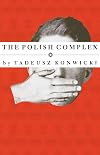
In The Polish Complex, Konwicki mixes the surreal and fantastic with grey Communist Warsaw and the result in an involving, melancholy, odd read. The main plot follows an author named Konwicki who is standing in line at a jewelry store on Christmas Eve. It becomes increasingly clear that the delivery to the store is never going to happen but the group in line finds it hard to leave. There’s a lot of aimless conversations – about the characters’ dull lives, plans that might never happen show more – that occasionally turn charged. Konwicki as well as a couple of the others allude to their time as Polish partisans during WWII. The surreal elements are often set out in separate stream-of-consciousness thoughts of the narrator, a flashback to the past or a letter but they also enter the main story. There’s some ambiguity about the author’s relation to some of the other characters – was one of the other line-dwellers assigned to kill him? Is the shopgirl his guardian angel?
The setting of a line and the dully grey background would be a recognizably Communist one. Everyone is waiting for something besides the jewelry shipment – for a trip that is talked about but might never come, for the supposed happy Communist future that no one believes in anymore, for Polish independence in the 19th c and for the end of an anonymous regime in a letter to Konwicki. Sometimes the talk can get a little pointless but Konwicki mixes the gloom with some fantastic inventions. The narrator occasionally thinks about role of the writer, the fate of nations and moves out all the way to the indifferent spinning earth in his long, elaborate stream-of-consciousness head monologues, a change of pace in both prose style and scope from the main plot. He has one extended story of a leader of the failed Polish rebellion in 1863 which is compared to the Polish partisans. I wasn’t sure if the author was basing this on a real character and was unfamiliar with the history of that time but the story was involving anyway. Another sideplot is the letter to Konwicki by a Polish friend now living in an unnamed country. His friend bemoans the sad state of their government, which clamps down on freedom and forces everyone to publicly state their love of the party. The friend sadly compares his life to the freedom that he assumes is in Poland, a bit of roundabout criticism by the author. show less
The setting of a line and the dully grey background would be a recognizably Communist one. Everyone is waiting for something besides the jewelry shipment – for a trip that is talked about but might never come, for the supposed happy Communist future that no one believes in anymore, for Polish independence in the 19th c and for the end of an anonymous regime in a letter to Konwicki. Sometimes the talk can get a little pointless but Konwicki mixes the gloom with some fantastic inventions. The narrator occasionally thinks about role of the writer, the fate of nations and moves out all the way to the indifferent spinning earth in his long, elaborate stream-of-consciousness head monologues, a change of pace in both prose style and scope from the main plot. He has one extended story of a leader of the failed Polish rebellion in 1863 which is compared to the Polish partisans. I wasn’t sure if the author was basing this on a real character and was unfamiliar with the history of that time but the story was involving anyway. Another sideplot is the letter to Konwicki by a Polish friend now living in an unnamed country. His friend bemoans the sad state of their government, which clamps down on freedom and forces everyone to publicly state their love of the party. The friend sadly compares his life to the freedom that he assumes is in Poland, a bit of roundabout criticism by the author. show less

A Dreambook for Our Time is a vividly told, character-driven narrative about the lives of a group of Polish adults in the late 1950s, about the time of Sputnik. The action takes place in a Polish village somewhere on the Sola River. A huge presence in the novel is that of the nearby forest. It was in the forest that many people hid from the Nazis during the war. It was also in the forest that Polish partisans operated during wartime; that Hitler was said to have hidden the "gold of the show more Jews"; and that one Huniady, a partisan turned bandit, was said to have his hideaway. In the present day action of the story, the local residents are bracing themselves for the eventual inundation of the valley for a new dam is now under construction. We first come across our narrator as he lies recovering from a suicide attempt in the parlor of his landlady, Miss Malvina. The main characters of the novel are pretty much all introduced in this scene. There is the Partisan, a local warlord who has lost power now that national and local government have been reestablished; Miss Malvina, a religious nut, but one who likes her drop and has an overweening sense of the social proprieties; her brother Ildefons Korsak, an old soldier half out of his mind after serving in a numerous wars who may conceivably be suffering from syphilis-related dementia; Joseph Car, the local evangelist preacher; Regina, a shopkeeper at the state-owned store who rejects the lusty Partisan's incessant offers of love; Justine, Car's wife who carries on an affair with our narrator; and others more peripheral. The story is for the most part about the daily grind of the main characters, who do not by any means strive to live the "examined" life. They drink ungodly amounts of vodka on the slightest pretext and in their cups act out in the most absurd ways. For the Partisan the central issues are his loss of face (power) and Regina's refusal of him. For the narrator, it is his failure during the war as a NCO of the Polish Home Army. There are a number of flashbacks to wartime during which we get the backstory on our narrator. Dreams intrude on daily life, but they are never indistinguishable from reality. One of my concerns on starting the novel was that it would lack coherence, that I would be at sea amid a bunch of unconnected and ambiguous images à la symbolist poetry. It is a "dreambook" after all. But that was not the case. Highly recommended for the deep reader. (Don't take it to the beach.) show less
Lists
Awards


You May Also Like


Associated Authors
Statistics
- Works
- 37
- Members
- 827
- Popularity
- #30,853
- Rating
- 3.6
- Reviews
- 20
- ISBNs
- 99
- Languages
- 15
- Favorited
- 5
