
Paweł Huelle (1957–2022)
Author of Who Was David Weiser?
About the Author
Image credit: Sławek
Works by Paweł Huelle
Weiser Dawidek 1 copy
Associated Works
The Art of the Story: An International Anthology of Contemporary Short Stories (1999) — Contributor — 393 copies, 5 reviews
Description of a Struggle: The Vintage Book of Contemporary Eastern European Writing (1994) — Contributor — 79 copies, 1 review
The Wall in My Head: Words and Images from the Fall of the Iron Curtain (2009) — Contributor — 57 copies, 4 reviews
Tagged
Common Knowledge
- Canonical name
- Huelle, Paweł
- Other names
- HUELLE, Paweł
HUELLE, Pawel - Birthdate
- 1957-09-10
- Date of death
- 2022-11-27
- Gender
- male
- Education
- Gdansk University
- Nationality
- Poland
- Birthplace
- Gdansk, Poland
- Places of residence
- Gdansk, Poland (born)
- Associated Place (for map)
- Gdansk, Poland
Members
Reviews
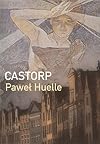
This story of Hans Castorp's school days in Danzig works pretty well on its own as a shrewd and fluent amusement, and the amusement is doubled and trebled by little references to Schnitzler's Traumnovelle or Grass's Danzig novels, but it's of course the new lens it brings to The Magic Mountain that's the real point of interest. Huelle precapitulates Mann's novel for purposes that are often straight-up satirical, like the conversations in the bathhouse between the English proto-Settembrini show more (we need a word or suffix for "proto-" but with an implication of already-in-the-context-of-the-thing-being-protoedness, in other words, a situation where proto-x comes before x but is nevertheless framed by it) and the German proto-Naphta, or the way the Decline-of-the-West pre-WWI stuff with Clavdia Chauchat about Germans and Slavs in the original gets made explicit here--at the end, rolled out in more or less thesis form by a sudden 21st-century narrator. But the book goes deeper too, and the fact that these things happened, will have happened, had already happened, had always had to happen, before the events of the MM changes Castorp from a sheepish Everyman into someone a bit numinous, a character to whom unexpected journeys to magical kingdoms and the descent of visions suffused with yearning are destined to happen, and whose ultimate destiny (I won't spoil the end of The Magic Mountain here) makes him a kind of dreamy blankish slate forced into the role of representative of and sacrificial lamb for the old bourgeois Europe. When Hans is caught looking out the window in math class and oh-snaps the professor with a heavy nineteenth-century comeback about Fermat's last theorem, the other students don't start to call him Cloudgazer or imbue him a reputation for legendary wit. They call him "Practical Castorp," against all the evidence. He's being forced into the role. This makes his Maria Mancinis and good meals and punctilious habits no longer cloying physical indulgences but humanizing details, and his bicycle rides, like the later walk in the snow, attempts to escape the role. It makes the essence of Castorp not practicality and innocence but enchantment and doom--and looking back, all four things were true of the pre-war world. Thus, the two-part story that Castorp and The Magic Mountain now become are revealed as a walk to the gallows no longer of a decadent and distracted world that doesn't know it's coming, but of an agitated and desperate one that suspects, and isn't yet aware that it suspects, but is looking desperately for a way out that isn't there, not in the highest mountain or the fluffiest Baltic cloud. show less
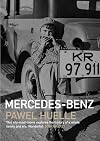
his was a lovely short novel.It is part of a series that Huelle wrote as letters to the Czech writer Bohumil Hrabal. In it, he tells the stories of his driving lessons. Undertaken later in life, he relaxes during them by telling his instructor wonderful stories about his family history, particularly how their cars have shaped their, and Poland's, history. The stories are largely bittersweet, ranging from the comic car accident that thrust his grandparents to national prominence to the absurd show more 'fox' hunt where drivers follow a balloon with a fox tail pinned to it, only for a freak wind to lead to many of their deaths in Soviet and German internment camps.
The stories are told fondly, and the relationship between the driver and his (female) instructor is portrayed as beautiful and happy moments. The whole book has the feel of leafing through somebody else's family photos, and there are black and white photos sprinkled throughout the text. However, many of the comic tails have dark endings, reminding us that Huelle's book is not just about this one family, and their cars, but is about Poland and its people in the twentieth century. It is a book with both lightness and depth, and the balance between the two is perfect. My only complaint is that all I needed to enjoy this book was the driver and the instructor, and Huelle eventually takes us beyond the car and into the real worlds of these people, something I felt added nothing to the story. Nevertheless, this is one to keep an eye out for. show less
The stories are told fondly, and the relationship between the driver and his (female) instructor is portrayed as beautiful and happy moments. The whole book has the feel of leafing through somebody else's family photos, and there are black and white photos sprinkled throughout the text. However, many of the comic tails have dark endings, reminding us that Huelle's book is not just about this one family, and their cars, but is about Poland and its people in the twentieth century. It is a book with both lightness and depth, and the balance between the two is perfect. My only complaint is that all I needed to enjoy this book was the driver and the instructor, and Huelle eventually takes us beyond the car and into the real worlds of these people, something I felt added nothing to the story. Nevertheless, this is one to keep an eye out for. show less

What a lovely book! Partially a tribute to Hrabal, partially a tribute to his own family, a compelling narrative on cars, history and politics.

Recommended by Maciek. Set in the late 1950s in Gdansk (Poland), this is a classic coming of age story. David Weiser is a mysterious Jewish outcast in a Catholic town. His sole defender is a girl named Elka, and over time, three other boys become fascinated by this seemingly worldly classmate. The book is narrated by one of the three, while they are being interrogated following the disappearance of Weiser and Elka, who are presumed to have died in a huge explosion detonated by Weiser. The show more constant time shifting in narration was a challenge, and the fact that the parents of these boys left them alone and at the mercy of school officials and investigators was hard to believe, even given the time period. Well written, with some intriguing mystery/mysticism, but I would have preferred more resolution. show less
Lists
Awards


You May Also Like


Associated Authors
Statistics
- Works
- 13
- Also by
- 5
- Members
- 440
- Popularity
- #55,640
- Rating
- 3.8
- Reviews
- 9
- ISBNs
- 70
- Languages
- 13
- Favorited
- 2
