
Deborah Blumenthal
Author of Charlie Hits It Big
About the Author
Works by Deborah Blumenthal
Tagged
Common Knowledge
- Birthdate
- 1948-05-30
- Gender
- female
- Occupations
- journalist
- Nationality
- USA
- Places of residence
- New York, New York, USA
- Associated Place (for map)
- New York, USA
Members
Reviews

Deborah Blumenthal tells the life story of overlooked African-American fashion designer Ann Cole Lowe in this engaging picture-book biography, beginning with Lowe's childhood in late 19th-century Alabama. Taught to sew from an early age, Lowe took over her mother's gown business at the age of sixteen, eventually going on to create many unique garments. She had a studio in New York for a period, and designed the wedding dress that Jacqueline Bouvier wore when she married future president John show more F. Kennedy. Despite her many achievement, Lowe was denied the credit and acclaim that were her due, until much later in her life, due to her race.
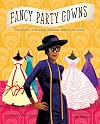
Although not an exhaustive biography of Lowe, Fancy Party Gowns: The Story of Fashion Designer Ann Cole Lowe skillfully highlights two important things about its eponymous subject. First, that she was immensely passionate about fashion and gown-making from a young age; and second, that despite the many injustices she faced, she never gave up. I liked Blumenthal's oft-repeated refrain, "she thought about what she could do, not what she couldn't change," as this highlights both the injustices rife in the American society of Lowe's day, and the inner strength required to succeed despite those injustices. The accompanying artwork here, done by Laura Freeman, is vivid and appealing, making bold use of color and form to capture some of the scenes from Lowe's life. Recommended to anyone looking for children's biographies about fashion designers and/or African-American women of spirit. show less
Although not an exhaustive biography of Lowe, Fancy Party Gowns: The Story of Fashion Designer Ann Cole Lowe skillfully highlights two important things about its eponymous subject. First, that she was immensely passionate about fashion and gown-making from a young age; and second, that despite the many injustices she faced, she never gave up. I liked Blumenthal's oft-repeated refrain, "she thought about what she could do, not what she couldn't change," as this highlights both the injustices rife in the American society of Lowe's day, and the inner strength required to succeed despite those injustices. The accompanying artwork here, done by Laura Freeman, is vivid and appealing, making bold use of color and form to capture some of the scenes from Lowe's life. Recommended to anyone looking for children's biographies about fashion designers and/or African-American women of spirit. show less
I loved this book. I am such a huge fan of women doing important things, and this book tells the rags to riches story of Ann Cole Lowe. Her great grandparents were slaves, she loses her mom at the young age of 16, she was segregated in design school, she took over her mothers sewing business at 16, her salon floods when she finally makes enough to get it, and yet the whole story she prevails on and doesn't think about the things she can't change. Her story holds such a powerful message and show more shows us that no matter who you are or where you come from, you can do it with hard work. She is an inspiration to all women and her story is so fascinating I am extremely interested in learning more. show less
This book tells the little-known story of Ann Cole Lowe, born in 1898, an African-American fashion designer who overcame a great deal of hardship and prejudice to become a leading star in the fashion world, even designing the wedding dress for Jacqueline Bouvier when she married John F. Kennedy.
Ann grew up in Alabama sewing alongside her mother, who, however, died when Ann was just 16. But Ann kept up with her mother's orders, and even attended design school in New York in 1917. But, as the show more author reports, she had to sit all alone in a separate room since she was black.
Eventually Ann was able to start her own business. One of the more memorable vignettes in the book is about the time Ann came to the Bouvier mansion in Newport, Rhode Island in 1953 to bring the wedding party dresses for soon-to-be Jacqueline Kennedy. The butler told her she would have to use the back entrance:
“Ann said that if she had to enter through the back door, the bride and bridesmaids wouldn’t be wearing her dresses for the wedding. She entered through the front door.”
Ann continued to design dresses for prominent women, but struggled financially, and in 1960 was forced to close her salon. She died in 1981 at the age of 82.
Illustrations by Laura Freeman are done in a style fashionistas will recognize known as “fashion illustration” or “fashion sketching.” They not only show a representation or design of a garment but are considered as a form of art. One sees less of it now with the greater use of photography, but designers still use this form of art for the initial representation of their ideas. [While Freeman's illustrations of some of Lowe’s finished gowns show women of color wearing them, Lowe’s designs were mostly purchased by wealthy white society women.]
Evaluation: I always loved beautiful gowns as a girl. I would have loved this book, as it combines an inspiring story with a “princess” element that will have broad appeal. show less
Ann grew up in Alabama sewing alongside her mother, who, however, died when Ann was just 16. But Ann kept up with her mother's orders, and even attended design school in New York in 1917. But, as the show more author reports, she had to sit all alone in a separate room since she was black.
Eventually Ann was able to start her own business. One of the more memorable vignettes in the book is about the time Ann came to the Bouvier mansion in Newport, Rhode Island in 1953 to bring the wedding party dresses for soon-to-be Jacqueline Kennedy. The butler told her she would have to use the back entrance:
“Ann said that if she had to enter through the back door, the bride and bridesmaids wouldn’t be wearing her dresses for the wedding. She entered through the front door.”
Ann continued to design dresses for prominent women, but struggled financially, and in 1960 was forced to close her salon. She died in 1981 at the age of 82.
Illustrations by Laura Freeman are done in a style fashionistas will recognize known as “fashion illustration” or “fashion sketching.” They not only show a representation or design of a garment but are considered as a form of art. One sees less of it now with the greater use of photography, but designers still use this form of art for the initial representation of their ideas. [While Freeman's illustrations of some of Lowe’s finished gowns show women of color wearing them, Lowe’s designs were mostly purchased by wealthy white society women.]
Evaluation: I always loved beautiful gowns as a girl. I would have loved this book, as it combines an inspiring story with a “princess” element that will have broad appeal. show less

I was not able to finish this book. I got about halfway through and just had to put it down. I got frustrated with Gia and her shenanigans. She was neither believable nor likable. I was really excited to read this - I expected a Godfather/Gossip Girl hybrid, not a whiny spoiled brat. The straw that broke the camel's back, however, was the incredibly inappropriate relationship that develops with (and is reciprocated by!) "Officer Hottie." So illegal. I'm all for suspension of disbelief, but show more when he started texting her back and calling her "Baby," I rolled my eyes and put my Kindle down in disgust. I much preferred the election subplot to the "romance," but I couldn't handle slogging through one for the other. show less
Awards


You May Also Like


Associated Authors
Statistics
- Works
- 29
- Members
- 1,544
- Popularity
- #16,680
- Rating
- 3.6
- Reviews
- 58
- ISBNs
- 97
- Languages
- 2