
Augusto Boal (1931–2009)
Author of Theatre of the Oppressed
About the Author
Augusto Boal is a theatre director, dramatist, theorist, writer and teacher. He was a Member of Parliament for Rio de Janeiro from 1993 to 1996 Adrian Jackson is Artistic Director of Cardboard Citizens. He has translated four books by Augusto Boal, collaborated with him on a number of occasions and show more taught Theatre of the Oppressed widely in countries including Namibia, South Africa, Hong Kong, Mauritius and Finland show less
Works by Augusto Boal
200 exercícios e jogos para o ator e o não-ator com vontade de dizer algo através do teatro (1978) 7 copies
Arena conta Tiradentes 3 copies
TDR #127 1 copy
P185 - Stop Est Magique 1 copy
200 Exercícios e jogos para o actor e o não actor com ganas de dizer algo através do teatro 1 copy
TDR #172 1 copy
Θείος Παπάρος 1 copy
Tio Patinhas e a Pílula 1 copy
TDR #160 1 copy
Associated Works
Tagged
Common Knowledge
- Birthdate
- 1931-03-16
- Date of death
- 2009-05-02
- Gender
- male
- Nationality
- Brazil
- Associated Place (for map)
- Brazil
Members
Reviews

The playwright and essayist Augusto Boal was the director of the Arena Theatre of São Paulo in the 1960th. This, his most influential work, was translated into many languages. It grew out of the practical theatre experience of staging and performing – some sections were written as introduction for plays - and out of the living experience of economic and political oppression. A.B. analyses the history of theatre in relation to the dominant economic classes (Aristotle and the Athenian show more ‘democracy’, Machiavelli and the emerging bourgeoisie, Hegel and Brecht). To Boal – and I agree – all human activity is political, even the refusal to be so, hence theatre is necessarily political.
A.B. reveals how the theatre has been used as an instrument of social and political control but how it can also be turned against the oppressor and become a force for liberation in the hands of the oppressed. Brecht has tried to do this: his plays reveal the world as subject to change. Boal goes further: ‘the spectator no longer delegates power to the characters either to think or to act in his place. The spectator frees himself; he thinks and acts for himself!’ (155) In the latter part of the work Boal describes the experiences gained with the Arena Theatre, the People’s Theatre in Peru and in numerous workshops; he elaborates the theory and practice of transforming the spectator into actor: Theatre as language, Theatre as discourse (Newspaper theatre, Invisible theatre, …) etc.
This may be the most important theoretical writing on theatre since Brecht.
Much information on the Theatre of the Oppressed is available on the Internet, also videos of workshops and interviews with Boal who died in 2009. (VI-10) show less
A.B. reveals how the theatre has been used as an instrument of social and political control but how it can also be turned against the oppressor and become a force for liberation in the hands of the oppressed. Brecht has tried to do this: his plays reveal the world as subject to change. Boal goes further: ‘the spectator no longer delegates power to the characters either to think or to act in his place. The spectator frees himself; he thinks and acts for himself!’ (155) In the latter part of the work Boal describes the experiences gained with the Arena Theatre, the People’s Theatre in Peru and in numerous workshops; he elaborates the theory and practice of transforming the spectator into actor: Theatre as language, Theatre as discourse (Newspaper theatre, Invisible theatre, …) etc.
This may be the most important theoretical writing on theatre since Brecht.
Much information on the Theatre of the Oppressed is available on the Internet, also videos of workshops and interviews with Boal who died in 2009. (VI-10) show less
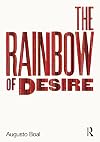
Rainbow of Desire is a handbook of exercises with a difference. It is Augusto Boal's bold and brilliant statement about the therapeutic ability of theatre to liberate individuals and change lives. Now translated into English and comprehensively updated from the French, Rainbow of Desire sets out the techniques which help us `see' for the first time the oppressions we have internalised. Boal, a Brazilian theatre director, writer and politician, has been confronting oppression in various forms show more for over thirty years. His belief that theatre is a means to create the future has inspired hundreds of groups all over the world to use his techniques in a multitude of settings. show less

Augusto Boal's workshops and theatre exercises are renowned throughout the world for their life-changing effects. At last this major director, practitioner, and author of many books on community theatre speaks out about the subjects most important to him – the practical work he does with diverse communities, the effects of globalization, and the creative possibilities for all of us.
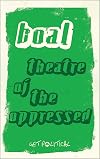
This new edition of Theatre of the Oppressed brings a classic work on radical drama fully up to date and includes a new foreword by the author Augusto Boal. Boal restores theatre to its proper place as a popular form of communication and expression. He demonstrates the ways in which theatre has come to reflect ruling-class control, drawing on the theories of Aristotle and Machiavelli. He then shows the process reversed in Brechtian/Marxist poetics to the revolutionary potential of show more transforming the spectator into the actor. Throughout, Boal draws on his own experience in Latin America and illustrates his theory with practical examples. show less
Awards


You May Also Like


Associated Authors
Statistics
- Works
- 34
- Also by
- 2
- Members
- 1,067
- Popularity
- #24,130
- Rating
- 4.1
- Reviews
- 7
- ISBNs
- 110
- Languages
- 9