
Peter Brook (1) (1925–2022)
Author of The Empty Space: A Book about the Theatre
For other authors named Peter Brook, see the disambiguation page.
Works by Peter Brook
Il teatro e il suo spazio 8 copies
Mahabharata 2 copies
TDR #32 1 copy
TDR #128 1 copy
TDR #129 1 copy
Great Adaptations (Great Expectations / Lord of the Flies / The Most Dangerous Game / Oliver Twist) (2004) — Director — 1 copy
Associated Works
The Persecution and Assassination of Jean-Paul Marat as Performed by the Inmates of the Asylum of Charenton Under the Direction of the Marquis de Sade (1964) — Introduction, some editions — 1,380 copies, 15 reviews
Anton Chekhov's Selected Plays [Norton Critical Edition, 2nd ed.] (2005) — Contributor — 72 copies, 1 review
Essential Art House, Volume I (Beauty and the Beast / Grand Illusion / Knife in the Water / Lord of the Flies / Rashomon / Wild Strawberries) — Director — 1 copy
Tell Me Lies : Text and photographs from the Royal Shakespeare Company's production of US (1968) — Introduction — 1 copy
Tagged
Common Knowledge
- Canonical name
- Brook, Peter
- Legal name
- Brook, Peter Stephen Paul
- Birthdate
- 1925-03-21
- Date of death
- 2022-07-02
- Gender
- male
- Education
- Westminster School, London
Gresham's School
University of Oxford (Magdalen College) - Occupations
- theatre director
film director - Awards and honors
- Order of the British Empire (1965)
Order of the Companions of Honour (1998) - Relationships
- Parry, Natasha (wife|1951|her death|2015)
- Nationality
- UK (birth)
France - Birthplace
- London, England, UK
- Place of death
- Paris, France
- Map Location
- England, UK
Members
Reviews

This short book from 1968 is one I should have read as an undergraduate in the 1980s. It is the first book by famed director Peter Brook, collecting a series of four lectures on the state of theater and its possibilities. The pieces do progress and build upon one another, moving from the critical viewpoint, through theory and history, to more practical concerns and perspectives.
The first part is "The Deadly Theatre," and in it Brook discusses all the ways in which theatrical works fail. show more "All through the world theatre audiences are dwindling" (10). There is a doom loop in which conventionality in writing, acting, and production, along with criticism and economic pressures, lead to lowered audience expectations, which in turn foster lackluster performances. The deadly theater is not integral to society, it is a superfluous appendage which can be profitably ignored.
In "The Holy Theatre" Brook addresses the ambition of the theater to make les Invisibles visible. He introduces the "illuminated genius" Antonin Artaud as the touchstone of this ambition, and recounts some of Brook's own experiments in a "theatre of cruelty." For further demonstrations of the "holy" trajectory, he outlines the work of Merce Cunningham, Samuel Beckett, and Jerzy Grotowski.
Brook's paragon of "The Rough Theatre" is Bertolt Brecht. The rough in some senses opposes the holy: rather than being drawn out of themselves by the holy, participants are thrown back into themselves by the rough. It is a theater of examination and exposure, rather than exaltation and ecstasy. But Brook insists that these two are complements that can and should inform each other, as they do--he claims--in the work of Shakespeare.
"The Immediate Theatre" brings the focus to the actual work of theatrical production, eventually settling on a (provisional) formula in the Francophone terms of repetition (rehearsal), representation (performance), and assistance (spectatorship). That these are all to some degree false cognates Brook does not explicitly make a matter of concern. He concludes with questions about whether theater can have enduring transformative effects for either its producers or its consumers.
Throughout this book, the prose is beautiful and eminently quotable. "It is not the fault of the holy that it has become a middle-class weapon to keep children good" (46). "As I continue to work, each experience will make these conclusions inconclusive again" (100). "Today, it is hard to see how a vital theatre and a necessary one can be other than out of tune with society--not seeking to celebrate the accepted values, but to challenge them" (134).
More than half a century after its composition The Empty Space is certainly valuable to students of 20th-century theater history, but also, I think, to anyone still concerned to generate and appreciate living performances in stage environments. show less
The first part is "The Deadly Theatre," and in it Brook discusses all the ways in which theatrical works fail. show more "All through the world theatre audiences are dwindling" (10). There is a doom loop in which conventionality in writing, acting, and production, along with criticism and economic pressures, lead to lowered audience expectations, which in turn foster lackluster performances. The deadly theater is not integral to society, it is a superfluous appendage which can be profitably ignored.
In "The Holy Theatre" Brook addresses the ambition of the theater to make les Invisibles visible. He introduces the "illuminated genius" Antonin Artaud as the touchstone of this ambition, and recounts some of Brook's own experiments in a "theatre of cruelty." For further demonstrations of the "holy" trajectory, he outlines the work of Merce Cunningham, Samuel Beckett, and Jerzy Grotowski.
Brook's paragon of "The Rough Theatre" is Bertolt Brecht. The rough in some senses opposes the holy: rather than being drawn out of themselves by the holy, participants are thrown back into themselves by the rough. It is a theater of examination and exposure, rather than exaltation and ecstasy. But Brook insists that these two are complements that can and should inform each other, as they do--he claims--in the work of Shakespeare.
"The Immediate Theatre" brings the focus to the actual work of theatrical production, eventually settling on a (provisional) formula in the Francophone terms of repetition (rehearsal), representation (performance), and assistance (spectatorship). That these are all to some degree false cognates Brook does not explicitly make a matter of concern. He concludes with questions about whether theater can have enduring transformative effects for either its producers or its consumers.
Throughout this book, the prose is beautiful and eminently quotable. "It is not the fault of the holy that it has become a middle-class weapon to keep children good" (46). "As I continue to work, each experience will make these conclusions inconclusive again" (100). "Today, it is hard to see how a vital theatre and a necessary one can be other than out of tune with society--not seeking to celebrate the accepted values, but to challenge them" (134).
More than half a century after its composition The Empty Space is certainly valuable to students of 20th-century theater history, but also, I think, to anyone still concerned to generate and appreciate living performances in stage environments. show less
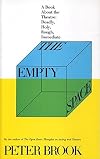
The author has interesting points about the nature of theatre, but at times one would almost believe he hated the theatre. He doesn't, of course, but he didn't like certain aspects of what people were doing in theatre. His points were interesting, and worth considering, though I'm not sure I would agree with him. I think it is the sort of views he represented that were the reason for the excesses of experimental theatre in the 1970s and 1980s. A worthwhile book, but rather out of date, of show more course. show less

For my money, this is the best all-around an d most essential book on/about theatre. It encapsulates a great deal about the kinds of theatre that exist in practice, not in the theoretical, not the kinds of theatre people in theatre like to believe/claim/feel they do. It's informative and inspiring.
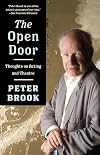
Is this a book for actors? Or directors? It's not clear. It mostly seems like the author put together some lectures he gave and published them, and there are some interesting reminiscences, some suggestions for actors and directors, and a bit of philosophical meandering. Not a bad book, but not particularly good either. It felt pretty lightweight, but it's an easy read. Sort of interesting for the philosophical look at what theatre is; he does have a solid view of what it takes to make show more theatre, and he's not ready to pitch any genre overboard. He thinks it's possible to move back and forth between high culture, middle culture, and low culture. He's probably right. Overall, I could have done without the constant suggestion that the "traditional" cultures of the East are intrinsically superior to the West. show less
Lists
Awards


You May Also Like


Associated Authors
Statistics
- Works
- 53
- Also by
- 11
- Members
- 2,108
- Popularity
- #12,209
- Rating
- 3.9
- Reviews
- 33
- ISBNs
- 144
- Languages
- 10