

Constantin Stanislavski (1863–1938)
Author of An Actor Prepares
About the Author
Constantin Stanislavski (1863-1938), born Constantin Sergeyevich Alexeev, was an actor, director, and the greatest of all acting teachers
Image credit: George Grantham Bain Collection, Library of Congress Prints and Photographs Division, Reproduction Number: LC-DIG-ggbain-35320
Works by Constantin Stanislavski
An Actor's Handbook: An Alphabetical Arrangement of Concise Statements on Aspects of Acting (1963) 155 copies
Stanislavski's Legacy: A Collection of Comments on a Variety of Aspects of an Actor's Art and Life (1980) 48 copies
K. Stanislavsky, 1863-1963, man and actor, Stanislavsky and the world theatre, Stanislavsky's letters (1963) 5 copies
Il lavoro dell'attore 2 2 copies
Ἡ ζωή μου στήν τέχνη 2 copies
C63 - Manual do Ator 2 copies
Die Arbeit des Schauspielers an sich selbst : Tagebuch eines Schülers - Teil II - Die Arbeit an sich selbst im schöpfe (1986) 2 copies
Ne veriu! Vospominaniia 1 copy
Skuespillerens arbeid med seg selv : i gjennomlevelsens skapende prosess : en elevdagbok (2023) 1 copy
Собрание сочинений в восьми томах. Том 5, Статьи, речи, заметки, дневники, воспоминания 1877-1917 1 copy
Работа актера над собой 1 copy
Stanislavsky 1 copy
Die Arbeit des Schauspielers an sich selbst : Tagebuch eines Schülers - Teil I - Die Arbeit an sich selbst im schöpfer (1984) 1 copy
C60 - A Preparação do Ator 1 copy
Sistem 1 copy
Lessen voor acteurs - deel 2 1 copy
Lessen voor acteurs - deel 3 1 copy
Pozorišna etika 1 copy
Associated Works
Anton Chekhov's Selected Plays [Norton Critical Edition, 2nd ed.] (2005) — Contributor — 72 copies, 1 review
Tagged
Common Knowledge
- Canonical name
- Stanislavski, Constantin
- Legal name
- Stanislavski, Constantin Sergeyevich
- Other names
- Alekseyev, Constantin Sergeyevich (birth)
- Birthdate
- 1863-01-17
- Date of death
- 1938-08-07
- Gender
- male
- Education
- Lazarev Institute of Oriental Languages
Moscow Theatre School - Occupations
- actor
theater director - Organizations
- Moscow Art Theatre
- Awards and honors
- Order of Lenin (1937)
Order of the Red Banner of Labor (1938)
People's Artist of the USSR (1936) - Short biography
- Stanislavski organized and developed acting techniques of his day into a more coherent and psychologically realistic system or method that was used around the world for many years.
- Nationality
- Russia
- Birthplace
- Moscow, Russian Empire
- Places of residence
- Moscow, Russian SFSR, USSR
- Place of death
- Moscow, Russian SFSR, USSR
- Burial location
- Novodevichy Cemetery, Moscow, Russia
Members
Reviews
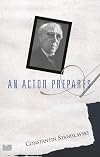
I read this book a few years ago, in good part out of morbid curiosity because Gary reads it to prepare for the grand showdown in that movie Team America: World Police.
Quite frankly, I don't have an acting background. I did do theater for 1 year as a forced elective in my first year of highschool because it was a class with an easy workload, but it focused more on the innards of how stages are organized and art theory over learning how to act. Worse, I was granted assisting tasks backstage show more during the annual play and never did any acting roles.
Therefore, I don't have the target background for the book and really didn't have any idea what I was going to read. This is not a fluff Cosmo piece about "my fulfilled dream in acting in the village Easter play" sort of deal. It's a highly technical book directed at aspiring actors to perform complex mind exercises to get into the jists of a role.
The book could very well be useful for spies (which is a huge part behind the plot in choosing Gary over a military recruit for Team America), acting as such, politicians, and the book can also span beyond that. You could be a businessman looking for ways to charm potential clients, but in the real world, you have the charisma of a scuttlefish. This book might be useful for many scenarios.
Is it a fun read? Not at all. The writing is very arid and delves even into philosophy and poetry at times. You could find yourself feeling nauseous simply reading it. I think it conveys its purpose well, but the writing is so tedious that I did struggle a lot reading it, which is the main reason why I gave it 3 stars.
However, you lose nothing by at least looking into the book. show less
Quite frankly, I don't have an acting background. I did do theater for 1 year as a forced elective in my first year of highschool because it was a class with an easy workload, but it focused more on the innards of how stages are organized and art theory over learning how to act. Worse, I was granted assisting tasks backstage show more during the annual play and never did any acting roles.
Therefore, I don't have the target background for the book and really didn't have any idea what I was going to read. This is not a fluff Cosmo piece about "my fulfilled dream in acting in the village Easter play" sort of deal. It's a highly technical book directed at aspiring actors to perform complex mind exercises to get into the jists of a role.
The book could very well be useful for spies (which is a huge part behind the plot in choosing Gary over a military recruit for Team America), acting as such, politicians, and the book can also span beyond that. You could be a businessman looking for ways to charm potential clients, but in the real world, you have the charisma of a scuttlefish. This book might be useful for many scenarios.
Is it a fun read? Not at all. The writing is very arid and delves even into philosophy and poetry at times. You could find yourself feeling nauseous simply reading it. I think it conveys its purpose well, but the writing is so tedious that I did struggle a lot reading it, which is the main reason why I gave it 3 stars.
However, you lose nothing by at least looking into the book. show less
I read this book a few years ago, in good part out of morbid curiosity because Gary reads it to prepare for the grand showdown in that movie Team America: World Police.
Quite frankly, I don't have an acting background. I did do theater for 1 year as a forced elective in my first year of highschool because it was a class with an easy workload, but it focused more on the innards of how stages are organized and art theory over learning how to act. Worse, I was granted assisting tasks backstage show more during the annual play and never did any acting roles.
Therefore, I don't have the target background for the book and really didn't have any idea what I was going to read. This is not a fluff Cosmo piece about "my fulfilled dream in acting in the village Easter play" sort of deal. It's a highly technical book directed at aspiring actors to perform complex mind exercises to get into the jists of a role.
The book could very well be useful for spies (which is a huge part behind the plot in choosing Gary over a military recruit for Team America), acting as such, politicians, and the book can also span beyond that. You could be a businessman looking for ways to charm potential clients, but in the real world, you have the charisma of a scuttlefish. This book might be useful for many scenarios.
Is it a fun read? Not at all. The writing is very arid and delves even into philosophy and poetry at times. You could find yourself feeling nauseous simply reading it. I think it conveys its purpose well, but the writing is so tedious that I did struggle a lot reading it, which is the main reason why I gave it 3 stars.
However, you lose nothing by at least looking into the book. show less
Quite frankly, I don't have an acting background. I did do theater for 1 year as a forced elective in my first year of highschool because it was a class with an easy workload, but it focused more on the innards of how stages are organized and art theory over learning how to act. Worse, I was granted assisting tasks backstage show more during the annual play and never did any acting roles.
Therefore, I don't have the target background for the book and really didn't have any idea what I was going to read. This is not a fluff Cosmo piece about "my fulfilled dream in acting in the village Easter play" sort of deal. It's a highly technical book directed at aspiring actors to perform complex mind exercises to get into the jists of a role.
The book could very well be useful for spies (which is a huge part behind the plot in choosing Gary over a military recruit for Team America), acting as such, politicians, and the book can also span beyond that. You could be a businessman looking for ways to charm potential clients, but in the real world, you have the charisma of a scuttlefish. This book might be useful for many scenarios.
Is it a fun read? Not at all. The writing is very arid and delves even into philosophy and poetry at times. You could find yourself feeling nauseous simply reading it. I think it conveys its purpose well, but the writing is so tedious that I did struggle a lot reading it, which is the main reason why I gave it 3 stars.
However, you lose nothing by at least looking into the book. show less

https://nwhyte.livejournal.com/3802646.html
The book Discipline or Corruption, published in 1967, is basically the bible of George Martin's cult-like Institute for Personal Development, which combined a reverence for the works of Russian theatre director Konstantin Stanislavski with prejudice against gays and an obsession with transforming the world through the redevelopment of Covent Garden. Yes, really. To Slanislavski's essay on Ethics and Discipline, Martin and four of his women show more colleagues, including Karen Cooper, add their own personal accounts of develeopment and the need for us all to reject corruption and embrace Stanislavski. (And Covent Garden). It's earnest and a bit dull; the Sixties produced much more exciting stuff than this.
George Martin and Susanne Harris, one of the other co-authors of Discipline or Corruption, bought the island of Stora Ekholmen in Stockholm harbour in 1965 for the Institute; but they do not seem to have got very far. Swedish sources suggest that at least one of them was still living there as recently as April 2019. Nothing much more, however, was heard from the Institute for Personal Development. show less
The book Discipline or Corruption, published in 1967, is basically the bible of George Martin's cult-like Institute for Personal Development, which combined a reverence for the works of Russian theatre director Konstantin Stanislavski with prejudice against gays and an obsession with transforming the world through the redevelopment of Covent Garden. Yes, really. To Slanislavski's essay on Ethics and Discipline, Martin and four of his women show more colleagues, including Karen Cooper, add their own personal accounts of develeopment and the need for us all to reject corruption and embrace Stanislavski. (And Covent Garden). It's earnest and a bit dull; the Sixties produced much more exciting stuff than this.
George Martin and Susanne Harris, one of the other co-authors of Discipline or Corruption, bought the island of Stora Ekholmen in Stockholm harbour in 1965 for the Institute; but they do not seem to have got very far. Swedish sources suggest that at least one of them was still living there as recently as April 2019. Nothing much more, however, was heard from the Institute for Personal Development. show less
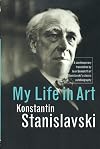
I thought that "My Life in Art" - especially my edition, which is the most current translation of the Russian version with wonderfully illuminating footnotes and addendum - was a fantastic read. Stanislavski's voice is so clear, and he absolutely draws you in with his conversational and friendly prose. I enjoyed hearing his struggles as a young actor, especially since they are things I am coming up against in my own acting, and how he worked as an "actor's director". This book was very show more eye-opening for me, and it really helped me to look at various theatrical standbys in a new light. show less
Lists
You May Also Like


Associated Authors
Statistics
- Works
- 59
- Also by
- 1
- Members
- 2,815
- Popularity
- #9,120
- Rating
- 3.9
- Reviews
- 20
- ISBNs
- 189
- Languages
- 17
- Favorited
- 3