
Penelope Arlon
Author of Fantastic Frogs (Scholastic Discover More Reader, Level 2)
About the Author
Series
Works by Penelope Arlon
Mighty Machines (LEGO Nonfiction): A LEGO Adventure in the Real World (4) (2017) — Author — 216 copies
Deep Dive (LEGO Nonfiction): A LEGO Adventure in the Real World (2016) — Author — 209 copies, 1 review
Planets (LEGO Nonfiction): A LEGO Adventure in the Real World (2016) — Author — 170 copies, 2 reviews
Bug Off! (LEGO Nonfiction): A LEGO Adventure in the Real World (2017) — Author — 133 copies, 1 review
Volcanoes and other Forces of Nature (LEGO Nonfiction): A LEGO Adventure in the Real World (2017) 111 copies
Big Book of Animals (LEGO Nonfiction): A LEGO Adventure in the Real World (2017) 89 copies, 3 reviews
Bucea 2 copies
Emergency Vehicles 1 copy
Penguins 1 copy
Auxilio 1 copy
See Me Grow - Frogs 1 copy
Djurlexikon : illustrerat lexikon för barn : [däggdjur, fåglar, kräldjur och groddjur, krälande kryp, fiskar] (2007) 1 copy
Rainforest (Discover More) 1 copy
Birds Discover More 1 copy
mira, mira l'aigua 1 copy
see my grow 1 copy
Associated Works
Tagged
Common Knowledge
- Gender
- female
- Occupations
- editor
children's book author - Organizations
- Dorling Kindersley Books
- Nationality
- United Kingdom
- Places of residence
- Berkshire, UK
- Associated Place (for map)
- Berkshire, UK
Members
Reviews
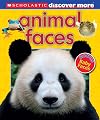
Most animals have many features in common with one another--eyes, noses, ears, mouths--so it's amazing that there are so many different-looking faces in the world! ANIMAL FACES is a completely original way to look at all the animal groups on Earth. By looking at some familiar animal faces--and some that are very rarely seen--young readers will learn about the main animal groups: hairy mammals, scaly reptiles, feathered birds, goggle-eyed amphibians, creepy bugs, and extraordinary fish! Why show more do birds have differently shaped beaks? Why do some spiders have eight eyes? How do some animals use their faces to scare off other animals? How well can an elephant smell? All these questions, and many more, are answered in a simple, fun way, accompanied by amazing photographs. show less
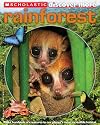
Even though most people don’t live close to a rainforest, these areas are important to the way everyone lives. This book explores rainforests by continent so that readers can compare the plants and animals of India, Africa, and South America. It details how people survive in these areas, how rainforest products are used in daily life, recently discovered species in these areas, and what will happen to the Earth if the rainforests are destroyed. Each page has multiple high-color photographs show more to help showcase what happens in these places. A glossary at the end can be used for vocabulary words that readers are unfamiliar with. It also includes a free digital book about monkeys so that interested readers can keep learning about this subject.
This is an encyclopedia-like book to help younger students get an introduction to the rainforest. The information is very basic and the text and images are large, making it a good resource for younger grades who are confident in reading but don’t need a lot of information. Because of its simple nature, older readers are likely to want more information and will not like the small amount of detail. Readers can get an overview of what happens in the rainforest, but because the information is so simple it is possible to read the whole book and still feel like not much knowledge has been gained. For younger readers, this book can be a great resource to learn about this interesting topic, but older readers might want to find a different resource in addition to or instead of this one. show less
This is an encyclopedia-like book to help younger students get an introduction to the rainforest. The information is very basic and the text and images are large, making it a good resource for younger grades who are confident in reading but don’t need a lot of information. Because of its simple nature, older readers are likely to want more information and will not like the small amount of detail. Readers can get an overview of what happens in the rainforest, but because the information is so simple it is possible to read the whole book and still feel like not much knowledge has been gained. For younger readers, this book can be a great resource to learn about this interesting topic, but older readers might want to find a different resource in addition to or instead of this one. show less
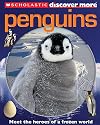
Let’s face it: penguins are hot these days. Even before their recent rise in popularity, penguins always were a favorite of mine: I used to tell my wife that I thought it was impossible to frown while looking at the silly creatures. With the success of movies like March of the Penguins and Happy Feet penguins might be a unique opportunity to get some children interested in nature.
This book uses a scrapbook approach to cover a depth of information on penguins. Each species is given its own show more spread, and species are compared in the beginning. The entire life cycle and their behavior are described in good detail, as are the natural history of the species. I think the information is rather accurate, though at times it seems simplified.
As a teacher, I like the idea of giving children a chance to pick a species and give a report on how that species lives, its environment and niche. I think that this book would be a great reference tool for an assignment such as this as it gives comprehensive account of all aspects of penguins’ life histories including human threats and predation. This book might be more accessible to younger audiences than larger reference book and is visually exciting. Just as an introduction to what we are talking about when we cover the idea of a niche (environment, predators, nesting habits, life cycle, prey, adaptations, etc) this book can be a useful introduction to many of the factors and terms scientists use. show less
This book uses a scrapbook approach to cover a depth of information on penguins. Each species is given its own show more spread, and species are compared in the beginning. The entire life cycle and their behavior are described in good detail, as are the natural history of the species. I think the information is rather accurate, though at times it seems simplified.
As a teacher, I like the idea of giving children a chance to pick a species and give a report on how that species lives, its environment and niche. I think that this book would be a great reference tool for an assignment such as this as it gives comprehensive account of all aspects of penguins’ life histories including human threats and predation. This book might be more accessible to younger audiences than larger reference book and is visually exciting. Just as an introduction to what we are talking about when we cover the idea of a niche (environment, predators, nesting habits, life cycle, prey, adaptations, etc) this book can be a useful introduction to many of the factors and terms scientists use. show less
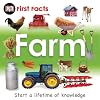
Just like the First Facts Seasons, I think this one is also great for kids! The structure of this book is awesome for young readers, with a central idea on each page, and fun facts or interesting tidbits scattered around the main text chunk. This book is filled with an assortment of photos that provide multiple versions of the same idea on each page to give a variety of perspectives as you learn the information. The big idea is to learn all about what a farm is and what you can find there!
Awards


You May Also Like


Associated Authors
Statistics
- Works
- 71
- Also by
- 10
- Members
- 6,201
- Popularity
- #3,958
- Rating
- 4.1
- Reviews
- 35
- ISBNs
- 230
- Languages
- 9