
Scott Nearing (1883–1983)
Author of The Good Life: Helen and Scott Nearing's Sixty Years of Self-Sufficient Living
About the Author
Image credit: Courtesy of the Special Collections Department, University of Iowa Libraries
Works by Scott Nearing
The Good Life: Helen and Scott Nearing's Sixty Years of Self-Sufficient Living (1992) 499 copies, 7 reviews
Living the Good Life: How to Live Sanely and Simply in a Troubled World (1954) 316 copies, 2 reviews
The New Education: Progressive Education One Hundred Years Ago Today (Classics in Progressive Education) (2007) 9 copies
The British general strike : an economic interpretation of its background and its significance (1927) 8 copies
The Debs decision 3 copies
Where is civilization going? 3 copies
The revolution of our time 2 copies
Europe in revolution 2 copies
Irrepressible America 2 copies
Education in soviet Russia 2 copies
Social adjustment 2 copies
The British General Strike, An Economic Interpretation of Its Background and Its Significance 1 copy
Economics for the Power Age 1 copy
Bolshevism and the West: A debate on the resolution "That the Soviet form of government is applicable to Western civilization" (1974) 1 copy
World events 1 copy
Fascism 1 copy
The Americanization of Labor. the Employers' Offensive Against the Trade Unions. with an Introd. by S. Nearing (2018) 1 copy
War or peace? 1 copy
From Capitalism to Communism 1 copy
Associated Works
Bars and Shadows: The Prison Poems of Ralph Chaplin (2004) — Introduction, some editions — 12 copies
Tagged
Common Knowledge
- Birthdate
- 1883-08-06
- Date of death
- 1983-08-24
- Gender
- male
- Education
- University of Pennsylvania (PhD|Economics|1909)
- Occupations
- writer
teacher
economist
political activist
foreign policy analyst - Organizations
- Pennsylvania Child Labor Committee
Swarthmore College
University of Pennsylvania
American Union Against Militarism
Toledo University
People's Council of America for Democracy and Peace (show all 10)
Socialist Party of America
Rand School of Social Science
Workers Party of America
Federated Press - Relationships
- Nearing, Helen (spouse)
Scott, John (son) - Nationality
- USA
- Birthplace
- Morris Run, Pennsylvania, USA
- Places of residence
- Morris Run, Pennsylvania, USA
Toledo, Ohio, USA
Arden, Delaware, USA
New York, New York, USA
Winhall, Vermont, USA - Associated Place (for map)
- USA
Members
Reviews
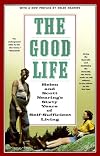
Helen and Scott Nearing, pacifist, teetotaling, nonsmoking, caffeine-free, collectivist, and vegetarian, moved from New York City to Vermont's Green Mountains in 1932, already middle-aged, to homestead. These books cover their trials, accomplishments, and philosophies (read: politics) on that first plot and their second homestead in Maine. These books inspired more than a few of the 1970s back-to-the-landers, as I learned from Back From the Land. However, I also learned from that book that show more Helen and Scott were not quite so financially independent as their books lead one to believe. Their day's division into four hours “bread labor” and four hours leisure (not to mention their purchase of somewhere in the neighborhood of 300 acres of land) was made possible not just by thrift and maple syrup profits, but also by a trust fund that doesn't get a mention in The Good Life.
Nonetheless, you have to admire their achievements. They hand-built a dozen stone buildings in Vermont and another nine in Maine largely by themselves, raised 85% of their food, wrote several books each, obtained all their heating fuel from their land, went on speaking tours, and entertained sometimes a dozen visitors a day in the height of their popularity in the seventies. They mentored Eliot Coleman and sold him the land on which he now works and lives. show less
Nonetheless, you have to admire their achievements. They hand-built a dozen stone buildings in Vermont and another nine in Maine largely by themselves, raised 85% of their food, wrote several books each, obtained all their heating fuel from their land, went on speaking tours, and entertained sometimes a dozen visitors a day in the height of their popularity in the seventies. They mentored Eliot Coleman and sold him the land on which he now works and lives. show less

I read Living The Good Life a few years ago. It is a practical book by Helen and Scott Nearing on living simply. They describe how they built their stone home and how they fed themselves off the land. The first edition was in 1954, long before the idea of going back-to-the-land was trendy in the sixties, and before it began to seem necessary in the oil crisis of the seventies. Scott Nearing was previously an economics professor who was blacklisted for his socialist views. The couple show more undertook a simple lifestyle so they could continue promoting their progressive politics.
Three ideas from the book really stuck with me.
One, the idea of bread labour. The Nearings worked only four hours a day to feed themselves, and spent the other hours in activist and creative pursuits; the simple life does not have to be long days of physical labour.
Two, the mono-diet. The Nearings lived on a diet of simple staples with little variance. At first this struck me as awful — does simple have to mean boring? On reflection, it made much more sense. Our culture demands that our food be new and different daily, and we ignore the cost of dragging foods across the planet so we can have whatever we want whenever we want. This demand is more about a craving of ego than of physical appetite. Indigenous eating reconnects us with our local foods and local economy. Variety is nice, but we may appreciate more subtle nuances when we pay closer attention to our food at hand.
Three, Sunday morning music. Helen was an accomplished musician. Scott asked her why she played the music of others instead of making her own. The music industry of our day is designed for the reproduction and distribution of other people’s music. Music has to have mass appeal, and musicians have to dedicate careers to the production of material. Why not just play music for one another for entertainment? Or read to one another? Do people do this anymore?
http://johnmiedema.ca/2008/09/02/living-the-good-life-by-helen-and-scott-nearing... show less
Three ideas from the book really stuck with me.
One, the idea of bread labour. The Nearings worked only four hours a day to feed themselves, and spent the other hours in activist and creative pursuits; the simple life does not have to be long days of physical labour.
Two, the mono-diet. The Nearings lived on a diet of simple staples with little variance. At first this struck me as awful — does simple have to mean boring? On reflection, it made much more sense. Our culture demands that our food be new and different daily, and we ignore the cost of dragging foods across the planet so we can have whatever we want whenever we want. This demand is more about a craving of ego than of physical appetite. Indigenous eating reconnects us with our local foods and local economy. Variety is nice, but we may appreciate more subtle nuances when we pay closer attention to our food at hand.
Three, Sunday morning music. Helen was an accomplished musician. Scott asked her why she played the music of others instead of making her own. The music industry of our day is designed for the reproduction and distribution of other people’s music. Music has to have mass appeal, and musicians have to dedicate careers to the production of material. Why not just play music for one another for entertainment? Or read to one another? Do people do this anymore?
http://johnmiedema.ca/2008/09/02/living-the-good-life-by-helen-and-scott-nearing... show less
A couple of the first back-to-the-landers write about their experience with the rustic life, moving from New York City to Vermont in the 1930s (and eventually to Maine). They had their principles and tried to live according to them. Among them was a belief in a balanced life. Thus, they only worked about 4 hours a day at homesteading, and spent the rest of their time engaged in other pursuits or relaxation. The book gives you a good sense of New England homesteading, though they hide some of show more their advantages (I believe Helen Nearing inherited a sizable fortune which made their lifestyle a lot more possible). show less
While the Nearings can get a little preachy about their lifestyle at times, it really didn't detract from enjoyment of "The Good Life: Helen and Scott Nearing's Sixty Years of Self-Sufficient Living." The book basically tells the story of how they started their eco-friendly farms -- first one in Vermont and when that area became too populated, the moved onto Maine. I found the book inspiring enough that I wish I had enough land to start my own rural homestead following their practical advice.
Lists
You May Also Like


Associated Authors
Statistics
- Works
- 77
- Also by
- 3
- Members
- 1,446
- Popularity
- #17,773
- Rating
- 4.0
- Reviews
- 10
- ISBNs
- 79
- Languages
- 3
- Favorited
- 1