
Roy A. Gallant
Author of National Geographic Picture Atlas of Our Universe
About the Author
Series
Works by Roy A. Gallant
Discovering Rocks and Minerals: A Nature and Science Guide to Their Collection and Identification (1967) 12 copies, 1 review
The ABCs of Chemistry 4 copies
The ABC's of astronomy: An illustrated dictionary (Doubleday books for young adults) (1962) 2 copies
GINN Science Program 1 copy
היקום 1 copy
Antarctica 1 copy
Associated Works
Tagged
Common Knowledge
- Legal name
- Gallant, Roy Arthur
- Birthdate
- 1924-04-17
- Gender
- male
- Nationality
- USA
- Birthplace
- Portland, Maine, USA
- Associated Place (for map)
- Maine, USA
Members
Reviews

1.I would recommend this book for middle elementary school students.
2.This book explains each planet in our galaxy as well as the sun and the stars as well. It does a great job of explaining what each planet would be like if we lived on it. As well as what stars are and how they die.
3.I would love to have this book in my classroom. The only iffy thing is that this book was published in 1986. So the data might be a little outdated.
2.This book explains each planet in our galaxy as well as the sun and the stars as well. It does a great job of explaining what each planet would be like if we lived on it. As well as what stars are and how they die.
3.I would love to have this book in my classroom. The only iffy thing is that this book was published in 1986. So the data might be a little outdated.

I know so many people from my generation (Gen-X) who had this book and LOVED it growing up. The information may be old (depending on the edition) but the art is still incredible.
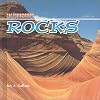
This was the best book for my 4 year old in our rock unit. It did a great job of explaining crystal formation in igneous rocks. We also really enjoyed the illustration that explained the rock cycle beautifully.
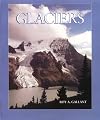
The glaciers book i actually liked it. It told us about how the ice over winter can go deeper and deeper. You may even hear the ice groaning,creaking,or ringing from the ice. When the first snow falls it lands on the ice and adds to it. The North and South pole have snow all year. In the northernmost regions of Canada,Alaska,Europe,Greenland,and Russia. The biggest glaciers are in South and North pole. I also read about what a glacier is. 95% of earth's ice is in Greenland and Antarctica. show more There's 2 kinds of glacier one is Ice sheets and ice sheets are an enormous, thick mounds of ice that covers large areas of land. Glaciers also move around the bottom of the glacier usually goes faster and the top moves slower. To see how the glacier moves the glaciologist put poles in the ground to feel the movement. One of the biggest glaciers was 60 miles wide and 208 miles long. You can actually tell the age of the ice by ice cores.
I thought the book deserves a 4 star. I liked this book because i actually learned a lot. The people that like to learn and read will like it. It was fun to read. So if you look for a educational book about glaciers this is it. So try and read it. I'll Bet you'll like it. show less
I thought the book deserves a 4 star. I liked this book because i actually learned a lot. The people that like to learn and read will like it. It was fun to read. So if you look for a educational book about glaciers this is it. So try and read it. I'll Bet you'll like it. show less
Awards


You May Also Like


Associated Authors
Statistics
- Works
- 84
- Also by
- 1
- Members
- 1,544
- Popularity
- #16,680
- Rating
- 4.0
- Reviews
- 15
- ISBNs
- 108
- Languages
- 1
- Favorited
- 1