
About the Author
Works by Robert Kegan
Immunity to Change: How to Overcome It and Unlock Potential in Yourself and Your Organization (2009) 408 copies, 4 reviews
How the Way We Talk Can Change the Way We Work: Seven Languages for Transformation (2000) 399 copies, 1 review
An Everyone Culture: Becoming a Deliberately Developmental Organization (2016) 203 copies, 2 reviews
Tagged
Common Knowledge
- Birthdate
- 1946-08-24
- Gender
- male
- Education
- Harvard University (PhD|1977)
Dartmouth College (AB summa cum laude|1968) - Occupations
- psychologist
university professor - Awards and honors
- National University Continuing Education Association. National Recognition Award (1987)
Massachusetts Psychological Association. Teacher of the Year (1992)
Educational Press Association of America. Distinguished Achievement Award (1996)
Association for Continuing Higher Education. National Leadership Award (1999) - Nationality
- USA
- Birthplace
- Minnesota, USA
- Places of residence
- Cambridge, Massachusetts, USA
Hanover, New Hampshire, USA
Minnesota, USA - Associated Place (for map)
- USA
Members
Reviews
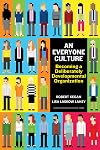
I work with a career development team for researchers at an academic medical center. Developing researchers’ careers is our central role in the enterprise. We do not have a formal structure that this book describes, but an informal culture of synergy and growth is a huge part of what we cultivate. Because of a constantly evolving world, career and professional development can provide an edge for organizations. A culture of growth attracts and retains top talent while fueling, year after show more year, a company’s ascent. The key step is for leaders to learn to nurture growth instead of merely demanding results.
Obviously, it didn’t take much to sell me that I could benefit from this book, and I did. In particular, I learned more about the psychology of an individual’s career growth. The authors hail from the field of adult development where growth starts from one person within. As the authors acknowledge, however, this book lacks showing in detail how workers can develop from the outside in. After finishing, I remain relatively ignorant of how outside practices transform themselves into productive thinking.
The subtitle and title of this book should be switched. The book is primarily about a “deliberately developmental organization” or DDO. It’s based off an in-depth study of three American companies in different industries. Each organization promotes human development in unique ways that have evolved from solving its own peculiar problems, but they unite around promoting a culture with growth mindsets among employees. An “everyone culture,” an element of DDOs, means requiring buy-in from every employee to push the company towards excellence. Using this concept in the title makes it seem as though the book is about inclusivity; that is not the primary topic, only a component.
This book appeals primarily to organizational leaders. The higher up the organization one is, the more relevant this book becomes to your work. It doesn’t propose a fixed framework but instead proposes a new mindset, especially for those with power. Further research and thought needs to occur about the structures that best promote growth. We live in a changing world where knowledge workers must grow continually at work. Agreeing with the authors, I suggest workplaces that promote professional (and even personal) growth deliberately will continue to rise in coming years. show less
Obviously, it didn’t take much to sell me that I could benefit from this book, and I did. In particular, I learned more about the psychology of an individual’s career growth. The authors hail from the field of adult development where growth starts from one person within. As the authors acknowledge, however, this book lacks showing in detail how workers can develop from the outside in. After finishing, I remain relatively ignorant of how outside practices transform themselves into productive thinking.
The subtitle and title of this book should be switched. The book is primarily about a “deliberately developmental organization” or DDO. It’s based off an in-depth study of three American companies in different industries. Each organization promotes human development in unique ways that have evolved from solving its own peculiar problems, but they unite around promoting a culture with growth mindsets among employees. An “everyone culture,” an element of DDOs, means requiring buy-in from every employee to push the company towards excellence. Using this concept in the title makes it seem as though the book is about inclusivity; that is not the primary topic, only a component.
This book appeals primarily to organizational leaders. The higher up the organization one is, the more relevant this book becomes to your work. It doesn’t propose a fixed framework but instead proposes a new mindset, especially for those with power. Further research and thought needs to occur about the structures that best promote growth. We live in a changing world where knowledge workers must grow continually at work. Agreeing with the authors, I suggest workplaces that promote professional (and even personal) growth deliberately will continue to rise in coming years. show less
Immunity to Change: How to Overcome It and Unlock the Potential in Yourself and Your Organization (Leadership for the Common Good) by Robert Kegan
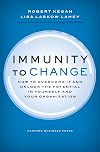
Having just read In Over Our Heads, which was written by one of the two authors for this book, I was expecting another too long and overly theoretical tome. Instead, this one resonated as valuable, practical and worthy of deeper study. I just bought a copy of my own to be able to have time to use the exercises and return to them as needed. Immunity to Change is all about finding the hidden obstacles that keep us from making the changes we know we should make. If course to do that, we also show more have o figure out what those changes are, being selective enough to have just one focus at a time. The harder work is on the other side of the process: figuring out what ingrained assumptions cause thinking that competes or blocks our change process. The book's case studies seemed unnecessarily long to me, but the whole book is written plainly enough that one can get through those sections. The more valuable part is the actual change process. The authors give a simple framework and clear steps for revealing a practical process for breaking through any type of personal change. The concepts can also apply to groups, with some modification to get the collective aligned. This book is a worthy read for anyone motivated toward personal growth or to develop an organization or team. show less
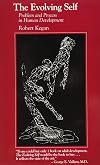
I'm very conflicted about this book. in the abstract, it's a fascinating study of human cognitive evolution as a continuous function -- though of its accuracy I'm not entirely convinced. In hindsight, it appears to explain a huge number of phenomena from my past relationships which at the time I considered almost inherently mystifying -- however, the strength of a theory is not how well it fits the past, but how well it predicts the future.
Unfortunately, Kegan seems almost enamored with show more Freud, and attempts to fit as many of his own models to agree with Freud's. Kegan's lack of skepticism in this regard strikes me as ominous; I can only wonder how much skepticism he has applied to his own models. While this not an explicit reason to disbelieve Kegan's theory of cognitive development, it is certainly sets off loud alarms. Most of the book's arguments come anecdotally, with a startlingly small sample size -- the majority of the book focuses on only three individuals, though Kegan says the theory itself is derived from "interviews with over 40 patients". Perhaps most damningly, the book relies *far* too heavily on large, incomprehensible tables spanning multiple pages with no visible signs of organization.
Though he does not formalize it as such, Kegan's theory seems to implicitly model human cognitive as a continuous oscillatory function, mapping from time to an axis of ego-differentiation/integration. Kegan states that these are opposite sides of the same coin, and strongly suggests that the ideal balance is the equilibrium between the two. The book offers some actionable advice on how to inspire transition between the cognitive stages, and how to notice the transition when it occurs. Furthermore, it suggests the reason that we are sometimes completely unable to see others' arguments is that they are aimed at a level we are not able to comprehend, let alone appreciate.
The final section of the book consists of advice for psychologists; it is entirely skippable for those of use who are not professional psychologists, and, though I am not an expert in the field, I would suspect it is indeed skipple for everyone entirely.
In conclusion: if you're interested in this book, read the Wikipedia page instead. You'll save yourself a lot of time and headache. show less
Unfortunately, Kegan seems almost enamored with show more Freud, and attempts to fit as many of his own models to agree with Freud's. Kegan's lack of skepticism in this regard strikes me as ominous; I can only wonder how much skepticism he has applied to his own models. While this not an explicit reason to disbelieve Kegan's theory of cognitive development, it is certainly sets off loud alarms. Most of the book's arguments come anecdotally, with a startlingly small sample size -- the majority of the book focuses on only three individuals, though Kegan says the theory itself is derived from "interviews with over 40 patients". Perhaps most damningly, the book relies *far* too heavily on large, incomprehensible tables spanning multiple pages with no visible signs of organization.
Though he does not formalize it as such, Kegan's theory seems to implicitly model human cognitive as a continuous oscillatory function, mapping from time to an axis of ego-differentiation/integration. Kegan states that these are opposite sides of the same coin, and strongly suggests that the ideal balance is the equilibrium between the two. The book offers some actionable advice on how to inspire transition between the cognitive stages, and how to notice the transition when it occurs. Furthermore, it suggests the reason that we are sometimes completely unable to see others' arguments is that they are aimed at a level we are not able to comprehend, let alone appreciate.
The final section of the book consists of advice for psychologists; it is entirely skippable for those of use who are not professional psychologists, and, though I am not an expert in the field, I would suspect it is indeed skipple for everyone entirely.
In conclusion: if you're interested in this book, read the Wikipedia page instead. You'll save yourself a lot of time and headache. show less
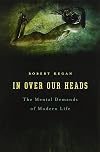
I picked this book up after a psychologist said it was an incredible read, one that made her do a lot of thinking. She was right; Kegan presents some ideas that I’ve not encountered elsewhere. He proposed that there are stages of human development; this isn’t new, but his idea of what these stages are is new.
His five stages start with very young children in the first order; older children (about 7 to 10 years old) in the second; the third order is teenagers and the majority of adults show more (most never get past this stage); some adults make it to the fourth order, in which people are capable of analyzing situations and making their own decisions and are self-motivated; and the fifth order is one that almost no one makes it too and if they do, it’s as older adults. This post modern stage sees the big picture; they see the world in shades of gray and find the similarities in different systems.
Some parts of this seem obvious; we already know that babies don’t understand that things happen to things and people when the baby is not looking at them (First order); that children are pretty much in the ‘all for me’ stage (Second order); that by the time we’re in our later teens or early adulthood we (hopefully but not necessarily) understand and take into consideration other peoples (and other groups) feelings. That stage 3 people don’t create their own theories or philosophies isn’t so obvious. Most of their actions would seem to show them as fully mature adults, but he’s right: most of the people I know don’t create their own world view but adapt themselves to the philosophies of others. The 5th stage I haven’t really managed to understand; obviously, I’m not nearly there and I’m not sure I know of anyone who is. Is the 5th stage based on examples, or is it something that Kegan hopes people will eventually evolve to? Who would be considered 5th stage? The Dalai lama?
The book is dense and I found it slow going. I’m generally a fast reader but it took me nearly two weeks to finish this book. Admittedly, it’s written for graduate students and I have no degree whatsoever, but I suspect that no one would find it an easy read. It is, however, very interesting and has given me some new ways to look at people. show less
His five stages start with very young children in the first order; older children (about 7 to 10 years old) in the second; the third order is teenagers and the majority of adults show more (most never get past this stage); some adults make it to the fourth order, in which people are capable of analyzing situations and making their own decisions and are self-motivated; and the fifth order is one that almost no one makes it too and if they do, it’s as older adults. This post modern stage sees the big picture; they see the world in shades of gray and find the similarities in different systems.
Some parts of this seem obvious; we already know that babies don’t understand that things happen to things and people when the baby is not looking at them (First order); that children are pretty much in the ‘all for me’ stage (Second order); that by the time we’re in our later teens or early adulthood we (hopefully but not necessarily) understand and take into consideration other peoples (and other groups) feelings. That stage 3 people don’t create their own theories or philosophies isn’t so obvious. Most of their actions would seem to show them as fully mature adults, but he’s right: most of the people I know don’t create their own world view but adapt themselves to the philosophies of others. The 5th stage I haven’t really managed to understand; obviously, I’m not nearly there and I’m not sure I know of anyone who is. Is the 5th stage based on examples, or is it something that Kegan hopes people will eventually evolve to? Who would be considered 5th stage? The Dalai lama?
The book is dense and I found it slow going. I’m generally a fast reader but it took me nearly two weeks to finish this book. Admittedly, it’s written for graduate students and I have no degree whatsoever, but I suspect that no one would find it an easy read. It is, however, very interesting and has given me some new ways to look at people. show less
Awards

You May Also Like


Associated Authors
Statistics
- Works
- 9
- Members
- 1,696
- Popularity
- #15,137
- Rating
- 4.2
- Reviews
- 12
- ISBNs
- 26
- Languages
- 3