
Hugo Martinez
Author of Wake: The Hidden History of Women-Led Slave Revolts
About the Author
Works by Hugo Martinez
Tagged
Common Knowledge
- Birthdate
- late 1900s
- Gender
- male
- Nationality
- USA
- Birthplace
- California, USA
- Places of residence
- New Orleans, Louisiana, USA
- Associated Place (for map)
- USA
Members
Reviews
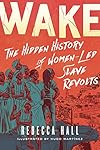
Rebecca Hall creates a vibrant and fascinating mix of memoir, history, historiography, and historical fiction as she explores the present day for clues to women-led slave revolts in the 18th century, worrying tidbits out of dusty archives protected by uncooperative white men, and -- like a paleontologist imagining an entire dinosaur from a few small bones -- conjecturing why and how the revolts might have actually happened, bringing to life women whose very names have been lost to show more history.
The art is a little rougher than I prefer, but the story is masterfully polished and I could not bring myself to stop reading until I had finished. show less
The art is a little rougher than I prefer, but the story is masterfully polished and I could not bring myself to stop reading until I had finished. show less
A vividly illustrated account of Black women rebels that combines elements of memoir, archival research, and informed imaginings of its subjects' lives.
A former tenants rights lawyer, Hall pursued a doctorate in history to uncover America's warped justice system. "In order to understand our experiences as Black women today,” she writes, “I had to study slavery.” This collaboration with illustrator Martínez focuses on two women-led revolts in New York City and uprisings during the show more trans-Atlantic slave trade. Of a 1712 revolt, Hall finds in court records the first names of four women involved and sentenced to execution; none are quoted in transcripts. "This is one way history erases us….You think you are reading an accurate chronicle written at the time, but if who we are and what we care about are deemed irrelevant, it won't be in there,” writes Hall. The author also examines a 1708 revolt led by a woman referred to in documents as the “Negro Fiend”; she was burned at the stake. The granddaughter of slaves, the author seeks to honor her ancestors by filling in the silent record. Facing difficulty accessing records and digesting their information, Hall called upon her deceased grandmother for strength. In London, Hall delved into archives of the trans-Atlantic slave trade, reading hundreds of slave-ship logs. Revolts at sea were largely a suicide mission fueled by slaves' desire to "take their captors with them to the bottom of the ocean." Research shows that the more women onboard a slave ship, the more likely a revolt. Hall believes that this was because women were mostly kept unchained and on deck, where it was easier for crew members to rape them; this also gave them access to weapons. The black-and-white illustrations nicely complement the text and elevate the artfulness and the power of the book, which begins and ends with scenes depicting women-led revolts aboard a ship Hall calls the Unity.
An urgent, brilliant work of historical excavation. show less
A former tenants rights lawyer, Hall pursued a doctorate in history to uncover America's warped justice system. "In order to understand our experiences as Black women today,” she writes, “I had to study slavery.” This collaboration with illustrator Martínez focuses on two women-led revolts in New York City and uprisings during the show more trans-Atlantic slave trade. Of a 1712 revolt, Hall finds in court records the first names of four women involved and sentenced to execution; none are quoted in transcripts. "This is one way history erases us….You think you are reading an accurate chronicle written at the time, but if who we are and what we care about are deemed irrelevant, it won't be in there,” writes Hall. The author also examines a 1708 revolt led by a woman referred to in documents as the “Negro Fiend”; she was burned at the stake. The granddaughter of slaves, the author seeks to honor her ancestors by filling in the silent record. Facing difficulty accessing records and digesting their information, Hall called upon her deceased grandmother for strength. In London, Hall delved into archives of the trans-Atlantic slave trade, reading hundreds of slave-ship logs. Revolts at sea were largely a suicide mission fueled by slaves' desire to "take their captors with them to the bottom of the ocean." Research shows that the more women onboard a slave ship, the more likely a revolt. Hall believes that this was because women were mostly kept unchained and on deck, where it was easier for crew members to rape them; this also gave them access to weapons. The black-and-white illustrations nicely complement the text and elevate the artfulness and the power of the book, which begins and ends with scenes depicting women-led revolts aboard a ship Hall calls the Unity.
An urgent, brilliant work of historical excavation. show less
I went in expecting a history book. But this is actually more about the author's drive to find the stories of slave women just as much as it is about the revolts. We get to see how various modern social systems treat her in this search and how she processes everything she learns, coming to terms with some really dark truths without letting them overpower her. So so good. I loved the art because it reminded me of the underground indie style that I grew up on: rebellious and unique, not show more sterilized like you get with, say, the DC house style. Also, the layouts are really creative and the artist does a fantastic job with detailing the scenes. show less
(Full disclosure: I received a free e-ARc for review through NetGalley/Edelweiss. Trigger warning for racist and misogynist violence, including rape.)
Dr. Rebecca Hall's first career was as a lawyer: educated at Berkeley, Hall served as a tenant's rights lawyer for eight years. The avalanche of racism and sexism she faced eventually led Hall down a different path: "to get at the root of what was warping the world." She decided to go back to school to pursue a doctorate in history, with a show more focus on "the history of race and gender in America." Her dissertation, which would culminate in this graphic novel some twenty years later, centered on women who led slave revolts.
https://www.flickr.com/photos/smiteme/50926953782/in/dateposted-public/
Unsurprisingly, her battle was an uphill one, since these women have largely been erased from history. For example, four women were involved in a 1712 slave revolt in New York City; while their names - Sarah, Abigail, Lily, Amba - made it into the public record, their testimony did not, save for this cryptic entry: "Having nothing to say for herself than that she had previously said..." Coverage of a 1708 uprising, also in NYC, which ultimately "resulted in the statutory framework that shaped slave control, and was a crucial linchpin in turning New York from a society with slaves into a slave society," referred only to the leaders as "Indian Sam" and "the Negro Wench" or "the Negro Fiend."
Other times, the keepers and owners of the records threw up their own roadblocks: upon requesting records pertaining to the slave trade at the British parliamentary archives, Hall was told that no such records exist (!). Lloyd's of London, which got its start insuring slave ships, outright refused her access (at least in part due to fears of well-deserved litigation).
Given these challenges, WAKE: THE HIDDEN HISTORY OF WOMEN-LED SLAVE REVOLTS is equally a story of Black women's resistance against the brutality and inhumanity of slavery - and a look at the heartbreaking and often tedious work of historians, especially those excavating atrocities that so many would rather bury, ignore, and outright deny. Hall's story is further informed and inspired by her own familial history: her paternal grandmother Harriet Thorpe was born into the shackles of slavery, but died a free woman.
https://www.flickr.com/photos/smiteme/50926144178/in/dateposted-public/
WAKE is both harrowing and illuminating, hard to read and yet impossible to put down. Though precious little is known about women-led slave revolts, through "a measured use of historical imagination," Hall imagines who these women were, who took up arms and resisted their captors, both on ships during the Middle Passage, and in the Americas. She also interrogates the toxic milieu of racism and misogyny that kept them in chains - and then disappeared them from history.
WAKE would make an excellent addition to high school history classrooms. In just three pages (see: 134-136), Hall taught me more about the nuances of the Atlantic slave trade than I learned in four years of high school. Likewise, the only slave revolt I can remember from AP History was the raid on Harper's Ferry (cynically, I can't help but wonder if it's because it had as its face a white man); never could I have ever dreamed of learning about revolts led by women. Her entries on the burning of women for treason as well as the increased likelihood of slave revolts on ships carrying more women (surprise!) are simply amazing and make me want to know more.
Seriously, can this become a miniseries on Netflix or something?
Hall's exhaustive research and passionate storytelling is complemented nicely by Hugo Martínez's illustrations. Part of me wished for color, to further pull the story into the present, but the art is captivating just the same. show less
Dr. Rebecca Hall's first career was as a lawyer: educated at Berkeley, Hall served as a tenant's rights lawyer for eight years. The avalanche of racism and sexism she faced eventually led Hall down a different path: "to get at the root of what was warping the world." She decided to go back to school to pursue a doctorate in history, with a show more focus on "the history of race and gender in America." Her dissertation, which would culminate in this graphic novel some twenty years later, centered on women who led slave revolts.
https://www.flickr.com/photos/smiteme/50926953782/in/dateposted-public/
Unsurprisingly, her battle was an uphill one, since these women have largely been erased from history. For example, four women were involved in a 1712 slave revolt in New York City; while their names - Sarah, Abigail, Lily, Amba - made it into the public record, their testimony did not, save for this cryptic entry: "Having nothing to say for herself than that she had previously said..." Coverage of a 1708 uprising, also in NYC, which ultimately "resulted in the statutory framework that shaped slave control, and was a crucial linchpin in turning New York from a society with slaves into a slave society," referred only to the leaders as "Indian Sam" and "the Negro Wench" or "the Negro Fiend."
Other times, the keepers and owners of the records threw up their own roadblocks: upon requesting records pertaining to the slave trade at the British parliamentary archives, Hall was told that no such records exist (!). Lloyd's of London, which got its start insuring slave ships, outright refused her access (at least in part due to fears of well-deserved litigation).
Given these challenges, WAKE: THE HIDDEN HISTORY OF WOMEN-LED SLAVE REVOLTS is equally a story of Black women's resistance against the brutality and inhumanity of slavery - and a look at the heartbreaking and often tedious work of historians, especially those excavating atrocities that so many would rather bury, ignore, and outright deny. Hall's story is further informed and inspired by her own familial history: her paternal grandmother Harriet Thorpe was born into the shackles of slavery, but died a free woman.
https://www.flickr.com/photos/smiteme/50926144178/in/dateposted-public/
WAKE is both harrowing and illuminating, hard to read and yet impossible to put down. Though precious little is known about women-led slave revolts, through "a measured use of historical imagination," Hall imagines who these women were, who took up arms and resisted their captors, both on ships during the Middle Passage, and in the Americas. She also interrogates the toxic milieu of racism and misogyny that kept them in chains - and then disappeared them from history.
WAKE would make an excellent addition to high school history classrooms. In just three pages (see: 134-136), Hall taught me more about the nuances of the Atlantic slave trade than I learned in four years of high school. Likewise, the only slave revolt I can remember from AP History was the raid on Harper's Ferry (cynically, I can't help but wonder if it's because it had as its face a white man); never could I have ever dreamed of learning about revolts led by women. Her entries on the burning of women for treason as well as the increased likelihood of slave revolts on ships carrying more women (surprise!) are simply amazing and make me want to know more.
Seriously, can this become a miniseries on Netflix or something?
Hall's exhaustive research and passionate storytelling is complemented nicely by Hugo Martínez's illustrations. Part of me wished for color, to further pull the story into the present, but the art is captivating just the same. show less
Lists
Awards


You May Also Like


Associated Authors
Statistics
- Works
- 5
- Members
- 520
- Popularity
- #47,759
- Rating
- 4.2
- Reviews
- 22
- ISBNs
- 13
- Languages
- 3