

Carlo McCormick
Author of Trespass: A History Of Uncommissioned Urban Art
About the Author
Works by Carlo McCormick
Pop Surrealism: The Rise Of Underground Art (2004) — Contributor, some editions; Contributor — 127 copies, 2 reviews
Keith Haring, Muna Tseng, and Tseng Kwong Chi: Boundless Minds & Moving Bodies in 80’s New York (2022) 8 copies, 1 review
Mark Dean Veca: 20 Years 1 copy
Associated Works
The Rolling Stone Book of the Beats: The Beat Generation and American Culture (1999) — Contributor — 181 copies, 2 reviews
Gauntlet: Exploring the Limits of Free Expression, No. 3 - Politically [In]Correct Issue (1992) — Contributor — 16 copies
Tagged
Common Knowledge
- Gender
- male
Members
Reviews
Keith Haring, Muna Tseng, and Tseng Kwong Chi - Boundless Minds & Moving Bodies in 80’s New York by Carlo McCormick
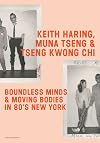
A Unique and colorful prism of the three friends Keith Haring, Muna Tseng and Tseng Kwong Chi in early 1980’s New York
Boundless Minds & Moving Bodies presents an intimate visual journey through the early collaborations between Keith Haring, Muna Tseng and Tseng Kwong Chi. It offers a unique and colourful prism of the three friends in their orbits,expressing themselves through different disciplinary languages: drawing, dance and photography. Their work and interactions reveal a shared show more performative energy of the joys of experimenting, openness, exchange and social engagement. Together and independently, they were immersed in and contributors to the bustling and vibrant cultural downtown scene.
This book features the 1982 collaboration by Keith Haring to create the set for choreographer Muna Tseng drawing a visuals score for her performance piece Epochal Songs. Muna’s brother, conceptual photographer Tseng Kwong Chi, was a close friend and collaborator with Keith. Tseng’s photographs of Haring’s work in the subways, on the streets and during public performances continue to make them accessible to a audiences across the globe. Next to the work of Keith and Muna, the publication introduces Tseng Kwong Chi’s own body of seminal work: the famous self-portrait series, East Meets West, while visiting many iconic tourist sites across the world during his travels together with Haring. show less
Boundless Minds & Moving Bodies presents an intimate visual journey through the early collaborations between Keith Haring, Muna Tseng and Tseng Kwong Chi. It offers a unique and colourful prism of the three friends in their orbits,expressing themselves through different disciplinary languages: drawing, dance and photography. Their work and interactions reveal a shared show more performative energy of the joys of experimenting, openness, exchange and social engagement. Together and independently, they were immersed in and contributors to the bustling and vibrant cultural downtown scene.
This book features the 1982 collaboration by Keith Haring to create the set for choreographer Muna Tseng drawing a visuals score for her performance piece Epochal Songs. Muna’s brother, conceptual photographer Tseng Kwong Chi, was a close friend and collaborator with Keith. Tseng’s photographs of Haring’s work in the subways, on the streets and during public performances continue to make them accessible to a audiences across the globe. Next to the work of Keith and Muna, the publication introduces Tseng Kwong Chi’s own body of seminal work: the famous self-portrait series, East Meets West, while visiting many iconic tourist sites across the world during his travels together with Haring. show less
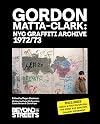
'BEYOND THE STREETS Publishing is pleased to release Gordon Matta Clark: NYC Graffiti Archive 1972/73; an unprecedented glimpse into the raw, untamed world of New York City's graffiti scene during the pivotal years of 1972 and 1973. Curated from the late Gordon Matta-Clark's photographic archives, the book presents over 500 photos never-before-seen photographs and essays on UGA: the first NYC graffiti gallery movement.'
Equal parts historian and disruptor Roger Gastman is a curator, urban show more anthropologist, collector and filmmaker. He has dedicated his life to educating, entertaining and solidifying the cultural importance of graffiti as a significant contemporary art form. Gastman served as a producer of the 2010 Academy Award-nominated film Exit Through the Gift Shop, and the co-curator of the first and largest graffiti exhibition, Art in the Streets, held in 2011 at the MoCA in Los Angeles. He has published magazines and produced over 80 books. He is the founder of BEYOND THE STREETS, the premiere exhibition of graffiti, street art and beyond. Rolling Like Thunder, his latest documentary which highlights the Freight Train Graffiti movement, is currently airing on Showtime.
In the summer of 1972, a 29-year old Gordon Matta-Clark began to photograph NYC's exploding graffiti movement. There are many significant things to consider here. One, this pre-dates the style we would begin to recognize as "graffiti" as documented in later books like Subway Art. This is an innocent time, an origin story, and Matta-Clark was capturing it with the sense innocence but acute interest. Matta-Clark himself was approaching architecture and urban space as the canvas for his own significant body of work. He is known now, famous for, his site-specific works, claiming unused or forgotten space, and transforming into something different. He was socially engaged, a rebel, an activist. Space and how to use and who uses it was important. And maybe that is why Gordon Matta-Clark turned his attention to documenting graffiti and the way the wall writers were using and claiming space, because that was so vital to his own practice. For such a renowned artist to explore graffiti in its infancy, was quite extraordinary.
On view at BEYOND THE STREETS and their CONTROL Gallery from March 1—April 13, 2024, Graffiti Archive 72/73 is a curated selection from Gordon Matta-Clark's archives that showcases over 200 photographs, many of which have never been revealed to the public until now. As Carlo McCormick wrote in a new 408-page hardbound Gordon Matta-Clark book featuring 550+ images, including photos from the exhibition, published by BTS, "Existing as a time capsule and comprehensive record of emergent styles and important writers in the golden age of New York City graffiti, the very fact that this collection was created by one of the most influential artists of the city in effect ratified graffiti at a time when it was belittled and even vilified."
In a way, this show is about graffiti, but perhaps more so the curiosity and interest of how the urban landscape forms in the eye and work of Matta-Clark. As vital as these photos are to the history of graffiti and its incredible explosion as an art form the world over just a few years after these were taken, this is also at the heartbeat of what Matta-Clark's life work was. This is about taking space, using space, owning space, rebelling against a system but also reclaiming a system. This show reminds us of the roots of graffiti, why it remains an important voice of youth and rebellion but also why taking space is so vital to the infrastructure of the people's fight to maintain a voice in their own neighborhoods. —Evan Pricco
Carlo McCormick, Caleb Neelon and Chris FREEDOM Pape added texts alongside interviews with important writers like JOE182, STAY HIGH149, COMET, RIFF170, STAFF161, and JESTER which give insight into the early years of writing. A closing essay by Chris Pape frames the shown works into the upcoming gallery scene accompanied with newspaper clippings, sketches and photographs from Michael Lawrence and Herbert Migdoll. show less
Equal parts historian and disruptor Roger Gastman is a curator, urban show more anthropologist, collector and filmmaker. He has dedicated his life to educating, entertaining and solidifying the cultural importance of graffiti as a significant contemporary art form. Gastman served as a producer of the 2010 Academy Award-nominated film Exit Through the Gift Shop, and the co-curator of the first and largest graffiti exhibition, Art in the Streets, held in 2011 at the MoCA in Los Angeles. He has published magazines and produced over 80 books. He is the founder of BEYOND THE STREETS, the premiere exhibition of graffiti, street art and beyond. Rolling Like Thunder, his latest documentary which highlights the Freight Train Graffiti movement, is currently airing on Showtime.
In the summer of 1972, a 29-year old Gordon Matta-Clark began to photograph NYC's exploding graffiti movement. There are many significant things to consider here. One, this pre-dates the style we would begin to recognize as "graffiti" as documented in later books like Subway Art. This is an innocent time, an origin story, and Matta-Clark was capturing it with the sense innocence but acute interest. Matta-Clark himself was approaching architecture and urban space as the canvas for his own significant body of work. He is known now, famous for, his site-specific works, claiming unused or forgotten space, and transforming into something different. He was socially engaged, a rebel, an activist. Space and how to use and who uses it was important. And maybe that is why Gordon Matta-Clark turned his attention to documenting graffiti and the way the wall writers were using and claiming space, because that was so vital to his own practice. For such a renowned artist to explore graffiti in its infancy, was quite extraordinary.
On view at BEYOND THE STREETS and their CONTROL Gallery from March 1—April 13, 2024, Graffiti Archive 72/73 is a curated selection from Gordon Matta-Clark's archives that showcases over 200 photographs, many of which have never been revealed to the public until now. As Carlo McCormick wrote in a new 408-page hardbound Gordon Matta-Clark book featuring 550+ images, including photos from the exhibition, published by BTS, "Existing as a time capsule and comprehensive record of emergent styles and important writers in the golden age of New York City graffiti, the very fact that this collection was created by one of the most influential artists of the city in effect ratified graffiti at a time when it was belittled and even vilified."
In a way, this show is about graffiti, but perhaps more so the curiosity and interest of how the urban landscape forms in the eye and work of Matta-Clark. As vital as these photos are to the history of graffiti and its incredible explosion as an art form the world over just a few years after these were taken, this is also at the heartbeat of what Matta-Clark's life work was. This is about taking space, using space, owning space, rebelling against a system but also reclaiming a system. This show reminds us of the roots of graffiti, why it remains an important voice of youth and rebellion but also why taking space is so vital to the infrastructure of the people's fight to maintain a voice in their own neighborhoods. —Evan Pricco
Carlo McCormick, Caleb Neelon and Chris FREEDOM Pape added texts alongside interviews with important writers like JOE182, STAY HIGH149, COMET, RIFF170, STAFF161, and JESTER which give insight into the early years of writing. A closing essay by Chris Pape frames the shown works into the upcoming gallery scene accompanied with newspaper clippings, sketches and photographs from Michael Lawrence and Herbert Migdoll. show less
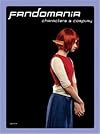
Unlike some of the other reviewers (on Amazon), I found the sobriety of the subjects (and by and large, they are VERY deadpan) a nice contrast to the elaborateness of the costumes. I'm not involved in the cosplay scene, so I can't comment (as some have done) to whether the costumes were "good" and "accurate" or not. One reviewer in particular sounds like they have a bad case of sour grapes not to have been included. A photographer will take probably thousands of photos for a book like this, show more and they can't use them all.
I enjoyed the photos, but I think Dorfman concentrated too strongly on Japanese-oriented costumers - those who are specifically tied to anime, manga and games in that style. I know there's plenty of WoW and Star Wars/Trek cosplayers, and tons of Steampunk fans, yet there were none represented. Generic "schoolgirls" and a catgirl, but not one Tauren, Stormtrooper, or zeppelin pilot. OK, maybe none of those photos were good enough for inclusion, I'm willing to cut her a little slack there. However...
Carlo McCormick's 5-page introduction is snarky, condescending and at times, nasty - though I'm sure in his infinite superiority over those pictured, he doesn't see it that way. "[T]his has got to be the nerdiest collection of hopeless geeks ever assembled," he says, and then backpedals a little with "they're also way cool." Whenever he offers some compliment, there's a slap next to it. He's an ART CRITIC, and knows nothing about cosplay, yet he comments as though these are all just silly and confused kids, experimenting with fashion. If you buy the book, I sincerely suggest you look only at the photos, because reading his intro will sour the experience for you. Perhaps you could use those five long pages of pedantic condescension as a place to paste in photos of YOUR costumed personae.
Recommendation: Get it used. show less
I enjoyed the photos, but I think Dorfman concentrated too strongly on Japanese-oriented costumers - those who are specifically tied to anime, manga and games in that style. I know there's plenty of WoW and Star Wars/Trek cosplayers, and tons of Steampunk fans, yet there were none represented. Generic "schoolgirls" and a catgirl, but not one Tauren, Stormtrooper, or zeppelin pilot. OK, maybe none of those photos were good enough for inclusion, I'm willing to cut her a little slack there. However...
Carlo McCormick's 5-page introduction is snarky, condescending and at times, nasty - though I'm sure in his infinite superiority over those pictured, he doesn't see it that way. "[T]his has got to be the nerdiest collection of hopeless geeks ever assembled," he says, and then backpedals a little with "they're also way cool." Whenever he offers some compliment, there's a slap next to it. He's an ART CRITIC, and knows nothing about cosplay, yet he comments as though these are all just silly and confused kids, experimenting with fashion. If you buy the book, I sincerely suggest you look only at the photos, because reading his intro will sour the experience for you. Perhaps you could use those five long pages of pedantic condescension as a place to paste in photos of YOUR costumed personae.
Recommendation: Get it used. show less
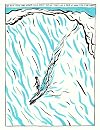
Raymond Pettibon (born 1957) has created a vocabulary of characters that reappear consistently across his oeuvre. The most poetic and revealing of these may be the surfer, the solitary longboarder challenging a massive wave. This revised and expanded edition of Raymond Pettibon: Surfers 1985-2015, the first printing of which sold out almost immediately upon publication in 2014, features 20 additional works, as well as new color separations and jacket design. Nearly all the works depict an show more ocean roiling with chaotic swells, accompanied by non sequiturs, quotations and bits of poetry in the artist's handwriting. Organized chronologically, the publication traces the surfer series, from early small-scale monochrome India ink drawings to numerous examples from the 1990s when the artist introduced color, culminating with his recent large-scale works, some of which were executed directly on a wall. Rounding out the publication is a meditation by the writer Carlo McCormick. show less
Lists
LAST GASP (1)
You May Also Like


Associated Authors
Statistics
- Works
- 23
- Also by
- 6
- Members
- 358
- Popularity
- #66,977
- Rating
- 4.2
- Reviews
- 6
- ISBNs
- 27
- Languages
- 4