
Norman Mailer (1923–2007)
Author of The Naked and the Dead
About the Author
Norman Kingsley Mailer was born on January 31, 1923 in Long Branch, N. J. and then moved with his family to Brooklyn, N. Y. Mailer later attended Harvard University and graduated with a degree in aeronautical engineering. Mailer served in the Army during World War II, and later wrote, directed, and show more acted in motion pictures. He was also a co-founder of the Village Voice and edited Disssent for nine years. Mailer has written several books including: The Armies of the Night, which won the National Book Award, the Pulitzer Prize, and a Polk Award; and The Executioner's Song, which won the Pulitzer Prize. In 2005, he won the Medal for Distinguished Contribution to American Letters from the National Book Foundation. He published his last novel, The Castle in the Forest, in 2007. He died of acute renal failure on November 10, 2007. (Bowker Author Biography) show less
Image credit: Norman Mailer in Los Angeles in February 2007
Works by Norman Mailer
Norman Mailer: The Naked and the Dead & Selected Letters 1945-1946 (LOA #364) (Library of America, 364) (2023) 71 copies
Norman Mailer: Collected Essays of the 1960s (LOA #306) (Library of America Norman Mailer Edition) (2018) 58 copies
The Big Empty: Dialogues on Politics, Sex, God, Boxing, Morality, Myth, Poker and Bad Conscience in America (2006) 33 copies
The idol and the octopus;: Political writings, on the Kennedy and Johnson administrations (1968) 24 copies, 1 review
Norman Mailer: The Sixties: A Library of America Boxed Set (The Library of America) (2018) 12 copies
Norman Mailer 2 Volume Hardback Collection (Oswald's Tale: An American Mystery & Harlot's Ghost) 4 copies
The homosexual villain 4 copies
New short novels 2 3 copies
Shika no sono 3 copies
Rasha to shisha. 1 2 copies
Cuentos 2 copies
Hörkutól stíga ekki dans 1 copy
Dželatova pesma 1 copy
HI Iduri non ballano 1 copy
TEMAS ACTUALES 1 copy
Çıplak ve Ölü 1 copy
MAI La canción del verdugo 1 copy
Nahí a mŕtvi 2 1 copy
Nahí a mŕtvi 1 1 copy
POR QUE ESTAMOS EN VIETNAM? 1 copy
CRONICAS PRESIDENCIALES. 1 copy
Het leid van de beul 1 copy
Meztelenek és holtak 1 copy
Katova píseň 1 copy
Os Exércitos da Noite 1 copy
Ha' aramim Vehametun 1 copy
Talking of violence 1 copy
A course in film-making 1 copy
Moderne amerikanische prosa 1 copy
Rasha to shisha. 2. 1 copy
Goli in mrtvi: Prva knjiga 1 copy
1989 1 copy
Drevne večeri 1 copy
The art of fiction XXXII : Norman Mailer, an interview — Contributor — 1 copy
Wild 90 [Region 2] 1 copy
Barbarkysten - I 1 copy
Barbarkysten - II 1 copy
Rey del Ring 1 copy
Associated Works
For the Love of Books: 115 Celebrated Writers on the Books They Love Most (1999) — Contributor — 479 copies, 4 reviews
Booknotes: America's Finest Authors on Reading, Writing, and the Power of Ideas (1997) — Contributor — 459 copies, 5 reviews
Reporting Vietnam: American Journalism 1959-1969, Volume 1 (1998) — Contributor — 349 copies, 3 reviews
The Art of Fact: A Historical Anthology of Literary Journalism (1997) — Contributor — 226 copies, 1 review
First Fiction: An Anthology of the First Published Stories by Famous Writers (1994) — Contributor — 197 copies, 1 review
The Rolling Stone Book of the Beats: The Beat Generation and American Culture (1999) — Contributor — 180 copies, 2 reviews
The Mark Twain Anthology: Great Writers on His Life and Work (2010) — Contributor — 160 copies, 1 review
An American Album: One Hundred and Fifty Years of Harper's Magazine (2000) — Contributor — 146 copies, 1 review
The Norton Anthology of American Literature, Volume 2: 1865 to Present (1979) — Contributor, some editions — 137 copies
On the Firing Line: The Public Life of Our Public Figures (1989) — Contributor — 128 copies, 1 review
The Best of Abbie Hoffman: Selections from Revolution for the Hell of It, Woodstock Nation, Steal this Book and New Writings (1993) — Foreword — 119 copies
The Glorious American Essay: One Hundred Essays from Colonial Times to the Present (2020) — Contributor — 119 copies
War No More: Three Centuries of American Antiwar and Peace Writing (2016) — Contributor — 110 copies, 2 reviews
Last Tango in Paris: The Screenplay With Photographs From The Film (1973) — Contributor, some editions; Contributor — 40 copies, 1 review
Antaeus No. 61, Autumn 1988 - Journals, Notebooks & Diaries (1988) — Contributor — 39 copies, 2 reviews
Rediscoveries II: Important Writers Select Their Favorite Works of Neglected Fiction (1988) — Contributor — 31 copies, 1 review
The Village Voice Reader: A Mixed Bag from the Greenwich Village Newspaper (1963) — Contributor — 28 copies, 1 review
We Accuse: A Powerful Statement of the New Political Anger in America (1965) — Contributor — 8 copies
Sylvia Plath's Tomato Soup Cake: A Compendium of Classic Authors' Favourite Recipes (2024) — Contributor — 6 copies
In the Teeth of War: Photographic Documentary of the March 26th, 1966, New York City Demonstration Against the War in Vietnam (1966) — Contributor — 5 copies
32 Współczesne Opowiadania Amerykańskie - Tom II — Contributor — 1 copy
The Ethnic Image in Modern American Literature, 1900-1950, Volumes 1-2 (1984) — Contributor — 1 copy
Tagged
Common Knowledge
- Canonical name
- Mailer, Norman
- Legal name
- Mailer, Norman Kingsley
Mailer, Nachem Malech (birth) - Birthdate
- 1923-01-31
- Date of death
- 2007-11-10
- Gender
- male
- Education
- Harvard College (BS|Aeronautical Engineering|1943)
University of Paris - Occupations
- novelist
essayist
journalist
director
screenwriter
actor - Organizations
- The Village Voice (co-founder)
United States Army (WWII) - Awards and honors
- National Book Award, Medal of Distinguished Contribution to American Letters (2005)
State Author of New York/Edith Wharton Citation of Merit (1991-93)
American Academy of Arts and Letters Academy Award (1960)
F. Scott Fitzgerald Award for Outstanding Achievement in American Fiction (2000)
Emerson-Thoreau Medal (1989)
American Academy of Arts and Letters (1967) (show all 13)
Pulitzer Prize for Fiction (1969, 1980)
National Book Award (1969)
Edward MacDowell Medal (1973)
George Polk Award (1969)
National Arts Club Gold Medal of Honor in Literature (1976)
Harvard University's Signet Society Medal for Achievement in the Arts (1970, 1994)
Austrian Cross of Honour for Science and Art, 1st class (2002) - Relationships
- Silverman, Beatrice (spouse, 1944-1952)
Morales, Adele (spouse, 1954-1961)
Campbell, Jeanne (spouse, 1962-1963)
Bentley, Beverly (spouse, 1963-1980)
Stevens, Carol (spouse, 1980-1980)
Mailer, Norris Church (spouse, 1980-2007) (show all 7)
Malaquais, Jean (friend, translator) - Cause of death
- kidney failure
- Nationality
- USA
- Birthplace
- Long Branch, New Jersey, USA
- Places of residence
- Long Branch, New Jersey, USA
New York, New York, USA
Paris, Île-de-France, France
Provincetown, Massachusetts, USA - Place of death
- New York, New York, USA
- Burial location
- Provincetown Cemetery, Provincetown, Massachusetts, USA
- Associated Place (for map)
- USA
Members
Discussions
The Fight by Norman Mailer in Folio Society Devotees (November 2025)
Norman Mailer in Legacy Libraries (February 2014)
Reviews
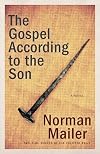
There was a cloud of tepid foreshadowing hanging over me as I went into this Mailer novel. It was decried as a soft and near lifeless work, a dedication of sorts from the secular Jewish Mailer to his then wife of and from America's Bible Belt.
But it was more than that. After reading Mailer for the last few years and hearing (in an interview with Charlie Rose I believe) that he willfully altered his style with every novel, I found myself more and enamored with his authorial ethos. Unlike, show more say, a Hemingway or a Faulkner, or a Pynchon, all of whom never seem to stray too far beyond their respective aesthetic spheres (and in some cases become almost slavish to them) Mailer ostensibly broke and re-broke his teeth with each new written endeavor.
And he was damn good at it too. Read Ancient Evenings and then The Gospel According to the Son and ask yourself how these two disparate works could have possibly been written by the same author. The former work wallowed in the excess and atavistic ritual of Ancient Egypt where the latter is almost monkish in its humanizing restraint in portraying Jesus Christ. And that Mailer was so able to characterize the Christian Messiah so believably as ideological rebel and conflicted man, as well as more than a bit vulnerable to the weaknesses of his partial humanity, while remaining mostly loyal to the gospels (save some genuinely funny and insightful editorial moments of Jesus's post death depictions in the hands of many who had never even met him) is a hell of a writerly feat in and of itself.
I read this in a day, I'm not saying you'll be carried by it as much as I was if only because at this point I'm probably far past the point of critical Stockholm syndrome concerning Mailer, but give it a shot to see a meditative, contemplative and, just as important, believable portrayal of the carpenter who, for many, divided history. show less
But it was more than that. After reading Mailer for the last few years and hearing (in an interview with Charlie Rose I believe) that he willfully altered his style with every novel, I found myself more and enamored with his authorial ethos. Unlike, show more say, a Hemingway or a Faulkner, or a Pynchon, all of whom never seem to stray too far beyond their respective aesthetic spheres (and in some cases become almost slavish to them) Mailer ostensibly broke and re-broke his teeth with each new written endeavor.
And he was damn good at it too. Read Ancient Evenings and then The Gospel According to the Son and ask yourself how these two disparate works could have possibly been written by the same author. The former work wallowed in the excess and atavistic ritual of Ancient Egypt where the latter is almost monkish in its humanizing restraint in portraying Jesus Christ. And that Mailer was so able to characterize the Christian Messiah so believably as ideological rebel and conflicted man, as well as more than a bit vulnerable to the weaknesses of his partial humanity, while remaining mostly loyal to the gospels (save some genuinely funny and insightful editorial moments of Jesus's post death depictions in the hands of many who had never even met him) is a hell of a writerly feat in and of itself.
I read this in a day, I'm not saying you'll be carried by it as much as I was if only because at this point I'm probably far past the point of critical Stockholm syndrome concerning Mailer, but give it a shot to see a meditative, contemplative and, just as important, believable portrayal of the carpenter who, for many, divided history. show less

Mailer’s text in Marilyn is supposed to serve as a supplement to the plethora of full-page photos one encounters in the hardcover first edition. That the image takes center stage, if you will, is important to consider from the outset in dealing with this book. Marilyn Monroe being a film icon and near universal sex symbol, just looking at the images alone tells you how she was perceived by and presented to the public. We might then expect Mailer’s text, with the subtitle of the book show more explicitly casting the work as biography, to offer a counterpoint to these images. He could unravel and use his writerly skill to map out a thoroughly researched biography that takes a critical eye to the Marilyn Monroe legend. The stunning thing about this book, why it succeeds, is precisely because he does not do that. Mailer writes, “let us at least recognize that the reductive voice speaks with no more authority than the romantic,” noting that to explain Marilyn we must recognize that there “are a million dumb and dizzy broads with luck and none come near to Monroe” (23). As a novelist and prose stylist, Mailer sees the legendary as something valuable.
Without some perceived mystique on part of others, Marilyn would not hold the sway she does in culture. Mailer exploits and plays with notion operating in a space somewhere between hagiography, novel, and critical examination. As to the first category, many passages in the book reiterate her beauty and uniqueness with striking phrases. Though if the entire text were a novelist fawning over or pitying a beautiful woman he never met, the narrative would in no way be sustainable. Most of the book centers around Monroe’s relationships, especially with love interests. These are examined with a sharp critical eye, evaluations lashing out from strangely unexpected avenues. Take the seemingly odd claim that “DiMaggio is interested in Marilyn only as a human being, not an Actress, and therefore is a vandal” (107). This is not an assertion you would find in any straightforward biography. Throughout the book, Monroe is characterized as a crude artist, but a less crude art object. Her skill is displaced by her all-American normality, but this is subverted by her otherworldly air. This otherworldliness, this presence, is what infests the screen.
From Mailer’s viewpoint, for DiMaggio to discount Marilyn the actress is discount the whole of her, to cheapen her by asserting nothing but her Southern charm or loveliness. To do this is make Marilyn into anybody else. Mailer transfigures Marilyn by making her into an artwork rather than an artist, though this doesn’t pejoratively objectify her. The photos here, the films to some extent, do the same thing. We perceive Marilyn and our gaze is mesmerizingly reflected back. To rub this away completely, to unpack the mystery and establish nothing but the facts would devolve a narrative of her life into dry filmography or an opportunity for pity and tragic sensationalism about her demise.
A recurring theme in the text, perhaps even a purposeful device, os the repetition of ghostly or occult elements. One notable example is how Mailer compares the way an actor “inhabits a role the way a ghoul invests a body”, and later, specifically characterizes Monroe’s repeated clashes with directors as analogous to “a medium who seeks to get rid of “those guests who are too hearty or hostile at a seance, as though she can express her own art only after she has neutralized those more active life forces around her” (151, 106). The comparison of Monroe to somehow holding a seance, and assigning to her a mildly vampiric quality that somehow manages to not be defamatory, prove that Mailer’s prose offers a treatment of Marilyn that is unique and often beautiful, if a little idiosyncratic.
Many of the claims in this biography were anecdotal, but at the time widely believed, though they have since been discredited. In most other instances, this would cause an older biography to suffer as a result, but here it simply adds to the narrative focus on legend and mystery and suffers nothing. A view of Mailer’s writing as purely a supplement to a phenomenal book of photographs would be unfair, as it is most certainly an equal component mapping Marilyn in all of her mythic, if sometimes mythical, proportions. Mailer's narrative is not objective nor even entirely factual biography, but that admixture of the real and the speculated is altogether suitable for a figure like Marilyn Monroe, especially when presented through Mailer's splendidly verbose and eccentric prose. show less
Without some perceived mystique on part of others, Marilyn would not hold the sway she does in culture. Mailer exploits and plays with notion operating in a space somewhere between hagiography, novel, and critical examination. As to the first category, many passages in the book reiterate her beauty and uniqueness with striking phrases. Though if the entire text were a novelist fawning over or pitying a beautiful woman he never met, the narrative would in no way be sustainable. Most of the book centers around Monroe’s relationships, especially with love interests. These are examined with a sharp critical eye, evaluations lashing out from strangely unexpected avenues. Take the seemingly odd claim that “DiMaggio is interested in Marilyn only as a human being, not an Actress, and therefore is a vandal” (107). This is not an assertion you would find in any straightforward biography. Throughout the book, Monroe is characterized as a crude artist, but a less crude art object. Her skill is displaced by her all-American normality, but this is subverted by her otherworldly air. This otherworldliness, this presence, is what infests the screen.
From Mailer’s viewpoint, for DiMaggio to discount Marilyn the actress is discount the whole of her, to cheapen her by asserting nothing but her Southern charm or loveliness. To do this is make Marilyn into anybody else. Mailer transfigures Marilyn by making her into an artwork rather than an artist, though this doesn’t pejoratively objectify her. The photos here, the films to some extent, do the same thing. We perceive Marilyn and our gaze is mesmerizingly reflected back. To rub this away completely, to unpack the mystery and establish nothing but the facts would devolve a narrative of her life into dry filmography or an opportunity for pity and tragic sensationalism about her demise.
A recurring theme in the text, perhaps even a purposeful device, os the repetition of ghostly or occult elements. One notable example is how Mailer compares the way an actor “inhabits a role the way a ghoul invests a body”, and later, specifically characterizes Monroe’s repeated clashes with directors as analogous to “a medium who seeks to get rid of “those guests who are too hearty or hostile at a seance, as though she can express her own art only after she has neutralized those more active life forces around her” (151, 106). The comparison of Monroe to somehow holding a seance, and assigning to her a mildly vampiric quality that somehow manages to not be defamatory, prove that Mailer’s prose offers a treatment of Marilyn that is unique and often beautiful, if a little idiosyncratic.
Many of the claims in this biography were anecdotal, but at the time widely believed, though they have since been discredited. In most other instances, this would cause an older biography to suffer as a result, but here it simply adds to the narrative focus on legend and mystery and suffers nothing. A view of Mailer’s writing as purely a supplement to a phenomenal book of photographs would be unfair, as it is most certainly an equal component mapping Marilyn in all of her mythic, if sometimes mythical, proportions. Mailer's narrative is not objective nor even entirely factual biography, but that admixture of the real and the speculated is altogether suitable for a figure like Marilyn Monroe, especially when presented through Mailer's splendidly verbose and eccentric prose. show less

"Confidence on both sides makes for war." (pg. 194)
The 1974 'Rumble in the Jungle' boxing match between Muhammad Ali and George Foreman is so iconic and rightly famous – as both cultural spectacle and an example of sporting skill – that it becomes hard, as a reviewer of Mailer's The Fight, to determine how much of one's enjoyment comes from the book itself and how much from the event it recreates.
It must be said that Mailer makes the reviewer's task much easier by laying his own style on show more pretty thick. It certainly helps differentiate the writer's performance from those of the two fighters. Originally a two-part piece of narrative journalism, the author indulges in a fair amount of waffle and cod philosophising. I've never really been keen on reading Mailer, whose overblown machismo and performatively tough prose style appear to be a legitimate imitation of what naysayers wrongly impugn of Ernest Hemingway's writing, and in The Fight Mailer seems to wilt under the comparison. Hemingway wrote well about boxing, of course, and even better about Africa, and Mailer's frequent references to 'Papa' and to bullfighting only remind us how much better it would be if the real master writer had lived to watch Ali vs Foreman in deepest Africa.
Mailer writes the fight itself very well; in these chapters he provides a masterclass in sportswriting. But the vast majority of the book is concerned with the build-up to the fight; Mailer builds the tension well enough, but his attempts to get into the two different personalities of Ali and Foreman skew towards baseless mythologising. The Fight is a much better read when Mailer delivers hints of the humanity hidden under the armour of the great fighting personalities: Foreman's monomania and silence, for example, or the slight whispers of doubt when Ali sees just how much punishment Foreman can put into a heavy bag in training.
Moments where Mailer reaches some stark insight into the forces underpinning the fight are to be cherished, for they provide glimpses of how astute this author can be when he rouses himself from the waffle. At its best, The Fight conveys the specialness of this particular match-up: the undefeated powerhouse Foreman versus the messianic artistry of Ali, a man who had been stripped of the championship title Foreman now held because of his opposition to being drafted for Vietnam. Mailer calls this inability to contest the removal "a frustration for a fighter doubtless equal in impact to writing A Farewell to Arms and then not being able to publish it" (pg. 175). Such legitimate writing flourishes are rare in the book (though it must be said they do become more frequent the closer we get to the fight itself), and they are often specks of gold in a sometimes swampy morass of waffle and mud. 'New Journalism', a movement Mailer was considered a part of, seems in retrospect to be an excuse to go on a bender rather than commit to a disciplined re-editing session. Again, those Hemingway references do no favours to Mailer; even in now-out-of-print pieces like The Dangerous Summer (about two matadors competing against one another over the course of a bullfighting season), Hemingway could write with greater clinical ferocity than his imitator.
It's a shame that Mailer can provide some good writing moments without harnessing such punching power into a consistent fight strategy. One such flourish occurs when Mailer speculates on why Mobutu, the African dictator hosting the Rumble in the Jungle, didn't appear in the stadium despite the self-evident PR benefits. Mailer suggests that it wouldn't do for the self-image of the 'great chief' to be recognised as physically inferior stood next to Ali and Foreman: "God does not stand next to his sons when they are taller" (pg. 109). As much as I enjoyed The Fight, I also wish Mailer had taken his own advice, and not made such a vain effort to stand next to the taller Hemingway.
A strange mix of verbose waffle and taut, hard-hitting observation, The Fight does justice to the boxing match it chronicles while also diminishing itself. Mailer cannot take his own advice, not only in the 'God standing next to his sons' line, but in the principles of fighting. Mailer, it seems, sees writing as pugilism, yet writes that boxers and champions are liars. They have to be, because "once you knew what they thought, you could hit them" (pg. 43). In his machismo and his desire to surpass Hemingway, Mailer showed his opening, and because of his bluster and waffle you don't mind hitting him there and telling him he's not God after all. The Fight is a good book, but it could have been a great one. Mailer built Ali vs Foreman up into the mythology he wanted it to be; it's a good mythology, but it leaves the reader feeling as though there's something remaining, something that a less self-indulgent writer might have had the wherewithal to claim.
If you want the full story, the great story of Ali vs Foreman, I can't really recommend Mailer's book. It is only a supplement, a sideshow to the real 'gen', as Hemingway would have put it. To get the real story, I suggest instead watching the excellent documentary film When We Were Kings (in which Mailer participates, but is not allowed to dominate). In the documentary, we can focus on two legitimate greats of the sport as they go at each other – a determination for the best to prove themselves against the best that seems to have fled from the sport nowadays (at time of writing, it seems unlikely we will ever see Fury vs Joshua with all the title belts on the line). Choose the documentary, then – for in the book, I began to grow weary of being distracted from the two great fighters by the sight of Mailer shadowboxing with himself. show less
The 1974 'Rumble in the Jungle' boxing match between Muhammad Ali and George Foreman is so iconic and rightly famous – as both cultural spectacle and an example of sporting skill – that it becomes hard, as a reviewer of Mailer's The Fight, to determine how much of one's enjoyment comes from the book itself and how much from the event it recreates.
It must be said that Mailer makes the reviewer's task much easier by laying his own style on show more pretty thick. It certainly helps differentiate the writer's performance from those of the two fighters. Originally a two-part piece of narrative journalism, the author indulges in a fair amount of waffle and cod philosophising. I've never really been keen on reading Mailer, whose overblown machismo and performatively tough prose style appear to be a legitimate imitation of what naysayers wrongly impugn of Ernest Hemingway's writing, and in The Fight Mailer seems to wilt under the comparison. Hemingway wrote well about boxing, of course, and even better about Africa, and Mailer's frequent references to 'Papa' and to bullfighting only remind us how much better it would be if the real master writer had lived to watch Ali vs Foreman in deepest Africa.
Mailer writes the fight itself very well; in these chapters he provides a masterclass in sportswriting. But the vast majority of the book is concerned with the build-up to the fight; Mailer builds the tension well enough, but his attempts to get into the two different personalities of Ali and Foreman skew towards baseless mythologising. The Fight is a much better read when Mailer delivers hints of the humanity hidden under the armour of the great fighting personalities: Foreman's monomania and silence, for example, or the slight whispers of doubt when Ali sees just how much punishment Foreman can put into a heavy bag in training.
Moments where Mailer reaches some stark insight into the forces underpinning the fight are to be cherished, for they provide glimpses of how astute this author can be when he rouses himself from the waffle. At its best, The Fight conveys the specialness of this particular match-up: the undefeated powerhouse Foreman versus the messianic artistry of Ali, a man who had been stripped of the championship title Foreman now held because of his opposition to being drafted for Vietnam. Mailer calls this inability to contest the removal "a frustration for a fighter doubtless equal in impact to writing A Farewell to Arms and then not being able to publish it" (pg. 175). Such legitimate writing flourishes are rare in the book (though it must be said they do become more frequent the closer we get to the fight itself), and they are often specks of gold in a sometimes swampy morass of waffle and mud. 'New Journalism', a movement Mailer was considered a part of, seems in retrospect to be an excuse to go on a bender rather than commit to a disciplined re-editing session. Again, those Hemingway references do no favours to Mailer; even in now-out-of-print pieces like The Dangerous Summer (about two matadors competing against one another over the course of a bullfighting season), Hemingway could write with greater clinical ferocity than his imitator.
It's a shame that Mailer can provide some good writing moments without harnessing such punching power into a consistent fight strategy. One such flourish occurs when Mailer speculates on why Mobutu, the African dictator hosting the Rumble in the Jungle, didn't appear in the stadium despite the self-evident PR benefits. Mailer suggests that it wouldn't do for the self-image of the 'great chief' to be recognised as physically inferior stood next to Ali and Foreman: "God does not stand next to his sons when they are taller" (pg. 109). As much as I enjoyed The Fight, I also wish Mailer had taken his own advice, and not made such a vain effort to stand next to the taller Hemingway.
A strange mix of verbose waffle and taut, hard-hitting observation, The Fight does justice to the boxing match it chronicles while also diminishing itself. Mailer cannot take his own advice, not only in the 'God standing next to his sons' line, but in the principles of fighting. Mailer, it seems, sees writing as pugilism, yet writes that boxers and champions are liars. They have to be, because "once you knew what they thought, you could hit them" (pg. 43). In his machismo and his desire to surpass Hemingway, Mailer showed his opening, and because of his bluster and waffle you don't mind hitting him there and telling him he's not God after all. The Fight is a good book, but it could have been a great one. Mailer built Ali vs Foreman up into the mythology he wanted it to be; it's a good mythology, but it leaves the reader feeling as though there's something remaining, something that a less self-indulgent writer might have had the wherewithal to claim.
If you want the full story, the great story of Ali vs Foreman, I can't really recommend Mailer's book. It is only a supplement, a sideshow to the real 'gen', as Hemingway would have put it. To get the real story, I suggest instead watching the excellent documentary film When We Were Kings (in which Mailer participates, but is not allowed to dominate). In the documentary, we can focus on two legitimate greats of the sport as they go at each other – a determination for the best to prove themselves against the best that seems to have fled from the sport nowadays (at time of writing, it seems unlikely we will ever see Fury vs Joshua with all the title belts on the line). Choose the documentary, then – for in the book, I began to grow weary of being distracted from the two great fighters by the sight of Mailer shadowboxing with himself. show less
This is one I've been wanting to get to for quite some time.
Let me just say: I get it. Norman Mailer is a massive loud mouthed boorish prick and yawning asshole of a man. His views towards women were...well, they were pretty fucked up for lack of a better French. And his opinions on minorities has always been rather peculiar. As in very very strange.
But all that being said Mailer was probably, for my lack of money anyway, one of the last literary pioneers that the American canon has so far show more produced. This in no way excuses his litany of flaws as a man, as a husband, as a father, as a person, at all. But in that labored dialectic of person versus art it might go a ways towards explaining just what it was he was trying to achieve and what it was he actually did.
Firstly, Mailer himself was a secular Jew out of New York something he made no secret or grand production. It was a part of who he was in the same way as white anglo saxon protestantism (or its variants) is for so many gentile Americans. But unlike those Christian writers your Faulkners, your Hemingways, Mailer was never unconscious of his minority status within this country, or 'outsider' status is probably a better appellation. But unlike, say, a Saul Bellow who attempted (with some success and many less than's) a Dickensian Judaic milieu by way of the street smart and the philosophical, Mailer decided instead to make his a literature of the ego, of the preternatural self. And at this he succeeded. For unlike the stiff formalism and labored humor of Bellow, Mailer's works always felt genuine, if only genuine to the world as he saw it and not as he tried to manicure it through precocious turns of phrase and wooden references to Talmudic lore.
Without going too much into Mailer's work in a whole (more so than I've done already) I have to say I enjoyed the quite frankly bizarro theological directions Mailer went through in his suppositions about God, the Devil, and evil as well as good. His declaring God to be a flawed artist (not unlike a writer which his literary executor and interlocutor slyly points out) has same real traction to it as, unlike many, Mailer's ideas are not the result of flash in the pan emotion, be it joy or dread or anger, against a world as it is, but a deeply thought out set of beliefs predicated on a lifetime's experiences as he perceived them.
This isn't Mailer's Summa Theologica or his own Guide for the Perplexed, but it is something of an arrogant but brilliant asshole's De Rerum Natura. I loved it because it was his, Mailer's bulbous, arrogant, surprisingly insightful take on the world as he saw it, felt it, and believed it. It's flawed and not for everyone. As was Mailer. So there you go. show less
Let me just say: I get it. Norman Mailer is a massive loud mouthed boorish prick and yawning asshole of a man. His views towards women were...well, they were pretty fucked up for lack of a better French. And his opinions on minorities has always been rather peculiar. As in very very strange.
But all that being said Mailer was probably, for my lack of money anyway, one of the last literary pioneers that the American canon has so far show more produced. This in no way excuses his litany of flaws as a man, as a husband, as a father, as a person, at all. But in that labored dialectic of person versus art it might go a ways towards explaining just what it was he was trying to achieve and what it was he actually did.
Firstly, Mailer himself was a secular Jew out of New York something he made no secret or grand production. It was a part of who he was in the same way as white anglo saxon protestantism (or its variants) is for so many gentile Americans. But unlike those Christian writers your Faulkners, your Hemingways, Mailer was never unconscious of his minority status within this country, or 'outsider' status is probably a better appellation. But unlike, say, a Saul Bellow who attempted (with some success and many less than's) a Dickensian Judaic milieu by way of the street smart and the philosophical, Mailer decided instead to make his a literature of the ego, of the preternatural self. And at this he succeeded. For unlike the stiff formalism and labored humor of Bellow, Mailer's works always felt genuine, if only genuine to the world as he saw it and not as he tried to manicure it through precocious turns of phrase and wooden references to Talmudic lore.
Without going too much into Mailer's work in a whole (more so than I've done already) I have to say I enjoyed the quite frankly bizarro theological directions Mailer went through in his suppositions about God, the Devil, and evil as well as good. His declaring God to be a flawed artist (not unlike a writer which his literary executor and interlocutor slyly points out) has same real traction to it as, unlike many, Mailer's ideas are not the result of flash in the pan emotion, be it joy or dread or anger, against a world as it is, but a deeply thought out set of beliefs predicated on a lifetime's experiences as he perceived them.
This isn't Mailer's Summa Theologica or his own Guide for the Perplexed, but it is something of an arrogant but brilliant asshole's De Rerum Natura. I loved it because it was his, Mailer's bulbous, arrogant, surprisingly insightful take on the world as he saw it, felt it, and believed it. It's flawed and not for everyone. As was Mailer. So there you go. show less
Lists
1960s (4)
Unread books (1)
THE WAR ROOM (1)
War Literature (1)
NTS Book Channel (1)
To read (1)
True Crime (1)
True Crime (1)
Discontinued (1)
1970s (1)
Obama Reads (1)
Read These Too (1)
1940s (1)
True Crime Books (1)
Fiction For Men (1)
Best War Stories (1)
Awards


You May Also Like


Associated Authors
Statistics
- Works
- 160
- Also by
- 71
- Members
- 24,808
- Popularity
- #848
- Rating
- 3.7
- Reviews
- 343
- ISBNs
- 894
- Languages
- 23
- Favorited
- 45


