
J. P. Kenyon (1927–1996)
Author of The Wordsworth Dictionary of British History
About the Author
Works by J. P. Kenyon
Associated Works
Historical perspectives : studies in English thought and society, in honour of J. H. Plumb (1974) — Contributor — 6 copies
Tagged
Common Knowledge
- Legal name
- Kenyon, John Philipps
- Birthdate
- 1927-06-18
- Date of death
- 1996-01-06
- Gender
- male
- Education
- King Edward VII School, Sheffield, England, UK
University of Cambridge
Sheffield University - Occupations
- historian
- Organizations
- University of Hull
University of Kansas
University of St Andrews - Nationality
- UK
- Birthplace
- Sheffield, South Yorkshire, England, UK
- Places of residence
- Sheffield, South Yorkshire, England, UK
- Associated Place (for map)
- Sheffield, South Yorkshire, England, UK
Members
Reviews

I find it interesting how the writers of these books were obviously granted a lot of freedom in their approaches; J. P. Kenyon does something I don't remember seeing before, which is he doesn't just open by laying out a thesis about the period in question, but he actually takes differing theses about the period in question as his topic. Kenyon rejects the "teleological approach of the Whig–Liberal historians" (15) where "a form of government... proceeded, subject to various trifling show more adjustments, down to the present day, and which not only made the nation Free and Right but showed it to be Great and Right" (14). That is to say, a lot of previous historians viewed this period as the gradual but inevitable evolution to the current system of British government, where the monarch's power is subordinated to that of a permanent, elected Parliament: "We have been brainwashed into accepting the... theory of inevitable, almost effortless parliamentary advance" (44). But this evolution was by no means inevitable... but if you don't accept the claims of the Whig approach to history, what do you have left? "Instead of striding along a brightly illuminated high road, the historian now shuffles uneasily in a thick fog from one lamp-post to another, the lamp-posts wide apart and eccentrically sited, and frequently shifting their position" (15). How's that for a metaphor!?
The body of the book mostly focuses on the shifting status of the monarchy versus Parliament, which makes sense in a period that saw the temporary abolition of the monarchy, and another monarch run out of the country and replaced with someone else. The introduction does lay out some other issues, such as the fluctuating status of the gentry (25), and Kenyon mentions in his preface that the first edition did have a chapter on literature and art that he cut (9-10), but overall it's monarchs that he focuses on here. (I like what he says near the end of the introduction about James I and Charles I: "It is a truism that they did not understand the English; it is not always acknowledged that their subjects took some understanding" [56]). At first, this made me view the book as the kind of traditional history that previous writers in the Pelican History series largely eschewed.
But when I got to the conclusion, I realized Kenyon wasn't going through kings (and queens) because he was interested in kings qua kings; I realized it was because he was specifically interested in the status of the monarchy versus that of Parliament, which he portrays as much more complicated than it was usually perceived as: "It is conventional to assume that 1649 and 1688, and even 1660, represent the triumph of parliamentary over monarchical institutions. With the benefit of hindsight this may seem obvious; it was not so at the time, and it is to be doubted if it ever was.... [W]eak and disorganized as the monarchy often was, Parliament was more so... (353). Kenyon ends up claiming that if power was vested anywhere, it was in neither monarchy nor democracy but aristocracy; the most stable institution of the era was the House of Lords: "What was founded in 1688... was not parliamentary monarchy but aristocratic monarchy" (355).
So, as a guide to how the monarchy and Parliament negotiated their shifting power, I found this a strong and clear volume of the series, one of my favorites... though like many of the later volumes in the series, it certainly benefits from having 350 pages to cover a single century, as opposed to three centuries or more. Parliament became increasingly bold in this era, for example asserting that Charles I needed "to give up all his powers of command, appointment and policy-making right across the board, even in the education, upbringing and marriage of his own children" (151)! Unfortunately, Kenyon argues, "few people outside his immediate family felt any emotional attachment to the person of the King, and without this he lacked the catalyst which might have transmuted a very strong and widespread support for the institution of monarchy into loyalty to the monarch himself" (154). Sure, people liked the idea of kings, but not this king, unfortunately for him. Similarly, Charles II could have concentrated power back in the monarchy, but Kenyon argues it was once again a problem of the monarch's personality: "in the first few vital years of the Restoration, Charles squandered all his chances. He was not a lazy man, but he lacked concentration, his interests were too diversified, and he did not apply himself to the business of governing" (211-12). If England had had monarchs with different personalities, the long-term victory of Parliament would have been by no means assured. Even so, when James II came to power in 1685, Kenyon claims that "the monarchy was at the very zenith of its power" (242-43), which historian overlook because of their "foreknowledge of the Revolution, only three years away" (242).
The negotiations over the Glorious Revolution are fascinating; basically Parliament wanted someone else to be king because of James II's Catholicism (among other issues) but also needed to thread a very narrow needle to make this happen. How can you ignore James II's son the Prince of Wales but claim that Mary ought to be the new queen regnant on basis of her being the child of James II? (275) Parliament ended up exerting a lot of authority over the monarch when it required monarchs to declare they weren't Catholic, and that they weren't allowed to marry Catholics either (277). Later this was extended to the monarch having to specifically be an Anglican (305). It used to be that monarchs established a government, but now there was "the concept of government existing independently of the King, who is just another official, though the most important one" (277). This all eventually resulted in some disputes: "Was [Queen] Anne's title purely hereditary, as the Tories insisted, or was it, as the Whigs argued, dependent on the Bill of Rights and the Act of Settlement?" (336) How much power did Parliament have over the monarch?
Kenyon is a lively and opinionated writer at times; I laughed at his description of George Villiers, First Duke of Buckingham: "Such men do not attract first-class historians" (84)! Quite a burn to whatever biographers had written about Buckingham before him! If the book has a flaw, it's that Cromwell, the Commonwealth, and the Interregnum feel kind of glossed over... but I suppose that makes sense; if Kenyon's interest is in the power of monarchy, then the actual Interregnum isn't really of interest to him, only how it began and how it ended.
In our current era in America, where the executive asserts continually expanded powers, it's fascinating and almost comforting to realize what an aberration that last couple centuries in America have been. For most of human history, rulers often did just summarily imprison or execute their opponents. Yes, it hasn't been that way for some time, but that's just a blip across the scale of most of history. Cold comfort, one supposes, but I will take what I can get. show less
The body of the book mostly focuses on the shifting status of the monarchy versus Parliament, which makes sense in a period that saw the temporary abolition of the monarchy, and another monarch run out of the country and replaced with someone else. The introduction does lay out some other issues, such as the fluctuating status of the gentry (25), and Kenyon mentions in his preface that the first edition did have a chapter on literature and art that he cut (9-10), but overall it's monarchs that he focuses on here. (I like what he says near the end of the introduction about James I and Charles I: "It is a truism that they did not understand the English; it is not always acknowledged that their subjects took some understanding" [56]). At first, this made me view the book as the kind of traditional history that previous writers in the Pelican History series largely eschewed.
But when I got to the conclusion, I realized Kenyon wasn't going through kings (and queens) because he was interested in kings qua kings; I realized it was because he was specifically interested in the status of the monarchy versus that of Parliament, which he portrays as much more complicated than it was usually perceived as: "It is conventional to assume that 1649 and 1688, and even 1660, represent the triumph of parliamentary over monarchical institutions. With the benefit of hindsight this may seem obvious; it was not so at the time, and it is to be doubted if it ever was.... [W]eak and disorganized as the monarchy often was, Parliament was more so... (353). Kenyon ends up claiming that if power was vested anywhere, it was in neither monarchy nor democracy but aristocracy; the most stable institution of the era was the House of Lords: "What was founded in 1688... was not parliamentary monarchy but aristocratic monarchy" (355).
So, as a guide to how the monarchy and Parliament negotiated their shifting power, I found this a strong and clear volume of the series, one of my favorites... though like many of the later volumes in the series, it certainly benefits from having 350 pages to cover a single century, as opposed to three centuries or more. Parliament became increasingly bold in this era, for example asserting that Charles I needed "to give up all his powers of command, appointment and policy-making right across the board, even in the education, upbringing and marriage of his own children" (151)! Unfortunately, Kenyon argues, "few people outside his immediate family felt any emotional attachment to the person of the King, and without this he lacked the catalyst which might have transmuted a very strong and widespread support for the institution of monarchy into loyalty to the monarch himself" (154). Sure, people liked the idea of kings, but not this king, unfortunately for him. Similarly, Charles II could have concentrated power back in the monarchy, but Kenyon argues it was once again a problem of the monarch's personality: "in the first few vital years of the Restoration, Charles squandered all his chances. He was not a lazy man, but he lacked concentration, his interests were too diversified, and he did not apply himself to the business of governing" (211-12). If England had had monarchs with different personalities, the long-term victory of Parliament would have been by no means assured. Even so, when James II came to power in 1685, Kenyon claims that "the monarchy was at the very zenith of its power" (242-43), which historian overlook because of their "foreknowledge of the Revolution, only three years away" (242).
The negotiations over the Glorious Revolution are fascinating; basically Parliament wanted someone else to be king because of James II's Catholicism (among other issues) but also needed to thread a very narrow needle to make this happen. How can you ignore James II's son the Prince of Wales but claim that Mary ought to be the new queen regnant on basis of her being the child of James II? (275) Parliament ended up exerting a lot of authority over the monarch when it required monarchs to declare they weren't Catholic, and that they weren't allowed to marry Catholics either (277). Later this was extended to the monarch having to specifically be an Anglican (305). It used to be that monarchs established a government, but now there was "the concept of government existing independently of the King, who is just another official, though the most important one" (277). This all eventually resulted in some disputes: "Was [Queen] Anne's title purely hereditary, as the Tories insisted, or was it, as the Whigs argued, dependent on the Bill of Rights and the Act of Settlement?" (336) How much power did Parliament have over the monarch?
Kenyon is a lively and opinionated writer at times; I laughed at his description of George Villiers, First Duke of Buckingham: "Such men do not attract first-class historians" (84)! Quite a burn to whatever biographers had written about Buckingham before him! If the book has a flaw, it's that Cromwell, the Commonwealth, and the Interregnum feel kind of glossed over... but I suppose that makes sense; if Kenyon's interest is in the power of monarchy, then the actual Interregnum isn't really of interest to him, only how it began and how it ended.
In our current era in America, where the executive asserts continually expanded powers, it's fascinating and almost comforting to realize what an aberration that last couple centuries in America have been. For most of human history, rulers often did just summarily imprison or execute their opponents. Yes, it hasn't been that way for some time, but that's just a blip across the scale of most of history. Cold comfort, one supposes, but I will take what I can get. show less
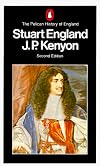
First published in 1978, J.P. Kenyon's book begins with a review of the traditional (and now generally dismissed) interpretations of the period, first the Whig interpretation (the story of Parliament’s expansion and securing of political liberty; history as progress) and the Marxist analysis (another teleological analysis culminating in the bourgeois revolution in England). Kenyon then discusses revisionists who rejected broad generalizations but with the result that we find ourselves in a show more fog, especially for the first half of the 17th century. A reaction set in against revisionism, and Kenyon himself is in a post-revisionist mode, focusing on the concept of a general crisis that was dramatically influenced by events abroad. Despite a general attitude of support for the monarchy, the errors and missteps of Charles I (including the effort to impose the English Prayer Book on the Scottish Church) created the conditions both for the English Civil War and his execution. Given general European developments, Kenyon suggests that the real question is why the monarchy did not succeed in strengthening itself over this period. Charles II had the opportunity for a new start with the Restoration but squandered it in his pursuit of pleasure and general neglect of governmental affairs until near the end of his rule. Despite being Catholic, James II could well have maintained his own reign if he had avoided unnecessary errors and then had not lost his nerve at a crucial time which led to his departure from England (deemed by Parliament to be an abdication) upon the (invited) invasion of William III.
Before presenting a narrative of developments, Kenyon addresses key issues and themes which characterized the period and shaped events including economic developments (periods of hardship but overall trend positive; in any event with little impact on the actions of Parliament), the rise and the fall of the gentry (mostly rise), the issues of the Church (mostly the struggle between Puritanism and Anglicanism concerning the rituals of the church and the retention of bishops, and posing the question why did Puritanism almost disappear after 1660), the Ancient Constitution (belief in the tradition of representative government), Parliament (disorderly, not representative, the House of Commons dominated by the landed classes at expense of merchant and manufacturing interests), money (the difficulties of the monarchy in raising funds necessary for growing expenses especially in wartime; Parliament survived because it kept control of taxation), causes of the Civil War (not long-running struggle between Parliament and King or strategic considerations or ideals but rather the tactical and political state of the monarchy, i.e., its general weakness which unbalanced the working of the Constitution (King in Parliament) and the “perverse ineptitude” of Charles I and some of his advisors which triggered a series of crises that made the Civil War inevitable; as to why Parliament finally decided to fight the King, the proximate cause may have been fear of reprisal by the King and his effective chief minister. the Earl of Strafford, who therefore was soon executed) and the monarchy (lacked good counsel, allies and friends, money, a standing army and good luck). As reflected in Shakespeare’s work, the country was in a state of neurosis, and Parliament, in Charles’ words, was acting as if it had distemper. The Addled Parliament of 1614 was the nadir.
There is a lot in this book. The Catholics, disillusioned when James I did not keep his promises of toleration, saw their long-term cause seriously damaged by the Gunpowder Plot conspiracy (which failed) to assassinate James I. The Gunpowder Plot was still being thrown into the faces of English Catholics under Edward VII. There is an interesting discussion of Edward Coke, famous for his advocacy on behalf of the common law (against church law), his investigations of monopolies and support of the independence of the judiciary. His abrasive temperament brought him into conflict with James I. (Upon his death in 1634, his widow remarked: “We will never see his like again, thank God!)." William Laud’s ambitious efforts to roll back Puritan influence in the Church sparked the beginning of the Civil War when the King sought to impose the English Prayer Book on the Scottish Calvinists and then needed to call upon Parliament to raise funds to enforce his will on Scotland. Laud was ultimately executed and yet after 1660 his objectives for the Church of England were largely met. Oliver Cromwell and Parliament were unable to come up with a permanent solution to the absence of the King in England’s constitutional structure, and the only reason the Cromwell regime lasted so long was its foundation on military power. When Cromwell died, Parliament asked Charles II to restore the monarchy and made very few demands upon him.
The author’s conclusion: “For Britain, the 17th century was a period of almost unequaled material progress comparable only with the century of the Industrial Revolution from 1760 to 1860. From being a poor, peripheral, backward country, she had now blossomed into one of the wealthiest nations in the world, with an expanding maritime and colonial empire.” But her political and constitutional progress was equivocal and did not secure the ultimate victory of Parliament. “In fact, weak and disorganized as the monarchy often was, Parliament was more so, and at the two crucial turning points of the century, in 1640 and 1688, the monarchy only succumbed to overwhelming outside intervention, from Scotland and the Netherlands. In 1660 monarchy was triumphantly restored, not on its own initiative, at a time when it was penniless and powerless.”
Kenyon is an excellent guide to the complexities and political instabilities of an important period of history that resonates in the contemporary scene. He brings order and clarity to a period lacking in both. show less
Before presenting a narrative of developments, Kenyon addresses key issues and themes which characterized the period and shaped events including economic developments (periods of hardship but overall trend positive; in any event with little impact on the actions of Parliament), the rise and the fall of the gentry (mostly rise), the issues of the Church (mostly the struggle between Puritanism and Anglicanism concerning the rituals of the church and the retention of bishops, and posing the question why did Puritanism almost disappear after 1660), the Ancient Constitution (belief in the tradition of representative government), Parliament (disorderly, not representative, the House of Commons dominated by the landed classes at expense of merchant and manufacturing interests), money (the difficulties of the monarchy in raising funds necessary for growing expenses especially in wartime; Parliament survived because it kept control of taxation), causes of the Civil War (not long-running struggle between Parliament and King or strategic considerations or ideals but rather the tactical and political state of the monarchy, i.e., its general weakness which unbalanced the working of the Constitution (King in Parliament) and the “perverse ineptitude” of Charles I and some of his advisors which triggered a series of crises that made the Civil War inevitable; as to why Parliament finally decided to fight the King, the proximate cause may have been fear of reprisal by the King and his effective chief minister. the Earl of Strafford, who therefore was soon executed) and the monarchy (lacked good counsel, allies and friends, money, a standing army and good luck). As reflected in Shakespeare’s work, the country was in a state of neurosis, and Parliament, in Charles’ words, was acting as if it had distemper. The Addled Parliament of 1614 was the nadir.
There is a lot in this book. The Catholics, disillusioned when James I did not keep his promises of toleration, saw their long-term cause seriously damaged by the Gunpowder Plot conspiracy (which failed) to assassinate James I. The Gunpowder Plot was still being thrown into the faces of English Catholics under Edward VII. There is an interesting discussion of Edward Coke, famous for his advocacy on behalf of the common law (against church law), his investigations of monopolies and support of the independence of the judiciary. His abrasive temperament brought him into conflict with James I. (Upon his death in 1634, his widow remarked: “We will never see his like again, thank God!)." William Laud’s ambitious efforts to roll back Puritan influence in the Church sparked the beginning of the Civil War when the King sought to impose the English Prayer Book on the Scottish Calvinists and then needed to call upon Parliament to raise funds to enforce his will on Scotland. Laud was ultimately executed and yet after 1660 his objectives for the Church of England were largely met. Oliver Cromwell and Parliament were unable to come up with a permanent solution to the absence of the King in England’s constitutional structure, and the only reason the Cromwell regime lasted so long was its foundation on military power. When Cromwell died, Parliament asked Charles II to restore the monarchy and made very few demands upon him.
The author’s conclusion: “For Britain, the 17th century was a period of almost unequaled material progress comparable only with the century of the Industrial Revolution from 1760 to 1860. From being a poor, peripheral, backward country, she had now blossomed into one of the wealthiest nations in the world, with an expanding maritime and colonial empire.” But her political and constitutional progress was equivocal and did not secure the ultimate victory of Parliament. “In fact, weak and disorganized as the monarchy often was, Parliament was more so, and at the two crucial turning points of the century, in 1640 and 1688, the monarchy only succumbed to overwhelming outside intervention, from Scotland and the Netherlands. In 1660 monarchy was triumphantly restored, not on its own initiative, at a time when it was penniless and powerless.”
Kenyon is an excellent guide to the complexities and political instabilities of an important period of history that resonates in the contemporary scene. He brings order and clarity to a period lacking in both. show less

More than a hundred years of British history; a miracle of wit and compression. Full of unforgettable portraits like this one of Charles II, whose ministers, Kenyon says
turned their backs on their royal master unwillingly, and as they faced a raging parliamentary opposition, or furtively negotiated with Louis XIV or William of Orange, they were conscious always of a pair of black, slaty eyes, in heavy pouches, probing their shoulders and kidneys, seeking the easiest place for the dismissive show more dagger. show less
turned their backs on their royal master unwillingly, and as they faced a raging parliamentary opposition, or furtively negotiated with Louis XIV or William of Orange, they were conscious always of a pair of black, slaty eyes, in heavy pouches, probing their shoulders and kidneys, seeking the easiest place for the dismissive show more dagger. show less

Notable in enlivening the dusty halls of British (principally English) academic historians. At its best its does a really good job in bringing out the clashes of egos behind the histories. Notably evocative on Macaulay and informative on Namier also.
Lists
You May Also Like


Associated Authors
Statistics
- Works
- 11
- Also by
- 2
- Members
- 1,130
- Popularity
- #22,721
- Rating
- 3.5
- Reviews
- 14
- ISBNs
- 43