
Christopher Hill (1) (1912–2003)
Author of The World Turned Upside Down: Radical Ideas During the English Revolution
For other authors named Christopher Hill, see the disambiguation page.
About the Author
Christopher Hill was born John Edward Christopher Hill in York, England on February 6, 1912. He attended Balliol College, Oxford University and later became the master of the college from 1965 until his retirement in 1978. In 1940, he was commissioned as a lieutenant in the Oxford and Bucks Light show more Infantry, before becoming a major in the intelligence corps in the Foreign Office from 1943 until the end of World War II. He was a Marxist historian whose work examined the role of economic factors in the events of 17th-century England. His works included The English Revolution 1640, Intellectual Origins of the English Revolution, God's Englishman, Reformation to Industrial Revolution, AntiChrist in 17th-Century England, Milton and the English Revolution, The World of the Muggletonians, The Experience of Defeat, and Liberty Against the Law. He died on February 23, 2003 at the age of 91. (Bowker Author Biography) show less
Works by Christopher Hill
The World Turned Upside Down: Radical Ideas During the English Revolution (1972) 1,283 copies, 9 reviews
Puritanism and Revolution: Studies in Interpretation of the English Revolution of the 17th Century (1958) 225 copies, 2 reviews
A Nation of Change and Novelty: Politics, Religion and Literature in Seventeenth Century England (1990) 32 copies
The Collected Essays of Christopher Hill: Writing and Revolution in 17th Century England (Collected Essays of Christopher Hill Vol. 1) (1985) 18 copies
The Collected Essays of Christopher Hill: Religion and Politics in 17th Century England (Collected Essays of Christopher Hill Vol. 2) (1986) 17 copies
The good old cause : the English revolution of 1640-1660, its causes, course and consequences: extracts from contemporary sources (1969) — Editor — 11 copies
The religion of Gerrard Winstanley 2 copies
Lenin / Stalin 1 copy
History and the Present 1 copy
L'Inghilterra e l'Europa moderna : storie di donne, di uomini, di idee : omaggio a Christopher Hill : Pisa, 30-31 marzo (1995) 1 copy
Histoire économique et sociale de la Grande Bretagne. Tome 1/2 : Des origines au XVIIIeme siècle (1977) — Author — 1 copy
LA REVOLUCIÓN RUSA 1 copy
Associated Works
Paradise Lost [Norton Critical Edition] (1667) — Contributor, some editions — 2,437 copies, 14 reviews
Crisis in Europe, 1560-1660 (1965) — Introduction, some editions; Introduction — 108 copies, 1 review
History : the journal of the Historical Association, February, June and October 1956 (1956) — Contributor — 1 copy
Tagged
Common Knowledge
- Canonical name
- Hill, Christopher
- Legal name
- Hill, John Edward Christopher
- Birthdate
- 1912-02-06
- Date of death
- 2003-02-23
- Gender
- male
- Education
- Balliol College, Oxford University (BA|1934)
St Peter's School, York, England, UK - Occupations
- historian
professor - Organizations
- Balliol College, Oxford (master)
University College of South Wales and Monmouthshire
Communist Party Historians Group
Communist Party of Great Britain
Stubbs Society
Past and Present (show all 7)
British Army (WWII) - Awards and honors
- Fellow, British Academy (1965)
- Relationships
- Hill, Bridget (spouse)
- Cause of death
- cerebral atrophy
- Nationality
- UK
- Birthplace
- York, Yorkshire, England, UK
- Places of residence
- York, Yorkshire, England, UK
Sibford Ferris, Oxfordshire, England, UK - Place of death
- Chipping Norton, Oxfordshire, England, UK
- Map Location
- England, UK
Members
Reviews

The period of the English Revolution of the 17th century, especially the late 1640s, was a time of incredible intellectual ferment, which we happen to know about in unusual detail, because there was a gap in official censorship of the press between 1641 and 1660. Everyone —idealists, dreamers, prophets, con-men, magicians, political and religious theorists, self-appointed messiahs, people with grudges against those in power, and quite a few who were simply deranged — put their ideas down show more on paper and issued them in pamphlets with wonderful titles like Jonahs Cry from the Whales Belly, The Lawyers Bane, Rome Ruin'd by Whitehall, Spiritual Whoredome discovered in a sermon before the House of Commons, The Vanitie of the Present Churches, Tyranipocrit Discovered, and — my favourite — A Fiery Flying Roll.
Most of these were objecting in one way or another to the compromises of the Commonwealth political settlement, which might have got rid of king and bishops for the time being, but had failed to sweep away other bugbears like tithes, landlords, and the professional monopolies of lawyers and priests, and was evidently seen by many at the bottom of society as simply replacing one set of powerful wealthy oppressors by another. Levellers looked for a more equal distribution of property — their hardline counterparts, the Diggers, wanted to eliminate private ownership of land altogether, setting up collective farms on uncultivated land. Seekers and Ranters took the teaching of the Reformation beyond Calvinism to reject clerical control of their religious and moral life altogether, embracing an antinomian position that nothing could be sinful to those who were living in the Spirit, and demonstratively indulged in the 17th century equivalent of sex, drugs and rock and roll in their services to prove it. Abiezer Coppe (he of the Burning Bun) is supposed to have sworn from the pulpit for a solid hour on one occasion: "there's swearing ignorantly i'th dark, and there's swearing i'th light, gloriously".
Hill takes us through the ideas of these groups and their many successors — the Ranters seem to have been one of the breeding grounds for the very respectable Quakers, for instance: Hill has fun casting James Nayler as the Trotsky subsequently written out of of Quaker history (he doesn't actually go on to call Fox and Penn Lenin and Stalin, but it seems to be implied...).
What is also very interesting is the way, not always clear, these ideas fit into social history. Hill makes a lot of how bottom-up it all was: A lot of the conspicuous radical figures including Fox, Coppe, Bunyan, and the Digger leader Gerrard Winstanley came out of the new Army and/or had been "mechanicks" — itinerant artisans — and thus didn't have a well-defined place either in traditional agrarian society or in bourgeois/professional town life. Very few seem to have come from the traditional kind of middle-class intellectual background, and those who did, like Milton, were usually analysts and commentators rather than being involved in actual radical action. Hill suspects, but can't actually prove, that the ideas expressed by people like the Ranters and Levellers came out of things that were always present in a radical stream of English popular culture (going back to the Peasants' Revolt and Lollards, and forward to Blake), emerging into the mainstream in the disorder of the Civil War, and then pushed back underground by the repression of the Restoration.
The history we learn at school seems to take it for granted that the Civil War was a momentary aberration in English politics far less significant than the subsequent settlement of 1688, but when you read about what was going on in the 1640s, you can't help wondering what would have happened if Cromwell had not eliminated the influence of the Levellers in the army at Burford in 1649. Would we have had democracy (or even communism) in the 17th century? Or would the Calvinists have got the upper hand again and turned England into a semi-theocracy like the Dutch Republic? We'll never know, but it's fun thinking about it. show less
Most of these were objecting in one way or another to the compromises of the Commonwealth political settlement, which might have got rid of king and bishops for the time being, but had failed to sweep away other bugbears like tithes, landlords, and the professional monopolies of lawyers and priests, and was evidently seen by many at the bottom of society as simply replacing one set of powerful wealthy oppressors by another. Levellers looked for a more equal distribution of property — their hardline counterparts, the Diggers, wanted to eliminate private ownership of land altogether, setting up collective farms on uncultivated land. Seekers and Ranters took the teaching of the Reformation beyond Calvinism to reject clerical control of their religious and moral life altogether, embracing an antinomian position that nothing could be sinful to those who were living in the Spirit, and demonstratively indulged in the 17th century equivalent of sex, drugs and rock and roll in their services to prove it. Abiezer Coppe (he of the Burning Bun) is supposed to have sworn from the pulpit for a solid hour on one occasion: "there's swearing ignorantly i'th dark, and there's swearing i'th light, gloriously".
Hill takes us through the ideas of these groups and their many successors — the Ranters seem to have been one of the breeding grounds for the very respectable Quakers, for instance: Hill has fun casting James Nayler as the Trotsky subsequently written out of of Quaker history (he doesn't actually go on to call Fox and Penn Lenin and Stalin, but it seems to be implied...).
What is also very interesting is the way, not always clear, these ideas fit into social history. Hill makes a lot of how bottom-up it all was: A lot of the conspicuous radical figures including Fox, Coppe, Bunyan, and the Digger leader Gerrard Winstanley came out of the new Army and/or had been "mechanicks" — itinerant artisans — and thus didn't have a well-defined place either in traditional agrarian society or in bourgeois/professional town life. Very few seem to have come from the traditional kind of middle-class intellectual background, and those who did, like Milton, were usually analysts and commentators rather than being involved in actual radical action. Hill suspects, but can't actually prove, that the ideas expressed by people like the Ranters and Levellers came out of things that were always present in a radical stream of English popular culture (going back to the Peasants' Revolt and Lollards, and forward to Blake), emerging into the mainstream in the disorder of the Civil War, and then pushed back underground by the repression of the Restoration.
The history we learn at school seems to take it for granted that the Civil War was a momentary aberration in English politics far less significant than the subsequent settlement of 1688, but when you read about what was going on in the 1640s, you can't help wondering what would have happened if Cromwell had not eliminated the influence of the Levellers in the army at Burford in 1649. Would we have had democracy (or even communism) in the 17th century? Or would the Calvinists have got the upper hand again and turned England into a semi-theocracy like the Dutch Republic? We'll never know, but it's fun thinking about it. show less

Milton and the English Revolution is very much an historian's view of the poet. He wants to put Milton firmly in the context of his own time, and goes to some trouble to show us how much Milton's unconventional political and theological ideas (actually, in the 17th century there's not much point trying to separate politics from theology) reflect and overlap with similar ideas that were being expressed by people in the radical underground - the Diggers, Levellers, Ranters, Quakers, show more Muggletonians, Fifth Monarchy Men, Seekers, and all the rest. It's interesting to put this side-by-side with Kerrigan's The prophetic Milton, which I was reading a couple of weeks ago, and which was written at about the same time. Both Hill and Kerrigan assign more or less the same set of heretical beliefs to Milton, but Kerrigan shows how he would have reached them by following a logical line through patristic theology and Calvin; Hill points out where he could have picked them up in pamphlets, tavern-talk and reports of court cases. And presumably they are both right, since Milton clearly did have all those authorities at his fingertips and also clearly associated with many people who were at least sympathetic to radical ideas. Hill's general conclusion is that Milton, taking his protestantism to its logical conclusion, took ideas from wherever he found them and tested them against his own conscience. He seems to have used the text of the Bible as a safety net to avoid falling into complete antinomianism, hence a lot of the points where Milton doesn't seem to take things to their full conclusion (e.g. his insistence on stating that Eve is inferior to Adam even though all the language he uses about her makes us feel that he doesn't quite believe that).
One really interesting thing for me was Hill's reminder that Milton did live in a world where there was always some sort of censorship going on (how much and what it was trying to stop varied widely during the decades of Milton's writing career, of course). Expressing ideas considered blasphemous, heretical, or politically inexpedient could easily land you in jail (or worse). Milton was obviously an expert political propagandist, and Hill suggests that we need to look carefully at what Milton wrote at different points in his career in the context of what he could say, and of whom he was trying to persuade. His passionate sincerity is always clear, but he isn't necessarily saying everything he might have wished to. At least some of what would otherwise look like puzzling changes of mind in the political pamphlets do seem to make perfect sense when we realise the constraints they were written under. This also explains the apparent discrepancies between Paradise Lost (published commercially in English in Milton's lifetime) and De Doctrina Christiana (written in Latin and set aside for posthumous publication, then forgotten in a cupboard in the Record Office for 150 years...).
As always, Hill is a lively and articulate writer, although you are bound to lose track from time to time of which sect was which (I've always thought I'd like to be a Muggletonian, just for the sake of the name...). Well worth a read if you're interested in the period and already know your way around Milton a bit. show less
One really interesting thing for me was Hill's reminder that Milton did live in a world where there was always some sort of censorship going on (how much and what it was trying to stop varied widely during the decades of Milton's writing career, of course). Expressing ideas considered blasphemous, heretical, or politically inexpedient could easily land you in jail (or worse). Milton was obviously an expert political propagandist, and Hill suggests that we need to look carefully at what Milton wrote at different points in his career in the context of what he could say, and of whom he was trying to persuade. His passionate sincerity is always clear, but he isn't necessarily saying everything he might have wished to. At least some of what would otherwise look like puzzling changes of mind in the political pamphlets do seem to make perfect sense when we realise the constraints they were written under. This also explains the apparent discrepancies between Paradise Lost (published commercially in English in Milton's lifetime) and De Doctrina Christiana (written in Latin and set aside for posthumous publication, then forgotten in a cupboard in the Record Office for 150 years...).
As always, Hill is a lively and articulate writer, although you are bound to lose track from time to time of which sect was which (I've always thought I'd like to be a Muggletonian, just for the sake of the name...). Well worth a read if you're interested in the period and already know your way around Milton a bit. show less
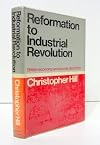
Book goes from the the fag end of the middle ages ( of the feudal economic system) to the beginning of modern society (of industrial capitalism.) It's interesting on how beliefs changed along with the political and economic. For example, the Catholic belief in "Purgatory " , which involved drawing on the merits from the community of souls, including dead saints and living monks, through a mediating priesthood , came to be replaced by Protestantism's more individual spiritual balance sheet show more approach ,of individuals fighting for their own Salvation .This effected the wielding of power:
DOMINIONS
In Germany the Reformation led to a system described by the formula *cuius regio, eius religio*: each petty princeling determined the worship of his own dominions. Something of the same sort grew up in England, as the result of lay patronage combined with a growing divergence of political outlook among patrons. Lacking the support of an international church, or even of a bishop who was not a royal civil servant, the parson could not look the squire in the face as an equal. On his voyage round the world Sir Francis Drake not only subjected his chaplain to civil penalties, he also excommunicated him 'out of the church of God and from all the benefits and graces thereof', just as Elizabeth and James I suspended Archbishops of Canterbury.
-p.22 show less
DOMINIONS
In Germany the Reformation led to a system described by the formula *cuius regio, eius religio*: each petty princeling determined the worship of his own dominions. Something of the same sort grew up in England, as the result of lay patronage combined with a growing divergence of political outlook among patrons. Lacking the support of an international church, or even of a bishop who was not a royal civil servant, the parson could not look the squire in the face as an equal. On his voyage round the world Sir Francis Drake not only subjected his chaplain to civil penalties, he also excommunicated him 'out of the church of God and from all the benefits and graces thereof', just as Elizabeth and James I suspended Archbishops of Canterbury.
-p.22 show less
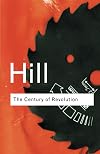
"Recorded history is like a photograph of an iceberg: it deals only with what is visible above the surface. Yet below the surface is the vast mass of the population, surviving sometimes in records when they are born, married, accused of crime, or buried, but otherwise leaving no trace. Through all the far reaching changes of this century which affected the upper classes, the labour of peasants, craftsmen, mariners went on relatively unchanged."
Fascinating book, and his Marxist influence is show more pretty clear - he talks of things in terms of class and the influence of the mode of production (although not using that term explicitly). It's not a narrative history - he divides it up into 4 periods, each of which is given a few pages of narrative describing the events and then is analysed in terms of politics, economics and religion and ideas. If you're looking for a good history in terms of the events that happened then don't read this. If you're interested in analysis of underlying causes and the system at work then this is a great book.
One of the themes that comes up so far is what "liberty" meant even at this early stage - as per usual, it means freedom for the big property owners and the gentry and squires who felt they had a god-given right to rule their villages and parishes in whatever way they wanted in their role as Justices of the Peace. Although Hill is scathing about Charles' government, he points out that often the problem of the Commons was with things like Charles using his prerogatives to stop enclosures (although of course he supported them when they helped him or his favourite courtiers).
He also mentions stuff like the government (not the Commons) trying to fix wages for workers and also restricting apprenticeships to try and prevent people moving around. He mentions an overproduction crisis where after the failure of an attempt to promote British cloth production the government made it illegal for clothiers to sack weavers even in massive overproduction. It gives a very clear picture of the conflicting economic interests that partially drove the Civil War. The monarch's government was concerned mainly with keeping the hierarchy stable and although money was a constant problem, economic growth in itself contributed very little to their cashflow so they didn't care about it so much as taxes were easily evaded and income mainly came through things like monopoly and peerage sales. The Commons was concerned with what was basically the very beginnings of industrial capital in Britain - the ending of monopolies, the free movement of people, free trade, all to secure the unfettered growth of capital. Hill talks about how there was initially a lot of reluctance to contest the King's prerogatives and resistance from the Commons was mainly in terms of restating old or supposed old rights and privileges. But when the situation became past compromise for the new powerful classes of merchants, small industry and land owners mostly outside the peerage, they pushed things far enough to create a war and a very different political system.
His stuff about the government of the Civil War period is interesting, and would make a good comparison with the 18th Brumaire by Marx. The civil war started with a large majority for the parliamentarians in both the Lords and the Commons yet some swapped sides because they were terrified of the thought of the common people having more control over the gentry. Parliament never suffered any significant losses but the creation of the New Model Army with command to officers by merit was necessary to press the advantage, creating a space for radical discussion among people of lower social rank and allowing their social advance, scaring many of the more conservative members of parliament. This led to a split in parliament where the more conservative factions made overtures to Charles I, leading to his execution by the more radical side and the expulsion of many of the conservative members by the army. This is around the point of the Putney debates, where the Levellers put forward their more radical vision that scared the large propertied members of the radical faction, causing a clampdown on the radicals of the lower orders. Hill quotes someone from the anti-Leveller side complaining that the call for the extension of liberty inevitably would mean a call for the extension of property, meaning the expropriation of existing property. They said "Liberty cannot be provided for in a general sense if property be preserved", but meant it from the standpoint of defending property. It's an interesting premonition of later revolutions.
From then on the army which now basically ruled the country was caught in an impossible position - the majority of the propertied classes would never support the continued existence and rule of the army, which was massively expensive and an insult to the gentry's pre-eminence, and therefore a friendly parliament could never be summoned or given control. Yet the generals had destroyed the hope of any massive support from the lower classes and the radicals by clamping down on their leadership and through their own fear of their property being expropriated if they gave them enough leeway. The generals therefore had no base to call on in defence of the army, which was increasingly financially unsustainable and yet couldn't be disbanded without destroying their powerbase. Multiple parliaments under particular rules and franchises intended to give the generals sustainable rule were summoned and failed as they were either too radical or too conservative for their liking. The army rule introduced more centralisation and was efficient in many ways but its encroachment of the prerogatives of the gentry in the counties was a major source of opposition to it. After Cromwell's death, the army was totally unable to retain control and conservatives in union with former radicals and parts of the army took control and called for the return of Charles II, to restore the order of sacrosanct property and gentry rule under a more powerful parliament.
Another interesting thing is his mention of increased taxes during the republic requiring people to sell up their tied down assets - things like plate - in order to pay them, creating a greater flow of capital which accelerated development and the accumulation of wealth. The history of the entire period is one of capital becoming more and more dominant, a trend reflected in politics - Whigs and Tories swap places, with Whigs going from outsiders (although rich outsiders) to the only political party worth anything, with their proto-capitalist policies being accepted wisdom. The Tories disappear into irrelevance as they lose power, wealth and their absolute support for the monarchy means less and less. Significant patronage no longer flowed from the king, but instead from positions determined by parliament. The monarch lost the vast majority of his lands and from this point on was reliant on parliamentary income. It's interesting how after the Civil War there were multiple opportunities for a further revolution which would have benefited one or the other parties but the moderate wings of both were absolutely against it because of the fear of stirring up the common people, which might lead to further attacks on their property. Part of the convergence between the two was their interests converged so much, both in property and in the importance of a stable system of finance to their own investments. The economic change was truly revolutionary.
It's important to note some of the stuff he leaves out in the book. Part of it is understandable on a length basis, but still. I've said above that it's not a narrative history - he leaves out a lot of details of events in favour of details of broad trends. He also namedrops a lot of major figures in art and writing without describing them, although I was fine without knowing who they were. It's very much a history of England - Scotland and Ireland appear only a few times when they directly affect England. This means no discussion of what led to the Act of Union (past basic mention of "was good for trade and development) and no discussion about the repression of Ireland or the system of property that profited English upper class there (apart from simply saying "it existed and it happened"). Which is understandable length wise but kind of frustrating. It also only very rarely mentions the colonies and then only to what extent it profits English ruling class. The slave trade only comes up in terms of how the monopoly was seized from the Dutch and the profits it made for ports. It seems kind of inadequate sometimes. Finally, women are given short shrift here. It's understandable that when talking specifically about an entirely male government women are talked about less. But it's frustrating that women are mentioned only very rarely and in tiny sentences, like saying "women had more freedom in the Civil War period because men were away as soldiers" and not expanding, mentioning women having to work at home alone with men out at wage work but not expanding. It's a little disappointing there's not more. I'd also say that personally I found the sections where he talked about the arts a little weak, although that might be because I know very little about them.
Nevertheless, with the caveats above in mind, a fascinating and interesting book. I don't know how it compares to other histories but personally I found its choice of subjects and the style of analysis exactly what I wanted to read and perfect for comparing and contrasting with modern history and seeing similarities as well as better understanding how class societies change and develop.
The men of property won freedom - freedom from arbitary taxation and arbitrary arrest, freedom from religious persecution, freedom to control the destinies of their country through their elected representatives, freedom to buy and sell. They also won freedom to evict copyholders and cottagers, to tyrannise over their villages, to hire unprotected labour in the open market... The smaller men failed in all spheres to get their freedom recognised, failed to win either the vote or economic security.show less
Freedom is not something abstract. It is the right of certain people to do certain things... Only very slowly and very late have men come to understand that unless freedom is universal it is only extended privilege. "If the common people have no more freedom in England," Winstanley asked, "but only to live among their elder brothers and work for them for hire, what freedom have they in England more than we have in Turkey or France?"...
In commending the actions of the men of the seventeenth century, as we should, in noting the very real constitutional, economic and intellectual advances, let us also remember how much of the lives of how many men and women is utterly unknown to us.
Lists
Awards


You May Also Like


Associated Authors
Statistics
- Works
- 40
- Also by
- 10
- Members
- 4,797
- Popularity
- #5,235
- Rating
- 4.1
- Reviews
- 32
- ISBNs
- 234
- Languages
- 7
- Favorited
- 9


