
Maha Addasi
Author of Time to Pray
About the Author
Image credit: via Chicago Review Press
Works by Maha Addasi
Tagged
Common Knowledge
- Birthdate
- 1968
- Gender
- female
- Education
- Butler University (BA)
Vermont College of Fine Arts (MFA) - Occupations
- journalist
children's author - Short biography
- Maha Addasi was born and grew up in Kuwait. After graduating from Butler University with a degree in Journalism, she worked in public relations for the Noor Al Hussein Foundation, directed by Queen Noor of Jordan. She has been a producer and news correspondent for Jordan Television, Dubai Television, and the BBC, where she produced Badia, a documentary about the Bedouin tribes of Jordan. For Dubai Television, she contributed to Focus on Arabia, a documentary that presented cultures and traditions from every corner of the Arab world. Her books include The White Nights of Ramadan (Smithsonian Notable Book for Children), Time to Pray (Arab American Book Award Honor), and A Kid’s Guide to Arab American History (Arab American Book Award Winner). She has an MFA in Writing for Children and Young Adults from Vermont College and lives in Fairfax, Virginia.
(source: Highlights Foundation) - Nationality
- Kuwait
- Birthplace
- Kuwait
- Places of residence
- Kuwait
Indianapolis, Indiana, USA
Fairfax, Virginia, USA - Associated Place (for map)
- Kuwait
Members
Reviews

A young Kuwaiti girl and her two little brothers eagerly await the coming of Girgian - a holiday celebrated in the Persian Gulf** states during the middle of the month of Ramadan, at the time of the full moon - anticipating the joy of dressing up in colorful costumes, and collecting candy from all the neighbors. Ramadan (and Girgian, of course) can be fun, Noor tells her grandmother, and is gently reminded that the month of fasting, while indeed fun, is much more than that...
I really enjoyed show more The White Nights of Ramadan, and the glimpse it offered into a cultural practice completely unknown to me! I had never heard of the holiday of Girgian - a holiday within a holiday, really - but was struck by its similarity (in some senses) to Halloween. That alone would recommend it to me! The accompanying illustrations by Ned Gannon, done in oil paint, were lovely, making excellent use of both color and light. With an engaging tale sure to strike a chord with young readers everywhere (what child doesn't love candy?), and beautiful illustrations that capture the magic of the "white nights," this is definitely a title I would (with caveat - see below) recommend to those looking for good titles about Ramadan!
**I was more than a little dismayed to see that the Persian Gulf was referred to as the "Arabian Gulf" (with "Persian" in parentheses), both in the front dust-jacket description, and in the author's note at the end. For those not in the know, there has been a dispute concerning the name of this body of water for the last few decades, fueled by Arab nationalism. See section four of the relevant Wikipedia article for a long list of historians (many of them Arab) who are probably rolling in their graves, at this ahistorical nonsense. Although a minor detail, when it comes to appreciating this otherwise excellent book, parents and educators should be aware of it, and ready to correct any misperception it may create in young readers. show less
I really enjoyed show more The White Nights of Ramadan, and the glimpse it offered into a cultural practice completely unknown to me! I had never heard of the holiday of Girgian - a holiday within a holiday, really - but was struck by its similarity (in some senses) to Halloween. That alone would recommend it to me! The accompanying illustrations by Ned Gannon, done in oil paint, were lovely, making excellent use of both color and light. With an engaging tale sure to strike a chord with young readers everywhere (what child doesn't love candy?), and beautiful illustrations that capture the magic of the "white nights," this is definitely a title I would (with caveat - see below) recommend to those looking for good titles about Ramadan!
**I was more than a little dismayed to see that the Persian Gulf was referred to as the "Arabian Gulf" (with "Persian" in parentheses), both in the front dust-jacket description, and in the author's note at the end. For those not in the know, there has been a dispute concerning the name of this body of water for the last few decades, fueled by Arab nationalism. See section four of the relevant Wikipedia article for a long list of historians (many of them Arab) who are probably rolling in their graves, at this ahistorical nonsense. Although a minor detail, when it comes to appreciating this otherwise excellent book, parents and educators should be aware of it, and ready to correct any misperception it may create in young readers. show less
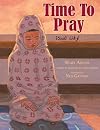
I absolutely loved this book. I enjoy the content but enjoyed the fact that it was written in both english and arabic! I thought incorporating another language in the book allowed he book to reach more people and help people who are either trying to learn english or arabic, learn it easier. I enjoy how it shows another angle of how children of arabic culture learn their roots and they way and reasons they do things. I loved how the young girl learned so much about her culture by traveling to show more see her grandmother, experiencing the culture of the unnamed middle eastern country and the family love that surrounded her. This book focused on the appreciation that the young girl had for the mosque and prayer, because all though she was not old enough to participate she enjoyed learning about it so much. show less
Written by Maha Addasi, "Time to Pray" is a colorful, well-written book that tells the story of a young Muslim girl learning about Muslim culture and prayer. This book incorporates illustrations, English and Arabic text, and a relatable character to convey the idea that it is important to understand cultures that may be different from one’s own, and to convey a basic understanding of Muslim religion and prayer.
Throughout this story, the main character, Yasmin, is visiting her grandmother show more in the Middle East. She learns the different aspects of her Muslim culture and how to pray. The author chose to have the text presented in English and Arabic on each page. This element draws the reader into the story and gives them a deeper look into the Muslim culture by seeing the language written on the pages. Along with this, Yasmin is a character that children can relate to because she is curious for answers and wants to learn, which is a characteristic of children. Through Yasmin’s observations and questions, the author also presents Arabic words to the reader that are written in English. For example, Yasmin’s grandmother refers to her as “Habibti,” which is explained through the quote, “I like it when Teta calls me Habibti, my love.” The authors use of Arabic words throughout the story, highlights the message of understanding different cultures.
The illustrations, done by Ned Gannon, bring this story to life. For example, the illustrations are depicted as watercolor paintings, using colors that are relevant to cultures in the Middle East. These illustrations of the setting and the characters allow the readers to get an inside look at the Muslim culture and how it is practiced. The author also provides different explanations throughout the story to inform the reader of the prayer routines for Muslims. This is done through dialogue between Yasmin and her grandmother. For example, when Yasmin expresses her desire to learn about the Muslim prayers, her grandmother makes pray clothes for her while explaining the five times a day that Muslims pray. Through this relationship, the reader is provided with enough information about Muslim culture without it being overwhelming, which leads the reader to the message of the aspects of Muslim culture and an understanding of a culture that may be different from one’s own.
This book is beautifully illustrated and immediately captured my attention due to the story also being written in Arabic. I think the author’s use of a relatable character, different languages, and information presented through a story successfully conveys the message of understanding a culture that may be different from one’s own and understanding the basics of Muslim religion. show less
Throughout this story, the main character, Yasmin, is visiting her grandmother show more in the Middle East. She learns the different aspects of her Muslim culture and how to pray. The author chose to have the text presented in English and Arabic on each page. This element draws the reader into the story and gives them a deeper look into the Muslim culture by seeing the language written on the pages. Along with this, Yasmin is a character that children can relate to because she is curious for answers and wants to learn, which is a characteristic of children. Through Yasmin’s observations and questions, the author also presents Arabic words to the reader that are written in English. For example, Yasmin’s grandmother refers to her as “Habibti,” which is explained through the quote, “I like it when Teta calls me Habibti, my love.” The authors use of Arabic words throughout the story, highlights the message of understanding different cultures.
The illustrations, done by Ned Gannon, bring this story to life. For example, the illustrations are depicted as watercolor paintings, using colors that are relevant to cultures in the Middle East. These illustrations of the setting and the characters allow the readers to get an inside look at the Muslim culture and how it is practiced. The author also provides different explanations throughout the story to inform the reader of the prayer routines for Muslims. This is done through dialogue between Yasmin and her grandmother. For example, when Yasmin expresses her desire to learn about the Muslim prayers, her grandmother makes pray clothes for her while explaining the five times a day that Muslims pray. Through this relationship, the reader is provided with enough information about Muslim culture without it being overwhelming, which leads the reader to the message of the aspects of Muslim culture and an understanding of a culture that may be different from one’s own.
This book is beautifully illustrated and immediately captured my attention due to the story also being written in Arabic. I think the author’s use of a relatable character, different languages, and information presented through a story successfully conveys the message of understanding a culture that may be different from one’s own and understanding the basics of Muslim religion. show less
As someone who is not very familiar with Muslim culture, I really enjoyed reading this multicultural work. Every page was written in both English and Arabic, which gave me an idea of the language in the Muslim culture. I was able to learn that they do not use the same letters as English, rather have a completely different set of symbols for written language. I loved reading about Yasmin’s daily activities when visiting her grandmother, such as her desire to learn how to properly pray five show more times a day. Watching Yasmin’s eagerness to learn added to the story because as she was eager to learn, so was I. This book taught me about the traditional foods, such as rice with plain yogurt, something I never knew would taste well together! While reading this book, I was able to compare and contrast the similarities of Muslim culture, such as praying to a god, but the differences, such as that they pray five times a day, while wearing special clothes, which is different than how I pray in my culture. The bright, beautiful pictures really helped guide the story, as I was able to put the words to a picture to see what Yasmin needed to properly pray according to her Muslim culture. While Yasmin’s Teta (grandmother) was teaching her the ways of Muslim culture, I was also learning, which is why I definitely would recommend this book to all readers. show less
Lists
Awards


You May Also Like


Associated Authors
Statistics
- Works
- 3
- Members
- 224
- Popularity
- #100,171
- Rating
- 4.1
- Reviews
- 31
- ISBNs
- 11