
Asma Mobin-Uddin
Author of My Name Is Bilal
About the Author
Image credit: via Penguin Random House
Works by Asma Mobin-Uddin
Tagged
Common Knowledge
There is no Common Knowledge data for this author yet. You can help.
Members
Reviews

Although too young to participate in the full month of Ramadan fasting, Leena is determined to abstain from food and water for at least one day, selecting the very first Friday of the season, when her Aunt Sana will be visiting with the family. But when she is invited to her friend Julia's birthday party - a party with a pony! - the very same day, she is faced with a difficult choice. Leena doesn't want to give up her fast (and the subsequent breaking of the fast, together with her family), show more but also doesn't want to miss the party. If she attends the party while also fasting, can she hold to her intention, in the face of chocolate cake and lemonade?
This warmhearted, realistic examination of one young Muslim girl's experiences, in trying to reconcile her religious duties with the social demands of a multicultural society - one in which many of her friends do not observe the same customs - is absolutely spot-on, really highlighting the importance of Ramadan in a way I have not seen in other children's books on the subject. Perhaps because the reader can see the tension in A Party in Ramadan, is witness to the young heroine's struggle to reconcile her two conflicting desires, as well as what she believes she should do, the narrative here (without being morose) is really quite moving. The happy ending is just icing on the cake!
With an engaging story, appealing pastel pencil illustrations by Laura Jacobsen, and a little author's note at the end, explaining the significance of the month of Ramadan, this is now one of my favorite children's books on the topic! Highly recommended (along with Maha Addasi's The White Nights of Ramadan) to anyone looking for high quality stories set during this important time in the Islamic calendar! show less
This warmhearted, realistic examination of one young Muslim girl's experiences, in trying to reconcile her religious duties with the social demands of a multicultural society - one in which many of her friends do not observe the same customs - is absolutely spot-on, really highlighting the importance of Ramadan in a way I have not seen in other children's books on the subject. Perhaps because the reader can see the tension in A Party in Ramadan, is witness to the young heroine's struggle to reconcile her two conflicting desires, as well as what she believes she should do, the narrative here (without being morose) is really quite moving. The happy ending is just icing on the cake!
With an engaging story, appealing pastel pencil illustrations by Laura Jacobsen, and a little author's note at the end, explaining the significance of the month of Ramadan, this is now one of my favorite children's books on the topic! Highly recommended (along with Maha Addasi's The White Nights of Ramadan) to anyone looking for high quality stories set during this important time in the Islamic calendar! show less

A young Pakistani-American girl named Aneesa is despondent as the holiday of Eid-al-Adha begins in this engaging story, missing her parents, who are performing the Hajj pilgrimage in far-away Saudi Arabia. Nonni, her grandmother, soon cheers her up however, showing her the lovely new Eid clothes she is to wear - three sets, one for each day of the holiday! - promising her that they will spend some quality grandmother-granddaughter time together, and tempting her with some delicious lamb show more korma. Although comforted, Aneesa's thoughts are still far away with her parents (even during the imam's sermon at the mosque), until she meets two girls at the reception after the services, and realizes that the newcomers, Zayneb and Mariam, are refugees who have almost nothing. Suddenly, her mind on something other than her own problems, Aneesa decides just what will make this the best Eid ever...
After greatly enjoying this author's A Party in Ramadan, I have been meaning to read The Best Eid Ever, erroneously believing that it concerned the holiday of Eid-al-Fitr, which marks the end of Ramadan. Imagine my surprise and delight when I discovered that this story concerns Eid-al-Adha! Unlike Ramadan and Eid-al-Fitr, which are explored in a number of excellent picture-books (The White Nights of Ramadan, Night of the Moon: A Muslim Holiday Story, Moon Watchers: Shirin's Ramadan Miracle), I have never seen an English-language story about Eid al-Adha, so this book is particularly welcome, for that reason. It is also just a very engaging story, one that celebrates generosity, and the importance of giving, in the Muslim tradition. Recommended to anyone looking for Eid-al-Adha stories for children, or for titles featuring Pakistani-American families. show less
After greatly enjoying this author's A Party in Ramadan, I have been meaning to read The Best Eid Ever, erroneously believing that it concerned the holiday of Eid-al-Fitr, which marks the end of Ramadan. Imagine my surprise and delight when I discovered that this story concerns Eid-al-Adha! Unlike Ramadan and Eid-al-Fitr, which are explored in a number of excellent picture-books (The White Nights of Ramadan, Night of the Moon: A Muslim Holiday Story, Moon Watchers: Shirin's Ramadan Miracle), I have never seen an English-language story about Eid al-Adha, so this book is particularly welcome, for that reason. It is also just a very engaging story, one that celebrates generosity, and the importance of giving, in the Muslim tradition. Recommended to anyone looking for Eid-al-Adha stories for children, or for titles featuring Pakistani-American families. show less
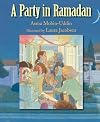
I absolutely love this CRF book. The plot of this book is so well developed that I didn't need to necessarily know anything about Ramadan to follow along. For example, throughout the book the reader is given information on the traditions and Leena's want to participate. Another thing I love about this book is that it challenges readers to see a new perspective. There are not many books that focus on Islamic culture, so this book is a really great window into that culture as well as a mirror show more (in my case) for Leena's friends and how they can cross cultural divides to support their friend. The big idea of this book is to value your culture. show less
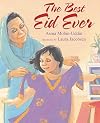
Aneesa is usually thrilled during Eid-al-Adha, the Muslim “Festival of Sacrifice” that marks the ending of the Hajj pilgrimage. But this year she feels sad because her parents are in Saudi Arabia for the Hajj, and not with her. Her grandmother promises they can still have fun. Nonni makes Aneesa her favorite lamb curry and reveals a hidden box containing three beautiful outfits to wear for the holiday. Aneesa is feeling better when they head to the prayer hall to hear a sermon. show more Afterwards she notices and meets two little girls who turn out to be refugees. She learns that refugees are often left with very few or none of their own possessions and questions how such loss fits with the idea that Allah will provide. Nonni explains that God helps everyone “but sometimes not in the way that you might think. Instead of just taking away the bad times, he might send good people to help them.” Aneesa is inspired by the true spirit of sacrifice but doesn’t expect that the girls’ father may view the gift as charity. But then he sees Aneesa and Nonni hiding nearby and accepts the gift for his daughters’ sake. Aneesa and her grandmother end the night with pizza instead of the lamb curry, both agreeing that they’ve had a satisfying Eid.
This book is well-written and easy to relate to, teaching its lesson without resorting to preachiness. There is a glossary in the back explaining key words and concepts. Pastel illustrations are realistic but stylized enough to read well at a distance if the book were being used in a classroom setting. The book teaches about Eid-Al-Adha by having its likable protagonist come to her own conclusions about charity and sacrifice. Her worldview expands as she learns more about human suffering and the responsibilities that come with growing up and following religious and ethical guidelines. School Library Journal wrote “This is a welcome contribution, giving much-needed visibility to a celebration observed by over ten million people in North America." A different School Library Journal article, “Say the Word Again? Eid” by Fawzia Galani-Williams laments the lack of books like this in most library collections:
“When I visit public libraries and peruse resources on children’s holiday literature, I am always confronted with a glaring absence. The two major celebrations in the Muslim world, Eid-ul-Fitr and Eid-ul-Adha (see explanation boxes), seem remarkably obscure in American libraries. If I am fortunate, I may find one or two nonfiction titles addressing the topic. While informational books on the Islamic holidays are few, fictional tales are even more scarce. Not surprisingly, very few teachers and librarians are familiar with them. When I recently asked a group of children librarians if they had ever heard of Eid, there was silence. “Say the word again?” said one librarian. Even my computer’s spell-check, which recognizes holidays like Hanukkah, Christmas and Kwanzaa, underlines Eid in red–highlighting it as a mistake.”
As Judith V. Lechner points out in her extremely helpful annotated bibliography “The World of Arab and Muslim Children in Children’s Books,” “relatively few books exist in English that give children a vision of the Arab world or of the Muslim religion.” As librarians what can we do about this state of affairs? I believe we can start by realizing how inadequate our collections are in their representation of Arab and Muslim children and teens. Yes we are limited by how few titles are in print, but there are we things we may want to do to compensate or effect change. We may wish to order multiple copies of useful titles like this so that we can merchandise them and recommend them to teachers who may not know about Eid-Al-Adha but want to teach broadly about holidays and cultures. We may want to keep titles longer, or weed them less aggressively, even if they don’t have the highest number of circulations in the picture book section, so that we don’t lose track of the books like this that we do have. If we have Collection Development staff at our libraries we can press them to beef up titles on Arab-Americans and Muslims, so that they know we see a lack on the branch level. If we are selectors ourselves we need to be aware of multicultural book awards and smaller publishing houses so that we purchase titles that contribute to increasing visibility for under-represented groups. The Best Eid Ever belongs in all school and public libraries because it presents both its story and background information on this holiday well. We need all the books like this that we can find to help fill a major gap in most collections that all too often goes unrecognized.
Works Cited:
Galani-Willams, Fawzia. "Say The Word Again? Eid." School Library Journal Dec 1 2007. Web. Mar 14, 2010
Lechner, Judith V. "The World of Arab and Muslim Children in Children’s Books”. No Date. Web. Mar 14, 2010
Mobin-Uddin, Asma. Best Eid Ever. Ill. by Laura Jacobsen. Honesdale, PA: Boyds Mills Press, 2007. Print. show less
This book is well-written and easy to relate to, teaching its lesson without resorting to preachiness. There is a glossary in the back explaining key words and concepts. Pastel illustrations are realistic but stylized enough to read well at a distance if the book were being used in a classroom setting. The book teaches about Eid-Al-Adha by having its likable protagonist come to her own conclusions about charity and sacrifice. Her worldview expands as she learns more about human suffering and the responsibilities that come with growing up and following religious and ethical guidelines. School Library Journal wrote “This is a welcome contribution, giving much-needed visibility to a celebration observed by over ten million people in North America." A different School Library Journal article, “Say the Word Again? Eid” by Fawzia Galani-Williams laments the lack of books like this in most library collections:
“When I visit public libraries and peruse resources on children’s holiday literature, I am always confronted with a glaring absence. The two major celebrations in the Muslim world, Eid-ul-Fitr and Eid-ul-Adha (see explanation boxes), seem remarkably obscure in American libraries. If I am fortunate, I may find one or two nonfiction titles addressing the topic. While informational books on the Islamic holidays are few, fictional tales are even more scarce. Not surprisingly, very few teachers and librarians are familiar with them. When I recently asked a group of children librarians if they had ever heard of Eid, there was silence. “Say the word again?” said one librarian. Even my computer’s spell-check, which recognizes holidays like Hanukkah, Christmas and Kwanzaa, underlines Eid in red–highlighting it as a mistake.”
As Judith V. Lechner points out in her extremely helpful annotated bibliography “The World of Arab and Muslim Children in Children’s Books,” “relatively few books exist in English that give children a vision of the Arab world or of the Muslim religion.” As librarians what can we do about this state of affairs? I believe we can start by realizing how inadequate our collections are in their representation of Arab and Muslim children and teens. Yes we are limited by how few titles are in print, but there are we things we may want to do to compensate or effect change. We may wish to order multiple copies of useful titles like this so that we can merchandise them and recommend them to teachers who may not know about Eid-Al-Adha but want to teach broadly about holidays and cultures. We may want to keep titles longer, or weed them less aggressively, even if they don’t have the highest number of circulations in the picture book section, so that we don’t lose track of the books like this that we do have. If we have Collection Development staff at our libraries we can press them to beef up titles on Arab-Americans and Muslims, so that they know we see a lack on the branch level. If we are selectors ourselves we need to be aware of multicultural book awards and smaller publishing houses so that we purchase titles that contribute to increasing visibility for under-represented groups. The Best Eid Ever belongs in all school and public libraries because it presents both its story and background information on this holiday well. We need all the books like this that we can find to help fill a major gap in most collections that all too often goes unrecognized.
Works Cited:
Galani-Willams, Fawzia. "Say The Word Again? Eid." School Library Journal Dec 1 2007. Web. Mar 14, 2010
Lechner, Judith V. "The World of Arab and Muslim Children in Children’s Books”. No Date. Web. Mar 14, 2010
Mobin-Uddin, Asma. Best Eid Ever. Ill. by Laura Jacobsen. Honesdale, PA: Boyds Mills Press, 2007. Print. show less
Lists
Awards


You May Also Like


Associated Authors
Statistics
- Works
- 3
- Members
- 343
- Popularity
- #69,542
- Rating
- 4.2
- Reviews
- 35
- ISBNs
- 12