
Denys Johnson-Davies (1922–2017)
Author of The Anchor Book of Modern Arabic Fiction
About the Author
Denys Johnson-Davies was born in Vancouver, British Columbia, Canada on June 21, 1922. He received a degree in Arabic from St. Catharine's College, Cambridge. During World War II, he joined the Arabic section of the BBC. After the war, he moved to Cairo and taught translation at the British show more Institute. He translated more than 30 Arabic novels, short-story collections, and anthologies including Modern Arabic Short Stories, The Time and the Place and Other Stories, The Journey of Ibn Fattouma, Arabian Nights and Days, Echoes of an Autobiography, Under the Naked Sky: Short Stories from the Arab World, and Homecoming: 60 Years of Egyptian Short Stories. He also wrote books for children, a memoir entitled Memories in Translation: A Life Between the Lines of Arabic Literature, and a collection of his own writing entitled Fate of a Prisoner and Other Stories. He died on May 22, 2017 at the age of 94. (Bowker Author Biography) show less
Works by Denys Johnson-Davies
Al-Ghazali on the Manners Relating to Eating: Book XI of the Revival of the Religious Sciences (Ghazali Series) (2000) — Translator, Commentator — 28 copies, 1 review
In a Fertile Desert: Modern Writing from the United Arab Emirates (2000) — Editor; Translator — 18 copies, 2 reviews
Homecoming: Sixty Years of Egyptian Short Stories (Modern Arabic Literature) (2012) — Editor; Translator — 9 copies
The Essential Naguib Mahfouz: Novels, Short Stories, Autobiography (Modern Arabic Literature) (2011) 7 copies
The Naguib Mahfouz Reader (Modern Arabic Literature), edited by Denys Johnson-Davies (2016) 2 copies
Ten Tales of Goha 1 copy
AA26 ذئب الصحراء والقط الأسد 1 copy
ذئب الصحراء واللؤلؤة السوداء 1 copy
What Happened to Zeeko 1 copy
ذئب الصحراء وملكة القراصنة 1 copy
Associated Works
Distant View of a Minaret and Other Stories (1983) — Translator, some editions; Introduction, some editions — 213 copies, 5 reviews
Tagged
Common Knowledge
- Birthdate
- 1922-06-21
- Date of death
- 2017-05-22
- Gender
- male
- Education
- University of Cambridge
- Occupations
- author
translator - Relationships
- Crociani, Paola (wife)
- Short biography
- Denys Johnson-Davies was an author and one of the pre-eminent translators of Arabic fiction into English, including many of the Nobel-Prize-winning author Naguib Mahfouz. Born in Canada, Johnson-Davies studied in London and Cambridge before moving to Cairo.
- Nationality
- Canada
- Birthplace
- Vancouver, British Columbia, Canada
- Places of residence
- Vancouver, British Columbia, Canada
Marrakesh, Morocco
Cairo, Egypt
London, England, UK
Sudan
Uganda (show all 7)
Kenya
Members
Reviews
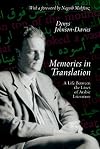
A brief tour through the world of Arabic literature in translation, as seen through the eyes and career of one of its most prolific English translators. Johnson-Davies does not try to provide a deep analysis of different literary themes or traditions in the Arab-speaking lands, and this is also not a detailed autobiography. Nevertheless, the arc of his career and his interactions with some of the region's most distinguished writers offer insights into how difficult it has been to attract show more readership for Arabic-language works in other lands and how both the Arabic literary scene and the world as a whole is the poorer for this neglect. I was particularly struck by the author's comment that for most of his career, he had to earn his actual living through jobs in other fields like journalism or consulting, while translating was simply a hobby that paid virtually nothing in return for the amount of effort invested in it. Some of his tales of translation problems or conflicts with different bureaucracies are also quite funny, although at times one wishes for a bit more detail on either his own work or those parts of the Arabic literary tradition that are less visible to readers in translation. This is a quick but entertaining read, especially for anyone who has already read some of the translated authors and volumes that are referred to in the book. show less

Accurate, well written, good illustrations. Good biography for Muslim youth who don’t know much about Islam or Prophet Muhammad, peace and blessings of God be upon him. Good for non-Muslim youth as well as Muslims who just love to read about the Prophet.
Denys Johnson-Davies is a respected Arabic-English translator with more than 30 translated volumes to his credit. In recognition of this contribution to Arabic literature, he was awarded the 2007 Sheikh Zayed Book Award for Personality of the Year in the Field of Culture. According to Wikipedia, this award is “one of the most prestigious and well-funded prizes in the Arab World” and is valued at around $300,000.
Johnson-Davies spent his early childhood years in Egypt, Sudan, Uganda and show more Kenya, until amebic dysentery caused him to be sent back to England at age twelve. Passing the admissions test to Cambridge at age fourteen, he spent a year at the School of Oriental Studies before being admitted to Cambridge at age sixteen, where he studied Hebrew and Arabic. The latter led to an offer of employment with the Arabic section of the BBC, where he became proficient in Arabic. His involvement with translation progressed while living intermittently in England and various Middle Eastern countries, during periods of employment as a teacher of translation, college professor, American oil company representative, lawyer, publisher and writer.
Johnson-Davies’ memoir is organized primarily by significant influences and Arabic authors, of whom I was only familiar with Naguib Mahfouz and Tayed Salih. Interwoven with his discussion of the authors with whom he worked are brief references to issues encountered with translation, some general and some specific to Arabic-English translation. He describes his philosophy of translation as the art of taking the Arabic text and reworking it, not into an exact translation, but rather into acceptable English. Using as an example Salih's The Season of Migration, a book translated into 21 other languages, he notes that those translating Arabic works into other languages often actually work from the English translation, rather than the original Arabic. Examples are also included of the manner in which political and religious issues impact Arabic writers and translators, even on the level of decisions such as whether to use colloquial language or classical Arabic.
Johnson-Davies describes the process of selecting works for translation as significantly different in the case of Arabic writing versus more common languages, such as French and German. In the latter instance, the selection is often made by a publisher, who then seeks out an appropriate translator. His process of choosing Arabic works for translation was generally the opposite, as mainstream publishers did not employ individuals interested in or fluent in Arabic. Therefore, his role as a translator often began with seeking a commitment from a publishing house. Johnson-Davies’ interactions with the Nobel Laureate, Naguib Mahfouz, was offered as an interesting example of this dilemma. Despite being the first to translate a Mahfouz short story, Johnson-Davies declined Mahfouz's request that he translate his novels, feeling that they would likely not draw an English audience. Mahfouz later signed a contract with the American University in Cairo (AUC) Press, who approached Johnson-Davies about assisting with a team approach to translation of his novels. He once again declined, believing that translation should be performed solo. Although he did eventually translate some of Mahfouz's works, in the end, the mainstream publication of Mahfouz’s considerable volume of works through AUC Press was likely a major factor in his being awarded the Nobel Prize.
I enjoyed this memoir as a fast, light read that was written largely in an anecdotal style, although I would have gotten more out of it had I been familiar with more of the authors. I also wish that Johnson-Davies had gone into greater depth regarding his experience and insights regarding the translation process itself. show less
Johnson-Davies spent his early childhood years in Egypt, Sudan, Uganda and show more Kenya, until amebic dysentery caused him to be sent back to England at age twelve. Passing the admissions test to Cambridge at age fourteen, he spent a year at the School of Oriental Studies before being admitted to Cambridge at age sixteen, where he studied Hebrew and Arabic. The latter led to an offer of employment with the Arabic section of the BBC, where he became proficient in Arabic. His involvement with translation progressed while living intermittently in England and various Middle Eastern countries, during periods of employment as a teacher of translation, college professor, American oil company representative, lawyer, publisher and writer.
Johnson-Davies’ memoir is organized primarily by significant influences and Arabic authors, of whom I was only familiar with Naguib Mahfouz and Tayed Salih. Interwoven with his discussion of the authors with whom he worked are brief references to issues encountered with translation, some general and some specific to Arabic-English translation. He describes his philosophy of translation as the art of taking the Arabic text and reworking it, not into an exact translation, but rather into acceptable English. Using as an example Salih's The Season of Migration, a book translated into 21 other languages, he notes that those translating Arabic works into other languages often actually work from the English translation, rather than the original Arabic. Examples are also included of the manner in which political and religious issues impact Arabic writers and translators, even on the level of decisions such as whether to use colloquial language or classical Arabic.
Johnson-Davies describes the process of selecting works for translation as significantly different in the case of Arabic writing versus more common languages, such as French and German. In the latter instance, the selection is often made by a publisher, who then seeks out an appropriate translator. His process of choosing Arabic works for translation was generally the opposite, as mainstream publishers did not employ individuals interested in or fluent in Arabic. Therefore, his role as a translator often began with seeking a commitment from a publishing house. Johnson-Davies’ interactions with the Nobel Laureate, Naguib Mahfouz, was offered as an interesting example of this dilemma. Despite being the first to translate a Mahfouz short story, Johnson-Davies declined Mahfouz's request that he translate his novels, feeling that they would likely not draw an English audience. Mahfouz later signed a contract with the American University in Cairo (AUC) Press, who approached Johnson-Davies about assisting with a team approach to translation of his novels. He once again declined, believing that translation should be performed solo. Although he did eventually translate some of Mahfouz's works, in the end, the mainstream publication of Mahfouz’s considerable volume of works through AUC Press was likely a major factor in his being awarded the Nobel Prize.
I enjoyed this memoir as a fast, light read that was written largely in an anecdotal style, although I would have gotten more out of it had I been familiar with more of the authors. I also wish that Johnson-Davies had gone into greater depth regarding his experience and insights regarding the translation process itself. show less

A collection of short stories and excerpts by 75 writers, with a heavy slant towards Egyptian literature. As could be expected, the quality of stories varies, but overall is is a great book for dipping in, many atmospheric and enjoyable pieces. Given how little Arabic fiction is generally available in english translation, pretty much everyone is bound to walk away with some new interesting finds.
Lists
Awards


You May Also Like


Associated Authors
Statistics
- Works
- 62
- Also by
- 9
- Members
- 572
- Popularity
- #43,782
- Rating
- 3.9
- Reviews
- 25
- ISBNs
- 89
- Languages
- 1