
Tayeb Salih (1929–2009)
Author of Season of Migration to the North
About the Author
Author Tayeb Salih was born in northern Sudan in 1929. He studied at the University of Khartoum and the University of London. He was one of the best known and most translated Arabic novelists of the 20th century. His works include Season of Migration to the North and The Wedding of Zein. He was show more also a broadcaster for the BBC Arabic Service, wrote a weekly column for the London-based Arabic language newspaper al Majalla, and worked at the U.N. Educational, Scientific and Cultural Organization (UNESCO) in Paris. He died from complications related to a kidney condition on February 18, 2009. (Bowker Author Biography) show less
Image credit: Illustration by Zero.
Works by Tayeb Salih
Complete Works 4 copies
دومة ود حامد 4 copies
مريود 1 copy
مريود 1 copy
للمدن تفرد وحديث: الغرب 1 copy
في صحبة المتنبي ورفاقه 1 copy
Musim Hijrah ke Utara 1 copy
دومة ود حامد 1 copy
في رحاب الجنادرية وأصيلة 1 copy
ZEYN'IN DUGUNU 1 copy
Associated Works
African Rhapsody: Short Stories of the Contemporary African Experience (1994) — Contributor — 23 copies
Tagged
Common Knowledge
- Legal name
- Salih, al-Tayyib
الطيب صالح - Birthdate
- 1929-07-12
- Date of death
- 2009-02-18
- Gender
- male
- Education
- University of Khartoum
University of London - Occupations
- novelist
radio broadcaster
short story writer - Nationality
- Sudan
- Birthplace
- Sudan
- Places of residence
- Sudan
UK - Burial location
- Khartoum, Sudan
- Associated Place (for map)
- Sudan
Members
Reviews

Though a translation, this is one of the most beautifully written books I’ve read in a long time - It’s also one of the most violent and disturbing. Written in 1966 soon after Sudan’s independence from Great Britain, it is a searing critique of the impact of colonialism and the re-assertion of power (and revenge) by the conquered over the conqueror. Even more stunning is that the author depicts this power struggle not just between nations but between cultures, races and (most show more surprisingly) gender. The struggle for power is symbolized by the relationships between the main character and the various women in his life and during the novel’s denouement, the struggle is depicted as a rape with horrible consequences for all involved.
The story is told by an unnamed narrator who returns to his Sudanese village along the Nile after having studied poetry in England. His description of his return is heartbreakingly beautiful and as he assures the curious villagers that the English are much like them, he also tells the reader how comforting it is to be home and how alien life in England was for him. He describes his homecoming as being like “a palm tree, a being with a background, with roots, with a purpose.”
Among the villagers is a stranger to the narrator. The stranger, Mustafa Sa’eed and the narrator develop a kind of conflicted relationship when Sa’eed admits that he too, had spent many years “in the North”, studying in England. It is Mustafa and his life both in the Sudanese village and in England that drive the story and that characterize the relationship between “North and South” – Empire and colony.
Though the narrator acknowledges progress made in his village due to British influence, the bond between the two countries is poisoned by the unequal nature of the relationship. This is extended to and symbolized by Sa’eed. For example, Sa’eed’s home in England is described in detail and is decorated with relics from his homeland. Conversely, his Sudanese home has a locked annex which the narrator ultimately enters to find a typically English reading room with not “a single Arab book”. By locking and hiding the this room from the villagers, Mustafa is making a statement about the influence his British time has on him.
Events in the village confirm for the narrator that he too, cannot reconcile North and South. This internal and external conflict reaches a breaking point and the narrator does ultimately come to terms with it. Whether or not he can go forward with his new understanding is left open to the reader’s interpretation.
This is a beautifully written, disturbing book that, though short, takes time to fully digest. show less
The story is told by an unnamed narrator who returns to his Sudanese village along the Nile after having studied poetry in England. His description of his return is heartbreakingly beautiful and as he assures the curious villagers that the English are much like them, he also tells the reader how comforting it is to be home and how alien life in England was for him. He describes his homecoming as being like “a palm tree, a being with a background, with roots, with a purpose.”
Among the villagers is a stranger to the narrator. The stranger, Mustafa Sa’eed and the narrator develop a kind of conflicted relationship when Sa’eed admits that he too, had spent many years “in the North”, studying in England. It is Mustafa and his life both in the Sudanese village and in England that drive the story and that characterize the relationship between “North and South” – Empire and colony.
Though the narrator acknowledges progress made in his village due to British influence, the bond between the two countries is poisoned by the unequal nature of the relationship. This is extended to and symbolized by Sa’eed. For example, Sa’eed’s home in England is described in detail and is decorated with relics from his homeland. Conversely, his Sudanese home has a locked annex which the narrator ultimately enters to find a typically English reading room with not “a single Arab book”. By locking and hiding the this room from the villagers, Mustafa is making a statement about the influence his British time has on him.
Events in the village confirm for the narrator that he too, cannot reconcile North and South. This internal and external conflict reaches a breaking point and the narrator does ultimately come to terms with it. Whether or not he can go forward with his new understanding is left open to the reader’s interpretation.
This is a beautifully written, disturbing book that, though short, takes time to fully digest. show less
Dust rose up behind us, and I watched the bedouin running towards some tattered tents by some bushes southwards of us, where there were diminutive sheep and naked children. Where, O God, is the shade? Such land brings forth nothing but prophets. This drought can be cured only by the sky.
After studying in Europe and having taken a civil servant job in Khartoum, a man returns to his home village on a bend in the Nile only a few times a year. On one visit, he is astonished to meet another show more English-speaking man and is unsure of what to make of a Western-educated man living in a farming village where traditions remain unchanging and education is rare. Mustafa later shares his story, a remarkable one, with the narrator.
This was a remarkable book. Originally published in 1966, it holds many insights about the effects of colonialism that remain relevant today. The narrator allows the customs and traditions of his birthplace commit an injustice, with repercussions that shock everyone. There's a lot going on in this slim novel set in an obscure corner of Sudan and I'm glad to have read it.
The war ended in victory for us all: the stones, the trees, the animals, the iron, while I, lying under this beautiful, compassionate sky, feel that we are all brothers; he who drinks and he who prays and he who steals and he who commits adultery and he who fights and he who kills. The source is the same. No one knows what goes on in the mind of the Divine. Perhaps he doesn't care. Perhaps he is not angry. show less
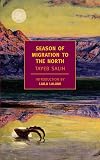
I enjoyed the first half of this book quite a lot. Two men, of different generations, living in the same Sudanese town. Each has traveled and spent time in England for education and work. Each has returned to Sudan--the elder came to this town, bought a farm, married, has children. The younger has returned to his hometown and is as yet unmarried. They returned for different reasons.
The second half begins to get odd, the last 30 pages or so are weird and weirder. I am sure this is somehow a show more discussion of the colonized sending their best and brightest to the colonizer for education and to work with them. And never quite fitting in or being appreciated. I am unclear, though, what the womanizing by Mustafa is really supposed to mean. How does Hosna's, his widow's, fate fit into this? Did he marry her because she was independent and strong, more like the English women he liked? And thus he was her perfect match, and she could not tolerate a more-typical Sudanese match? Can the narrator avoid the same fate as that of Mustafa? He appears to chose to.
The author, born in Sudan, lived most of his life in Europe as well, so perhaps related more to Mustafa and the narrator than to those who did not leave their town and opted not to pursue additional education. Perhaps this book is really about how he felt when returning home? So many questions! show less
The second half begins to get odd, the last 30 pages or so are weird and weirder. I am sure this is somehow a show more discussion of the colonized sending their best and brightest to the colonizer for education and to work with them. And never quite fitting in or being appreciated. I am unclear, though, what the womanizing by Mustafa is really supposed to mean. How does Hosna's, his widow's, fate fit into this? Did he marry her because she was independent and strong, more like the English women he liked? And thus he was her perfect match, and she could not tolerate a more-typical Sudanese match? Can the narrator avoid the same fate as that of Mustafa? He appears to chose to.
The author, born in Sudan, lived most of his life in Europe as well, so perhaps related more to Mustafa and the narrator than to those who did not leave their town and opted not to pursue additional education. Perhaps this book is really about how he felt when returning home? So many questions! show less
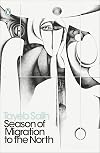
This is excellent writing and excellent translation, overall quite captivating. I enjoy and appreciate this investigation of identity and colonialism and duality and violence. It is full of critique and also humanity. There's quite a focus on this sort of fracturing, infection, dualities of opposing forces. I found it difficult that at the heart of this fight for men's souls are women suffering violence under, it seems, all circumstances. Certainly these women are more central, more almost show more agentive, almost rounded, almost human, than in so many other books; yet in the end they are still ancillary to the journey and decisions of men. I'm not sure whether that is a part of the critique. I'm not sure. show less
Lists
Awards


You May Also Like


Associated Authors
Statistics
- Works
- 26
- Also by
- 8
- Members
- 2,374
- Popularity
- #10,807
- Rating
- 3.8
- Reviews
- 67
- ISBNs
- 68
- Languages
- 15
- Favorited
- 5