
Rukhsana Khan
Author of Big Red Lollipop
About the Author
Image credit: rukhsanakhan.com
Works by Rukhsana Khan
Associated Works
Once Upon an Eid: Stories of Hope and Joy by 15 Muslim Voices (2020) — Contributor — 334 copies, 18 reviews
Tagged
Common Knowledge
- Birthdate
- 1962-03-13
- Gender
- female
- Occupations
- children's book author
- Nationality
- Pakistan (birth)
Canada - Birthplace
- Lahore, Pakistan
- Places of residence
- Dundas, Ontario, Canada
- Associated Place (for map)
- Dundas, Ontario, Canada
Members
Reviews
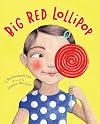
Rubina has been invited to her first birthday party. She is SO EXCITED...until her mother, Ami, says she has to take her fussy little sister Sana along. Ami just doesn't understand how birthday parties work! It's not much fun with Sana along, but the worst thing happens after they get home with their party favors. A long time later, it's Sana's turn to be invited...and now Ami says she has to take the littlest sister, Maryam, along. What will Rubina do?
There are several reasons this is an show more outstanding story. First, it's a universal theme that children will recognize and understand, although it's not one often seen in picturebooks. The absolute, helpless anger at an adult who just doesn't understand is so, so perfect. I think every child will recognize that frustration and every adult can remember a time when they felt those emotions. The clash between siblings, the older child who feels the younger one is getting away with everything, and Rubina's struggle to decide whether or not she'll help Sana, are all sympathetically and realistically portrayed. Finally, I was glad to see the realistic consequences of Sana's attendance at the party - Rubina doesn't get any invitations "for a really long time." Contrary to all those happy multicultural books, where a student from another culture is first mocked for their strangeness, and then accepted without difficulty....Khan says it like it is; kids are the ultimate conformists and they don't generally like different. Rubina's fellow students don't become fascinated by Pakistani family structure, they don't flock around her begging to know about her family; they avoid her. Rubina has to learn how to reconcile the different cultures she is part of - her family and her school - on her own.
Sometimes I'm a fan of Sophie Blackall's art and sometimes I'm not. Here, I definitely am. The energy and movement of her round-faced children, their excited, angry, hurt, happy expressions, and the changing perspectives are the perfect complement to Khan's text.
Verdict: A beautifully nuanced story with elements that will resonate with a wide range of children of different ages and experiences. The basic plot will draw in younger children in a storytime atmosphere, but this book is also an excellent story to give to older elementary children. Recommended for children dealing with different cultures at home and at school, for children with siblings, and for anyone who's ever been frustrated that someone just doesn't understand. show less
There are several reasons this is an show more outstanding story. First, it's a universal theme that children will recognize and understand, although it's not one often seen in picturebooks. The absolute, helpless anger at an adult who just doesn't understand is so, so perfect. I think every child will recognize that frustration and every adult can remember a time when they felt those emotions. The clash between siblings, the older child who feels the younger one is getting away with everything, and Rubina's struggle to decide whether or not she'll help Sana, are all sympathetically and realistically portrayed. Finally, I was glad to see the realistic consequences of Sana's attendance at the party - Rubina doesn't get any invitations "for a really long time." Contrary to all those happy multicultural books, where a student from another culture is first mocked for their strangeness, and then accepted without difficulty....Khan says it like it is; kids are the ultimate conformists and they don't generally like different. Rubina's fellow students don't become fascinated by Pakistani family structure, they don't flock around her begging to know about her family; they avoid her. Rubina has to learn how to reconcile the different cultures she is part of - her family and her school - on her own.
Sometimes I'm a fan of Sophie Blackall's art and sometimes I'm not. Here, I definitely am. The energy and movement of her round-faced children, their excited, angry, hurt, happy expressions, and the changing perspectives are the perfect complement to Khan's text.
Verdict: A beautifully nuanced story with elements that will resonate with a wide range of children of different ages and experiences. The basic plot will draw in younger children in a storytime atmosphere, but this book is also an excellent story to give to older elementary children. Recommended for children dealing with different cultures at home and at school, for children with siblings, and for anyone who's ever been frustrated that someone just doesn't understand. show less

When Rubina is invited to a classmate's birthday party, she is thrilled - until her mother insists that she bring her little sister Sana along. Deaf to her explanations that this just isn't done, Ami insists: either Rubina brings Sana, or she doesn't go herself. Predictably, the results are disastrous: Sana misbehaves at the party, throwing a temper tantrum whenever she doesn't win at the games, and - having gobbled down all the treats in her own goody-bag - eats Rubina's lollipop, carefully show more saved as a indulgence for later. Rubina's anger at this theft, and her protests about its unfairness, are met with a lecture about sharing, while Sana's rudeness at the party, which ensures that her older sister doesn't receive any further invitations, is never addressed. When Sana herself is confronted with a similar situation, a few years later, and Ami insists that little Maryam be taken along to a party, what will Rubina do...?
Reading the online reviews for Big Red Lollipop, and seeing the almost universal praise heaped upon it - encomiums to its message of forgiveness, commentary on its narrative of values, whether conflicted, because this is an immigrant story, or universal, because this is family dynamics writ large - I was struck yet again by how out of step I often feel, when it comes to the larger society around me. While I agree that forgiveness - as witnessed by Rubina's decision tospeak up for Sana, and by her acceptance of Sana's peace offering, at the end - is both desirable and laudable, so too are limitations, discipline and fairness. All three of which seem signally absent from Khan's narrative, and from her parental model, which, whatever the author's intention with her conclusion, is what really stood out to me.
It simply amazes me that so few reviewers are struck by the fact that the conflict here is driven, not by what Ami tells Rubina to do, but by what she doesn't tell Sana to do. She never tells her that she has to behave well, when a guest in someone else's home, and she never tells her that it is wrong to be greedy, and take all of a treat, leaving nothing for anyone else. It really discourages me to see some reviewers putting this behavior down to differing values in the Pakistani-Canadian community, as I think that: 1) many parents of younger children would insist, or at least encourage, their offspring to include one another in special events (my own parents certainly did this), and 2) while there are few truly universal values, I suspect that courtesy to a host, and the obligations created by hospitality, would be among those few.
I suppose one could read this as a "making lemonade from lemons" kind of tale: sometimes life is just unfair (as are parents), and there's nothing really to be done but make the best of it. But this is a second-best kind of solution: if life is unfair kids, just be NICE! Be FORGIVING! And above all: DON'T PROTEST! How I would have loathed that very Victorian sentiment, as a girl...
NOTE: the two stars here are for Sophie Blackall's gorgeous artwork, which I gave short shrift to in the review above. They're definitely worth checking out, for their own sake, and fully deserved the praise they won, including getting Big Red Lollipop chosen as one of The New York Times Best Illustrated Children's Book for 2010. show less
Reading the online reviews for Big Red Lollipop, and seeing the almost universal praise heaped upon it - encomiums to its message of forgiveness, commentary on its narrative of values, whether conflicted, because this is an immigrant story, or universal, because this is family dynamics writ large - I was struck yet again by how out of step I often feel, when it comes to the larger society around me. While I agree that forgiveness - as witnessed by Rubina's decision to
It simply amazes me that so few reviewers are struck by the fact that the conflict here is driven, not by what Ami tells Rubina to do, but by what she doesn't tell Sana to do. She never tells her that she has to behave well, when a guest in someone else's home, and she never tells her that it is wrong to be greedy, and take all of a treat, leaving nothing for anyone else. It really discourages me to see some reviewers putting this behavior down to differing values in the Pakistani-Canadian community, as I think that: 1) many parents of younger children would insist, or at least encourage, their offspring to include one another in special events (my own parents certainly did this), and 2) while there are few truly universal values, I suspect that courtesy to a host, and the obligations created by hospitality, would be among those few.
I suppose one could read this as a "making lemonade from lemons" kind of tale: sometimes life is just unfair (as are parents), and there's nothing really to be done but make the best of it. But this is a second-best kind of solution: if life is unfair kids, just be NICE! Be FORGIVING! And above all: DON'T PROTEST! How I would have loathed that very Victorian sentiment, as a girl...
NOTE: the two stars here are for Sophie Blackall's gorgeous artwork, which I gave short shrift to in the review above. They're definitely worth checking out, for their own sake, and fully deserved the praise they won, including getting Big Red Lollipop chosen as one of The New York Times Best Illustrated Children's Book for 2010. show less
As the older of two sisters, I not only loved this, but totally identified with the main character--a little girl whose mom makes her take her li'l sis to a friend's birthday party. Ugh, Mom! Why?!
The mom in this story actually doesn't know about the custom of celebrating birthdays in the United States, which should be an intriguing point for most young American readers. Some people don't celebrate birthdays? Really?
The central conflict in this occurs when the middle sister eats most of show more the oldest sister's birthday party lollipop. The illustrations hilariously show the angry chase that ensues, culminating in the oldest sister throwing the lollipop under the couch in frustration. Then the middle sister fishes it out and eats the rest. Gross! Funny!
In a move not often seen in picture books, the story elapses over an entire year (maybe two--we see the youngest sister grow up noticeably) which allows us to see the development of the characters. When the middle sister is told she has to take the youngest to a birthday party, you'll be surprised what happens.
A fantastic book about fairness, maturity, and sibling relations. show less
The mom in this story actually doesn't know about the custom of celebrating birthdays in the United States, which should be an intriguing point for most young American readers. Some people don't celebrate birthdays? Really?
The central conflict in this occurs when the middle sister eats most of show more the oldest sister's birthday party lollipop. The illustrations hilariously show the angry chase that ensues, culminating in the oldest sister throwing the lollipop under the couch in frustration. Then the middle sister fishes it out and eats the rest. Gross! Funny!
In a move not often seen in picture books, the story elapses over an entire year (maybe two--we see the youngest sister grow up noticeably) which allows us to see the development of the characters. When the middle sister is told she has to take the youngest to a birthday party, you'll be surprised what happens.
A fantastic book about fairness, maturity, and sibling relations. show less
A young girl named Rubina receives an invitation to a classmate's birthday party, but when she asks her mom for permission to go, her little sister Sana throws a tantrum until Rubina agrees to take her along to the party, even though she knows the other children will think its strange. They go to the party, and in the gift bags they take home, both girls are given a big, red lollipop. Sana eats hers on the way home from the party, but Rubina wants to save hers, so she puts in the fridge. The show more next day, when Rubina goes to retrieve it, she finds that Sana has already eaten almost all of it. None of the children at school invite Rubina to any more parties because they know she'll have to bring Sana. One day, Sana brings home an invitation to a party, and their youngest sister, Maryam, throws a fit that she wants to go too. Rubina intervenes on behalf of Sana, sparing Sana the social ostracism she herself had caused her big sister. As a gesture of reconciliation, Sana gives Rubina the big green lollipop she receives at the party. This story will resonate with anyone who has a sibling, younger or older, and has a good message that doing good deeds without expecting reward brings rewards. There is also some relatively understated representation, as the family shown is of the Muslim faith, as the mother wears the hijab and they all have traditionally Middle Eastern names, but nothing more is really made of it from a cultural perspective. show less
Lists
Awards


You May Also Like


Associated Authors
Statistics
- Works
- 18
- Also by
- 1
- Members
- 2,303
- Popularity
- #11,154
- Rating
- 4.0
- Reviews
- 254
- ISBNs
- 66
- Languages
- 2
- Favorited
- 1
