
Sylvia Whitman (1)
Author of Under the Ramadan Moon
For other authors named Sylvia Whitman, see the disambiguation page.
About the Author
Image credit: Simon & Schuster
Works by Sylvia Whitman
Tagged
Common Knowledge
Members
Reviews

With a lyrical text that makes excellent use of repetition - "We wait for the moon. We watch for the moon. We watch for the Ramadan moon." - and soft pastel illustrations that are full of light and warmth, author Sylvia Whitman and illustrator Sue Williams have created a lovely picture-book celebration of Ramadan, the Muslim month of fasting, in Under the Ramadan Moon. Each two-page spread features friends and family engaged in some activity - reading the Qur'an, visiting friends, giving to show more the poor - that it is important in this month of religious observance, until the final page - "We live our faith / until next year / under the moon, / under the moon, / under the Ramadan moon." - which brings the narrative to a lovely conclusion.
I really appreciated this picture-book celebration of Ramadan, largely because it is a celebration of this important time in the Islamic year, rather than just an explanation of it. Which is not to say that it isn't informative (there is an excellent afterword by the author, after all, explaining the holiday), just that the text doesn't feel overly didactic. The narrative is simple, and the artwork charming, so I think this one would work well with younger children. For those looking for slightly more advanced stories with this theme, I also recommend Asma Mobin-Uddin's A Party in Ramadan, Hena Khan's Night of the Moon: A Muslim Holiday Story, and Maha Addasi's The White Nights of Ramadan. show less
I really appreciated this picture-book celebration of Ramadan, largely because it is a celebration of this important time in the Islamic year, rather than just an explanation of it. Which is not to say that it isn't informative (there is an excellent afterword by the author, after all, explaining the holiday), just that the text doesn't feel overly didactic. The narrative is simple, and the artwork charming, so I think this one would work well with younger children. For those looking for slightly more advanced stories with this theme, I also recommend Asma Mobin-Uddin's A Party in Ramadan, Hena Khan's Night of the Moon: A Muslim Holiday Story, and Maha Addasi's The White Nights of Ramadan. show less
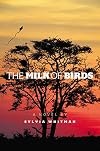
In The Milk of Birds, Sylvia Whitman touches on subject matter rarely seen in YA fiction, and I want to applaud her for that. This novel deals with tough subjects (divorce, genocide, rape, learning disorders, and more), but retains an overarching sense of hope. On closing the finishing page, I was sad that this our world, but also touched by the inspiring story within. Whitman handles all of this well, keeping the focus small, on the daily lives of these two girls, Nawra in Darfur and K.C. show more in Richmond.
Signed up to participate in the charity Save the Girls, K.C. initially wants none of it, too busy worrying about her parents' divorce and her plummeting grades. In fact, K.C. refuses to respond to Nawra's first few letters, until Save the Girls contacts her to find out why she's not been sending letters, which has been making Nawra feel sad. K.C.'s mom offers to write the letters if need be, but K.C. finally steps up to the plate and does it herself, unable to stand the idea of her mom's terrible imitation of her going out into the world.
I give you this small summary to explain what I liked best about The Milk of Birds. The scale of it and the portrayals are so honest. K.C. is an average girl, and, like most kids, the last thing she wants to do when she gets home from school is do more "homework," which is how the pen pal thing feels to her at first. Watching K.C. slowly lose her reluctance to write the letters is so moving, especially when, by the time the year of correspondence comes to a close, K.C. keeps writing letters for her last package, unable to say goodbye.
If you're hoping to learn a lot about the big picture in Darfur, The Milk of Birds isn't the place to get it. Through Nawra, Whitman offers a view to the life of one girl. It's not a broad perspective, but a narrow one. Nawra's life has been just . . . there's not really a word sufficient to describe the horrors she's lived through. Whitman does not shy away from the harsh realities like female circumcision, rape, hunger, or murder. As expected, this is not a light read. That said, Whitman definitely doesn't add in any more than is necessary; she tells it like it is, and that is shock enough.
Nawra is so strong in the face of her life that it is simply incredible. Despite everything, her tone in the letters is so sweet and cheery and hopeful. Though K.C.'s problems are nothing compared to Nawra's, Nawra worries about K.C., and offers kind advice. The unselfishness Nawra shows is beautiful, as are the sayings she uses.
K.C. grows a lot in her correspondence with Nawra, but perhaps not as much as you would think. Her arc is rather more realistic than is traditional in fiction. At the end, K.C. is not utterly transfigured by her correspondence with Nawra, but she is a bit more confident, much more loving, and incredibly determined to do something to help Darfur. Still, K.C.'s focus all along has been on her own issues. K.C. loves Nawra and wants to help, but she doesn't ever stop worrying about her crush on the boy she likes or her issues with her parents or her issues with learning. Again, this felt very believable, because, no matter how much perspective she has, she has to live her own life. Also, I love that Whitman touched on learning disorders, because that's not something I've often seen in YA novels.
The only reason my rating isn't higher is that The Milk of Birds moved very slowly for me. Much as I am impressed by the characters of Nawra and K.C., I didn't ever connect with them on an emotional level, except, perhaps, at the very end. The more I think about The Milk of Birds, the more I like it, but it was a slow, tough read for me. At the same time, I am so very glad I read it, and I think that a lot of the difficult reads are important ones.
The Milk of Birds is a slow-moving, powerful read that's heart-breakingly honest and realistic. Whitman deftly tackles more dark subjects than can usually be handled in a single book, but The Milk of Birds never strays into melodrama. The Milk of Birds is a read to inspire the reader to want to make a difference in the world, showing how even just a monthly letter can make an appreciable difference in someone else's life. show less
Signed up to participate in the charity Save the Girls, K.C. initially wants none of it, too busy worrying about her parents' divorce and her plummeting grades. In fact, K.C. refuses to respond to Nawra's first few letters, until Save the Girls contacts her to find out why she's not been sending letters, which has been making Nawra feel sad. K.C.'s mom offers to write the letters if need be, but K.C. finally steps up to the plate and does it herself, unable to stand the idea of her mom's terrible imitation of her going out into the world.
I give you this small summary to explain what I liked best about The Milk of Birds. The scale of it and the portrayals are so honest. K.C. is an average girl, and, like most kids, the last thing she wants to do when she gets home from school is do more "homework," which is how the pen pal thing feels to her at first. Watching K.C. slowly lose her reluctance to write the letters is so moving, especially when, by the time the year of correspondence comes to a close, K.C. keeps writing letters for her last package, unable to say goodbye.
If you're hoping to learn a lot about the big picture in Darfur, The Milk of Birds isn't the place to get it. Through Nawra, Whitman offers a view to the life of one girl. It's not a broad perspective, but a narrow one. Nawra's life has been just . . . there's not really a word sufficient to describe the horrors she's lived through. Whitman does not shy away from the harsh realities like female circumcision, rape, hunger, or murder. As expected, this is not a light read. That said, Whitman definitely doesn't add in any more than is necessary; she tells it like it is, and that is shock enough.
Nawra is so strong in the face of her life that it is simply incredible. Despite everything, her tone in the letters is so sweet and cheery and hopeful. Though K.C.'s problems are nothing compared to Nawra's, Nawra worries about K.C., and offers kind advice. The unselfishness Nawra shows is beautiful, as are the sayings she uses.
K.C. grows a lot in her correspondence with Nawra, but perhaps not as much as you would think. Her arc is rather more realistic than is traditional in fiction. At the end, K.C. is not utterly transfigured by her correspondence with Nawra, but she is a bit more confident, much more loving, and incredibly determined to do something to help Darfur. Still, K.C.'s focus all along has been on her own issues. K.C. loves Nawra and wants to help, but she doesn't ever stop worrying about her crush on the boy she likes or her issues with her parents or her issues with learning. Again, this felt very believable, because, no matter how much perspective she has, she has to live her own life. Also, I love that Whitman touched on learning disorders, because that's not something I've often seen in YA novels.
The only reason my rating isn't higher is that The Milk of Birds moved very slowly for me. Much as I am impressed by the characters of Nawra and K.C., I didn't ever connect with them on an emotional level, except, perhaps, at the very end. The more I think about The Milk of Birds, the more I like it, but it was a slow, tough read for me. At the same time, I am so very glad I read it, and I think that a lot of the difficult reads are important ones.
The Milk of Birds is a slow-moving, powerful read that's heart-breakingly honest and realistic. Whitman deftly tackles more dark subjects than can usually be handled in a single book, but The Milk of Birds never strays into melodrama. The Milk of Birds is a read to inspire the reader to want to make a difference in the world, showing how even just a monthly letter can make an appreciable difference in someone else's life. show less
A story about the bond that develops between two pen pals, an American teen named K.C. and a fourteen-year-old Sudanese refugee Nawra. I found Nawra's harrowing daily struggles to survive far more interesting than K.C.'s experiences which seem quite frivolous by comparison. I often became annoyed with K.C. and her issues because they are so completely trivial compared to Nawra's, although she does become a passionate activist for Darfur. Perhaps reading this will help American teens put show more their own life experiences and problems in perspective. show less
I remember when I was younger, ,y mom would take my sister and I to the dentist and in his office he would have the Highlight Magazine. Anyway in this magazine there would be a list of children who wanted pen pals. It was a pretty big thing back then, but it was only listings of the children in the United States. In this book an aid society asked for volunteers for pen pals and a small stipend to send to them, and American children were paired up with refuges living in camps. This is how K. show more C. and Naura become pen pals. I admit I liked Naura's story more, it was heartbreaking, this young girl who had lived with her whole family in Umm Jamilla, had a happy existence a large family. All taken away by the Janjaweeds murder spree. The conditions in the camp, what happened to her and her family were so hard to read, as well as the cultural traditions such as young girls circumcisions. Yet her story is told in a matter of fact voice, filled with quotes of the traditions of her people. This is one of those books that transcend the YA genre, at least Naura's side. K. C. is a very likable character as well, her difficulty with learning, her divorced parents, and as she learns Naura's story in letters she comes to the realization that she can make her life better an option that Naura does not have. show less
Awards


You May Also Like


Associated Authors
Statistics
- Works
- 13
- Members
- 518
- Popularity
- #47,944
- Rating
- 3.7
- Reviews
- 11
- ISBNs
- 31
