
Mick Cochrane
Author of The Girl Who Threw Butterflies
Works by Mick Cochrane
Associated Works
My Bookstore: Writers Celebrate Their Favorite Places to Browse, Read, and Shop (2012) — Contributor — 616 copies, 16 reviews
Tagged
Common Knowledge
- Gender
- male
- Education
- University of Saint Thomas (BA|English)
University of Minnesota (PhD|Literature) - Occupations
- professor
- Organizations
- Canisius College (professor)
- Nationality
- USA
- Birthplace
- St. Paul, Minnesota, USA
- Places of residence
- St. Paul, Minnesota, USA
Kenmore, New York, USA - Associated Place (for map)
- USA
Members
Reviews
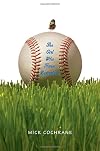
Molly is an eighth grader who recently lost her father in a car accident. When he was alive, her dad played catch and watched baseball with her. He also taught her some pitching fundamentals, including how to throw a knuckleball (AKA The Butterfly Pitch). Rather than try out for softball the spring after he dies, Molly decides to try out for the baseball team. The boys baseball team.
This book really resonates with me. My dad and I bonded over the Chicago Cubs and APBA when I was a kid. We show more also used to play catch in the backyard (football in the fall, softball in the spring). He never taught me to pitch, but he did teach me to really understand and love the game. We had a lot of other things in common, but sports was a big one. He was also a journalist, as was Molly's dad. My dad died five years ago. I still miss and think about him constantly, especially in April, when baseball season starts. show less
This book really resonates with me. My dad and I bonded over the Chicago Cubs and APBA when I was a kid. We show more also used to play catch in the backyard (football in the fall, softball in the spring). He never taught me to pitch, but he did teach me to really understand and love the game. We had a lot of other things in common, but sports was a big one. He was also a journalist, as was Molly's dad. My dad died five years ago. I still miss and think about him constantly, especially in April, when baseball season starts. show less

As eighth grader Molly Williams struggles to come to terms with the recent death of her father, killed in a car accident a number of months before, and to deal with her distant mother, who seems to be going through the motions of life on autopilot, she finds in baseball - her father's passion, and her own - something that gives her a sense of community and allows her to feel connected once again to her dad. Her talent for throwing "butterflies" (AKA knuckleballs) wins her a spot on the boys' show more baseball team, which brings its own series of challenges, as well as an unexpected new friendship.
Chosen as our January selection in The Children's Fiction Book Club to which I belong, Mick Cochrane's The Girl Who Threw Butterflies is an engaging tale of a young girl and her home and school life. The cast of characters, from Molly herself to her group of friends - Molly's best friend Celia, with her fierce independence and pet projects, her new friend and teammate Lonnie, with his penchant for turning everything into art - is well drawn. I appreciated the fact that the heroine confronts real issues - the loss of her father, being the only girl on a boys' sports team - and that those issues bring problems, without those problems overwhelming the narrative. I also appreciated the author's evident love for and knowledge of baseball. I don't know that I connected as deeply with the story as some other readers seem to have done, but I did appreciate it, both as a narrative of childhood loss, and as a children's sports novel. Recommended to middle grade readers who have themselves experienced such a loss, and to those looking for engaging sports stories. show less
Chosen as our January selection in The Children's Fiction Book Club to which I belong, Mick Cochrane's The Girl Who Threw Butterflies is an engaging tale of a young girl and her home and school life. The cast of characters, from Molly herself to her group of friends - Molly's best friend Celia, with her fierce independence and pet projects, her new friend and teammate Lonnie, with his penchant for turning everything into art - is well drawn. I appreciated the fact that the heroine confronts real issues - the loss of her father, being the only girl on a boys' sports team - and that those issues bring problems, without those problems overwhelming the narrative. I also appreciated the author's evident love for and knowledge of baseball. I don't know that I connected as deeply with the story as some other readers seem to have done, but I did appreciate it, both as a narrative of childhood loss, and as a children's sports novel. Recommended to middle grade readers who have themselves experienced such a loss, and to those looking for engaging sports stories. show less
Interesting how the book begins with the person causing the sexual abuse and then becomes more about the members of his family. Amazing how little Hal really cared about what he had done to his victims and his family - his thinking was all about him and the inconvenience it caused in his life. Wife Phyllis was a person I could not respect even though she grew and changed by the end of the book.
Life is as unpredictable as a knuckleball. Molly learns that the hard way — her father has just died in a mysterious car accident. Her mother is in that ”distant, ticked-off, unreachable place.” Molly is left to navigate on her own the morass of 8th grade and grief. And the one thing that she knows can help her the most is BASEBALL.
Remembering the long afternoons playing baseball with her father, mastering the art of throwing a knuckleball, Molly decides to try out for the baseball show more team — the boy’s baseball team: “‘You don’t just aim a butterfly,’ her father used to say. ‘You release it.’ ” He told her that the knuckleball isn’t just a pitch but an attitude toward life, a way of being in the world — a philosophy…
In Mick Cochrane’s The Girl Who Threw Butterflies, the characters are so well-drawn, the descriptions of baseball make me want tickets to the World Series and drew me into the magic of the game, and the rich metaphors and story brilliantly capture the transitions and struggles in the life of an 8th grader. For example, from her father “Molly understood that keeping score was a kind of storytelling, an almost magical translation of loud and dusty events in the world — a stolen base, an around-the-horn double play, a triple — into pencil marks, a kind of secret code, numbers and lines and shapes, like cuneiform or hieroglyphics, the handiwork of some ancient scribe.” From the baseball team Molly discovers that as the pitcher, if there’s a runner on first base, it’s her responsibility to talk to the shortstop and second baseman. It’s her job to call out who should take a bunt if the first and third basmen are both charging it. If Coach Morales touches his forearm, it means steal a base. If he touches the bill of his cap, it means bunt. Molly loves this entire system of wordless communication.
She wonders if she could apply this system to the rest of her life, like when her locker is defaced, or when she’s sitting across the table from her mother at dinner. She would love to try and communicate some of their dinner conversations using signs. But then again there are many nights when she doesn’t see how she possibly could, because half the time she doesn’t even know what she wants to get across.
Even the signs and scorebook don’t show just how nervous a pitcher is, or how exuberant a teammate is when he clears the plate with a double, with all the attendant whistling and cheering. Or how terrible Molly feels if her knuckler has gone completely wild. “You’re cruising along one minute, feeling like you can do no wrong. Life is good, all’s right with the world. And then all of a sudden, for no apparent reason, things change.” Baseball = 8th grade = life. show less
Remembering the long afternoons playing baseball with her father, mastering the art of throwing a knuckleball, Molly decides to try out for the baseball show more team — the boy’s baseball team: “‘You don’t just aim a butterfly,’ her father used to say. ‘You release it.’ ” He told her that the knuckleball isn’t just a pitch but an attitude toward life, a way of being in the world — a philosophy…
In Mick Cochrane’s The Girl Who Threw Butterflies, the characters are so well-drawn, the descriptions of baseball make me want tickets to the World Series and drew me into the magic of the game, and the rich metaphors and story brilliantly capture the transitions and struggles in the life of an 8th grader. For example, from her father “Molly understood that keeping score was a kind of storytelling, an almost magical translation of loud and dusty events in the world — a stolen base, an around-the-horn double play, a triple — into pencil marks, a kind of secret code, numbers and lines and shapes, like cuneiform or hieroglyphics, the handiwork of some ancient scribe.” From the baseball team Molly discovers that as the pitcher, if there’s a runner on first base, it’s her responsibility to talk to the shortstop and second baseman. It’s her job to call out who should take a bunt if the first and third basmen are both charging it. If Coach Morales touches his forearm, it means steal a base. If he touches the bill of his cap, it means bunt. Molly loves this entire system of wordless communication.
She wonders if she could apply this system to the rest of her life, like when her locker is defaced, or when she’s sitting across the table from her mother at dinner. She would love to try and communicate some of their dinner conversations using signs. But then again there are many nights when she doesn’t see how she possibly could, because half the time she doesn’t even know what she wants to get across.
Even the signs and scorebook don’t show just how nervous a pitcher is, or how exuberant a teammate is when he clears the plate with a double, with all the attendant whistling and cheering. Or how terrible Molly feels if her knuckler has gone completely wild. “You’re cruising along one minute, feeling like you can do no wrong. Life is good, all’s right with the world. And then all of a sudden, for no apparent reason, things change.” Baseball = 8th grade = life. show less
Lists
Awards


You May Also Like


Associated Authors
Statistics
- Works
- 4
- Also by
- 2
- Members
- 454
- Popularity
- #54,063
- Rating
- 3.7
- Reviews
- 32
- ISBNs
- 26
- Languages
- 1