
Rebecca Stefoff
Author of A different mirror for young people : a young people's history of multicultural America
About the Author
Rebecca Stefoff is the author of many books for young readers including several other works dealing with settling of the American West. Stefoff lives in the Pacific Northwest and takes special interest in the geography and history of the region.
Series
Works by Rebecca Stefoff
A different mirror for young people : a young people's history of multicultural America (2012) 272 copies, 2 reviews
How to Change Everything: The Young Human's Guide to Protecting the Planet and Each Other (2021) 140 copies, 5 reviews
Lies My Teacher Told Me: Young Readers’ Edition: Everything American History Textbooks Get Wrong (2019) — Adapter — 105 copies, 2 reviews
George H.W. Bush: 41st President of the United States (Presidents of the United States) (1990) 22 copies
Abraham Lincoln: 16th President of the United States (Presidents of the United States) (1989) 18 copies
Freedom Summer For Young People: The Violent Season that Made Mississippi Burn and Made America a Democracy (2020) 18 copies
Theodore Roosevelt: 26th President of the United States (Presidents of the United States) (1988) 17 copies
Andrew Jackson: Seventh President of the United States (Encyclopedia of Presidents) (1988) 16 copies
Saddam Hussein: The Terrifiying Inside Story of the Iraqi Nuclear and Biological Weapons (1995) 15 copies
Accidental Explorers: Surprises and Side Trips in the History of Discovery (Extraordinary Explorers) (1899) 15 copies
William Henry Harrison, 9th President of the United States (Presidents of the United States) (1990) 13 copies
Thomas Jefferson: 3rd President of the United States (Presidents of the United States) (1988) 13 copies
Journey to Gold Mountain: The Chinese in 19Th-Century America (The Asian American Experience) (1994) 12 copies
Lech Walesa: The Road to Democracy (Great Lives: 20th Century Politics and Goverment) (1992) 8 copies
Richard M. Nixon: 37th President of the United States (Presidents of the United States) (1990) 8 copies
Democracy and Race: Asian Americans and World War II (The Asian American Experience) (1994) 6 copies
La historia del pueblo de Estados Unidos para jóvenes: Revisada y actualizada (For Young People Series) (Spanish Edition) (2023) 2 copies
John Brown and Armed Resistance to Slavery (Primary Sources of the Abolitionist Movement) (2015) 2 copies
Me, Myself, and I--The More Grammar Changes, the More It Remains the Same (Why Do We Say That?) (2017) 1 copy
Gloria Estefan 1 copy
The Second Sphinx 1 copy
The Road to Democracy 1 copy
Associated Works
A Young People's History of the United States (For Young People Series) (2007) — Adapter; Adpater — 546 copies, 6 reviews
A Young People's History of the United States, Volume 1: Columbus to the Spanish-American War (2009) — Adapter — 208 copies, 4 reviews
A Young People's History of the United States, Volume 2: Class Struggle to the War on Terror (2007) — Adapter — 141 copies, 2 reviews
Tagged
Common Knowledge
- Other names
- Sanders, Suzanne
- Birthdate
- 1951-02-17
- Gender
- female
- Education
- Indiana University, Fort Wayne (BA ∙ English)
University of Pennsylvania (MA ∙ English) - Occupations
- freelance writer
editor - Nationality
- USA
- Birthplace
- Bloomington, Indiana, USA
- Places of residence
- Philadelphia, Pennsylvania, USA
Portland, Oregon, USA
Fort Wayne, Indiana, USA
Bloomington, Indiana, USA - Associated Place (for map)
- USA
Members
Reviews
Lies My Teacher Told Me: Young Readers’ Edition: Everything American History Textbooks Get Wrong by Rebecca Stefoff
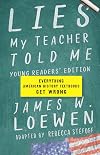
"Aslimmed-down version of Loewen’s (Sundown Towns, 2018, etc.) damning indictment of the way United States history is taught.
As in the adult edition, the author bases his argument on critical examinations of 18 high school textbooks published between 1974 and 2007. He sees clear tendencies to blandly hero-ify not only historical figures—such as Helen Keller, commonly presented in relation to her disabilities, not for her lifelong social and political radicalism—but also American show more culture and government, which are consistently portrayed as international forces for good despite centuries of invasion-based foreign policy. To freshen his material, the author slips in more recent statistics and general comments that newer textbooks seem to have filled in at least some of the more egregious gaps. More provocatively, he also flings down a gauntlet to young readers by not reproducing two of the five photos he discusses as iconic images of the war in Vietnam, arguing that they are still too edgy for some school districts. He also offers alternative narratives about the conflicts between European immigrants and Indigenous residents, slavery, racism, social class, and the ideal of “progress.” Overall, he presents a cogent argument for studying historical nuances. He argues that young people should not be deprived of hearing the incredible truth of American history in service to avoidance of controversy or blinkered, parochial nationalism.
An accessible, eye-opening invitation to look for hidden—and not-so-hidden—agendas in supposedly authoritative sources. (notes, index) (Nonfiction. 13-18)" www.kirkusreviews.com show less
As in the adult edition, the author bases his argument on critical examinations of 18 high school textbooks published between 1974 and 2007. He sees clear tendencies to blandly hero-ify not only historical figures—such as Helen Keller, commonly presented in relation to her disabilities, not for her lifelong social and political radicalism—but also American show more culture and government, which are consistently portrayed as international forces for good despite centuries of invasion-based foreign policy. To freshen his material, the author slips in more recent statistics and general comments that newer textbooks seem to have filled in at least some of the more egregious gaps. More provocatively, he also flings down a gauntlet to young readers by not reproducing two of the five photos he discusses as iconic images of the war in Vietnam, arguing that they are still too edgy for some school districts. He also offers alternative narratives about the conflicts between European immigrants and Indigenous residents, slavery, racism, social class, and the ideal of “progress.” Overall, he presents a cogent argument for studying historical nuances. He argues that young people should not be deprived of hearing the incredible truth of American history in service to avoidance of controversy or blinkered, parochial nationalism.
An accessible, eye-opening invitation to look for hidden—and not-so-hidden—agendas in supposedly authoritative sources. (notes, index) (Nonfiction. 13-18)" www.kirkusreviews.com show less
Lies My Teacher Told Me: Young Readers’ Edition: Everything American History Textbooks Get Wrong by Rebecca Stefoff
I read the original Lies My Teacher Told Me: Everything Your American History Textbook Got Wrong when it came out years and years ago — one of the best books I’ve ever read. I bought at least two (but probably more) as gifts. Needless to say, I was gratified to see that book adapted for middle- and high-schoolers to read and enjoy.
Christopher Columbus has been exposed for his cruelty to the Native Peoples he encountered. (The Spanish wiped out every Indian in my parents’ native Cuba by show more the middle of the 18th century.) But Loewen goes further, providing a true look at the First Thanksgiving, Helen Keller’s entire history, Woodrow Wilson’s limited vision of who did — and did not — deserve to be covered by the U.S. Constitution, and lots more. And unlike your standard American history course, which never seems to make it past World War I or the Great Depression, author James Loewen delves into the Vietnam and Iraq Wars, the Central American and Mexican invasions, and 9/11.
How I wish this book had existed when my own children were 12 or so!
In the interest of full disclosure, I received this book from NetGalley and The New Press in exchange for an honest review. show less
Christopher Columbus has been exposed for his cruelty to the Native Peoples he encountered. (The Spanish wiped out every Indian in my parents’ native Cuba by show more the middle of the 18th century.) But Loewen goes further, providing a true look at the First Thanksgiving, Helen Keller’s entire history, Woodrow Wilson’s limited vision of who did — and did not — deserve to be covered by the U.S. Constitution, and lots more. And unlike your standard American history course, which never seems to make it past World War I or the Great Depression, author James Loewen delves into the Vietnam and Iraq Wars, the Central American and Mexican invasions, and 9/11.
How I wish this book had existed when my own children were 12 or so!
In the interest of full disclosure, I received this book from NetGalley and The New Press in exchange for an honest review. show less
How to Change Everything: The Young Human's Guide to Protecting the Planet and Each Other by Naomi Klein
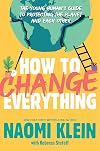
This book encompasses the broad reaching research of the author into various arguments and real life examples behind climate change, and delivers them in a well-thought out and supported manner.
To say that this book centers around the theme climate change, doesn't really do it justice. This book is chucked full of passionate research, arguments and well-laid together examples, and create a treasure chest of information. So many aspects surrounding the theme are addressed, that this book show more alone broadens the horizons and leaves the reader packed with information. But it goes further than that and offers the reader suggestions on how things can be changed.
This is not an easy read, and it carries quite a bit of weight on the information and fact end. Readers interested in the subject will find what they are looking for and more. The author spends no time with leisure, but uses every page to demonstrate and support climate change. The book starts out with the 2019 student climate protest, allowing the first pages to connect with the intended audience age group, and shows examples such as Greta Thunberg to hit the idea home that kids can have an influence, too. After this, it shoots off around the world to explain what climate change is, the factors, predictions, examples, what's been attempted, what's worked, and what hasn't as well as ideas and food for thought on how things need to continue or what can still be done.
Everything is presented in a logical manner and driven forward by examples. The accompanying photos and illustrations help drive certain points home or simply aid the reader in identifying certain situations. For anyone interested in the subject and wanting to learn more, it delivers and then some.
This isn't easy subject material to bring across to this age group, but the author does a pretty good job. The vocabulary, for the most part, stays at the intended level, and the arguments are laid out in a way that upper middle graders can follow and understand. But it's a lot. The arguments and examples hit with rapid fire and swerve right from one into the next. It's not something to sit down and easily digest, but becomes heavy quick. As said, for those with interest in the topic, it's great. For those without...it's a lot.
Examples are delivered from around the world and support every beat. This not only is necessary for the idea of climate change but also gave lovely insight into the rest of the world. But I'm not sure it's digestible to the intended audience. The names and places are dropped at a hat...many of which readers know little to nothing about. While this isn't the point, it still shoves a huge wedge between the information and reader, which leaves them disconnected. For most readers, I believe this book holds too much too fast. But for the right reader, it's a treasure chest of information.
I received an ARC and was impressed at how completely and well-laid out the argumentation is. show less
To say that this book centers around the theme climate change, doesn't really do it justice. This book is chucked full of passionate research, arguments and well-laid together examples, and create a treasure chest of information. So many aspects surrounding the theme are addressed, that this book show more alone broadens the horizons and leaves the reader packed with information. But it goes further than that and offers the reader suggestions on how things can be changed.
This is not an easy read, and it carries quite a bit of weight on the information and fact end. Readers interested in the subject will find what they are looking for and more. The author spends no time with leisure, but uses every page to demonstrate and support climate change. The book starts out with the 2019 student climate protest, allowing the first pages to connect with the intended audience age group, and shows examples such as Greta Thunberg to hit the idea home that kids can have an influence, too. After this, it shoots off around the world to explain what climate change is, the factors, predictions, examples, what's been attempted, what's worked, and what hasn't as well as ideas and food for thought on how things need to continue or what can still be done.
Everything is presented in a logical manner and driven forward by examples. The accompanying photos and illustrations help drive certain points home or simply aid the reader in identifying certain situations. For anyone interested in the subject and wanting to learn more, it delivers and then some.
This isn't easy subject material to bring across to this age group, but the author does a pretty good job. The vocabulary, for the most part, stays at the intended level, and the arguments are laid out in a way that upper middle graders can follow and understand. But it's a lot. The arguments and examples hit with rapid fire and swerve right from one into the next. It's not something to sit down and easily digest, but becomes heavy quick. As said, for those with interest in the topic, it's great. For those without...it's a lot.
Examples are delivered from around the world and support every beat. This not only is necessary for the idea of climate change but also gave lovely insight into the rest of the world. But I'm not sure it's digestible to the intended audience. The names and places are dropped at a hat...many of which readers know little to nothing about. While this isn't the point, it still shoves a huge wedge between the information and reader, which leaves them disconnected. For most readers, I believe this book holds too much too fast. But for the right reader, it's a treasure chest of information.
I received an ARC and was impressed at how completely and well-laid out the argumentation is. show less
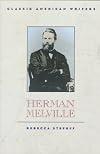
I picked up this little biography, HERMAN MELVILLE, at a library sale recently. It's written for a YA audience, but I found it extremely instructive myself. Writing in an easy and accessible style, Rebecca Stefoff provides insight and background into Melville's early life and how his family was plagued by poverty and hard times, causing him to try different jobs in teaching and commerce, finally going to sea on merchant ships, whalers and even a Navy ship. These experiences gave him grist show more for most of his early works - TYPEE, OMOO, MARDI, REDBURN and WHITE-JACKET - and later for his masterpieces, MOBY DICK and BILLY BUDD.
Melville's MOBY DICK was not a success during his lifetime. In fact he was best known for his two early books (TYPEE and OMOO), both South Seas adventure stories, or 'travel books.' I was also interested to learn that Melville actually served in the US Navy, a crewman aboard the USN vessel, United States. He signed on in Honolulu for a short cruise and spent 14 months sailing from Hawaii, around South America to Boston, an experience he used to write his last book, BILLY BUDD, which was not published until 1924, more than thirty after his death in 1891. Melville was 72, and nearly forgotten as a writer when he died. But the 1920s saw a renewed interest in his work, and, well, you know the rest.
Melville is seen as a giant of American letters now. His place in the canon of American Literature has been secure for nearly a hundred years and will no doubt endure. Rebecca Stefoff has written an eminently readable and very enjoyable introduction to Melville for the young reader. Very highly recommended.
- Tim Bazzett, author of the memoir, BOOKLOVER show less
Melville's MOBY DICK was not a success during his lifetime. In fact he was best known for his two early books (TYPEE and OMOO), both South Seas adventure stories, or 'travel books.' I was also interested to learn that Melville actually served in the US Navy, a crewman aboard the USN vessel, United States. He signed on in Honolulu for a short cruise and spent 14 months sailing from Hawaii, around South America to Boston, an experience he used to write his last book, BILLY BUDD, which was not published until 1924, more than thirty after his death in 1891. Melville was 72, and nearly forgotten as a writer when he died. But the 1920s saw a renewed interest in his work, and, well, you know the rest.
Melville is seen as a giant of American letters now. His place in the canon of American Literature has been secure for nearly a hundred years and will no doubt endure. Rebecca Stefoff has written an eminently readable and very enjoyable introduction to Melville for the young reader. Very highly recommended.
- Tim Bazzett, author of the memoir, BOOKLOVER show less
Lists
Awards


You May Also Like


Associated Authors
Statistics
- Works
- 211
- Also by
- 5
- Members
- 2,354
- Popularity
- #10,898
- Rating
- 3.9
- Reviews
- 22
- ISBNs
- 415
- Languages
- 9
