
Roxanne Dunbar-Ortiz
Author of An Indigenous Peoples' History of the United States
About the Author
Roxanne Dunbar-Ortiz is Professor Emerita of Ethnic Studies and Women's Studies at California State University, East Bay.
Image credit: Roxanne Dunbar-Ortiz
Series
Works by Roxanne Dunbar-Ortiz
An Indigenous Peoples' History of the United States for Young People (2019) 1,312 copies, 13 reviews
All the Real Indians Died off and 20 Other Myths About Native Americans (2016) 349 copies, 17 reviews
Not a Nation of Immigrants: Settler Colonialism, White Supremacy, and a History of Erasure and Exclusion (2021) 254 copies, 4 reviews
Roxanne Dunbar-Ortiz's Indigenous Peoples' History of the United States: A Graphic Interpretation (2024) 86 copies, 2 reviews
Associated Works
Towards Collective Liberation: Anti-Racist Organizing, Feminist Praxis, and Movement Building Strategy (2013) — Foreword — 150 copies, 2 reviews
Hillbilly Nationalists, Urban Race Rebels, and Black Power: Community Organizing in Radical Times (2011) — Introduction, some editions — 119 copies, 2 reviews
Stand Your Ground: A History of America's Love Affair with Lethal Self-Defense (2017) — Preface, some editions — 62 copies, 11 reviews
Red State Rebels: Tales of Grassroots Resistance in the Heartland (2008) — Contributor — 47 copies, 1 review
Tagged
Common Knowledge
- Birthdate
- 1939
- Gender
- female
- Relationships
- Ortiz, Simon J. (ex-husband)
- Short biography
- Roxanne Dunbar-Ortiz has recanted her previous published claims of Native American heritage:
"I THINK I'VE RETHOUGHT THAT SINCE I PUBLISHED IT. I THINK IT'S REALLY IMPORTANT THAT NATIVE IDENTITY BE IDENTIFIED WITH THE TRIBAL WITH THE TRIBE, IT IS NOT A RACE THERE IS NO SUCH THING AS INDIAN, MORE THAN 300 DIFFERENT NATIVE COMMUNITIES, WITHOUT TIES I NEVER HAD TIES WITH ANYTHING AND IS PRETTY CERTAIN THAT PROBABLY MY MOTHER WAS NOT CHEROKEE, THERE IS NO TRACING HIM, I THINK WHEN I MADE THAT ASSESSMENT AT THE TIME, I HAD NOT REALLY GIVEN ENOUGH THOUGHT, I RETHOUGHT IT AND I VERY MUCH DOUBT THAT AND I CERTAINLY WOULD NOT CALL MYSELF CHEROKEE."
https://www.c-span.org/program/in-dept... - Nationality
- USA
- Birthplace
- Texas, USA
- Places of residence
- rural Oklahoma, USA
San Francisco, California, USA - Associated Place (for map)
- USA
Members
Reviews
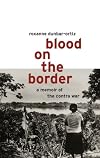
Some passages from Blood on the Border:
The deputy director of the CIA, Bobby Ray Inman, one of the weirdest of that cast of spook characters, was featured at a press conference exhibiting grainy photographs that resembled Rorschach inkblot tests. In a seeming parody of a TV meteorologist, he pointed his white stick at various parts of the photograph and recounted a narrative that had nothing to do with the picture, which he then described as unassailable evidence. The story he told was of a show more massive Cuban occupation of the northeast region of Nicaragua. He claimed that the landing strip at Puerto Cabezas was being prepared for fighter jets to land and that a Cuban military base was being built; the most telling detail of all, he said, was the appearance of a baseball diamond, which proved the Cubans were there to stay. This caused amusement in Nicaragua, where baseball had been the national sport ever since the US Marines had first occupied the country in the 1890s.
I never figured out if Inman was completely insane or quite crafty. In any case, he resigned in March 1982, and his boss, William Casey, was even loonier. At times, it seemed absurd to try to counteract this nuttiness with rationality. But it was not only the spooks; General Alexander Haig, Reagan’s secretary of state, held a press conference at the Dupont Circle Hilton Hotel in Washington in which he pointed to another photograph (blown up almost two stories tall) and described what he termed as widespread massacres. The photograph showed human bodies enveloped in flames. Haig claimed that these were Miskitu Indians being burned alive by Sandinista soldiers. Newspapers featured the photograph with headlines screaming of massacres and atrocities against the Nicaraguan Indians. During the following days, tiny correction boxes appeared in newspapers - why it wasn’t a big story itself I couldn’t figure out - reporting that the photograph was the property of the conservative French daily Le Figaro, and was taken in 1978, before the Sandinistas took power. The photo actually showed the Red Cross burning corpses of the victims of Somoza’s bombing of civilians in Managua in 1978. The irony was that such massacres were actually happening in nearby Guatemala as Haig spoke, massacres about which the administration said nothing. To my knowledge, no reporter ever questioned Haig about his allegations and misrepresentation of the photograph, nor did he ever admit his deception. The administration was that brazen. Even when corrections were printed, the lies created a kind of populist genocidal logic, in which “exaggerations” were then acknowledged, but people assumed that there must be some core of truth to the charges nevertheless.
*
I understood, but could not forgive, the temptations of celebrity hunger. I had my own “fifteen minutes of fame” in 1968-70 in the women’s liberation movement. Such attention can replace a fragile sense of self, so that only more attention can fill the void that remains, and more attention is never enough.
*
Writing was a kind of release and relief. I had worked on the subject so long that writing the book was more like reading, the words almost forming themselves. My mind and body became a kind of word processor, disappearing into the work. I loved - I still love - the way writing allows me to put pieces together into meaningful wholes, or at least ones that give meaning to me. I cannot function without trying to see the whole. show less
The deputy director of the CIA, Bobby Ray Inman, one of the weirdest of that cast of spook characters, was featured at a press conference exhibiting grainy photographs that resembled Rorschach inkblot tests. In a seeming parody of a TV meteorologist, he pointed his white stick at various parts of the photograph and recounted a narrative that had nothing to do with the picture, which he then described as unassailable evidence. The story he told was of a show more massive Cuban occupation of the northeast region of Nicaragua. He claimed that the landing strip at Puerto Cabezas was being prepared for fighter jets to land and that a Cuban military base was being built; the most telling detail of all, he said, was the appearance of a baseball diamond, which proved the Cubans were there to stay. This caused amusement in Nicaragua, where baseball had been the national sport ever since the US Marines had first occupied the country in the 1890s.
I never figured out if Inman was completely insane or quite crafty. In any case, he resigned in March 1982, and his boss, William Casey, was even loonier. At times, it seemed absurd to try to counteract this nuttiness with rationality. But it was not only the spooks; General Alexander Haig, Reagan’s secretary of state, held a press conference at the Dupont Circle Hilton Hotel in Washington in which he pointed to another photograph (blown up almost two stories tall) and described what he termed as widespread massacres. The photograph showed human bodies enveloped in flames. Haig claimed that these were Miskitu Indians being burned alive by Sandinista soldiers. Newspapers featured the photograph with headlines screaming of massacres and atrocities against the Nicaraguan Indians. During the following days, tiny correction boxes appeared in newspapers - why it wasn’t a big story itself I couldn’t figure out - reporting that the photograph was the property of the conservative French daily Le Figaro, and was taken in 1978, before the Sandinistas took power. The photo actually showed the Red Cross burning corpses of the victims of Somoza’s bombing of civilians in Managua in 1978. The irony was that such massacres were actually happening in nearby Guatemala as Haig spoke, massacres about which the administration said nothing. To my knowledge, no reporter ever questioned Haig about his allegations and misrepresentation of the photograph, nor did he ever admit his deception. The administration was that brazen. Even when corrections were printed, the lies created a kind of populist genocidal logic, in which “exaggerations” were then acknowledged, but people assumed that there must be some core of truth to the charges nevertheless.
*
I understood, but could not forgive, the temptations of celebrity hunger. I had my own “fifteen minutes of fame” in 1968-70 in the women’s liberation movement. Such attention can replace a fragile sense of self, so that only more attention can fill the void that remains, and more attention is never enough.
*
Writing was a kind of release and relief. I had worked on the subject so long that writing the book was more like reading, the words almost forming themselves. My mind and body became a kind of word processor, disappearing into the work. I loved - I still love - the way writing allows me to put pieces together into meaningful wholes, or at least ones that give meaning to me. I cannot function without trying to see the whole. show less
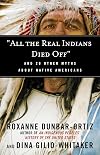
This is a very 101 level book. If you know nothing about Native issues, then read it immediately. These are things all U.S. citizens and residents should know.
If you are already familiar with these topics, you won't learn anything new. That said, this book does give you some great ammunition if you struggle to explain to the willfully ignorant why it's important to describe the decimation of Native populations as "genocide," why Washington's NFL team name is problematic, why it's show more problematic to dress up as an "Indian" for Halloween, and similar topics.
(I'd like to note that I have a pretty serious issue with the identity politics that Roxanne Dunbar-Ortiz perpetuates in her own life, claiming a Native identity with no proof, but that does not appear in this book. Indeed, this book's value overrides any of my personal concerns about her.) show less
If you are already familiar with these topics, you won't learn anything new. That said, this book does give you some great ammunition if you struggle to explain to the willfully ignorant why it's important to describe the decimation of Native populations as "genocide," why Washington's NFL team name is problematic, why it's show more problematic to dress up as an "Indian" for Halloween, and similar topics.
(I'd like to note that I have a pretty serious issue with the identity politics that Roxanne Dunbar-Ortiz perpetuates in her own life, claiming a Native identity with no proof, but that does not appear in this book. Indeed, this book's value overrides any of my personal concerns about her.) show less
 This review was written for LibraryThing Early Reviewers.
Indigenous Peoples' History of the United States for Young People (Revisioning American History for Young People): 2 (Revisioning History for Young People) by Roxanne Dunbar-Ortiz
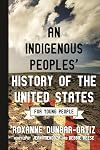
The first history of the United States told from the perspective of indigenous peoples
Today in the United States, there are more than five hundred federally recognized Indigenous nations comprising nearly three million people, descendants of the fifteen million Native people who once inhabited this land. The centuries-long genocidal program of the US settler-colonial regimen has largely been omitted from history. Now, for the first time, acclaimed historian and activist Roxanne show more Dunbar-Ortizoffers a history of the United States told from the perspective of Indigenous peoples and reveals how Native Americans, for centuries, actively resisted expansion of the US empire.
With growing support for movements such as the campaign to abolish Columbus Day and replace it with Indigenous Peoples’ Day and the Dakota Access Pipeline protest led by the Standing Rock Sioux Tribe, An Indigenous Peoples’ History of the United States is an essential resource providing historical threads that are crucial for understanding the present. In An Indigenous Peoples’ History of the United States, Dunbar-Ortiz adroitly challenges the founding myth of the United States and shows how policy against the Indigenous peoples was colonialist and designed to seize the territories of the original inhabitants, displacing or eliminating them. And as Dunbar-Ortiz reveals, this policy was praised in popular culture, through writers like James Fenimore Cooper and Walt Whitman, and in the highest offices of government and the military. Shockingly, as the genocidal policy reached its zenith under President Andrew Jackson, its ruthlessness was best articulated by US Army general Thomas S. Jesup, who, in 1836, wrote of the Seminoles: “The country can be rid of them only by exterminating them.”
Spanning more than four hundred years, this classic bottom-up peoples’ history radically reframes US history and explodes the silences that have haunted our national narrative. show less
Today in the United States, there are more than five hundred federally recognized Indigenous nations comprising nearly three million people, descendants of the fifteen million Native people who once inhabited this land. The centuries-long genocidal program of the US settler-colonial regimen has largely been omitted from history. Now, for the first time, acclaimed historian and activist Roxanne show more Dunbar-Ortizoffers a history of the United States told from the perspective of Indigenous peoples and reveals how Native Americans, for centuries, actively resisted expansion of the US empire.
With growing support for movements such as the campaign to abolish Columbus Day and replace it with Indigenous Peoples’ Day and the Dakota Access Pipeline protest led by the Standing Rock Sioux Tribe, An Indigenous Peoples’ History of the United States is an essential resource providing historical threads that are crucial for understanding the present. In An Indigenous Peoples’ History of the United States, Dunbar-Ortiz adroitly challenges the founding myth of the United States and shows how policy against the Indigenous peoples was colonialist and designed to seize the territories of the original inhabitants, displacing or eliminating them. And as Dunbar-Ortiz reveals, this policy was praised in popular culture, through writers like James Fenimore Cooper and Walt Whitman, and in the highest offices of government and the military. Shockingly, as the genocidal policy reached its zenith under President Andrew Jackson, its ruthlessness was best articulated by US Army general Thomas S. Jesup, who, in 1836, wrote of the Seminoles: “The country can be rid of them only by exterminating them.”
Spanning more than four hundred years, this classic bottom-up peoples’ history radically reframes US history and explodes the silences that have haunted our national narrative. show less
Not "A Nation of Immigrants": Settler Colonialism, White Supremacy, and a History of Erasure and Exclusion by Roxanne Dunbar-Ortiz
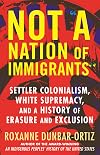
Debunks the pervasive and self-congratulatory myth that our country is proudly founded by and for immigrants, and urges readers to embrace a more complex and honest history of the United States
Whether in political debates or discussions about immigration around the kitchen table, many Americans, regardless of party affiliation, will say proudly that we are a nation of immigrants. In this bold new book, historian Roxanne Dunbar-Ortiz asserts this ideology is harmful and dishonest because it show more serves to mask and diminish the US’s history of settler colonialism, genocide, white supremacy, slavery, and structural inequality, all of which we still grapple with today.
She explains that the idea that we are living in a land of opportunity—founded and built by immigrants—was a convenient response by the ruling class and its brain trust to the 1960s demands for decolonialization, justice, reparations, and social equality. Moreover, Dunbar-Ortiz charges that this feel good—but inaccurate—story promotes a benign narrative of progress, obscuring that the country was founded in violence as a settler state, and imperialist since its inception.
While some of us are immigrants or descendants of immigrants, others are descendants of white settlers who arrived as colonizers to displace those who were here since time immemorial, and still others are descendants of those who were kidnapped and forced here against their will. This paradigm shifting new book from the highly acclaimed author of An Indigenous Peoples’ History of the United States charges that we need to stop believing and perpetuating this simplistic and a historical idea and embrace the real (and often horrific) history of the United States. - from the publisher show less
Whether in political debates or discussions about immigration around the kitchen table, many Americans, regardless of party affiliation, will say proudly that we are a nation of immigrants. In this bold new book, historian Roxanne Dunbar-Ortiz asserts this ideology is harmful and dishonest because it show more serves to mask and diminish the US’s history of settler colonialism, genocide, white supremacy, slavery, and structural inequality, all of which we still grapple with today.
She explains that the idea that we are living in a land of opportunity—founded and built by immigrants—was a convenient response by the ruling class and its brain trust to the 1960s demands for decolonialization, justice, reparations, and social equality. Moreover, Dunbar-Ortiz charges that this feel good—but inaccurate—story promotes a benign narrative of progress, obscuring that the country was founded in violence as a settler state, and imperialist since its inception.
While some of us are immigrants or descendants of immigrants, others are descendants of white settlers who arrived as colonizers to displace those who were here since time immemorial, and still others are descendants of those who were kidnapped and forced here against their will. This paradigm shifting new book from the highly acclaimed author of An Indigenous Peoples’ History of the United States charges that we need to stop believing and perpetuating this simplistic and a historical idea and embrace the real (and often horrific) history of the United States. - from the publisher show less
Lists
Awards


You May Also Like


Associated Authors
Statistics
- Works
- 18
- Also by
- 8
- Members
- 4,716
- Popularity
- #5,342
- Rating
- 4.1
- Reviews
- 110
- ISBNs
- 69
- Languages
- 2
- Favorited
- 1
