
Moss Hart (1904–1961)
Author of Act One: An Autobiography
About the Author
Image credit: Library of Congress
Works by Moss Hart
Three Plays by Kaufman and Hart: Once in a Lifetime, You Can't Take It with You and The Man Who Came to Dinner (1980) 111 copies, 1 review
The Man Who Came to Diinner [2000 TV movie] — Writer — 4 copies
The Climate of Eden: A Play (based on Edgar Mittelholzer's novel Shadows Move Among Them) (1953) 2 copies
God schept de dag 1 copy
Prince of Players [1955 film] — Writer — 1 copy
Better Luck Next Time 1 copy
As Thousands Cheer 1 copy
Associated Works
Merrily We Roll Along: Original 1981 Broadway Cast Recording — Original play — 11 copies
Reader's Digest Best Sellers 1960: Advise and Consent | Act One: An Autobiography | Mrs. 'arris Goes to Paris | Dear and Glorious Physician (1960) — Author — 9 copies
As Thousands Cheer: The Hit Musical Comedy Revue! (1998 New York Revival Cast) — Sketches — 3 copies
This Is the Army / Call Me Mister / Winged Victory [soundtrack] — Performer — 2 copies
Twentieth Century Fox Presents Studio Classics: The "Best Picture" Collection (All About Eve/Gentleman's Agreement/How Green Was My Valley/Sunrise) — Writer — 2 copies
Tagged
Common Knowledge
- Canonical name
- Hart, Moss
- Birthdate
- 1904-10-24
- Date of death
- 1961-12-20
- Gender
- male
- Occupations
- playwright
film director
autobiographer
theatre director
librettist - Organizations
- Dramatists Guild of America
- Awards and honors
- American Theater Hall of Fame (1972)
Pulitzer Prize for Drama (1937) - Relationships
- Hart, Kitty Carlisle (wife)
- Cause of death
- heart attack
- Nationality
- USA
- Birthplace
- New York, New York, USA
- Places of residence
- New York, New York, USA
Palm Springs, California, USA - Place of death
- Palm Springs, California, USA
- Burial location
- Ferncliff Cemetery, Hartsdale, New York, USA
- Associated Place (for map)
- USA
Members
Reviews
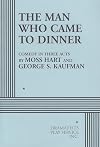
I first read this when I was eleven. I don't think I quite understood everything, but I knew a good read when I saw it!
Years later I was able to attend the revival with Nathan Lane & Jean Smart (and a slightly miscast Harriet Harris)--what a delight to see these masters bringing the words to life. But this is one of those wonderful plays which read very, very well indeed. It's no doubt better with Nathan Lane, but just imagine Nathan Lane in your head and you will have a marvelous time show more reading the play yourself.
(And if you love it, then move on to You Can't Take It With You by the same authors, nearly as good, although it won the Pulitzer and this one didn't!)
The plot is genius: a horrible writer--I mean, a horrible person who writes well--is injured and forced to remain bedridden at a (wealthy) suburban home. Much of the play is his entertaining his famous friends, but there are subplots throughout that eventually pay off spectacularly.
A real treat, and aside from modern audiences being less and less able to recognize the allusions to then-current celebrity, it doesn't show its age one bit. show less
Years later I was able to attend the revival with Nathan Lane & Jean Smart (and a slightly miscast Harriet Harris)--what a delight to see these masters bringing the words to life. But this is one of those wonderful plays which read very, very well indeed. It's no doubt better with Nathan Lane, but just imagine Nathan Lane in your head and you will have a marvelous time show more reading the play yourself.
(And if you love it, then move on to You Can't Take It With You by the same authors, nearly as good, although it won the Pulitzer and this one didn't!)
The plot is genius: a horrible writer--I mean, a horrible person who writes well--is injured and forced to remain bedridden at a (wealthy) suburban home. Much of the play is his entertaining his famous friends, but there are subplots throughout that eventually pay off spectacularly.
A real treat, and aside from modern audiences being less and less able to recognize the allusions to then-current celebrity, it doesn't show its age one bit. show less

https://fromtheheartofeurope.eu/three-plays-by-george-s-kaufman-and-moss-hart/
https://fromtheheartofeurope.eu/you-cant-take-it-with-you-1938-and-play-by-moss-...
I got this collection of 1930s plays five years ago, in the early stages of my Oscar-watching project, because the middle one of the three was the basis of a very successful film starring Lionel Barrymore. In fact all three of these plays were successfully adapted for the screen.
The scripts are prefaced by a short piece from each of show more the two authors, gently poking fun at each other and giving a sense of the relationship between two Broadway creators. They certainly seem to have got on with each other better than Gilbert and Sullivan.
The first play, Once in a Lifetime, is about a vaudeville trio, down on their luck because of the invention of talking movies which sucks the audience out of theatre, who go to Hollywood and try to make it big there. The dumb guy of the three ascends to huge cinematic power, and the punchline of the play is that the bad decisions he makes turn out to be very successful.
I thought it was really funny. I don’t always find it easy to read scripts, but here I had no difficulty differentiating the characters with their different voices. I noted that George Kaufman, one of the authors, also played the frustrated playwright Laurence Vail in the first Broadway cast.
The key character is Mary Daniels, the woman in the vaudeville trio, who gets the best lines and serves as the audience viewpoint character on what is happening in Hollywood. In the original Broadway production she was played by Jean Dixon.
The drunk actress Gay Wellington (and another comic turn, the Grand Duchess Olga) were among the cuts made by Riskin as he adapted You Can't Take It With You for the screen. Kirby’s background is much less developed in the play – the whole subplot involving property transactions, and the character of Mr Poppins, are inserted by Riskin into the film. The Vanderhofs have pet snakes rather than a raven. (Though I’m glad to say that the kitten is original.)
The guts of it are all the same, and one can see why the play won a Pulitzer as an uplifting tonic in depressing times. It’s a bit more misogynistic (as I said, two extra female characters who are only there as figures of fun, and Mrs Kirby gets a harder time) and more racist (Donald gets treated worse). There is a hilarious sequence during the Kirbys’ disastrous visit to the Vanderhof household, where Penny gets the Kirbys to play a word association game.
The third play, The Man Who Came to Dinner, is even more overtly a character study than the other two. A famous New York theatre critic slips on an icy patch while visiting Ohio and is immobilised in the home of his reluctant hosts for several weeks. There’s a bit of a comedy of middle-class manners here, but mainly it’s about the monstrous protagonist who is unaware of his own monstrosity.
I Imagine that this is simple to stage, in that the entire play takes place in the Ohio front room. It’s more of a one-joke story than the other two. The play was written for actor and critic Alexander Woolcott, who had behaved with abominable rudeness while visiting Hart’s family home; for some strange reason he bowed out of actually performing as the character based on himself, and it fell to Monty Woolley to do it on both stage and screen, giving his career an immense boost. The film stars him and Bette Davis. show less
https://fromtheheartofeurope.eu/you-cant-take-it-with-you-1938-and-play-by-moss-...
I got this collection of 1930s plays five years ago, in the early stages of my Oscar-watching project, because the middle one of the three was the basis of a very successful film starring Lionel Barrymore. In fact all three of these plays were successfully adapted for the screen.
The scripts are prefaced by a short piece from each of show more the two authors, gently poking fun at each other and giving a sense of the relationship between two Broadway creators. They certainly seem to have got on with each other better than Gilbert and Sullivan.
The first play, Once in a Lifetime, is about a vaudeville trio, down on their luck because of the invention of talking movies which sucks the audience out of theatre, who go to Hollywood and try to make it big there. The dumb guy of the three ascends to huge cinematic power, and the punchline of the play is that the bad decisions he makes turn out to be very successful.
I thought it was really funny. I don’t always find it easy to read scripts, but here I had no difficulty differentiating the characters with their different voices. I noted that George Kaufman, one of the authors, also played the frustrated playwright Laurence Vail in the first Broadway cast.
The key character is Mary Daniels, the woman in the vaudeville trio, who gets the best lines and serves as the audience viewpoint character on what is happening in Hollywood. In the original Broadway production she was played by Jean Dixon.
The drunk actress Gay Wellington (and another comic turn, the Grand Duchess Olga) were among the cuts made by Riskin as he adapted You Can't Take It With You for the screen. Kirby’s background is much less developed in the play – the whole subplot involving property transactions, and the character of Mr Poppins, are inserted by Riskin into the film. The Vanderhofs have pet snakes rather than a raven. (Though I’m glad to say that the kitten is original.)
The guts of it are all the same, and one can see why the play won a Pulitzer as an uplifting tonic in depressing times. It’s a bit more misogynistic (as I said, two extra female characters who are only there as figures of fun, and Mrs Kirby gets a harder time) and more racist (Donald gets treated worse). There is a hilarious sequence during the Kirbys’ disastrous visit to the Vanderhof household, where Penny gets the Kirbys to play a word association game.
The third play, The Man Who Came to Dinner, is even more overtly a character study than the other two. A famous New York theatre critic slips on an icy patch while visiting Ohio and is immobilised in the home of his reluctant hosts for several weeks. There’s a bit of a comedy of middle-class manners here, but mainly it’s about the monstrous protagonist who is unaware of his own monstrosity.
I Imagine that this is simple to stage, in that the entire play takes place in the Ohio front room. It’s more of a one-joke story than the other two. The play was written for actor and critic Alexander Woolcott, who had behaved with abominable rudeness while visiting Hart’s family home; for some strange reason he bowed out of actually performing as the character based on himself, and it fell to Monty Woolley to do it on both stage and screen, giving his career an immense boost. The film stars him and Bette Davis. show less
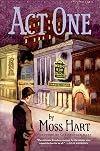
An absolute delightful autobiography by playwright Moss Hart. He grew up in poverty but had an early love for the theatre. He worked as a social director at summer camps, building himself up to the most in demand director for all of the camps. He had written several plays during this time, none of which were produced but finally had one called Once in a Lifetime that was produced. The book tells of his early childhood and times as a social director but more important, the collaborative show more effort with George S. Kaufman and getting Once in a Lifetime produced. His writing in the book describes Kaufman in such detail that you feel you know him. The work done during this collaborative effort is also discussed as well as the re-write process after out of town tryouts. The reader was so elated when the play finally turned out to be a success and his family was able to escape poverty. A great look at life on Broadway in the early part of the 20th century. My only criticism would be there are no photos in the book. show less

Deeply absorbing autobiography of the famed Broadway playwright, taking him from a poverty-stricken childhood in the Bronx to the day after his first major hit, "Once in a Lifetime," debuted. It contains a very interesting picture of George S. Kaufman, his collaborator on that show; it also contains an intriguing account of how the play came into being, including the painful process of multiple revisions as a result of "out of town tryouts." Very much recommended.
Lists
Awards


You May Also Like


Associated Authors
Statistics
- Works
- 28
- Also by
- 30
- Members
- 2,158
- Popularity
- #11,911
- Rating
- 3.9
- Reviews
- 38
- ISBNs
- 62
- Languages
- 1
- Favorited
- 3