
George S. Kaufman (1889–1961)
Author of You Can't Take It With You
About the Author
Kaufman, was born in Pittsburgh, attended law school for two years, failed as a business person, and became a humorist for Franklin P. Adams's column before joining the New York Times, whose drama editor he became in the 1920s. Kaufman was sole author of one long play and two one-act plays, show more including the popular The Butter and Egg Man (1926), but he collaborated on more than 25 plays, most importantly with Moss Hart, but also with Marc Connelly, Edna Ferber, and others, including Ring Lardner and John P. Marquand. These plays range from the hilarious madness of Cocoanuts (1929) and Animal Crackers (1928), two Marx Brothers shows that Kaufman worked on, to the comic pathos of Stage Door (1936) (with Edna Ferber). Commenting on why he did not write true satire, Kaufman said, "Satire is what closes Saturday night." Kaufman, Morris Ryskind, and Ira Gershwin won the Pulitzer Prize for drama for Of Thee I Sing (1932) and Kaufman and Hart for You Can't Take It with You (1937). (Bowker Author Biography) show less
Image credit: Courtesy of the NYPL Digital Gallery (image use requires permission from the New York Public Library)
Works by George S. Kaufman
Three Plays by Kaufman and Hart: Once in a Lifetime, You Can't Take It with You and The Man Who Came to Dinner (1980) 110 copies, 1 review
George Washington Slept Here Acting Edition (George Washinton Slept Here, Comedy In Three Acts) (1940) 48 copies, 1 review
The Man Who Came to Diinner [2000 TV movie] — Writer — 4 copies
LET 'EM EAT CAKE. A Sequel to "Of Thee I Sing". A Musical Play By George S. Kaufman and Morrie Ryskind. Lyrics by Ira Gershwin. (1933) 3 copies
The Late George Apley: A Play 3 copies
Beggar on Horseback 1 copy
George Washington Slept Here 1 copy
For Good Old Nectar 1 copy
The Great Warburton Mystery 1 copy
The Pride Of The Claghornes 1 copy
On The American Plan 1 copy
Local Boy Makes Good 1 copy
Gone With The Revolution 1 copy
Associated Works
Fierce Pajamas: An Anthology of Humor Writing from The New Yorker (2001) — Contributor — 790 copies, 5 reviews
The Marx Brothers Silver Screen Collection: The Cocoanuts / Animal Crackers / Monkey Business / Horse Feathers / Duck Soup (1929) — Writer — 127 copies
The Vicious Circle: Mystery and Crime Stories by Members of the Algonquin Round Table (2007) — Contributor — 99 copies, 1 review
The Marx Brothers Collection (A Night at the Opera / A Day at the Races/ A Night In Casablanca / Room Service / At the Circus / Go West / The Big Store) (2004) — Writer — 59 copies
Twenty One-Act Plays: An Anthology for Amateur Performing Groups (1978) — Contributor — 42 copies, 1 review
Three Plays About Business in America: The Adding Machine, Beggar on Horseback, All My Sons (1969) — Contributor — 40 copies, 1 review
25 best plays of the Modern American Theatre : Early Series : 1916-1929 (1949) — Contributor — 32 copies
Merrily We Roll Along: Original 1981 Broadway Cast Recording — Original play — 11 copies
Longer Plays By Modern Authors. Beau Brummell; Copperhea; Dulcy; Intimate Strangers; (1922) — Contributor — 6 copies
Tagged
Common Knowledge
- Legal name
- Kaufman, George Simon
- Birthdate
- 1889-11-16
- Date of death
- 1961-06-02
- Gender
- male
- Occupations
- playwright
journalist
theatre critic
humorist - Organizations
- American Academy of Arts and Letters (Literature, 1938)
Algonquin Round Table
The New York Times - Relationships
- Kaufman, Beatrice (wife)
Schneider, Anne Kaufman (daughter) - Nationality
- USA
- Birthplace
- Pittsburgh, Pennsylvania, USA
- Places of residence
- New York, New York, USA
- Place of death
- New York, New York, USA
- Associated Place (for map)
- New York, USA
Members
Reviews
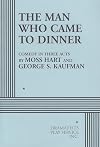
I first read this when I was eleven. I don't think I quite understood everything, but I knew a good read when I saw it!
Years later I was able to attend the revival with Nathan Lane & Jean Smart (and a slightly miscast Harriet Harris)--what a delight to see these masters bringing the words to life. But this is one of those wonderful plays which read very, very well indeed. It's no doubt better with Nathan Lane, but just imagine Nathan Lane in your head and you will have a marvelous time show more reading the play yourself.
(And if you love it, then move on to You Can't Take It With You by the same authors, nearly as good, although it won the Pulitzer and this one didn't!)
The plot is genius: a horrible writer--I mean, a horrible person who writes well--is injured and forced to remain bedridden at a (wealthy) suburban home. Much of the play is his entertaining his famous friends, but there are subplots throughout that eventually pay off spectacularly.
A real treat, and aside from modern audiences being less and less able to recognize the allusions to then-current celebrity, it doesn't show its age one bit. show less
Years later I was able to attend the revival with Nathan Lane & Jean Smart (and a slightly miscast Harriet Harris)--what a delight to see these masters bringing the words to life. But this is one of those wonderful plays which read very, very well indeed. It's no doubt better with Nathan Lane, but just imagine Nathan Lane in your head and you will have a marvelous time show more reading the play yourself.
(And if you love it, then move on to You Can't Take It With You by the same authors, nearly as good, although it won the Pulitzer and this one didn't!)
The plot is genius: a horrible writer--I mean, a horrible person who writes well--is injured and forced to remain bedridden at a (wealthy) suburban home. Much of the play is his entertaining his famous friends, but there are subplots throughout that eventually pay off spectacularly.
A real treat, and aside from modern audiences being less and less able to recognize the allusions to then-current celebrity, it doesn't show its age one bit. show less

https://fromtheheartofeurope.eu/three-plays-by-george-s-kaufman-and-moss-hart/
https://fromtheheartofeurope.eu/you-cant-take-it-with-you-1938-and-play-by-moss-...
I got this collection of 1930s plays five years ago, in the early stages of my Oscar-watching project, because the middle one of the three was the basis of a very successful film starring Lionel Barrymore. In fact all three of these plays were successfully adapted for the screen.
The scripts are prefaced by a short piece from each of show more the two authors, gently poking fun at each other and giving a sense of the relationship between two Broadway creators. They certainly seem to have got on with each other better than Gilbert and Sullivan.
The first play, Once in a Lifetime, is about a vaudeville trio, down on their luck because of the invention of talking movies which sucks the audience out of theatre, who go to Hollywood and try to make it big there. The dumb guy of the three ascends to huge cinematic power, and the punchline of the play is that the bad decisions he makes turn out to be very successful.
I thought it was really funny. I don’t always find it easy to read scripts, but here I had no difficulty differentiating the characters with their different voices. I noted that George Kaufman, one of the authors, also played the frustrated playwright Laurence Vail in the first Broadway cast.
The key character is Mary Daniels, the woman in the vaudeville trio, who gets the best lines and serves as the audience viewpoint character on what is happening in Hollywood. In the original Broadway production she was played by Jean Dixon.
The drunk actress Gay Wellington (and another comic turn, the Grand Duchess Olga) were among the cuts made by Riskin as he adapted You Can't Take It With You for the screen. Kirby’s background is much less developed in the play – the whole subplot involving property transactions, and the character of Mr Poppins, are inserted by Riskin into the film. The Vanderhofs have pet snakes rather than a raven. (Though I’m glad to say that the kitten is original.)
The guts of it are all the same, and one can see why the play won a Pulitzer as an uplifting tonic in depressing times. It’s a bit more misogynistic (as I said, two extra female characters who are only there as figures of fun, and Mrs Kirby gets a harder time) and more racist (Donald gets treated worse). There is a hilarious sequence during the Kirbys’ disastrous visit to the Vanderhof household, where Penny gets the Kirbys to play a word association game.
The third play, The Man Who Came to Dinner, is even more overtly a character study than the other two. A famous New York theatre critic slips on an icy patch while visiting Ohio and is immobilised in the home of his reluctant hosts for several weeks. There’s a bit of a comedy of middle-class manners here, but mainly it’s about the monstrous protagonist who is unaware of his own monstrosity.
I Imagine that this is simple to stage, in that the entire play takes place in the Ohio front room. It’s more of a one-joke story than the other two. The play was written for actor and critic Alexander Woolcott, who had behaved with abominable rudeness while visiting Hart’s family home; for some strange reason he bowed out of actually performing as the character based on himself, and it fell to Monty Woolley to do it on both stage and screen, giving his career an immense boost. The film stars him and Bette Davis. show less
https://fromtheheartofeurope.eu/you-cant-take-it-with-you-1938-and-play-by-moss-...
I got this collection of 1930s plays five years ago, in the early stages of my Oscar-watching project, because the middle one of the three was the basis of a very successful film starring Lionel Barrymore. In fact all three of these plays were successfully adapted for the screen.
The scripts are prefaced by a short piece from each of show more the two authors, gently poking fun at each other and giving a sense of the relationship between two Broadway creators. They certainly seem to have got on with each other better than Gilbert and Sullivan.
The first play, Once in a Lifetime, is about a vaudeville trio, down on their luck because of the invention of talking movies which sucks the audience out of theatre, who go to Hollywood and try to make it big there. The dumb guy of the three ascends to huge cinematic power, and the punchline of the play is that the bad decisions he makes turn out to be very successful.
I thought it was really funny. I don’t always find it easy to read scripts, but here I had no difficulty differentiating the characters with their different voices. I noted that George Kaufman, one of the authors, also played the frustrated playwright Laurence Vail in the first Broadway cast.
The key character is Mary Daniels, the woman in the vaudeville trio, who gets the best lines and serves as the audience viewpoint character on what is happening in Hollywood. In the original Broadway production she was played by Jean Dixon.
The drunk actress Gay Wellington (and another comic turn, the Grand Duchess Olga) were among the cuts made by Riskin as he adapted You Can't Take It With You for the screen. Kirby’s background is much less developed in the play – the whole subplot involving property transactions, and the character of Mr Poppins, are inserted by Riskin into the film. The Vanderhofs have pet snakes rather than a raven. (Though I’m glad to say that the kitten is original.)
The guts of it are all the same, and one can see why the play won a Pulitzer as an uplifting tonic in depressing times. It’s a bit more misogynistic (as I said, two extra female characters who are only there as figures of fun, and Mrs Kirby gets a harder time) and more racist (Donald gets treated worse). There is a hilarious sequence during the Kirbys’ disastrous visit to the Vanderhof household, where Penny gets the Kirbys to play a word association game.
The third play, The Man Who Came to Dinner, is even more overtly a character study than the other two. A famous New York theatre critic slips on an icy patch while visiting Ohio and is immobilised in the home of his reluctant hosts for several weeks. There’s a bit of a comedy of middle-class manners here, but mainly it’s about the monstrous protagonist who is unaware of his own monstrosity.
I Imagine that this is simple to stage, in that the entire play takes place in the Ohio front room. It’s more of a one-joke story than the other two. The play was written for actor and critic Alexander Woolcott, who had behaved with abominable rudeness while visiting Hart’s family home; for some strange reason he bowed out of actually performing as the character based on himself, and it fell to Monty Woolley to do it on both stage and screen, giving his career an immense boost. The film stars him and Bette Davis. show less
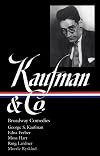
been in love with the irascible (from all reports) kaufman since i was an adolescent and discovered the Algonquin Round Table. for impressions of kaufman read moss hart's ACT ONE or listen to (or watch) Elaine Stritch's one woman show AT LIBERTY. for the craft as practiced by the man himself ... read these plays. or better yet .. go to one (they are produced still, all over the world and with frequent broadway revivals). or watch one of the movie treatments.
'the royal family', 'animal show more crackers', 'june moon' [broadway archives video has recorded a 1970s public television version of this that is priceless], 'once in a lifetime' [recently staged at london's national theatre], 'of thee i sing', 'dinner at eight' [sigh], 'stage door' [more sprawling than the classic screen version .. but check in on kate hepburn and ginger rogers and eve arden and lucille ball and ann miller having fun with this set up as originally crafted by kaufman and edna ferber]; and the perhaps most familiar 'you can't take it with you' and 'the man who came to dinner'.
savor. enjoy. volumes like this one justify this entire 'library of america' series for me. show less
'the royal family', 'animal show more crackers', 'june moon' [broadway archives video has recorded a 1970s public television version of this that is priceless], 'once in a lifetime' [recently staged at london's national theatre], 'of thee i sing', 'dinner at eight' [sigh], 'stage door' [more sprawling than the classic screen version .. but check in on kate hepburn and ginger rogers and eve arden and lucille ball and ann miller having fun with this set up as originally crafted by kaufman and edna ferber]; and the perhaps most familiar 'you can't take it with you' and 'the man who came to dinner'.
savor. enjoy. volumes like this one justify this entire 'library of america' series for me. show less
Some of the better known plays of George S. Kaufman, including some that are still performed today, such as You Can't Take it With You. It's a bit of a mixed bag, with some of the plays being a bit weak in the backbone, but the best of them make up for it. Even the lesser plays are worth reading, if only to see the history of theatre in mid-20th century United States. Most of these plays are not hilariously funny, at least on today's terms, but they have enough solid chuckles to deliver when show more they are supposed to. The pathos is also present, though sometimes a bit melodramatic for modern tastes. All in all, a good collection. show less
Lists
Awards


You May Also Like


Associated Authors
Statistics
- Works
- 59
- Also by
- 32
- Members
- 2,247
- Popularity
- #11,409
- Rating
- 3.7
- Reviews
- 38
- ISBNs
- 65
- Languages
- 2
- Favorited
- 4