
Jennifer Marie Brissett
Author of Elysium
About the Author
Works by Jennifer Marie Brissett
TFF-X: Ten years of The Future Fire: A speculative fiction anthology (2015) — Contributor — 3 copies
Associated Works
Sunspot Jungle: The Ever Expanding Universe of Fantasy and Science Fiction (2018) — Contributor — 38 copies, 1 review
Tagged
Common Knowledge
- Birthdate
- Feburary 16, 19??
- Gender
- female
- Education
- Stonecoast MFA Program
Boston University - Awards and honors
- 2015 Finalist for the Locus Award for Best First Novel
2015 James Tiptree Jr. Award Honor List
2014 Philip K. Dick Award Special Citation
2013 Finalist for the storySouth Millions Writers Award - Agent
- Janklow & Nesbit Associates
- Nationality
- USA
UK - Birthplace
- London, England, Great Britain
- Places of residence
- New York, New York, USA
Cambridge, Massachusetts, USA - Associated Place (for map)
- USA
Members
Reviews
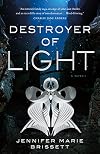
Real Rating: 4.75* of five
The Publisher Says: The Matrix meets an Afro-futuristic retelling of Persephone set in a science fiction underworld of aliens, refugees, and genetic engineering in Jennifer Marie Brissett's Destroyer of Light
Having destroyed Earth, the alien conquerors resettle the remains of humanity on the planet of Eleusis. In the four habitable areas of the planet—Day, Dusk, Dawn, and Night—the haves and have nots, criminals and dissidents, and former alien conquerors show more irrevocably bind three stories:
*A violent warlord abducts a young girl from the agrarian outskirts of Dusk leaving her mother searching and grieving.
*Genetically modified twin brothers desperately search for the lost son of a human/alien couple in a criminal underground trafficking children for unknown purposes.
*A young woman with inhuman powers rises through the insurgent ranks of soldiers in the borderlands of Night.
Their stories, often containing disturbing physical and sexual violence, skate across years, building to a single confrontation when the fate of all—human and alien—balances upon a knife’s-edge.
I RECEIVED MY DRC FROM THE PUBLISHER VIA NETGALLEY. THANK YOU.
My Review: ↡↡↡ HEED. THE. CONTENT. WARNINGS. BELOW. ↡↡↡
Humanity is clinging to existence on the tidally locked planet called "Eleusis." Their enemies, the krestge, have destroyed Earth (no one knows why) and evacuated them to Eleusis without doing anything more to complete the extermination (no one knows why). But life must go on. Being humanity, you know what this means: infighting, resource grabs, atrocities, all the usual stuff.
We follow the entire nightmarish fight between people, used in the sense of "humans," who would do better to question the hows and whys of the aliens who exist among them, as the entire planet careens towards some climactic cathartic cleansing of...of...of what, exactly? Is it time for Humanity to finish its extinction at the hands of its squabbling selves? Or is it just barely possible that this awful mirror is held up to make Humanity confront its worst and most enraging aspects?
You don't know Author Brissett's work if you think she provides an answer to that question.
Intricately interconnected strands of Eleusis's enhanced and unenhanced human remnants, violently abusing themselves and each other, aliens with the demonstrated capacity to end the entire human lineage sitting still and doing nothing are some of the mainstays of this book's architecture. The manner in which Author Brissett makes one care about the architecture is, in common with the subtle and unjustly undercelebrated [Elysium], left for you to discern. The clues are there. The point of the read is to get out of it what you put into it. While I myownself am indifferent to spoilers, having watched The Crying Game decades ago and thinking The Big Reveal was...kinda obvious...but in any event anticlimactic, I still think you'll enjoy the read more if you're left to mull over the roles of the krestge, the enhanced humans, the nature of the need for child soldiers, and the book's title. Hang on until the ending, and you will feel so very rewarded for your efforts.
There is MUCH to unearth. The pleasures in these words are very significant.
CW: sexual assault, CW: violence show less
The Publisher Says: The Matrix meets an Afro-futuristic retelling of Persephone set in a science fiction underworld of aliens, refugees, and genetic engineering in Jennifer Marie Brissett's Destroyer of Light
Having destroyed Earth, the alien conquerors resettle the remains of humanity on the planet of Eleusis. In the four habitable areas of the planet—Day, Dusk, Dawn, and Night—the haves and have nots, criminals and dissidents, and former alien conquerors show more irrevocably bind three stories:
*A violent warlord abducts a young girl from the agrarian outskirts of Dusk leaving her mother searching and grieving.
*Genetically modified twin brothers desperately search for the lost son of a human/alien couple in a criminal underground trafficking children for unknown purposes.
*A young woman with inhuman powers rises through the insurgent ranks of soldiers in the borderlands of Night.
Their stories, often containing disturbing physical and sexual violence, skate across years, building to a single confrontation when the fate of all—human and alien—balances upon a knife’s-edge.
I RECEIVED MY DRC FROM THE PUBLISHER VIA NETGALLEY. THANK YOU.
My Review: ↡↡↡ HEED. THE. CONTENT. WARNINGS. BELOW. ↡↡↡
Humanity is clinging to existence on the tidally locked planet called "Eleusis." Their enemies, the krestge, have destroyed Earth (no one knows why) and evacuated them to Eleusis without doing anything more to complete the extermination (no one knows why). But life must go on. Being humanity, you know what this means: infighting, resource grabs, atrocities, all the usual stuff.
We follow the entire nightmarish fight between people, used in the sense of "humans," who would do better to question the hows and whys of the aliens who exist among them, as the entire planet careens towards some climactic cathartic cleansing of...of...of what, exactly? Is it time for Humanity to finish its extinction at the hands of its squabbling selves? Or is it just barely possible that this awful mirror is held up to make Humanity confront its worst and most enraging aspects?
You don't know Author Brissett's work if you think she provides an answer to that question.
Intricately interconnected strands of Eleusis's enhanced and unenhanced human remnants, violently abusing themselves and each other, aliens with the demonstrated capacity to end the entire human lineage sitting still and doing nothing are some of the mainstays of this book's architecture. The manner in which Author Brissett makes one care about the architecture is, in common with the subtle and unjustly undercelebrated [Elysium], left for you to discern. The clues are there. The point of the read is to get out of it what you put into it. While I myownself am indifferent to spoilers, having watched The Crying Game decades ago and thinking The Big Reveal was...kinda obvious...but in any event anticlimactic, I still think you'll enjoy the read more if you're left to mull over the roles of the krestge, the enhanced humans, the nature of the need for child soldiers, and the book's title. Hang on until the ending, and you will feel so very rewarded for your efforts.
There is MUCH to unearth. The pleasures in these words are very significant.
CW: sexual assault, CW: violence show less
Review of Uncorrected Advance Reading Digital Galley
The aliens came, they attacked, they destroyed Earth.
Gathered up and resettled on far-away Eleusis, remnants of humanity live with their conquerors, ostensibly in peace. Settled along the planet’s narrow perimeter, they live in the area that circles the center of the world. On Eleusis, Dawn is one half of this narrow habitable ring, Dusk is the other. The borderlands are known as Night.
The shimmering/shifting krestge believe they hold show more control over the humans on Eleusis, but they remain unaware of some long-ago preparations. And they have failed to account for how the alterations wrought in some could change everything they believe they understand.
What does fate hold in store for krestge and human when, ultimately, the often-troubling years lead to confrontation?
Does humanity harbor resentment toward the krestge or have they moved past the memories of that long-ago attack when the krestge came and rained down total destruction on their home world?
And what do the krestge think and feel?
The unfolding narrative alternates between the abduction of Cora, the strange abilities of genetically-modified twins Jown and Pietyr who search for a lost boy, and the rise of a young woman with uncommon powers. Revealed alternately, occurring in one of the three habitable areas of Eleusis, and moving forward and backward in time, the stories eventually coalesce, but readers may find the presentation a bit confusing.
Nevertheless, the worldbuilding here is first-rate; the characters, diverse and interesting. Along with some important social morés . . . haves and have nots, prejudice, drugs, family dynamics . . . there’s an intriguing coming-of-age component in this evolving narrative. The stage is set for a conflict between human/post-human and krestge in what readers might consider a staple of the science fiction genre. But some unexpected twists and unforeseen events change everything, taking the story in a surprising direction.
All of these components make for a complex, intriguing story that could certainly be a positive contribution to the science fiction genre.
HOWEVER . . .
It is difficult to believe that depicting the vicious rape of a child is necessary to the telling of any story, science fiction or otherwise. These brutal scenes do absolutely nothing to advance the telling of the tale. So, why, on more than one occasion, do readers find themselves confronted with this heinous act? To say it is simply a part of the story, a component in the telling of this child’s life on this alien planet, seems to suggest that, on some level, the foreignness of this place and this culture makes this acceptable.
In truth, it does not.
Add the wanton murder of other children, and it simply becomes too much . . . the story that follows pales in the light of these horrors so nonchalantly tossed into the narrative with no more apparent concern than a discussion of Cora sitting in the kitchen eating kremer porridge.
The struggles of an alien civilization and humanity seeking to exist together on a planet far from Earth could become an amazing story, but that narrative lies sacrificed on the altar of detestable events that seem inserted into the telling of the tale simply for the shock value they bring. And that is an insult to the reader.
If scenes like these are a necessary part of the “new golden age” of science fiction, many readers will simply decide that the genre is not for them, after all. Who would blame them?
Although the book carries a warning . . . “This book is designed for audiences 18+ due to scenes of physical and sexual violence, and themes that some may find disturbing” . . . it fails to supply the essential information that these scenes of rape and violence are being perpetrated against young children.
As a result of these concerns, this book earns a lowered rating and cannot be recommended.
I received a free copy of this eBook from Macmillan-Tor/Forge and NetGalley
#DestroyerofLight #NetGalley show less
The aliens came, they attacked, they destroyed Earth.
Gathered up and resettled on far-away Eleusis, remnants of humanity live with their conquerors, ostensibly in peace. Settled along the planet’s narrow perimeter, they live in the area that circles the center of the world. On Eleusis, Dawn is one half of this narrow habitable ring, Dusk is the other. The borderlands are known as Night.
The shimmering/shifting krestge believe they hold show more control over the humans on Eleusis, but they remain unaware of some long-ago preparations. And they have failed to account for how the alterations wrought in some could change everything they believe they understand.
What does fate hold in store for krestge and human when, ultimately, the often-troubling years lead to confrontation?
Does humanity harbor resentment toward the krestge or have they moved past the memories of that long-ago attack when the krestge came and rained down total destruction on their home world?
And what do the krestge think and feel?
The unfolding narrative alternates between the abduction of Cora, the strange abilities of genetically-modified twins Jown and Pietyr who search for a lost boy, and the rise of a young woman with uncommon powers. Revealed alternately, occurring in one of the three habitable areas of Eleusis, and moving forward and backward in time, the stories eventually coalesce, but readers may find the presentation a bit confusing.
Nevertheless, the worldbuilding here is first-rate; the characters, diverse and interesting. Along with some important social morés . . . haves and have nots, prejudice, drugs, family dynamics . . . there’s an intriguing coming-of-age component in this evolving narrative. The stage is set for a conflict between human/post-human and krestge in what readers might consider a staple of the science fiction genre. But some unexpected twists and unforeseen events change everything, taking the story in a surprising direction.
All of these components make for a complex, intriguing story that could certainly be a positive contribution to the science fiction genre.
HOWEVER . . .
It is difficult to believe that depicting the vicious rape of a child is necessary to the telling of any story, science fiction or otherwise. These brutal scenes do absolutely nothing to advance the telling of the tale. So, why, on more than one occasion, do readers find themselves confronted with this heinous act? To say it is simply a part of the story, a component in the telling of this child’s life on this alien planet, seems to suggest that, on some level, the foreignness of this place and this culture makes this acceptable.
In truth, it does not.
Add the wanton murder of other children, and it simply becomes too much . . . the story that follows pales in the light of these horrors so nonchalantly tossed into the narrative with no more apparent concern than a discussion of Cora sitting in the kitchen eating kremer porridge.
The struggles of an alien civilization and humanity seeking to exist together on a planet far from Earth could become an amazing story, but that narrative lies sacrificed on the altar of detestable events that seem inserted into the telling of the tale simply for the shock value they bring. And that is an insult to the reader.
If scenes like these are a necessary part of the “new golden age” of science fiction, many readers will simply decide that the genre is not for them, after all. Who would blame them?
Although the book carries a warning . . . “This book is designed for audiences 18+ due to scenes of physical and sexual violence, and themes that some may find disturbing” . . . it fails to supply the essential information that these scenes of rape and violence are being perpetrated against young children.
As a result of these concerns, this book earns a lowered rating and cannot be recommended.
I received a free copy of this eBook from Macmillan-Tor/Forge and NetGalley
#DestroyerofLight #NetGalley show less
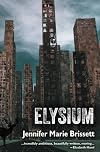
Hot damn. Debut novelist Jennifer Marie Brissett takes a simple story of loss—a very human story of loss and love—and refracts it into multiple narratives to explore interesting ideas related to AI, alternate realities, and memory and history.
The opening scene in Elysium starts off with a literary kick. Those first few pages read like a surreal, ghost-in-the-machine version of Mrs. Dalloway. In the first line, an omniscient observer of some kind swoops down and zeroes in on a city scene. show more It observes a woman, Adrianne, going about her business, running errands, contemplating lunch with a friend, doing some window shopping. Things seem ordinary enough until Adrianne starts noticing a few things along the way: an eerie green dot in the sky; an elk wandering the streets; an owl on the windowsill. Each encounter (or vision) seems to stir something deep in Adrianne’s soul.
When Adrianne is injured by some falling scaffolding, the event seems to open up some kind of narrative glitch. A burst of code babble spills out on the page and suddenly the entire world of the novel is reset. Pick your jargon: System failure. Connection broken. A diagnostic program tries to fix things.
And then we’re returned to the story. Adrianne goes home and we learn of her strained relationship with her live-in boyfriend, Antoine. She goes to sleep and wakes up. But something’s off. It’s no longer summer but autumn. With the turn of a few sentences, a kind of timeslip takes place. If you aren’t paying attention, you could almost miss it. Adrianne is now Adrian, a man. Something or someone (the AI?) has swapped out our leading lady so seamlessly you might think it were a typo.
Half the fun of reading Elysium is diving into the mystery of why this is all happening. The bursts of code obviously have something to do with the narrative slippages, but how and why? Previously, it was Adrianne and her boyfriend, Antoine; now, it’s Adrian and his boyfriend Antoine. Helen, her friend, is now Hector. Readers will quickly realize that we’re looking at variations of Adrianne / Adrian – Antoine / Antoinette. The relationship continues to twirl and change: We also see lovers, father-daughter, husband-wife, siblings. Barring the AI element, this might as well be an exploration of eternal recurrence or reincarnation.
Somewhere, always watching, a program is rebooted; a diagnostic scan is run; lines of code are repaired and reloaded. Narrative elements are constantly being reshuffled like a deck of cards—and we’re treated to a new story. These cascades of instability can be whiplash-inducing, but follow along and an elegant form is revealed. Like in any programming, there are patterns. Motifs keep appearing: the elk, the green dot in the sky, the reference to vestal virgins, and so many others.
In the hands of a less skilled writer, the novel’s ambitious scope might have backfired badly. But Elysium was surprisingly readable and it was relatively easy to keep track of who was who. Brissett keeps every iteration fresh and each new pairing we meet feels vivid and unique. She might not have the character ventriloquism of say, David Mitchell, but Brissett holds her own and manages to give the characters their own individual voices and cadences. The most evocative sections for me are the ones with the two young brothers and the father and daughter.
As the book progresses, the stories and setting become more and more fantastical and bleak. The standalone quality of each iteration starts to break down and a larger, more integrated story picks up speed as the mystery of the shadowy AI is revealed. Who built it? Why was it built?
By the middle of the book, things get complicated. At one point, we learn that aliens invaded and settled on Earth. Their arrival precipitated a kind of mutagenic dust bowl and infected the air, changing all life on the planet. From the beginning, we know there has been some kind of super-intelligence at work, a kind of AI set up high above ground, observing the world below. It lurks in the background, though we can’t be sure of causality: Is it creating the different worlds we’re seeing, or is it merely responding to it? It’s a kind of chicken-and-the-egg conundrum that doesn’t show its hand until the end.
Brissett gives us layer after layer, seemingly making things more complicated and opaque but what she’s actually doing is pulling back the curtain ever so slowly. The structure of the book made me think of Ravel’s Bolero, a composition that builds slowly from a single tendril of sound. It meanders but gathers power and force over time.
It’s inevitable that people will compare the novel to the film, The Matrix, but Elysium is much more nuanced than that. The big difference is that Elysium never really steps outside of itself like the characters in the film do, splitting their time between the real, drab world—the desert of the real—and the glittering, computer-imagined world. In many ways, Elysium is all about that ‘imagined’ world, history and memory.
Readers will have their theories, but for my money I think Brissett fundamentally sets out to tell a story of soul mates and love—and the threats to those bonds. It’s not death or betrayal that threaten those ties with our loved ones; rather, it’s the threat of forgetting. So we create our avatars, murals, homages and memorials and write songs and poetry and tell stories. Again and again. In his in-depth review, Niall Harrison writes:
All I’ll say is that Elysium has an ending that is both expected and surprising. The revelation is a slow build; I appreciated that we aren’t just given a deus ex machina ending or an info-dump.
And then there’s the silence where you close the book…and press reset.
The opening scene in Elysium starts off with a literary kick. Those first few pages read like a surreal, ghost-in-the-machine version of Mrs. Dalloway. In the first line, an omniscient observer of some kind swoops down and zeroes in on a city scene. show more It observes a woman, Adrianne, going about her business, running errands, contemplating lunch with a friend, doing some window shopping. Things seem ordinary enough until Adrianne starts noticing a few things along the way: an eerie green dot in the sky; an elk wandering the streets; an owl on the windowsill. Each encounter (or vision) seems to stir something deep in Adrianne’s soul.
When Adrianne is injured by some falling scaffolding, the event seems to open up some kind of narrative glitch. A burst of code babble spills out on the page and suddenly the entire world of the novel is reset. Pick your jargon: System failure. Connection broken. A diagnostic program tries to fix things.
And then we’re returned to the story. Adrianne goes home and we learn of her strained relationship with her live-in boyfriend, Antoine. She goes to sleep and wakes up. But something’s off. It’s no longer summer but autumn. With the turn of a few sentences, a kind of timeslip takes place. If you aren’t paying attention, you could almost miss it. Adrianne is now Adrian, a man. Something or someone (the AI?) has swapped out our leading lady so seamlessly you might think it were a typo.
Half the fun of reading Elysium is diving into the mystery of why this is all happening. The bursts of code obviously have something to do with the narrative slippages, but how and why? Previously, it was Adrianne and her boyfriend, Antoine; now, it’s Adrian and his boyfriend Antoine. Helen, her friend, is now Hector. Readers will quickly realize that we’re looking at variations of Adrianne / Adrian – Antoine / Antoinette. The relationship continues to twirl and change: We also see lovers, father-daughter, husband-wife, siblings. Barring the AI element, this might as well be an exploration of eternal recurrence or reincarnation.
Somewhere, always watching, a program is rebooted; a diagnostic scan is run; lines of code are repaired and reloaded. Narrative elements are constantly being reshuffled like a deck of cards—and we’re treated to a new story. These cascades of instability can be whiplash-inducing, but follow along and an elegant form is revealed. Like in any programming, there are patterns. Motifs keep appearing: the elk, the green dot in the sky, the reference to vestal virgins, and so many others.
In the hands of a less skilled writer, the novel’s ambitious scope might have backfired badly. But Elysium was surprisingly readable and it was relatively easy to keep track of who was who. Brissett keeps every iteration fresh and each new pairing we meet feels vivid and unique. She might not have the character ventriloquism of say, David Mitchell, but Brissett holds her own and manages to give the characters their own individual voices and cadences. The most evocative sections for me are the ones with the two young brothers and the father and daughter.
As the book progresses, the stories and setting become more and more fantastical and bleak. The standalone quality of each iteration starts to break down and a larger, more integrated story picks up speed as the mystery of the shadowy AI is revealed. Who built it? Why was it built?
By the middle of the book, things get complicated. At one point, we learn that aliens invaded and settled on Earth. Their arrival precipitated a kind of mutagenic dust bowl and infected the air, changing all life on the planet. From the beginning, we know there has been some kind of super-intelligence at work, a kind of AI set up high above ground, observing the world below. It lurks in the background, though we can’t be sure of causality: Is it creating the different worlds we’re seeing, or is it merely responding to it? It’s a kind of chicken-and-the-egg conundrum that doesn’t show its hand until the end.
Brissett gives us layer after layer, seemingly making things more complicated and opaque but what she’s actually doing is pulling back the curtain ever so slowly. The structure of the book made me think of Ravel’s Bolero, a composition that builds slowly from a single tendril of sound. It meanders but gathers power and force over time.
It’s inevitable that people will compare the novel to the film, The Matrix, but Elysium is much more nuanced than that. The big difference is that Elysium never really steps outside of itself like the characters in the film do, splitting their time between the real, drab world—the desert of the real—and the glittering, computer-imagined world. In many ways, Elysium is all about that ‘imagined’ world, history and memory.
Readers will have their theories, but for my money I think Brissett fundamentally sets out to tell a story of soul mates and love—and the threats to those bonds. It’s not death or betrayal that threaten those ties with our loved ones; rather, it’s the threat of forgetting. So we create our avatars, murals, homages and memorials and write songs and poetry and tell stories. Again and again. In his in-depth review, Niall Harrison writes:
”If every page of Elysium is an echo, or an echo of an echo of a deep historical trauma, then what does it mean to be listening, to be the recipient of the story? If it is about any one thing for its characters, I would say that Elysium is about resistance, to society, to apocalypse, to fate itself. It is filled with people trying to be (not that they know it) more than echoes: to live. But if it is about any one thing for its readers, I think it is about responsibility, about thinking about how and why we consume certain stories.”
All I’ll say is that Elysium has an ending that is both expected and surprising. The revelation is a slow build; I appreciated that we aren’t just given a deus ex machina ending or an info-dump.
And then there’s the silence where you close the book…and press reset.
show less
>>
>> open bridge
Connecting . . .
*BRIDGE CONNECTED*
Elysium opens with a series of vignettes depicting Adrian/Adrianne and Antoine/Antoinette, in each of which the two are of different genders – male/female, male/male, female/female; as are also some of the supporting characters. This section (sections) reads like mimetic fiction, but breaking them up is what appears to be output from a computer program (in the form of error messages). The novel then takes an abrupt swerve into alternate history, in which Adrianne is a Vestal Virgin in a show more modern-day Western city, before then heading into post-apocalypse territory as off-stage alien invaders release some form of dust which mutates human beings and brings about the collapse of civilisation. One of the two main characters becomes one such mutant herself and develops wings. Another shift, and now Adrian is the chief designer of an underground city – a geofront, from the description – in which some of humanity plan to survive, safe from the mutagenic dust and the alien invaders. They’re also building starships to take them to another world. It is at this point in the story that the novel reveals a plan to use the atmosphere to store an archive of human civilisation, and it is the operating system of this which is genersating the computer messages and actually “telling” the story of Elysium. In the final section, Adrianne is a prisoner in a concentration camp run by the alien invaders, and when one of the aliens is imprisoned with them, she learns from it that the aliens had killed all the humans who had not escaped Earth, and that she is no more than a simulation run by the archive in the atmosphere (as, indeed, were all the other narratives in the novel). While Elysium certainly has its moments, the writing is rough to begin with – “The water of sorrow ran like a river down the curve of Adrianne’s cheek”? – but soon improves, or at least becomes less of a barrier. The gender- and sexuality-switching in the opening sections is also neat and cleverly-done, and I thought the Vestal Virgin part especially good… but the post-apocalypse section, and the geo-front section, were a bit dull, and the novel only picked up again with Adrianne in the prison camp, a section which pretty much seems to serve no purpose other than to explain the entire book. In many respects, Elysium reminded me a lot of Sue Thomas’s Correspondence, although I thought Correspondence a much more difficult, but more rewarding, read. show less
Lists
Awards


You May Also Like


Associated Authors
Statistics
- Works
- 4
- Also by
- 9
- Members
- 332
- Popularity
- #71,552
- Rating
- 3.6
- Reviews
- 15
- ISBNs
- 18
- Languages
- 1
- Favorited
- 1

