
Joan Leegant
Author of Wherever You Go
Works by Joan Leegant
Associated Works
With Signs & Wonders: An International Anthology of Jewish Fabulist Fiction (2001) — Contributor — 33 copies, 1 review
The New Diaspora: The Changing Landscape of American Jewish Fiction (2015) — Contributor — 17 copies
Promised Lands: New Jewish American Fiction on Longing and Belonging (2010) — Contributor — 13 copies
Tagged
Common Knowledge
- Gender
- female
Members
Reviews
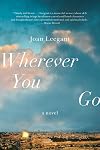
Originally posted on Read Handed.
Wherever You Go is that rare literary gem that seamlessly takes the reader through tough times and complicated emotions from the perspectives of multiple characters.
The novel highlights three main characters, each vastly different, but all compelling. First is Yona Stern, a young American woman in Israel attempting to reconnect with her sister and only living family, Dena. Ten years before, Yona had stolen Dena's fiance away, and the sisters had not spoken show more since. Now, Dena is married with five children, living with her husband, Aryeh Ben-Tzion, in Givat Baruch, a zealous messianic community. Honestly, when I finished the first chapter and realized that the second chapter switched to a different character's perspective, I was a little disappointed. I was already wrapped up in Yona's story and wanted it to continue. The feeling was short lived, however, when I started to read about Mark Greenglass.
Mark Greenglass is a Jewish scholar, an American living in Jerusalem, briefly home in New York to teach a series at a Jewish institute near his parents' home. But Mark feels like a "fake", his enthusiasm for religion waning:
"Still into religion. Though religion's not helping me much these days. A temporary salve, it appears. Had a good long run, but something's happened, I don't know what. I go through the motions, but I don't feel it. Not anymore" (pg. 31).
Another catalyst in Mark's life is his past and his first love, Regina, for whom he's never stopped feeling responsible.
The third main character is Aaron Blinder, the son of a well-known writer of Holocaust-centered historical fiction. Aaron comes to Jerusalem from the United States to study abroad, but soon fails out of his courses and begins to wander. He takes up residency at Adamah, a radical collective dedicated to ensuring Israel belongs to the Jews. He quickly determines to prove himself to Schroeder, the group's leader, by planning and enacting his own "planned incident" against the Arabs.
Each character comes into the story with emotional baggage that they will either rise above or succumb to as the story progresses. Leegant makes this clear from the beginning: each character is on a trip, and each thinks s/he has "brought too much".
The stories unfold beautifully: building suspense, rearranging the reader's first impressions of the characters, and bringing them together seamlessly. The final message is one of hope amid violence, extremism, and political turmoil. The novel champions life over death, love over hate, and hope for the future over the despair of the past.
Overall, Joan Leegant has created a captivating novel that transports its readers into Israel's political and ideological struggles on the micro level, showing how such conflicts affect individuals and their families. I highly recommend Wherever You Go to readers who enjoy literary fiction that tackles thorny issues and the human condition. show less
Wherever You Go is that rare literary gem that seamlessly takes the reader through tough times and complicated emotions from the perspectives of multiple characters.
The novel highlights three main characters, each vastly different, but all compelling. First is Yona Stern, a young American woman in Israel attempting to reconnect with her sister and only living family, Dena. Ten years before, Yona had stolen Dena's fiance away, and the sisters had not spoken show more since. Now, Dena is married with five children, living with her husband, Aryeh Ben-Tzion, in Givat Baruch, a zealous messianic community. Honestly, when I finished the first chapter and realized that the second chapter switched to a different character's perspective, I was a little disappointed. I was already wrapped up in Yona's story and wanted it to continue. The feeling was short lived, however, when I started to read about Mark Greenglass.
Mark Greenglass is a Jewish scholar, an American living in Jerusalem, briefly home in New York to teach a series at a Jewish institute near his parents' home. But Mark feels like a "fake", his enthusiasm for religion waning:
"Still into religion. Though religion's not helping me much these days. A temporary salve, it appears. Had a good long run, but something's happened, I don't know what. I go through the motions, but I don't feel it. Not anymore" (pg. 31).
Another catalyst in Mark's life is his past and his first love, Regina, for whom he's never stopped feeling responsible.
The third main character is Aaron Blinder, the son of a well-known writer of Holocaust-centered historical fiction. Aaron comes to Jerusalem from the United States to study abroad, but soon fails out of his courses and begins to wander. He takes up residency at Adamah, a radical collective dedicated to ensuring Israel belongs to the Jews. He quickly determines to prove himself to Schroeder, the group's leader, by planning and enacting his own "planned incident" against the Arabs.
Each character comes into the story with emotional baggage that they will either rise above or succumb to as the story progresses. Leegant makes this clear from the beginning: each character is on a trip, and each thinks s/he has "brought too much".
The stories unfold beautifully: building suspense, rearranging the reader's first impressions of the characters, and bringing them together seamlessly. The final message is one of hope amid violence, extremism, and political turmoil. The novel champions life over death, love over hate, and hope for the future over the despair of the past.
Overall, Joan Leegant has created a captivating novel that transports its readers into Israel's political and ideological struggles on the micro level, showing how such conflicts affect individuals and their families. I highly recommend Wherever You Go to readers who enjoy literary fiction that tackles thorny issues and the human condition. show less
Wherever You Go by Joan Leegant is a thematically complex novel examining the lives of three Jewish Americans who have traveled to Israel. All three find themselves in Israel because they seek atonement in varying forms, but often atonement must be made with sacrifice. The book examines both political and religious extremism as it collides with democracy in the Middle East, but perhaps even more importantly the book examines the overwhelming human need to feel accepted, to feel like we show more belong to something bigger than ourselves. Leegant’s prose is beautiful and her knowledge of Israel makes this novel come alive.
Yona Stern travels to Israel to seek forgiveness from her sister for a past sin. The book opens with Yona’s arrival at the airport, and the novel in many ways is about why Jewish Americans travel to Israel. “The metallic clanging. The loudspeakers blaring in five languages. The luggage carousel coughed up its half-digested suitcases.” Leegant is masterful with descriptions throughout the novel, and this opening scene will undoubtedly be familiar to many readers who have made the journey.
This is not Yona’s first trip to Israel. In fact, her grievous sin against her sister was committed on a past trip. The reader learns from the customs agent that the name Yona means dove in Hebrew. Her sister’s name, Dena, means judgment. Dena, a mother of five and pregnant again, is part of the settlement movement, which is viewed as radical by some. She is stoic and unrelenting. The symbolism in the novel is clear.
The second character the novel follows is Mark Greenglass, an ex-drug dealer turned talented Talmud teacher. While the novel opens with Yona arriving in Israel, the first time the reader meets Mark he is stepping off a train in New York having come from Israel to deliver a series of lectures. Leegant writes:
"He was a fake. An imposter. It was all falling apart and he couldn’t stop it. He ought to pull off the yarmulke, the tzitzit fringes, throw them into the trash. Everything was unraveling and he didn’t know why, only that it was slipping away from him like so much water from his fingertips. One day it’s the organizing principle of your life, and the next it’s nothing. Gone, evaporated."
Mark is struggling with his faith, but like Yona, the internal struggle is tied to the aching need for atonement. As he thinks about how he has skipped the morning and afternoon prayers, he muses:
"And now he was going to skip them all again. In the place where the whole business began. New York. Where he’d descended with Regina and climbed back out alone. The irony was not lost on him. He was giving it up in the place where all that hot desire for the holy had first taken root."
While in New York, Mark wants to help Regina, his first love. Religion saved him, but he left her behind. She is caught in the nightmare of drug addiction, and now he is wavering in the very thing that took him away.
Also like Yona, Mark feels ostracized by his family. Mark’s father, Lenny, is all business and money. He has no interest in religion or art or anything remotely emotional. Yona and Dena are polar opposites, as are Mark and his father.
The third main character in the novel is the one that ultimately brings them all together. Aaron Blinder is a young college dropout, lost and lonely in the world. As I said before, the symbolism is clear. Aaron is appropriately named.
He, like Yona and Mark, is a family outcast. His lack of ambition and series of failures embarrasses his father, a famous Jewish American writer whose books focus on the Holocaust. Aaron desperately wants to be a part of something important. He wants to be a success. He wants his father to look at him with pride. While living in an extremist commune on the edge of Israeli territory, not fitting in, not respected by the Israelis:
"He felt the hand of the almighty Avenger guiding him, touching him on his very shoulder, looking down at him from this cracked ceiling in this miserable outpost on the edge of the scorpion desert where a hundred battles had been fought and where so much blood had soaked into the earth that even the mountains had turned red."
Aaron’s naiveté and desperation blindly leads him to violence, which brings the characters together and becomes the denouement of the novel.
I really enjoyed the novel because there are so many layers of themes, symbols, and character conflicts. There are the main characters with their personal conflicts and stories- the theme of atonement through sacrifice. On another level they represent Jewish Americans who feel drawn to Israel for political and religious reasons. They want to be a part of something bigger and more important than themselves; yet, as a taxi driver tells Yona in the novel:
“Americans will always be new. No matter how long they’re here… They could be here thirty years, even fifty, and they’ll still be new. Except maybe if they shed blood. Then maybe someone might say they belong.”
At one point Eyal, an Israeli, tells Yona:
“The radical settlers I know, and believe me, I have a few in my family closet, they need black and white. They don’t like the gray… they like absolutes. And drama. They don’t want to be ordinary people thinking about car payments and bank overdraft. They want a big life. Historical, theatrical.”
And this ideology drives Aaron to action. It is the tension between the epic history of the land and everyday life in a democracy. Leegant captures the nuances and themes in beautiful prose.
Wherever You Go was published in paperback in July 2011 by W.W. Norton. Leegant won the Edward Lewis Wallant Award for the best book of Jewish American fiction for her collection of short stories, An Hour in Paradise. She lives half the year in New England and half in Israel where she teaches at Bar-Ilan University. I look forward to reading more of her work. show less
Yona Stern travels to Israel to seek forgiveness from her sister for a past sin. The book opens with Yona’s arrival at the airport, and the novel in many ways is about why Jewish Americans travel to Israel. “The metallic clanging. The loudspeakers blaring in five languages. The luggage carousel coughed up its half-digested suitcases.” Leegant is masterful with descriptions throughout the novel, and this opening scene will undoubtedly be familiar to many readers who have made the journey.
This is not Yona’s first trip to Israel. In fact, her grievous sin against her sister was committed on a past trip. The reader learns from the customs agent that the name Yona means dove in Hebrew. Her sister’s name, Dena, means judgment. Dena, a mother of five and pregnant again, is part of the settlement movement, which is viewed as radical by some. She is stoic and unrelenting. The symbolism in the novel is clear.
The second character the novel follows is Mark Greenglass, an ex-drug dealer turned talented Talmud teacher. While the novel opens with Yona arriving in Israel, the first time the reader meets Mark he is stepping off a train in New York having come from Israel to deliver a series of lectures. Leegant writes:
"He was a fake. An imposter. It was all falling apart and he couldn’t stop it. He ought to pull off the yarmulke, the tzitzit fringes, throw them into the trash. Everything was unraveling and he didn’t know why, only that it was slipping away from him like so much water from his fingertips. One day it’s the organizing principle of your life, and the next it’s nothing. Gone, evaporated."
Mark is struggling with his faith, but like Yona, the internal struggle is tied to the aching need for atonement. As he thinks about how he has skipped the morning and afternoon prayers, he muses:
"And now he was going to skip them all again. In the place where the whole business began. New York. Where he’d descended with Regina and climbed back out alone. The irony was not lost on him. He was giving it up in the place where all that hot desire for the holy had first taken root."
While in New York, Mark wants to help Regina, his first love. Religion saved him, but he left her behind. She is caught in the nightmare of drug addiction, and now he is wavering in the very thing that took him away.
Also like Yona, Mark feels ostracized by his family. Mark’s father, Lenny, is all business and money. He has no interest in religion or art or anything remotely emotional. Yona and Dena are polar opposites, as are Mark and his father.
The third main character in the novel is the one that ultimately brings them all together. Aaron Blinder is a young college dropout, lost and lonely in the world. As I said before, the symbolism is clear. Aaron is appropriately named.
He, like Yona and Mark, is a family outcast. His lack of ambition and series of failures embarrasses his father, a famous Jewish American writer whose books focus on the Holocaust. Aaron desperately wants to be a part of something important. He wants to be a success. He wants his father to look at him with pride. While living in an extremist commune on the edge of Israeli territory, not fitting in, not respected by the Israelis:
"He felt the hand of the almighty Avenger guiding him, touching him on his very shoulder, looking down at him from this cracked ceiling in this miserable outpost on the edge of the scorpion desert where a hundred battles had been fought and where so much blood had soaked into the earth that even the mountains had turned red."
Aaron’s naiveté and desperation blindly leads him to violence, which brings the characters together and becomes the denouement of the novel.
I really enjoyed the novel because there are so many layers of themes, symbols, and character conflicts. There are the main characters with their personal conflicts and stories- the theme of atonement through sacrifice. On another level they represent Jewish Americans who feel drawn to Israel for political and religious reasons. They want to be a part of something bigger and more important than themselves; yet, as a taxi driver tells Yona in the novel:
“Americans will always be new. No matter how long they’re here… They could be here thirty years, even fifty, and they’ll still be new. Except maybe if they shed blood. Then maybe someone might say they belong.”
At one point Eyal, an Israeli, tells Yona:
“The radical settlers I know, and believe me, I have a few in my family closet, they need black and white. They don’t like the gray… they like absolutes. And drama. They don’t want to be ordinary people thinking about car payments and bank overdraft. They want a big life. Historical, theatrical.”
And this ideology drives Aaron to action. It is the tension between the epic history of the land and everyday life in a democracy. Leegant captures the nuances and themes in beautiful prose.
Wherever You Go was published in paperback in July 2011 by W.W. Norton. Leegant won the Edward Lewis Wallant Award for the best book of Jewish American fiction for her collection of short stories, An Hour in Paradise. She lives half the year in New England and half in Israel where she teaches at Bar-Ilan University. I look forward to reading more of her work. show less
'Wherever You Go' is about three people, and the narrative moves between them beginning with Yona Stern, an American visiting her sister Dena, a settler living in the territories near Hebron on the West Bank. Yona has come to make peace with Dena, after being estranged for ten years. It then moves on to Mark Greenglass, a Talmud teacher in Jerusalem, now visiting his parents in New York, before returning to Jerusalem. He’s come to a crisis point in his life where he is questioning his show more faith, his life and his career. The third person is Aaron Blinder, a young American and a somewhat pathetic individual who gets involved in an unofficial commune just outside Jerusalem. Events gradually connect the three, changing all three lives.
Wherever You Go is convincing, with a strong sense of location, believable characters and a fast-paced plot. I’m neither Jewish or American but I thought this was an interesting view of life in Israel, and of the relationship between Israel and America and of Jewish Americans living in both countries. It also conveys the conflicts and tensions of Israeli life, emphasising the dangers of religious and political extremism. But it’s not just a commentary on the political and religious issues, as it explores each of the characters’ personal issues – seeking forgiveness, looking for the truth in religious beliefs, and reconciling family relationships. All in all, a well-rounded novel, which captivated me. show less
Wherever You Go is convincing, with a strong sense of location, believable characters and a fast-paced plot. I’m neither Jewish or American but I thought this was an interesting view of life in Israel, and of the relationship between Israel and America and of Jewish Americans living in both countries. It also conveys the conflicts and tensions of Israeli life, emphasising the dangers of religious and political extremism. But it’s not just a commentary on the political and religious issues, as it explores each of the characters’ personal issues – seeking forgiveness, looking for the truth in religious beliefs, and reconciling family relationships. All in all, a well-rounded novel, which captivated me. show less
Modern-day Israel is one of those countries in which I can just about barely imagine living. Living one’s life surrounded by sworn enemies, and being condemned by much of the rest of the world for what sometimes seems to be an overzealous dedication to self-defense, has to have a huge psychological impact on Israeli citizens. I often wonder how they go about their daily lives under those conditions. Is terrorism constantly on their minds or do they learn to push aside the threat and get on show more with it?
Questions like these make me appreciate novels that offer a glimpse into that world, books that speak with authority and insight about what it is really like there. Joan Leegent’s Wherever You Go is one of the better books of this type I have read in 2011.
Wherever You Go is the story of how three very different American Jews, strangers all, converge in Israel only to have their lives forever changed by circumstances none could have foreseen. Yona Stern is there in hopes of reconciling with the sister who has not spoken to her for ten years but finds that Dana, by now a hardcore West Bank settlement zealot, wants nothing to do with her. Mark Greenglass, a respected Talmud scholar who initially returned to his religion as a means of escaping the addiction that was killing him, is back from a family visit to New York and wondering where his religious fervor has gone. And young college student, Aaron Binder, finds himself drawn to a radical fringe group and its charismatic leader after deciding to stay in Israel a while longer before returning to the U.S.
Leegent tells their individual stories in alternating chapters, building each character layer by layer until they seem very real to her readers. They have very different lives, and at first do not seem to have much in common until one realizes that the three of them have come to Israel seeking the same thing: a fresh start on the rest of their lives. Yona needs her sister’s forgiveness if she is to move on; Mark needs to reconcile his inner religious turmoil before he can do the same; and Aaron is desperately seeking an affirmation of his self-worth, something his overbearing father has long denied him.
Just about the point at which some readers might begin to wonder what Leegent intends for her characters, one of them will make the fatal decision that brings them together for the first time. It is a tragic choice, one made for all the wrong reasons, and it has the potential to ruin the futures of Yona, Mark, and Aaron.
Wherever You Go is a gut-wrenching look at how one brief moment can change lives forever. Three people: an unobservant Jew, a Jewish religious scholar in the process of losing his faith, and an unstable radical, come together in a collision authored by sheer chance. None of them will be the same.
Rated at: 4.5 show less
Questions like these make me appreciate novels that offer a glimpse into that world, books that speak with authority and insight about what it is really like there. Joan Leegent’s Wherever You Go is one of the better books of this type I have read in 2011.
Wherever You Go is the story of how three very different American Jews, strangers all, converge in Israel only to have their lives forever changed by circumstances none could have foreseen. Yona Stern is there in hopes of reconciling with the sister who has not spoken to her for ten years but finds that Dana, by now a hardcore West Bank settlement zealot, wants nothing to do with her. Mark Greenglass, a respected Talmud scholar who initially returned to his religion as a means of escaping the addiction that was killing him, is back from a family visit to New York and wondering where his religious fervor has gone. And young college student, Aaron Binder, finds himself drawn to a radical fringe group and its charismatic leader after deciding to stay in Israel a while longer before returning to the U.S.
Leegent tells their individual stories in alternating chapters, building each character layer by layer until they seem very real to her readers. They have very different lives, and at first do not seem to have much in common until one realizes that the three of them have come to Israel seeking the same thing: a fresh start on the rest of their lives. Yona needs her sister’s forgiveness if she is to move on; Mark needs to reconcile his inner religious turmoil before he can do the same; and Aaron is desperately seeking an affirmation of his self-worth, something his overbearing father has long denied him.
Just about the point at which some readers might begin to wonder what Leegent intends for her characters, one of them will make the fatal decision that brings them together for the first time. It is a tragic choice, one made for all the wrong reasons, and it has the potential to ruin the futures of Yona, Mark, and Aaron.
Wherever You Go is a gut-wrenching look at how one brief moment can change lives forever. Three people: an unobservant Jew, a Jewish religious scholar in the process of losing his faith, and an unstable radical, come together in a collision authored by sheer chance. None of them will be the same.
Rated at: 4.5 show less
Awards


You May Also Like


Associated Authors
Statistics
- Works
- 3
- Also by
- 5
- Members
- 188
- Popularity
- #115,782
- Rating
- 3.9
- Reviews
- 16
- ISBNs
- 7