
Brian Garfield (1939–2018)
Author of The Thousand Mile War: World War II in Alaska and the Aleutians
About the Author
Brian Francis Wynne Garfield was born in New York City on January 26, 1939. He attended the University of Arizona and served in the U.S. Army and the Army Reserves from 1957-1965. He wrote his first book, Range Justice, when he was 18 years old. He went on to write more than 70 books including show more westerns, mysteries, and nonfiction. His novels included Death Wish, Gun Down, and Death Sentence. Hopscotch won an Edgar Award and was adapted into a film in 1980, which Garfield also wrote. The Thousand-Mile War: World War II in Alaska and the Aleutians was a finalist for the Pulitzer Prize in nonfiction in 1969. Nineteen of his works were made into films or TV shows. He died after a battle with Parkinson's disease on December 29, 2018 at the age of 79. (Bowker Author Biography) show less
Series
Works by Brian Garfield
The Crime of My Life: Favorite Stories by Presidents of the Mystery Writers of America (1984) — Editor; Contributor — 13 copies
Joe Cutter's Game (in Alfred Hitchcock's Book of Horror Stories 2 / Tales to Take Your Breath Away) 2 copies
WAR WHOOP AND BATTLE CRY 2 copies
The Stepfather 1 copy
Arizona Rider 1 copy
LYNCH LAW CANYON 1 copy
Cabra cega 1 copy
La Venganza de Mathieson 1 copy
Range Justice 1 copy
Cloak and Dagger — Author — 1 copy
24 timmar från döden 1 copy
Döden följer spåren 1 copy
La vallée des ombres 1 copy
Associated Works
A Century of Great Western Stories-An Anthology of Western Fiction (2000) — Contributor — 125 copies
Reader's Digest Condensed Books 1990 v03: Harmful Intent / The Flight of the Swan / The Estuary Pilgrim / Manifest Destiny (1990) — Author — 32 copies
La rivista di Alfred Hitchcock n.6 — Author — 1 copy
Tagged
Common Knowledge
- Legal name
- Garfield, Brian Francis Wynne
- Other names
- Wynne, Frank (pseudonym)
O'Brian, Frank (pseudonym) - Birthdate
- 1939-01-26
- Date of death
- 2018-12-29
- Gender
- male
- Education
- University of Arizona (BA - English, MA - English)
Southern Arizona School for Boys - Occupations
- novelist
screenwriter
guitarist
non-fiction author - Organizations
- United States Army
- Nationality
- USA
- Birthplace
- Manhattan, New York, USA
- Places of residence
- Santa Fe, New Mexico, USA
Tucson, Arizona, USA - Place of death
- Pasadena, California, USA
- Associated Place (for map)
- USA
Members
Reviews
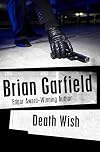
"There are times I’m convinced there’s nothing more to existence in this world than a black desert where blind people pick up rocks and grope around to kill one another.”
There's a reason why Garfield's novel of vigilante justice resonated so well with both the reading a film-going population of the seventies. The economic and sociopolitical struggles of that decade was woven deep into the very cultural existence at the time. Death Wish - with its lingering look at the emotional show more deterioration of the survivor of inner-city gang violence that eventually leads to violent assaults in a desperate attempt to achieve some sort of societal (if not cosmic) justice - managed to appeal not only to a segment of the population that wished to retaliate against increasing crime and disharmony with bloody retribution, but also to those who feared this kind of romanticized barbarism.
Garfield achieves this dual status by allowing the reader to remain empathetic to the plight of Paul Benjamin after his wife and daughter are attacked (and the wife killed) by drug addicted street thugs, but doesn't manufacture exterior excuses or rationalizations for his increasingly misanthropic worldview and behavior, enabling one to understand without condoning, or conversely, to cheer on Benjamin without losing sight of the disconnect with humanity caused by his actions. In other hands, Death Wish would be just another men's adventure novel (exactly what the film franchise became, ironically), but instead it is a journey into the depths of human desperation, obsession, and ultimately, personal retribution.
"We are all dressing for dinner in the jungle." show less
There's a reason why Garfield's novel of vigilante justice resonated so well with both the reading a film-going population of the seventies. The economic and sociopolitical struggles of that decade was woven deep into the very cultural existence at the time. Death Wish - with its lingering look at the emotional show more deterioration of the survivor of inner-city gang violence that eventually leads to violent assaults in a desperate attempt to achieve some sort of societal (if not cosmic) justice - managed to appeal not only to a segment of the population that wished to retaliate against increasing crime and disharmony with bloody retribution, but also to those who feared this kind of romanticized barbarism.
Garfield achieves this dual status by allowing the reader to remain empathetic to the plight of Paul Benjamin after his wife and daughter are attacked (and the wife killed) by drug addicted street thugs, but doesn't manufacture exterior excuses or rationalizations for his increasingly misanthropic worldview and behavior, enabling one to understand without condoning, or conversely, to cheer on Benjamin without losing sight of the disconnect with humanity caused by his actions. In other hands, Death Wish would be just another men's adventure novel (exactly what the film franchise became, ironically), but instead it is a journey into the depths of human desperation, obsession, and ultimately, personal retribution.
"We are all dressing for dinner in the jungle." show less

“Now in the summer of 1874 Gabe found himself at the wrong end of five days on the transcontinental railroad.”
From Manhattan to San Francisco, by way of Sacramento. The Barbary Coast! “…the most vice-infested square mile of corruption in the world.”
“If he took a bath he’d be about twelve pounds lighter; if they didn’t they’d soon be after him to pay real estate taxes on all that dirt.”
Gabe wants to rob The Mint, which seems impossible to everyone else! But he’s got a show more plan. He’s kind of like Westlake’s Dortmunder character, just a hundred years before! Maybe Gabe is Dortmunder’s grandfather? Hmmm…
Officer McCorkle with his big notebook and pencil! Hilarious! Gabe, Vangie, Francis, Captain Flagway, and their lucky charm Itzy! A fun group to read about, pulling the 'impossible' caper!
On a personal note and chuckle as a current resident of Marin County, CA -
"Marin County," Francis said. "But Vangie's right Gabe, that land up there won't be worth much."
If you know, you know! lol!!! show less
From Manhattan to San Francisco, by way of Sacramento. The Barbary Coast! “…the most vice-infested square mile of corruption in the world.”
“If he took a bath he’d be about twelve pounds lighter; if they didn’t they’d soon be after him to pay real estate taxes on all that dirt.”
Gabe wants to rob The Mint, which seems impossible to everyone else! But he’s got a show more plan. He’s kind of like Westlake’s Dortmunder character, just a hundred years before! Maybe Gabe is Dortmunder’s grandfather? Hmmm…
Officer McCorkle with his big notebook and pencil! Hilarious! Gabe, Vangie, Francis, Captain Flagway, and their lucky charm Itzy! A fun group to read about, pulling the 'impossible' caper!
On a personal note and chuckle as a current resident of Marin County, CA -
"Marin County," Francis said. "But Vangie's right Gabe, that land up there won't be worth much."
If you know, you know! lol!!! show less

The book that inspired the film, this is a slim, thoughtful meditation on grief and loss and anger that leads to violence as the only rational response to a dangerous world. Whether it's a moral response is left ambiguous. This isn't sleazy or exploitative or even sanctimonious. Mostly it's just sad story about a man transformed into his opposite by a horrible loss.

Brian Garfield, perhaps best known as the author of the novel which inspired the infamous Death Wish films, seems like one of those forgotten authors now, which is a shame. As a craftsman he's up there with Westlake, Block, McBain, et al, those brilliant genre authors who never turned in a poorly written or badly constructed novel, who could take a plots or a characters apart and put them back together like a mechanic fine tuning an engine. Such books are always a pleasure to read.
Kolchak's show more Gold is framed as a spy thriller, but the historical investigation that makes up the bulk of it is the real heart of the novel. Harry Bristow is a historian working on a book about the destruction of the Black Sea port of Sepastopol during the Second World War. Despite many misgivings, he finds himself being directed down a side-path: the disappearance of a massive amount of gold belonging to the Russian Czar during the civil war. An interview with a dying emigre in Tel Aviv reveals the original fate of the gold. Research into archives in Russia has the potential to show him where the gold is now. Unfortunately, the KGB is almost literally looking over his shoulder, he has an old friend in the CIA and his lover may or may not be an agent of Mossad. And they all want the gold.
The book takes the form of a rather ragged manuscript delivered to Bristow's publishers, pieced together into something readable by his editors. Two sections cover the various adventures of the gold, and it is these that are the highlight of the book, combining historical notes for context and the personal account of a key witness to events. They are brilliant pieces of narrative dexterity, and I won't soon forget the account of the bullion train, fleeing the onslaught of the Reds through a refugee column of hundreds of thousands of doomed souls while the merciless winter closes in.
The cover blurb makes a big deal of comparing Kolchk's Gold to The Day Of The Jackal, but it's more like the Odessa File, really, and it certainly makes the cod-historical conspiracy thrillers of Dan Brown look like the weak sauce that they are. Garfield writes brilliantly, constructs his plots and mysteries and revelations like a demon. Don't be put off by the idea that this is just another cold war thriller. It's well worth rediscovering. show less
Kolchak's show more Gold is framed as a spy thriller, but the historical investigation that makes up the bulk of it is the real heart of the novel. Harry Bristow is a historian working on a book about the destruction of the Black Sea port of Sepastopol during the Second World War. Despite many misgivings, he finds himself being directed down a side-path: the disappearance of a massive amount of gold belonging to the Russian Czar during the civil war. An interview with a dying emigre in Tel Aviv reveals the original fate of the gold. Research into archives in Russia has the potential to show him where the gold is now. Unfortunately, the KGB is almost literally looking over his shoulder, he has an old friend in the CIA and his lover may or may not be an agent of Mossad. And they all want the gold.
The book takes the form of a rather ragged manuscript delivered to Bristow's publishers, pieced together into something readable by his editors. Two sections cover the various adventures of the gold, and it is these that are the highlight of the book, combining historical notes for context and the personal account of a key witness to events. They are brilliant pieces of narrative dexterity, and I won't soon forget the account of the bullion train, fleeing the onslaught of the Reds through a refugee column of hundreds of thousands of doomed souls while the merciless winter closes in.
The cover blurb makes a big deal of comparing Kolchk's Gold to The Day Of The Jackal, but it's more like the Odessa File, really, and it certainly makes the cod-historical conspiracy thrillers of Dan Brown look like the weak sauce that they are. Garfield writes brilliantly, constructs his plots and mysteries and revelations like a demon. Don't be put off by the idea that this is just another cold war thriller. It's well worth rediscovering. show less
Lists
Awards


You May Also Like


Associated Authors
Statistics
- Works
- 94
- Also by
- 31
- Members
- 1,864
- Popularity
- #13,806
- Rating
- 3.6
- Reviews
- 45
- ISBNs
- 313
- Languages
- 13