
Leah Henderson
Author of A Day for Rememberin': Inspired by the True Events of the First Memorial Day
Works by Leah Henderson
A Day for Rememberin': Inspired by the True Events of the First Memorial Day (2021) 102 copies, 5 reviews
Associated Works
Black Enough: Stories of Being Young and Black in America (2019) — Contributor — 646 copies, 15 reviews
Tagged
Common Knowledge
Members
Reviews
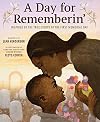
Acommunity of former slaves honors the fallen heroes who made them free.
It’s 1865, and White people are “mad ’cause we aren’t enslaved no more” (a fantastic burn!). Eli wants to follow his father to his work, but his parents are adamant that he take advantage of the education he is now entitled to and go to school. But finally, one day is so special that he gets to follow his father to work. The adult men are digging and building at the old Charleston racecourse, used as a prison show more for Union soldiers during the war, while Eli and the other children paint a picket fence. Finally, there’s a parade that culminates in sermons, songs, and laying flowers at the graves of Union soldiers buried at the former track, both Black and White. It’s Decoration Day, which will later become today’s Memorial Day. Cooper’s illustrations are soft and gentle, his muted color palette with many yellows, browns, and tans working well to convey the dusty workplace and the toil it takes to build a memorial site. His customary technique lends a gauzy haze to the proceedings. Henderson’s choice to show the development of this day of remembrance from the perspective of a child involved in the literal work required to build it gives the story weight and meaning. (This book was reviewed digitally with 11-by-18-inch double-page spreads viewed at 68% of actual size.)
A treasure. (author's note, timeline, notes) (Picture book. 6-10)
-Kirkus Review show less
It’s 1865, and White people are “mad ’cause we aren’t enslaved no more” (a fantastic burn!). Eli wants to follow his father to his work, but his parents are adamant that he take advantage of the education he is now entitled to and go to school. But finally, one day is so special that he gets to follow his father to work. The adult men are digging and building at the old Charleston racecourse, used as a prison show more for Union soldiers during the war, while Eli and the other children paint a picket fence. Finally, there’s a parade that culminates in sermons, songs, and laying flowers at the graves of Union soldiers buried at the former track, both Black and White. It’s Decoration Day, which will later become today’s Memorial Day. Cooper’s illustrations are soft and gentle, his muted color palette with many yellows, browns, and tans working well to convey the dusty workplace and the toil it takes to build a memorial site. His customary technique lends a gauzy haze to the proceedings. Henderson’s choice to show the development of this day of remembrance from the perspective of a child involved in the literal work required to build it gives the story weight and meaning. (This book was reviewed digitally with 11-by-18-inch double-page spreads viewed at 68% of actual size.)
A treasure. (author's note, timeline, notes) (Picture book. 6-10)
-Kirkus Review show less
Marching for the rights of all—children, Black people, women, Indigenous people, DREAMers, the LGBTQ+ community, disabled individuals, and many others—is explored in this history.
From the children who walked with Mother Jones from Pennsylvania to New York in 1903 to speak for better youth labor laws to the worldwide Youth Climate Strike in March 2019, all kinds of marches—many linked to children and youth—are described in lively language and illustrated with bright cartoons that show more emphasize diversity among participants and illustrate the banners and posters carried. Each two-page spread contains a short history of each march and the actions taken, set in dense type, along with one or two quotes from organizers. Some, like the Longest Walk, a 1978 march from San Francisco to Washington, D.C., undertaken by Indigenous people to bring attention to 11 Congressional bills that threatened sovereignty, were weeks or months long. Widely known events like the recent Women’s March in January 2017 and actions known only to a few historians, like the 1943 march of Bulgarian Jews against the Holocaust, receive equal treatment. Connections among marches and themes repeated due to unchanging social and political conditions are pointed out and are one of the book’s strengths. The visually appealing last spread shows a timeline of each event placed on a long winding road. There is neither a table of contents nor an index, but the information presented is accessible and should really be read straight through for greatest impact. (This book was reviewed digitally with 11-by-20-inch double-page spreads viewed at 27.3% of actual size.)
This inspiring book will encourage activism. (sources, further reading) (Nonfiction. 11-13) show less
From the children who walked with Mother Jones from Pennsylvania to New York in 1903 to speak for better youth labor laws to the worldwide Youth Climate Strike in March 2019, all kinds of marches—many linked to children and youth—are described in lively language and illustrated with bright cartoons that show more emphasize diversity among participants and illustrate the banners and posters carried. Each two-page spread contains a short history of each march and the actions taken, set in dense type, along with one or two quotes from organizers. Some, like the Longest Walk, a 1978 march from San Francisco to Washington, D.C., undertaken by Indigenous people to bring attention to 11 Congressional bills that threatened sovereignty, were weeks or months long. Widely known events like the recent Women’s March in January 2017 and actions known only to a few historians, like the 1943 march of Bulgarian Jews against the Holocaust, receive equal treatment. Connections among marches and themes repeated due to unchanging social and political conditions are pointed out and are one of the book’s strengths. The visually appealing last spread shows a timeline of each event placed on a long winding road. There is neither a table of contents nor an index, but the information presented is accessible and should really be read straight through for greatest impact. (This book was reviewed digitally with 11-by-20-inch double-page spreads viewed at 27.3% of actual size.)
This inspiring book will encourage activism. (sources, further reading) (Nonfiction. 11-13) show less
This book is set in 1865 in Charleston, South Carolina, and tells the story of the first Memorial Day celebration. Ten-year-old Eli longs to go with his father to work, but his father insists Eli go to school, now that Blacks are allowed to be educated.
Before the war, the boy tells us, he was always scared that Mama or Papa would get sold away, never to come back home. Now, even though Papa looks more tired than ever, they don’t have that particular fear as a constant presence in their show more lives.
When Papa finally takes Eli to see what he has been working on, it turns out to be a memorial to Union soldiers who died in the notorious Confederate prison erected on Charleston’s Washington Race Course. The course was part of the grounds of Hampton Park, named for Confederate General Wade Hampton III who, at the time of the Civil War, owned one of the largest collections of slaves in the South. By the time the prison closed in 1865, 257 Union soldiers had died on the grounds from exposure, disease, and starvation, as the author apprises us in a note at the conclusion of the book. In April 1865 a group of Black volunteers offered to make a better resting place for these fallen soldiers who had helped secure their freedom. The dead had been dumped into a mass grave, but the volunteers dug them up and reburied them in individual plots.
They gave the makeshift cemetery an archway over the entrance gate that read “Martyrs of the Race Course.” On May 1, ten thousand people, both Black and white, gathered to pay respect. In the front were nearly three thousand Black children from newly formed freedmen’s schools. There were songs and speeches at this “First Decoration Day,” which later became known as Memorial Day.
The author also includes a timeline, a list of other cities claiming to be the birthplace of Memorial Day, footnotes and a selected bibliography.
Multiple award-winning illustrator Floyd Cooper was the perfect choice for the artwork in this book. His oil erasure images and muted color palette on double-page spreads add softness, warmth, and texture. In addition, the expression on the faces of the people he paints convey more than the words of the text could do alone.
Evaluation: This book for readers aged 6 and up has an underlying and unstated message of grace and forgiveness, as well as determination and “the audacity of hope,” to paraphrase the first African American President some 140 years later. show less
Before the war, the boy tells us, he was always scared that Mama or Papa would get sold away, never to come back home. Now, even though Papa looks more tired than ever, they don’t have that particular fear as a constant presence in their show more lives.
When Papa finally takes Eli to see what he has been working on, it turns out to be a memorial to Union soldiers who died in the notorious Confederate prison erected on Charleston’s Washington Race Course. The course was part of the grounds of Hampton Park, named for Confederate General Wade Hampton III who, at the time of the Civil War, owned one of the largest collections of slaves in the South. By the time the prison closed in 1865, 257 Union soldiers had died on the grounds from exposure, disease, and starvation, as the author apprises us in a note at the conclusion of the book. In April 1865 a group of Black volunteers offered to make a better resting place for these fallen soldiers who had helped secure their freedom. The dead had been dumped into a mass grave, but the volunteers dug them up and reburied them in individual plots.
They gave the makeshift cemetery an archway over the entrance gate that read “Martyrs of the Race Course.” On May 1, ten thousand people, both Black and white, gathered to pay respect. In the front were nearly three thousand Black children from newly formed freedmen’s schools. There were songs and speeches at this “First Decoration Day,” which later became known as Memorial Day.
The author also includes a timeline, a list of other cities claiming to be the birthplace of Memorial Day, footnotes and a selected bibliography.
Multiple award-winning illustrator Floyd Cooper was the perfect choice for the artwork in this book. His oil erasure images and muted color palette on double-page spreads add softness, warmth, and texture. In addition, the expression on the faces of the people he paints convey more than the words of the text could do alone.
Evaluation: This book for readers aged 6 and up has an underlying and unstated message of grace and forgiveness, as well as determination and “the audacity of hope,” to paraphrase the first African American President some 140 years later. show less

Having completed this during the holidays, I would say this book puts me in mind of "It's a Wonderful Life" and "A Christmas Carol," plus "Back to the Future," in that time travel changes one's outlook on life and self for the better. After Ailey chokes at a school audition for "The Wiz," his ailing Grampa shares his lifelong regret at not accepting an invitation from Bill "Bojangles" Robinson to come tap dance at his theater. He tells Ailey about the pair of Bojangles' shoes hidden in his show more closet. When Ailey finds them and tries them on, he is transported to 1930s Harlem where he meets Grampa as a kid tapping on the corner of 125th Street and 8th Avenue. Ailey realizes he needs to get Grampa to overcome his fears and dance for Bojangles, no regrets. A lively story that gets the theme across for young readers...carpe diem! show less
Lists
Youth: BLM (1)
Awards


You May Also Like


Associated Authors
Statistics
- Works
- 8
- Also by
- 3
- Members
- 424
- Popularity
- #57,553
- Rating
- 4.2
- Reviews
- 17
- ISBNs
- 29