
Gayle Brandeis
Author of The Book of Dead Birds
About the Author
Image credit: Photo by Priscilla Iezzi
Works by Gayle Brandeis
Associated Works
Breeder: Real-Life Stories from the New Generation of Mothers (2001) — Contributor — 164 copies, 8 reviews
Literary Cash: Unauthorized Writings Inspired by the Legendary Johnny Cash (Smart Pop series) (2006) — Contributor — 17 copies
Tagged
Common Knowledge
- Canonical name
- Brandeis, Gayle
- Birthdate
- 1968-04-14
- Gender
- female
- Education
- University of Redlands
Antioch University - Occupations
- novelist
poet
essayist - Organizations
- Code Pink
Women Creating Peace Collective - Nationality
- USA
- Birthplace
- Chicago, Illinois, USA
- Places of residence
- Riverside, California, USA
- Associated Place (for map)
- USA
Members
Reviews
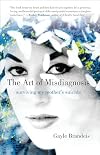
Gayle Brandeis's mother Arlene had always been self-centered and eccentric, but as she grew older she fell into the grip of a full-blown delusional disorder. Her hypochondria and paranoia culminated in an successful suicide attempt days after her daughter gave birth to a late-in-life baby, almost as if she were upstaging her. Brandeis writes with compassion about her mother's mental illness and its impact on her as a daughter, especially during the postpartum period when she was show more simultaneously mourning her mother and welcoming her son. Included also are Brandeis's own teenage experiences with faking illness in order to claim the role of "the sick girl".
Brandeis dwells a little too long on the details of her at-home water birth, but other than that, this is a moving look at a fraught mother-daughter relationship.
Please note that my LibraryThing Early Reviewers copy has not arrived as of the date of this review. I obtained this book from another source. show less
Brandeis dwells a little too long on the details of her at-home water birth, but other than that, this is a moving look at a fraught mother-daughter relationship.
Please note that my LibraryThing Early Reviewers copy has not arrived as of the date of this review. I obtained this book from another source. show less
 This review was written for LibraryThing Early Reviewers.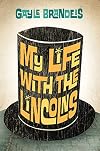
One of the forthcoming books that was getting some pretty significant buzz at the ALA Midwinter meeting among the publishers was Gayle Brandeis' My Life with the Lincolns (Henry Holt, coming out in mid-March). Being a sucker for a good YA story now and then, I was happy to receive an ARC, which I spent the last two evenings (and as much of the intervening day as my spare moments allowed) devouring.
It's 1966, and Mina Edelman (12) believes her family are the Lincolns reincarnated. Their names show more and ages match nicely (Mina's short for Wilhelmina, and her sisters are Roberta and Tabitha, called Tabby - just about as close as you can get to Robert, Willie, and Tad; her parents are Abraham and Margaret). Mina takes it as her goal to make sure her dad doesn't get murdered like his prior iteration, and is convinced she's going to die a horrible death just like young Willie did (this preoccupation brings about some of the funnier and more disturbing elements of the plot).
When Mina's dad gets involved with the Chicago Freedom Movement, and begins taking her to Martin Luther King, Jr. rallies, protest marches, and organizational meetings, her world - and that of her entire family - expands in some new and unexpected ways. Like Gary Schmidt's The Wednesday Wars, this book tackles some serious issues - Vietnam, racism, family tensions - but does so while capturing in a truly special way the mindset of a young person caught up in events larger than herself.
At once funny, sad, and inspiring, this is a book that's going places.
http://philobiblos.blogspot.com/2010/02/book-review-my-life-with-lincolns.html show less
It's 1966, and Mina Edelman (12) believes her family are the Lincolns reincarnated. Their names show more and ages match nicely (Mina's short for Wilhelmina, and her sisters are Roberta and Tabitha, called Tabby - just about as close as you can get to Robert, Willie, and Tad; her parents are Abraham and Margaret). Mina takes it as her goal to make sure her dad doesn't get murdered like his prior iteration, and is convinced she's going to die a horrible death just like young Willie did (this preoccupation brings about some of the funnier and more disturbing elements of the plot).
When Mina's dad gets involved with the Chicago Freedom Movement, and begins taking her to Martin Luther King, Jr. rallies, protest marches, and organizational meetings, her world - and that of her entire family - expands in some new and unexpected ways. Like Gary Schmidt's The Wednesday Wars, this book tackles some serious issues - Vietnam, racism, family tensions - but does so while capturing in a truly special way the mindset of a young person caught up in events larger than herself.
At once funny, sad, and inspiring, this is a book that's going places.
http://philobiblos.blogspot.com/2010/02/book-review-my-life-with-lincolns.html show less
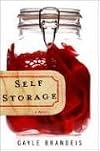
An engaging and incredibly touching novel: Gayle Brandeis, winner of the Bellwether Prize for Fiction in Support of a Literature of Social Change (THE BOOK OF DEAD BIRDS), has penned another novel that is both engaging as a story and timely in subject matter. In it, she expertly flings a cartload of characters searching for love, security and identity into a melting pot infused with political upheaval, fear and post-9/11 muck. The result is a book that is both chaotic and solid, frightening show more and incredibly touching.
Aptly titled SELF STORAGE, the narrative focuses on the business of the self and how we as humans store the "stuff" that makes up both our inner core and our external appearance, using Walt Whitman's gorgeous LEAVES OF GRASS/"Song of Myself" as its guide. All the main characters struggle valiantly with this process --- some successful, others not --- in order to define what of themselves is private and what can be shared openly with others. The book also addresses identity on a larger scale, and confronts both how we relate to others in our surrounding communities and how we receive and are perceived in the world. Given that the story takes place in our contemporary, war-torn world, the white characters have a much more carefree, privileged outlook on life and its prospects, while the Arabs are relegated to prejudicial treatment, confinement and secrecy.
In brief, SELF STORAGE is a post-gloom-and-doom/pre-sorted out tale of two families thrown together just months after the Twin Towers' demise. Twenty-eight-year-old Flan (Flannery) Parker, her husband (Shae) and two young children (Nori and Noodle) are barely scraping by in their shoddy university housing complex in Riverside, California. Flan makes her living buying booty from auctions and unclaimed storage units and reselling it on eBay or at garage sales, while Shae fumbles away at his hopelessly pretentious dissertation ("Hands on the Joystick: Televisual Abstractionism and the Postnarrative Origins of Virtual Selfhood"). The Parkers sleep together in one room, mattresses strewn across the floor --- a symbol, perhaps, of their slim grasp on security and lack of incentive to do anything about it (without any real consequences).
Meanwhile, their neighbors live an entirely different existence. Émigrés from Afghanistan, the Suleimans barely leave their house; when they do, they are shrouded in what seems like a veil of mystery --- most likely brought on by Mrs. Suleiman's (Sodaba's) burqa. They don't participate in the housing complex's dinner gatherings, rarely look any of their neighbors in the eye, and basically keep their strict traditions and their opinions to themselves for fear of persecution. But when a near-fatal accident occurs (Sodaba accidentally runs over Flan's youngest child, Nori), pitting Flan and Sodaba together on opposite sides of a near-homicide investigation, the two women (and their cultures) become connected in a way never thought possible.
At times, Flan's mission to "save" Sodaba from almost-definite deportation after the accident by driving her to a friend's house in the woods seems a bit too pie-in-the-sky. Some readers might question Flan's altruistic motives and her willingness to put her family on the line in order to save a virtual stranger (especially one who ran over her child), despite Brandeis's efforts to convince us otherwise. Nevertheless, this dilemma raises weighty questions about how far one might be willing to go to help another human being, despite his or her differences.
Above all, SELF STORAGE is an in-depth (if slightly scattered) study of persons displaced --- within themselves, with their neighbors and in the world at large --- and of their gallant efforts to find their way home. Brandeis's emphasis on Whitman's sentiments and the gorgeous selections from "Song of Myself" sprinkled throughout are a gift, and readers will delight in the pages of poetic excerpts included at the end.
--- Reviewed by Alexis Burling show less
Aptly titled SELF STORAGE, the narrative focuses on the business of the self and how we as humans store the "stuff" that makes up both our inner core and our external appearance, using Walt Whitman's gorgeous LEAVES OF GRASS/"Song of Myself" as its guide. All the main characters struggle valiantly with this process --- some successful, others not --- in order to define what of themselves is private and what can be shared openly with others. The book also addresses identity on a larger scale, and confronts both how we relate to others in our surrounding communities and how we receive and are perceived in the world. Given that the story takes place in our contemporary, war-torn world, the white characters have a much more carefree, privileged outlook on life and its prospects, while the Arabs are relegated to prejudicial treatment, confinement and secrecy.
In brief, SELF STORAGE is a post-gloom-and-doom/pre-sorted out tale of two families thrown together just months after the Twin Towers' demise. Twenty-eight-year-old Flan (Flannery) Parker, her husband (Shae) and two young children (Nori and Noodle) are barely scraping by in their shoddy university housing complex in Riverside, California. Flan makes her living buying booty from auctions and unclaimed storage units and reselling it on eBay or at garage sales, while Shae fumbles away at his hopelessly pretentious dissertation ("Hands on the Joystick: Televisual Abstractionism and the Postnarrative Origins of Virtual Selfhood"). The Parkers sleep together in one room, mattresses strewn across the floor --- a symbol, perhaps, of their slim grasp on security and lack of incentive to do anything about it (without any real consequences).
Meanwhile, their neighbors live an entirely different existence. Émigrés from Afghanistan, the Suleimans barely leave their house; when they do, they are shrouded in what seems like a veil of mystery --- most likely brought on by Mrs. Suleiman's (Sodaba's) burqa. They don't participate in the housing complex's dinner gatherings, rarely look any of their neighbors in the eye, and basically keep their strict traditions and their opinions to themselves for fear of persecution. But when a near-fatal accident occurs (Sodaba accidentally runs over Flan's youngest child, Nori), pitting Flan and Sodaba together on opposite sides of a near-homicide investigation, the two women (and their cultures) become connected in a way never thought possible.
At times, Flan's mission to "save" Sodaba from almost-definite deportation after the accident by driving her to a friend's house in the woods seems a bit too pie-in-the-sky. Some readers might question Flan's altruistic motives and her willingness to put her family on the line in order to save a virtual stranger (especially one who ran over her child), despite Brandeis's efforts to convince us otherwise. Nevertheless, this dilemma raises weighty questions about how far one might be willing to go to help another human being, despite his or her differences.
Above all, SELF STORAGE is an in-depth (if slightly scattered) study of persons displaced --- within themselves, with their neighbors and in the world at large --- and of their gallant efforts to find their way home. Brandeis's emphasis on Whitman's sentiments and the gorgeous selections from "Song of Myself" sprinkled throughout are a gift, and readers will delight in the pages of poetic excerpts included at the end.
--- Reviewed by Alexis Burling show less
Let’s face it, none of us can ever fathom our parents. They are walking question marks and we are left to wonder at their dim prehistory—those years before our birth, the faces and places of yellowed snapshots. Who are those young people staring back at the camera? What were their lives like before we came along in disruption?
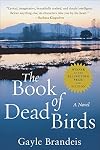
For Ava Sing Lo, these are the questions that peck at her soul as she struggles to solve the riddle of her mother in Gayle Brandeis’s debut novel, The Book of show more Dead Birds. Her mother is close-mouthed, her motives unfathomable, her emotions kept tightly bound. Determining her mother’s heart ultimately means discovering her own as well.
I wonder what my mother’s heart really looks like. I imagine a wrinkled leather pouch, something mummified and dry; she could tear it into strips and serve it as jerky—chewy, saturated with salt.
As the novel opens, Ava has just finished her graduate studies in communication at San Diego State, though she’s a failure when it comes to communicating with her Korean mother. Helen Sing Lo is a former prostitute to black GIs in the 1960s (one of those anonymous soldiers was Ava’s father) who now carves and paints eggshells to earn a living, only revealing herself through impromptu singing (while Ava plays the drums). Through her plaintive songs, something in Helen’s soul takes wing and Ava records it all in a journal.
As you can expect, birds (both dead and living) are central to the book. Near the beginning of her story, Ava tells us, “I am a bird killer. The killer of my mother’s birds. An accidental killer, but a killer nonetheless.âÂ?
For years, her motherâÂÂs pet cockatiels and parrots have fallen victim to AvaâÂÂs blundering and her mother keeps her own journal, a Book of Dead Birds, complete with feathers and eggshells as evidence. Pleasing her mother is somehow tied to her being able to stop killing birds. Ava gets her shot at redemption when she joins a group of environmentalists at the Salton Sea, an inland lake eighty miles north of San Diego where a mysterious botulism has recently killed more than three thousand birds, including brown pelicans.
As Ava works to save the endangered species, she also learns more about herself once sheâÂÂs out from under her motherâÂÂs wing, so to speak. AvaâÂÂs narration is interspersed with dreams, HelenâÂÂs dead-bird obituaries, excerpts from John James AudubonâÂÂs notebooks and, most important, the motherâÂÂs storyâÂÂfirst as a prostitute, then as a bride abandoned by her white husband in America after she gives birth to a black child.
My mother named me Ava because she liked how the English letters lookedâÂÂthe big A a beak pointed upward, the v a sharp slash of wings, the small a round and flat as a parrotâÂÂs eye. She chose the name even before she knew it had anything to do with birdsâÂÂthe letters spoke to her with their own hollow bones. Her family name was Song, but she choose Sing for us because...it sounded more active, like something that is happening, something alive in the throat...The âÂÂLoâÂ?...comes from my motherâÂÂs mishearing of the song âÂÂSwing Low, Sweet Chariot.âÂ? She had seen an American movie where a man in prison sang that song, and she thought he was saying âÂÂsing low,âÂ? his voice was so low, so gravelly and dark. ThatâÂÂs how she felt twenty-five years ago, sheâÂÂs told meâÂÂlow and gravelly and dark right after I was born. ThatâÂÂs how I still make her feel, it seems, again and again and again, awkward as the âÂÂlâÂ? sound in her mouth.
Poetry abounds on every page and graces every sentence. Starting with AvaâÂÂs ornithological name and continuing through the grim details of the Salton Sea bird rescue, Brandeis writes confidently and lyrically without ever turning to treacle. She cares as passionately about her characterâÂÂs parent-puzzle quest as Ava does about redeeming herself in her motherâÂÂs eyes by saving at least one birdâÂÂs life. Though pelicans continue to die at the Salton Sea, the daughter eventually learns how to listen to her motherâÂÂs heartâÂÂwhich is not tough as jerky after allâÂÂas well as her own. The Book of Dead Birds captures the way we communicate with our parents and children, then uncages the heart to sing.
Brandeis has a poetâÂÂs ear for the music of language. Her remarkable first novel is deceptively simple and quick to read...but the characters and their fledgling flights of the heart stay with readers long after the book is closed and set aside. show less
For Ava Sing Lo, these are the questions that peck at her soul as she struggles to solve the riddle of her mother in Gayle Brandeis’s debut novel, The Book of show more Dead Birds. Her mother is close-mouthed, her motives unfathomable, her emotions kept tightly bound. Determining her mother’s heart ultimately means discovering her own as well.
I wonder what my mother’s heart really looks like. I imagine a wrinkled leather pouch, something mummified and dry; she could tear it into strips and serve it as jerky—chewy, saturated with salt.
As the novel opens, Ava has just finished her graduate studies in communication at San Diego State, though she’s a failure when it comes to communicating with her Korean mother. Helen Sing Lo is a former prostitute to black GIs in the 1960s (one of those anonymous soldiers was Ava’s father) who now carves and paints eggshells to earn a living, only revealing herself through impromptu singing (while Ava plays the drums). Through her plaintive songs, something in Helen’s soul takes wing and Ava records it all in a journal.
As you can expect, birds (both dead and living) are central to the book. Near the beginning of her story, Ava tells us, “I am a bird killer. The killer of my mother’s birds. An accidental killer, but a killer nonetheless.âÂ?
For years, her motherâÂÂs pet cockatiels and parrots have fallen victim to AvaâÂÂs blundering and her mother keeps her own journal, a Book of Dead Birds, complete with feathers and eggshells as evidence. Pleasing her mother is somehow tied to her being able to stop killing birds. Ava gets her shot at redemption when she joins a group of environmentalists at the Salton Sea, an inland lake eighty miles north of San Diego where a mysterious botulism has recently killed more than three thousand birds, including brown pelicans.
As Ava works to save the endangered species, she also learns more about herself once sheâÂÂs out from under her motherâÂÂs wing, so to speak. AvaâÂÂs narration is interspersed with dreams, HelenâÂÂs dead-bird obituaries, excerpts from John James AudubonâÂÂs notebooks and, most important, the motherâÂÂs storyâÂÂfirst as a prostitute, then as a bride abandoned by her white husband in America after she gives birth to a black child.
My mother named me Ava because she liked how the English letters lookedâÂÂthe big A a beak pointed upward, the v a sharp slash of wings, the small a round and flat as a parrotâÂÂs eye. She chose the name even before she knew it had anything to do with birdsâÂÂthe letters spoke to her with their own hollow bones. Her family name was Song, but she choose Sing for us because...it sounded more active, like something that is happening, something alive in the throat...The âÂÂLoâÂ?...comes from my motherâÂÂs mishearing of the song âÂÂSwing Low, Sweet Chariot.âÂ? She had seen an American movie where a man in prison sang that song, and she thought he was saying âÂÂsing low,âÂ? his voice was so low, so gravelly and dark. ThatâÂÂs how she felt twenty-five years ago, sheâÂÂs told meâÂÂlow and gravelly and dark right after I was born. ThatâÂÂs how I still make her feel, it seems, again and again and again, awkward as the âÂÂlâÂ? sound in her mouth.
Poetry abounds on every page and graces every sentence. Starting with AvaâÂÂs ornithological name and continuing through the grim details of the Salton Sea bird rescue, Brandeis writes confidently and lyrically without ever turning to treacle. She cares as passionately about her characterâÂÂs parent-puzzle quest as Ava does about redeeming herself in her motherâÂÂs eyes by saving at least one birdâÂÂs life. Though pelicans continue to die at the Salton Sea, the daughter eventually learns how to listen to her motherâÂÂs heartâÂÂwhich is not tough as jerky after allâÂÂas well as her own. The Book of Dead Birds captures the way we communicate with our parents and children, then uncages the heart to sing.
Brandeis has a poetâÂÂs ear for the music of language. Her remarkable first novel is deceptively simple and quick to read...but the characters and their fledgling flights of the heart stay with readers long after the book is closed and set aside. show less
Lists
Awards


You May Also Like


Associated Authors
Statistics
- Works
- 11
- Also by
- 8
- Members
- 694
- Popularity
- #36,475
- Rating
- 3.6
- Reviews
- 30
- ISBNs
- 28
- Favorited
- 1
