
Jim Fay
Author of Parenting With Love And Logic
About the Author
Image credit: via loveandlogic.com
Works by Jim Fay
Love and Logic Magic for Early Childhood: Practical Parenting From Birth to Six Years (2000) 396 copies, 7 reviews
Helicopters, Drill Sergeants & Consultants: Parenting Styles and the Messages They Send (1994) 56 copies, 1 review
Grandparenting With Love & Logic: Practical Solutions to Today's Grandparenting Challenges (1994) 50 copies
Meeting the Challenge: Using Love and Logic to help children develop attention and behavior skills (2000) 50 copies, 1 review
From Innocence to Entitlement: A Love and Logic Cure for the Tragedy of Entitlement (2005) 44 copies
Schoolwide Discipline Plan Without the Loopholes: Yeah, but- A Salamander is Not a Fish! (2010) 20 copies
Millionaire Babies or Bankrupt Brats: Love and Logic Solutions to Teaching Kids About Money (2008) 12 copies
Toddlers and Preschoolers: Love and Logic Parenting for Early Childhood, 6 Months to Five Years (2003) 12 copies
Four Steps to Responsibility: Techniques to Lead Children to Responsible Decision Making (1998) 11 copies
Quick and Easy Classroom Interventions: 23 Proven Tools for Increasing Student Cooperation (1998) 9 copies
Didn't I Tell You to Take Out the Trash: Techniques for Getting Kids to Do Chores Without Hassles (1996) 7 copies
Love Me Enough to Set Limits: Building Your Child's Self-Esteem With Thoughtful Limit Setting (1996) 5 copies
Tagged
Common Knowledge
- Gender
- male
Members
Reviews
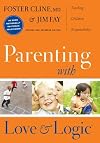
As many other reviewers have said, you should take from this book what's useful to you and leave the rest. A few useful things for me:
1. Parenting should not be a power struggle. My job as a parent is not to control my child. (This is not in the book, but I really like partnering/collaborating with my 5yo to find solutions to conflicts. As the book says, kids should have opportunities to exercise power over their lives.)
2. Keep in mind your ultimate goal as a parent. For most of us, it's show more for our kids to become independent and trustworthy. This can't happen if we never trust them. We have to give them opportunities to make choices and suffer consequences within reason.
3. Be consistent with boundaries. This is especially important for very young children who don't understand how context guides behavior. For example, if you let your child make a big mess and laugh about it one day (because, say, it's a lazy Sunday) but then the next day you get super upset when they make a big mess (because, say, it's Monday morning and you have to get to work) it's confusing for little kids. Consistency (to the point of even saying "uh-oh" in the same sing-song way every time you want to discourage a behavior) will really help guide behavior.
A few things the book advocates that don't work for me:
1. Don't lecture. --okay, this sounds good. But the authors recommend parents keep mum and let experience be their child's teacher. This doesn't always work for me because I'm a verbal person raising a verbal kid. Some things are better learned first by talking together. For example, if we're having a conflict over toothbrushing, I'm not going to quietly let my kids get cavities so they can learn from experience why toothbrushing matters. I'm going to describe in detail how much it sucks to get a cavity and explain that a trip to the dentist is expensive. (This has worked pretty well for us, btw.)
2. Never lose your cool. --again this sounds good. But it basically encourages parents to trick kids into thinking the kids have no power to upset their parents. I think this will inevitably come across as hollow as your kids get older. I'd rather be authentic with my kid about my feelings. Honestly, I don't think I could pull off unflappable anyway.
3. Lock your kid in their room when they misbehave because you can't control their behavior but you can control their location. --yeah, this is bad advice. Please don't routinely lock your child in their room, even if you're standing just outside the door. Google "love withdrawal" as a parenting/discipline technique and you'll find research that shows this doesn't work well. show less
1. Parenting should not be a power struggle. My job as a parent is not to control my child. (This is not in the book, but I really like partnering/collaborating with my 5yo to find solutions to conflicts. As the book says, kids should have opportunities to exercise power over their lives.)
2. Keep in mind your ultimate goal as a parent. For most of us, it's show more for our kids to become independent and trustworthy. This can't happen if we never trust them. We have to give them opportunities to make choices and suffer consequences within reason.
3. Be consistent with boundaries. This is especially important for very young children who don't understand how context guides behavior. For example, if you let your child make a big mess and laugh about it one day (because, say, it's a lazy Sunday) but then the next day you get super upset when they make a big mess (because, say, it's Monday morning and you have to get to work) it's confusing for little kids. Consistency (to the point of even saying "uh-oh" in the same sing-song way every time you want to discourage a behavior) will really help guide behavior.
A few things the book advocates that don't work for me:
1. Don't lecture. --okay, this sounds good. But the authors recommend parents keep mum and let experience be their child's teacher. This doesn't always work for me because I'm a verbal person raising a verbal kid. Some things are better learned first by talking together. For example, if we're having a conflict over toothbrushing, I'm not going to quietly let my kids get cavities so they can learn from experience why toothbrushing matters. I'm going to describe in detail how much it sucks to get a cavity and explain that a trip to the dentist is expensive. (This has worked pretty well for us, btw.)
2. Never lose your cool. --again this sounds good. But it basically encourages parents to trick kids into thinking the kids have no power to upset their parents. I think this will inevitably come across as hollow as your kids get older. I'd rather be authentic with my kid about my feelings. Honestly, I don't think I could pull off unflappable anyway.
3. Lock your kid in their room when they misbehave because you can't control their behavior but you can control their location. --yeah, this is bad advice. Please don't routinely lock your child in their room, even if you're standing just outside the door. Google "love withdrawal" as a parenting/discipline technique and you'll find research that shows this doesn't work well. show less
this is astoundingly bad parenting advice. dangerously bad, actually. i was looking forward to reading this and was immediately put off by the super christian bent to it (i just looked and realized it was published by a christian press) but thought i'd just ignore that part. ("Responsible parents want to bring their children up with established spiritual values. They want their kids to have faith, understand the Christian message, and know God intimately.") even as i was reading and show more disagreeing with much of the message, and a lot of the way it was being told, i figured there was some good foundational stuff that i could take from this book for my own parenting. and there is. but i can't get past all of the really terrible things they tell you to do, and how they tell you that if you don't you will be doing "irreparable harm" to your children "by the time they reach high school." example, i agree - you have to take care of yourself if you intend to take care of other people. you have to do some things for yourself, etc. but: "For many unhappy parents and their entitled, demanding children, life becomes a one-way street....Wise parents who find themselves in such a predicament set the model by taking good care of themselves. A Love and Logic parent might say, 'Honey, I know you want me to (help you with your homework; take you to your practice; drive you to the movie). However, I'm sorry to say that taking you places (doing things for you) has put a darkening cloud over my haze of happiness lately. That's sad but true. So I think I'll pass on doing it this time.' This parent will raise respectful, thoughtful children who grow to take good care of themselves, too." really? you want me to help me with your homework but i don't want to, so screw you, kid. i could pull something like this from almost every page that i got through, contradicting something they wrote before. this isn't about "natural consequences" and "raising responsible kids." it's about giving a pass to lazy parents, and generally telling you ways to royally fuck up your kids. show less
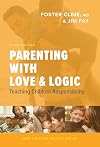
This parenting book resonated with me more than any other I’ve read. Its main goal is to help you raise kids who are able to make decisions for themselves in a safe environment at home that will translate well when they’re out of your house. They talk about how helicopter or drill sergeant parents limit kids’ maturity, while consultant parents help their kids learn through natural consequences. The key is empathy while still allowing them to fail.
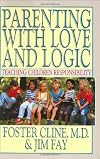
Raising kids is difficult, and every child is different. Therefore, no one book can tell you how you should teach your own unique human being. Having said that, as one who survived parenting six very different children, I wholeheartedly endorse this book. It does not absolve you of the responsibility of understanding each child individually and catering your approach to his/her specific needs, but it does provide powerful tools and insights that will make you much more effective as a parent. show more Just be careful not to cross the line that separates mature detachment (good) and indifference (bad). In other words, remember the "Love" part, and not just the "Logic." show less
Lists
Awards

You May Also Like


Associated Authors
Statistics
- Works
- 70
- Members
- 3,178
- Popularity
- #8,039
- Rating
- 3.9
- Reviews
- 28
- ISBNs
- 101
- Languages
- 2