
Andrew Neiderman
Author of The Devil's Advocate
About the Author
Works by Andrew Neiderman
Advogado do diabo 1 copy
Tagged
Common Knowledge
- Canonical name
- Neiderman, Andrew
- Birthdate
- 1940-10-26
- Gender
- male
- Occupations
- author
screenwriter
lyricist - Nationality
- USA
- Birthplace
- Brooklyn, New York, USA
- Places of residence
- Fallsburg, New York, USA
- Associated Place (for map)
- New York, USA
Members
Reviews
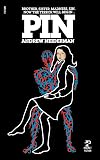
This is a strange, strange book. Gothic in nature, and told in a style similar to that of V.C. Andrews (certainly helping to explain why Neiderman became the ghostwriter for her later books), Pin is an eerie, strange read that revolves around a brother and sister who live with the life-size dummy which their father once used for his medical practice. For much of the work, the reader questions what's real and what's not, uncertain even if there's a supernatural element to the book, or if it's show more only a matter of psychosis. As the book goes further, there's more and more material that will, at least, make any reader raise an eyebrow and feel a bit of shock. The depravity pictured here is obscene in many spots, and hard to read in some, so the book is an unsettling one.
I found that the end dragged, although I was pulled along non-stop for the first half of the book. At around the halfway to two-thirds point, everything became clearer (to me, at least--I know other readers in my book club who felt differently), so that I found the ending fairly predictable, and a lot less interesting than I might have hoped. I think Neiderman implemented so much foreshadowing that the end being predictable was in some ways a foregone conclusion, and especially considering how eerie and atmospheric and unsettling the beginning and middle had been, I would have expected more from the end.
I'm not sure I'll read more Neiderman. If you're tempted by this book, I will say that you need to go into it expecting to read some disturbing material; the book requires content warnings for incestuous behavior and non-consensual sex. If you've read V.C. Andrews' library at large, I don't think anything here will outright shock you--it's much the same style and touches on some of the same types of questionable behavior, without doubt--though you might be surprised by how blatantly perverse some of the humor here is. show less
I found that the end dragged, although I was pulled along non-stop for the first half of the book. At around the halfway to two-thirds point, everything became clearer (to me, at least--I know other readers in my book club who felt differently), so that I found the ending fairly predictable, and a lot less interesting than I might have hoped. I think Neiderman implemented so much foreshadowing that the end being predictable was in some ways a foregone conclusion, and especially considering how eerie and atmospheric and unsettling the beginning and middle had been, I would have expected more from the end.
I'm not sure I'll read more Neiderman. If you're tempted by this book, I will say that you need to go into it expecting to read some disturbing material; the book requires content warnings for incestuous behavior and non-consensual sex. If you've read V.C. Andrews' library at large, I don't think anything here will outright shock you--it's much the same style and touches on some of the same types of questionable behavior, without doubt--though you might be surprised by how blatantly perverse some of the humor here is. show less
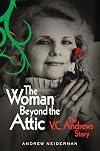
This biography of V.C. Andrews was fun and interesting! It's by the writer who "took over" from V.C. Andrews after her death, first completing a couple of books she had started, and then writing 80 or 90 more as "the V.C. Andrews Trust." The style of this biography is a little bit overblown but a) are you surprised? and b) that seems appropriate.
I first encountered V.C. Andrews when I was ten or eleven with her book Heaven. It kind of blew my mind apart because it starts with a fairly show more child-friendly story about a girl who is very poor but her immediate problems include choosing what flavor to get when their teacher takes her and her siblings out for ice cream. Then bam bam bam we have a stillbirth, a father selling his children for $500 apiece, her new father molesting her, and her sister's new father the minister molesting the sister (with a fair amount of rationalizing why these assaults were not that bad.) Heaven was definitely an eye-opener and introduced me to the seedy side of life. I was simultaneously intrigued, repulsed, titillated, and amused. Which is pretty much how you are supposed to feel reading a gothic novel like this, and V.C. Andrews wrote cracking good ones.
I didn't know anything about V.C. Andrews and I was surprised to learn that she had a disability and that her first novel was not published until she was in her fifties. Her disability seems to have been partly from medical malpractice, partly from a fall she had in high school, and partly from bone spurs or other organic causes. There's some ableist language in this book about "wheelchair bound" and "confined to a wheelchair" but really this is a disability pride story that tells itself.
I thought it was interesting what issues a current-day version of V.C. Andrews would not have to face and what ones she still would. Her mother was her sole caregiver and Andrews went out very rarely, in part because her mother felt shame about having a daughter with a disability. (No wonder she was able to write so vividly about being trapped in an attic.) One of the reasons V.C. Andrews began writing was that she knew if her mother pre-deceased her, she would need to pay for all her own care, so she had to make some money. Today thanks to tireless activism and the ADA, people with disabilities have caregivers paid for by Medicaid, more places are accessible, and (until COVID hit) social service agencies are supposed to make it possible for people with disabilities to take their rightful place in the community. When V.C. Andrews sold her first book, it was a total gamble because her $7,000 advance meant that her benefits would be cut off, but most people don't earn back their advance. That kind of thing is still a problem today as people with disabilities can't take most jobs or marry without losing their benefits. Fortunately, Andrews' first book (Flowers in The Attic) was a smash hit and she was able to buy a new house for her and her mom. And instead of staying cooped up at home, she and her mother were able to see the world, including publicity tours to Hollywood, Paris, and London.
The assumption I made about V.C. Andrews based on her novels was that she was a survivor of incest and/or sexual assault because it's such an enduring theme in her stories and she seemed to be grappling for a way to somehow make it okay or romantic. The author Andrew Neiderman doesn't get into this topic, but he presents the POV that Andrews had a sort of lurid view of romance because as far as anyone knows, she never had the opportunity to have a real-life romance of her own. After her literary success she did have a dreamy attorney and stockbroker who seemed to be vying for her attentions.
Unfortunately, the good life after her big breakthrough only lasted for about seven years before Andrews died of breast cancer. The author Andrew Neiderman explains that he was first tapped by their mutual agent to finish a book for Andrews while she was still alive but in failing health, and that he never actually met her. It's unclear from his account how much V.C. Andrews knew about or assisted with this plan. I remember as a kid being increasingly incredulous as more and more books by V.C. Andrews kept coming out after she died. At first the book jackets or front matter would say something about how it was an unfinished book or based on plans or notes she left behind. I thought, no one leaves behind notes for a dozen different books! Then ultimately the books began to say something more like "inspired by" or "based on the work of" or "authorized by the estate" or some language like that.
Neiderman opens the book with a poem he wrote about Andrews, expressing that he has cheated Death of victory as he resurrects Andrews with every page he writes. That pretty much sums up the whole tone of the book: egotistical but truly devoted to V.C. Andrews and her memory. Most of the information comes from Andrews' surviving family, which Neiderman describes as having become a second family to him. I probably would have been happier with a more straightforward story of her life and less literary criticism. But overall I came away thinking well of both Andrews and ghost writer Neiderman, and I heartily recommend this book for anyone who has fond memories of V.C. Andrews' novels. There are also a few chapters from a genuine unfinished V.C. Andrews novel included at the end. I gratefully received an ARC of this biography from Netgalley in exchange for an honest review. show less
I first encountered V.C. Andrews when I was ten or eleven with her book Heaven. It kind of blew my mind apart because it starts with a fairly show more child-friendly story about a girl who is very poor but her immediate problems include choosing what flavor to get when their teacher takes her and her siblings out for ice cream. Then bam bam bam we have a stillbirth, a father selling his children for $500 apiece, her new father molesting her, and her sister's new father the minister molesting the sister (with a fair amount of rationalizing why these assaults were not that bad.) Heaven was definitely an eye-opener and introduced me to the seedy side of life. I was simultaneously intrigued, repulsed, titillated, and amused. Which is pretty much how you are supposed to feel reading a gothic novel like this, and V.C. Andrews wrote cracking good ones.
I didn't know anything about V.C. Andrews and I was surprised to learn that she had a disability and that her first novel was not published until she was in her fifties. Her disability seems to have been partly from medical malpractice, partly from a fall she had in high school, and partly from bone spurs or other organic causes. There's some ableist language in this book about "wheelchair bound" and "confined to a wheelchair" but really this is a disability pride story that tells itself.
I thought it was interesting what issues a current-day version of V.C. Andrews would not have to face and what ones she still would. Her mother was her sole caregiver and Andrews went out very rarely, in part because her mother felt shame about having a daughter with a disability. (No wonder she was able to write so vividly about being trapped in an attic.) One of the reasons V.C. Andrews began writing was that she knew if her mother pre-deceased her, she would need to pay for all her own care, so she had to make some money. Today thanks to tireless activism and the ADA, people with disabilities have caregivers paid for by Medicaid, more places are accessible, and (until COVID hit) social service agencies are supposed to make it possible for people with disabilities to take their rightful place in the community. When V.C. Andrews sold her first book, it was a total gamble because her $7,000 advance meant that her benefits would be cut off, but most people don't earn back their advance. That kind of thing is still a problem today as people with disabilities can't take most jobs or marry without losing their benefits. Fortunately, Andrews' first book (Flowers in The Attic) was a smash hit and she was able to buy a new house for her and her mom. And instead of staying cooped up at home, she and her mother were able to see the world, including publicity tours to Hollywood, Paris, and London.
The assumption I made about V.C. Andrews based on her novels was that she was a survivor of incest and/or sexual assault because it's such an enduring theme in her stories and she seemed to be grappling for a way to somehow make it okay or romantic. The author Andrew Neiderman doesn't get into this topic, but he presents the POV that Andrews had a sort of lurid view of romance because as far as anyone knows, she never had the opportunity to have a real-life romance of her own. After her literary success she did have a dreamy attorney and stockbroker who seemed to be vying for her attentions.
Unfortunately, the good life after her big breakthrough only lasted for about seven years before Andrews died of breast cancer. The author Andrew Neiderman explains that he was first tapped by their mutual agent to finish a book for Andrews while she was still alive but in failing health, and that he never actually met her. It's unclear from his account how much V.C. Andrews knew about or assisted with this plan. I remember as a kid being increasingly incredulous as more and more books by V.C. Andrews kept coming out after she died. At first the book jackets or front matter would say something about how it was an unfinished book or based on plans or notes she left behind. I thought, no one leaves behind notes for a dozen different books! Then ultimately the books began to say something more like "inspired by" or "based on the work of" or "authorized by the estate" or some language like that.
Neiderman opens the book with a poem he wrote about Andrews, expressing that he has cheated Death of victory as he resurrects Andrews with every page he writes. That pretty much sums up the whole tone of the book: egotistical but truly devoted to V.C. Andrews and her memory. Most of the information comes from Andrews' surviving family, which Neiderman describes as having become a second family to him. I probably would have been happier with a more straightforward story of her life and less literary criticism. But overall I came away thinking well of both Andrews and ghost writer Neiderman, and I heartily recommend this book for anyone who has fond memories of V.C. Andrews' novels. There are also a few chapters from a genuine unfinished V.C. Andrews novel included at the end. I gratefully received an ARC of this biography from Netgalley in exchange for an honest review. show less
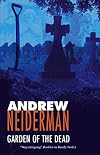
The synopsis for this book actually sounded good so when I was offered the chance to read it for free, I thought, why not?
Boy howdy, that was a decision I would sorely come to regret. If I thought Andrew Neiderman's writing under the V.C. Andrews name was bad, I was subjected to more - and worse - here. The story itself had tons of potential, and under the pen of a skilled author, such a story would be utterly compelling and unforgettable, or if this story was a movie or an episode of CSI or show more Law and Order or something like that, that would totally rock. Unfortunately, the story is bogged down with predictability, bad cliches, and an abuse of metaphors to describe this or that, making for a story that kept me turning the pages just so I could get to the end and finish this book! (I do hate to leave books unfinished however bad they may be)
Unfortunately, this is not much different than other books he has written, whether under his own name or V.C. Andrews. And Kitchen Family? Really? Neiderman already created the Patio Family, and now the Kitchen Family. What's next? The Bedroom Family? The Living-Room Family? show less
Boy howdy, that was a decision I would sorely come to regret. If I thought Andrew Neiderman's writing under the V.C. Andrews name was bad, I was subjected to more - and worse - here. The story itself had tons of potential, and under the pen of a skilled author, such a story would be utterly compelling and unforgettable, or if this story was a movie or an episode of CSI or show more Law and Order or something like that, that would totally rock. Unfortunately, the story is bogged down with predictability, bad cliches, and an abuse of metaphors to describe this or that, making for a story that kept me turning the pages just so I could get to the end and finish this book! (I do hate to leave books unfinished however bad they may be)
Unfortunately, this is not much different than other books he has written, whether under his own name or V.C. Andrews. And Kitchen Family? Really? Neiderman already created the Patio Family, and now the Kitchen Family. What's next? The Bedroom Family? The Living-Room Family? show less

You're looking at the Chucky doll in the arms of the child on this cover. You're looking at the title. You're thinking those two things cannot be there without both being one in the same. I'll have you know there's not really an evil doll in this. I had to find that out myself but I kind of expected it.
So where do I start? First off Sharon is really a limp dish rag of a person. She trust her husband so much that even though he is making terrible decisions, she thinks oh yeah he says it's a show more good decision. But at the same time she can't escape him. If she broke up with him where would she go?
Within the first six pages we find out that she's basically dependent on him and he is the breadwinner who can choose who lives and who dies. It's a horrifying life to be so dependent you have no way out and the only way out might ruin your reputation and take you down to homelessness. That's horrifying. He has her by the purse strings. So from the get-go you know that Alex has all of the power in this relationship. They don't even want kids but Alex suddenly decides he needs kids and he just starts plucking them out of the foster care system and raising them. It's almost like he needs to make an army and I don't doubt that he would have picked up a fifth or sixth kid down the road.
It seems like Alex's father is a oddly abusive but good guy in this book and that threw me for a loop. I don't really write this book high. It's a complicated thing did I read this book really fast and enjoy all of it? Yes and no. I enjoyed reading the book but the characters really annoyed me.
It feels like we would have a little bit more investigation into these murders and deaths. I don't know, but usually they investigate the neighbors and the people who were last seen with them and all that stuff and none of that really happens. It's only Sharon who suspects but also is in denial so she's an unreliable investigator in this whole thing. She's also utterly limp and easily plied.
Weak willed woman in writing always seem to come off as they have no spine and no will until the very last moment of the very last scene and then suddenly they are possessed or they are snap to attentiveness and know what needs to be done. This book is no different. I wish she had a bigger spine earlier on and had just started standing up to him but he had done it anyway, because then it would have made her rebellion at the end very obviously about to happen but also totally not just a spur of the moment random spine growth.
I am constantly torn between saying I hate her and that I have met characters and people actually like her in real life and I hated that. I hate that she's an actual character that I have met in a real person. I hate that this kind of person exists. And reading about them always works me up because I don't like to imagine these people existing and just doing stuff like this. Being in these kind of relationships. But it happens. It's awful.
At the end of the day I ended up here because the cover of the book that I got looked like it was a Chucky knock off or a pre-existing Chucky book. And Chucky was never based off of Robert the haunted doll so I wanted to see if this was where he came from. It was likely not in anything but the cover, but it was an interesting journey and I did not fully hate the book I just found it terrifying in a way of I've seen too many lifetime movies and true stories go this way and I did not like how this went. Gave me a little bit of a Children Of The Corn Energy. Very eerie.
3.8 stars. show less
So where do I start? First off Sharon is really a limp dish rag of a person. She trust her husband so much that even though he is making terrible decisions, she thinks oh yeah he says it's a show more good decision. But at the same time she can't escape him. If she broke up with him where would she go?
Within the first six pages we find out that she's basically dependent on him and he is the breadwinner who can choose who lives and who dies. It's a horrifying life to be so dependent you have no way out and the only way out might ruin your reputation and take you down to homelessness. That's horrifying. He has her by the purse strings. So from the get-go you know that Alex has all of the power in this relationship. They don't even want kids but Alex suddenly decides he needs kids and he just starts plucking them out of the foster care system and raising them. It's almost like he needs to make an army and I don't doubt that he would have picked up a fifth or sixth kid down the road.
It seems like Alex's father is a oddly abusive but good guy in this book and that threw me for a loop. I don't really write this book high. It's a complicated thing did I read this book really fast and enjoy all of it? Yes and no. I enjoyed reading the book but the characters really annoyed me.
It feels like we would have a little bit more investigation into these murders and deaths. I don't know, but usually they investigate the neighbors and the people who were last seen with them and all that stuff and none of that really happens. It's only Sharon who suspects but also is in denial so she's an unreliable investigator in this whole thing. She's also utterly limp and easily plied.
Weak willed woman in writing always seem to come off as they have no spine and no will until the very last moment of the very last scene and then suddenly they are possessed or they are snap to attentiveness and know what needs to be done. This book is no different. I wish she had a bigger spine earlier on and had just started standing up to him but he had done it anyway, because then it would have made her rebellion at the end very obviously about to happen but also totally not just a spur of the moment random spine growth.
I am constantly torn between saying I hate her and that I have met characters and people actually like her in real life and I hated that. I hate that she's an actual character that I have met in a real person. I hate that this kind of person exists. And reading about them always works me up because I don't like to imagine these people existing and just doing stuff like this. Being in these kind of relationships. But it happens. It's awful.
At the end of the day I ended up here because the cover of the book that I got looked like it was a Chucky knock off or a pre-existing Chucky book. And Chucky was never based off of Robert the haunted doll so I wanted to see if this was where he came from. It was likely not in anything but the cover, but it was an interesting journey and I did not fully hate the book I just found it terrifying in a way of I've seen too many lifetime movies and true stories go this way and I did not like how this went. Gave me a little bit of a Children Of The Corn Energy. Very eerie.
3.8 stars. show less
Lists
Awards

You May Also Like


Associated Authors
Statistics
- Works
- 51
- Members
- 1,477
- Popularity
- #17,386
- Rating
- 3.2
- Reviews
- 45
- ISBNs
- 176
- Languages
- 9
- Favorited
- 3