

Simon Hawke
Author of The Romulan Prize
About the Author
Disambiguation Notice:
Nicholas Yerkamov legally changed his name to Simon Hawke. He has also written under the pennames S.L. Hunter and J.D. Masters.
(ger) Nicholas Yerkamov änderte seinen Namen zu Simon Hawke. He has also written under the pennames S.L. Hunter and J.D. Masters.
Image credit: goodreads
Series
Works by Simon Hawke
Hamburger Heaven 1 copy
Fortunes Of A Fool 1 copy
Associated Works
Isaac Asimov's Wonderful Worlds of Science Fiction, Volume 2: The Science Fictional Olympics (1984) — Contributor — 96 copies, 1 review
A Date Which Will Live in Infamy: An Anthology of Pearl Harbor Stories That Might Have Been (2001) — Contributor — 16 copies
The Magazine of Fantasy and Science Fiction December 1980, Vol. 59, No. 6 (1980) — Author — 14 copies
Tagged
Common Knowledge
- Other names
- Yermakov, Nikolai Valentinovitch (name at birth)
Yermakov, Nicholas V.
Yermakov, Nicholas
Yermakov, Nick
Hunter, S. L. (pen name)
Masters, J. D. (pen name) - Birthdate
- 1951-09-30
- Gender
- male
- Occupations
- science fiction writer
fantasy writer - Organizations
- Science Fiction and Fantasy Writers of America
Authors Guild - Awards and honors
- Colorado Writer of the Year (1992)
- Nationality
- USA
- Birthplace
- New York, New York, USA
- Disambiguation notice
- Nicholas Yerkamov legally changed his name to Simon Hawke. He has also written under the pennames S.L. Hunter and J.D. Masters.
- Associated Place (for map)
- New York, USA
Members
Reviews

Poor old Percy; the Elusive Pimpernel never survives intact in pastiches of Orczy's stories. Feminists like to knock him down a peg or two, and male writers obviously prefer to get him out of the way altogether, and focus on Marguerite. Are they intimidated by the Baroness' hero, or just jealous?
Here, in the third of a series of books about time travel, Sir Percy is dispatched by accident in the first few chapters, and 'rampant specimen of manhood' (I kid you not) Finn Delaney is sent back show more to patch up the tear in the fabric of history. Finn is a man's hero, swearing, fighting, and drawing his precocious tomboy assistant Andre and Marguerite Blakeney alike to his charms. He assumes the Pimpernel's identity and continues his plans for a league to rescue French aristocrats from the guillotine. This twist works well, because at the start of Orczy's novel, Percy and Marguerite are newly married after a whirlwind romance and already estranged, and he has been living abroad since the death of his parents. Nobody knows him well enough to notice a change. Marguerite falling for 'Finn' is also understandable, if predicatable, because she only realises that she loves Percy when his secret identity is revealed. Instead of killing off Orczy's hero, and replacing him with a stand-in (not even Delaney), a 'Quantum Leap' scenario might have worked better, with (the real) Percy and Marguerite being restored to each other at the end. The Scarlet Pimpernel is far too charismatic a hero to die under a horse's hooves by accident!
The time travel aspect of the adventure is very complex, and Finn's 'nemesis', Mongoose, only complicates matters further. Without the continuing thread of the futuristic agency, however, this would just have been a regurgitation of Orczy's novel, so the blend of historical fiction and William Gibson-esque sci-fi works well. Hawke is fairly faithful to the original source, considering the plot, and doesn't do any of Orczy's characters too much of a disservice (apart from killing off Sir Percy!) There are a couple of anachronisms, possibly intentional signs of an alternate timeline (the Bastille is still standing in 1792), but otherwise this is a unique take on a favourite story. show less
Here, in the third of a series of books about time travel, Sir Percy is dispatched by accident in the first few chapters, and 'rampant specimen of manhood' (I kid you not) Finn Delaney is sent back show more to patch up the tear in the fabric of history. Finn is a man's hero, swearing, fighting, and drawing his precocious tomboy assistant Andre and Marguerite Blakeney alike to his charms. He assumes the Pimpernel's identity and continues his plans for a league to rescue French aristocrats from the guillotine. This twist works well, because at the start of Orczy's novel, Percy and Marguerite are newly married after a whirlwind romance and already estranged, and he has been living abroad since the death of his parents. Nobody knows him well enough to notice a change. Marguerite falling for 'Finn' is also understandable, if predicatable, because she only realises that she loves Percy when his secret identity is revealed. Instead of killing off Orczy's hero, and replacing him with a stand-in (not even Delaney), a 'Quantum Leap' scenario might have worked better, with (the real) Percy and Marguerite being restored to each other at the end. The Scarlet Pimpernel is far too charismatic a hero to die under a horse's hooves by accident!
The time travel aspect of the adventure is very complex, and Finn's 'nemesis', Mongoose, only complicates matters further. Without the continuing thread of the futuristic agency, however, this would just have been a regurgitation of Orczy's novel, so the blend of historical fiction and William Gibson-esque sci-fi works well. Hawke is fairly faithful to the original source, considering the plot, and doesn't do any of Orczy's characters too much of a disservice (apart from killing off Sir Percy!) There are a couple of anachronisms, possibly intentional signs of an alternate timeline (the Bastille is still standing in 1792), but otherwise this is a unique take on a favourite story. show less
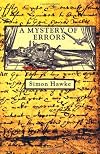
Some books have stories outside their own stories…personal stories. My wife got me a copy of this for my birthday some 19 years ago (along with an autographed copy of another Hawke book). I read a few pages, and then it sat on my nightstand for the next five years until we moved from Korea back to he states, and then in our library until it was lost with so many other books to soot and smoke damage from a fire in 2013. Hawke is one of a few authors as fall back on when I feel “reader’s show more block” creeping up on me, but this short series isn’t one of my “go to” books… mainly because I hadn’t gotten back to it after all these years. And now the error of that mystery has been corrected. It took more than half of the book before I got engaged, but I did and I did enjoy it.
Hawke says in his afterward that some might think him cheeky (paraphrased) for presuming to write about Shakespeare as a fictional character, but I agree with him that people take Shakespeare too seriously (again, paraphrasing). I don’t buy the analysis of so many… yes, so many who have based their academic careers on such analysis. I liked Hawke’s take on Shakespeare:
Okay, probably not just my opinion. show less
Hawke says in his afterward that some might think him cheeky (paraphrased) for presuming to write about Shakespeare as a fictional character, but I agree with him that people take Shakespeare too seriously (again, paraphrasing). I don’t buy the analysis of so many… yes, so many who have based their academic careers on such analysis. I liked Hawke’s take on Shakespeare:
He knew that his medium was an ephemeral one and he regarded it accordingly. He wrote his works to be performed, not deconstructed in a college classroom or analyzed with pathological precision for every possible nuance and interpretation. He understood, without a doubt, that his was a collaborative medium, that actors would bring their own contributions to the table, that plays were a dynamic group effort of the entire company, not a showcase for an individual writer's talent and/or ego.IMO, Shakespeare is far better seen and heard than read.
Students who are forced to sit through agonizing lectures by monotonous professors who drone on and on about iambic pentameter and heroic couplets never truly learn to appreciate the Bard, and more's the pity, because Shakespeare himself would have been aghast to learn that his words were putting young captive audiences to sleep. He wanted, more than anything, to make them laugh, or weep, or rage ... to make them feel, for that was why Elizabethan audiences went to the theatre.
Okay, probably not just my opinion. show less

In a previous review, I complained that the Time Wars series was getting a falling into a formula. In this, the sixth book of the series, Mr. Hawke changes things a bit. The first change is that this book is not based on a particular novel, but rather an historical event. He flirted with this in The Nautilus Sanction when he departed from the plot of 20,000 Leagues Under the Sea and had his characters meet up with the pirate Jean Lafitte. In The Khyber Connection, the entire plot occurs show more around a conflict between the British army and Afghan tribes in the Khyber Pass in 1897 Afghanistan. To this, Mr. Hawke adds some characters from the stories of Rudyard Kipling--soldiers Learoyd, Orthenis and Mulvaney and bhisti Gunga Din--and his own time commandos. A temporal soldier from the 27th Century is found dead at the Khyber Pass, apparently killed by his own doppleganger. This leads the Temporal Army Corps to the conclusion that their worst fear--a timestream split--has occurred and they are facing a Temporal Corps from an alternate universe. I won't spoil the story by telling you what these alternate commandos are up to, but suffice it to say, it shakes up the status quo. What stays the same is Mr. Hawke's suspensful plotting and enjoyable characterization. Y'all should check it out.
--J. show less
--J. show less

Delightful whimsy. Cross-over to fantasy universes are done and done again, but Hawke weaves in groan-inducing puns. a self-aware narrator, and a character who is aware of the narrator! A favorite, and just what the doctor ordered for post-surgery recovery.
Five stars because I'll keep coming back to it.
Five stars because I'll keep coming back to it.
Lists
Awards


You May Also Like


Associated Authors
Statistics
- Works
- 77
- Also by
- 11
- Members
- 8,145
- Popularity
- #2,970
- Rating
- 3.4
- Reviews
- 100
- ISBNs
- 169
- Languages
- 8
- Favorited
- 7