
Leo A. Frankowski (1943–2008)
Author of The Cross-Time Engineer
About the Author
Image credit: Leo Frankowski [credit: John "J-Cat" Griffith]
Series
Works by Leo A. Frankowski
Conrad's Time Machine 3 copies
Copernick's Revolution 2 copies
Sir Conrad cavaliere del tempo 2 copies
Le avventure di Conrad Stargard 2 copies
CS5: Lord Conrad's Lady 1 copy
CS7: Conrad's Time Machine 1 copy
T1: A Boy and His Tank 1 copy
CS4: The Flying Warlord 1 copy
T3: Kren of the Mitchegai 1 copy
T2: The War With Earth 1 copy
Tagged
Common Knowledge
- Legal name
- Frankowski, Leo A.
- Birthdate
- 1943-02-13
- Date of death
- 2008-12-25
- Gender
- male
- Occupations
- science fiction writer
novelist - Nationality
- USA
- Birthplace
- Detroit, Michigan, USA
- Places of residence
- Detroit, Michigan, USA (birth)
Russia
Lake Elsinore, California, USA (death) - Place of death
- Lake Elsinore, California, USA
- Associated Place (for map)
- California, USA
Members
Reviews
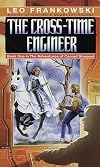
I'm a big fan of time travel stories, but I had to bail on this one. The protagonist is just too painful to deal with. A barely-disguised version of the Incel author. I liked the idea of a modern man developing modern technology in medieval times, but not enough to deal with the misogynistic views of the pedophile* main character.
*He sleeps with 14 y/o's. Maybe that's not considered pedophilia in the 13th century, but it certainly is today.
*He sleeps with 14 y/o's. Maybe that's not considered pedophilia in the 13th century, but it certainly is today.
Polish computer engineer Conrad Schwartz, on a mountain walking holiday, drinks too much one night at an inn which is, unknown to him, a sloppily run front for the time-travelling Historical Corps. He stumbles into the basement to sleep it off, little realizing that he's doing so within a time machine. When he wakes in the morning, everything seems . . . different. As he eventually discovers, he has been transported back to the Poland of the year 1231; his knowledge of history tells him that show more in a mere decade or so this country will be overrun by the Mongols, with extraordinary loss of life. Unless . . .
He ends up at a remote settlement, Okoitz, ruled by the moderately powerful Count Lambert Piast, who befriends him and allows him a lot of latitude to do all the engineering he can manage relying on memory and the local tools and materials; in his enterprises he is helped, yet again without his knowing it, by the fact that his uncle works for the Historical Corps and, having located in the distant past, has planted, for the young man to acquire, a hyperintelligent horse and a hi-tech sword.
There's a nice European feel on occasion to the use of language in the telling of this tale, as for example when Conrad is discussing with his companion Father Ignacy the latter's detestation of Germans. Comments Conrad to the reader:
I had an uncle who had survived being a partisan in the 1944 Warsaw insurrection. He hated Germans, but his hatred was like a dislike for cabbages compared with the hatred of the supremely mild man who walked beside me. (p25)
Overall, though, I was less than delighted by the book -- for two main reasons, one to do with its rationale and one to do with my own qualms. To take the first of these first: For fear of affecting the flow of causality, the Historical Corps cannot simply retrieve Conrad from the past, yet it seems there's no problem about allowing him to build up Poland's technological capabilities with extraordinary anachronicity and thereby create a new history. I'm not sure I'm prepared to buy this: it seems like a very significant plot problem to me, too significant to be glossed over with a few bits of misdirection and a general waving of hands.
My other reason for unease is also the reason I'll not be reading further books in the series. Conrad spends a lot of his time at Okoitz boffing, usually but not always singly, the "handmaidens" kept around the castle by Count Lambert for this use by himself and his guests. That it's all a bit masturbatory is forgivable. The trouble is that these wenches, who're essentially paid servants and unpaid harlots, are underage -- and not just trivially so: they're 14. On discovering, early on, quite how young his bedmates are, Conrad has a minor crisis of conscience, confesses to a priest, etc., but then tells himself that in 13th-century Poland 14 was a marriageable age, after all, ho ho, and carries on boffing. This really unsettles me. I don't think the "marriageable age" argument washes. In terms of a time traveller from the 20th century, those girls are mere adolescents -- in fact, Conrad occasionally remarks on the schoolgirlishness of his favourite underage mistress -- and those are surely the terms in which said traveller must judge his own actions. That what he's doing is accepted as just dandy by the people among whom he's arrived is not, I think, ethically relevant: had Conrad landed among a thuggee band in 18th-century India, would it have been all right for him to rob and murder innocent strangers? And the odd thing about this element of the book is the complete unnecessariness of the pedophilia: I can't imagine any reader batting an eyelid at the historical implausibility (if any) had the girls been described as 16 or 17 years old, making them safely over the age of consent in the UK and, I assume, in the 20th-century Poland Conrad came from. As I say, this aspect meant the book left an unpleasant taste in my mouth. show less
He ends up at a remote settlement, Okoitz, ruled by the moderately powerful Count Lambert Piast, who befriends him and allows him a lot of latitude to do all the engineering he can manage relying on memory and the local tools and materials; in his enterprises he is helped, yet again without his knowing it, by the fact that his uncle works for the Historical Corps and, having located in the distant past, has planted, for the young man to acquire, a hyperintelligent horse and a hi-tech sword.
There's a nice European feel on occasion to the use of language in the telling of this tale, as for example when Conrad is discussing with his companion Father Ignacy the latter's detestation of Germans. Comments Conrad to the reader:
I had an uncle who had survived being a partisan in the 1944 Warsaw insurrection. He hated Germans, but his hatred was like a dislike for cabbages compared with the hatred of the supremely mild man who walked beside me. (p25)
Overall, though, I was less than delighted by the book -- for two main reasons, one to do with its rationale and one to do with my own qualms. To take the first of these first: For fear of affecting the flow of causality, the Historical Corps cannot simply retrieve Conrad from the past, yet it seems there's no problem about allowing him to build up Poland's technological capabilities with extraordinary anachronicity and thereby create a new history. I'm not sure I'm prepared to buy this: it seems like a very significant plot problem to me, too significant to be glossed over with a few bits of misdirection and a general waving of hands.
My other reason for unease is also the reason I'll not be reading further books in the series. Conrad spends a lot of his time at Okoitz boffing, usually but not always singly, the "handmaidens" kept around the castle by Count Lambert for this use by himself and his guests. That it's all a bit masturbatory is forgivable. The trouble is that these wenches, who're essentially paid servants and unpaid harlots, are underage -- and not just trivially so: they're 14. On discovering, early on, quite how young his bedmates are, Conrad has a minor crisis of conscience, confesses to a priest, etc., but then tells himself that in 13th-century Poland 14 was a marriageable age, after all, ho ho, and carries on boffing. This really unsettles me. I don't think the "marriageable age" argument washes. In terms of a time traveller from the 20th century, those girls are mere adolescents -- in fact, Conrad occasionally remarks on the schoolgirlishness of his favourite underage mistress -- and those are surely the terms in which said traveller must judge his own actions. That what he's doing is accepted as just dandy by the people among whom he's arrived is not, I think, ethically relevant: had Conrad landed among a thuggee band in 18th-century India, would it have been all right for him to rob and murder innocent strangers? And the odd thing about this element of the book is the complete unnecessariness of the pedophilia: I can't imagine any reader batting an eyelid at the historical implausibility (if any) had the girls been described as 16 or 17 years old, making them safely over the age of consent in the UK and, I assume, in the 20th-century Poland Conrad came from. As I say, this aspect meant the book left an unpleasant taste in my mouth. show less
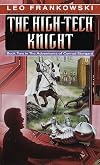
Honestly, I should not even be attempting to reviewing this book. I read it for...you guessed it...a challenge. There is absolutely nothing wrong with the writing or the topic...IF you are into sci-fi, which I am 10,000% NOT. This was ten million miles out of my element. I did find the character of Conrad very brave and actually smarter than some of the characters in other genres that I've recently read. At least he wasn't messing up good relationships or hob-knobbing with possible serial show more killers. I even found myself rooting for him several times. I could easily see some of my friends eating this up and asking for more. I gave it 3 -stars because, while I can't say that I actually liked it...I didn't hate it either and I felt that was only fair to Leo Frankowski for the effort that he put into producing this. I haven't seen my name gracing the cover of a book recently. show less
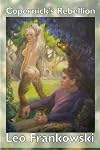
n 1940, thirty year-old Martin Guibedo escaped Germany with his only surviving family member, his crippled five year-old nephew Heinrich Copernick. Both men became masters of genetic engineering, Martin specializing in plants, and his nephew Heinrich in animal life forms.
Martin designs and freely distributes his proud creation to save the human race, tree houses. These houses are literally trees, genetically modified to have rooms, beds, chairs, cupboards that grow food, and of course, show more composting toilets. A tiny problem develops when the first version of the house eats its occupants. Oops. Heinrich's big creations are LDUs, sentient worker beasts that look like walking tables with eight eyes; fauns, cute little half girls-half goats who educate and care for human young; and TRACs, large sentient creatures designed to act in the stead of trucks or buses.
When the dynamic duo's designs begin to interfere with the status quo of the major political and economic powers of the earth; of course it means war. Heinrich, when not genetically modifying himself into a giant stud-muffin and growing his own Pam Anderson-like wife, has been preparing for this eventuality. When the two scientists unleash metal-eating microbes, the compost really hits the fan.
I agree with Connie Willis that great science fiction comes from taking a hypothesis and drawing it out to its most logical or most absurd conclusion. Leo Frankowski does just that in this book, letting the Polish uncle-nephew duo have complete free reign to design whatever absurd thing they can dream up without any real repercussions; universe builders remaking the earth as they want it. The humans in the story do not have much character development, but the little faun, Liebchen, and the LDU, Dirk, are really endearing as they grow and change in the struggle to understand human morality and ethics.
I am surprised this book is so obscure; it is my favorite Frankowski book. If you have read any of his Conrad Stargard novels, you already know that the book is full of plenty of whiz-bang, neato ideas, male chauvinism, puns, but is overall a rollicking fun read. Hard to put down until the last page is turned. show less
Martin designs and freely distributes his proud creation to save the human race, tree houses. These houses are literally trees, genetically modified to have rooms, beds, chairs, cupboards that grow food, and of course, show more composting toilets. A tiny problem develops when the first version of the house eats its occupants. Oops. Heinrich's big creations are LDUs, sentient worker beasts that look like walking tables with eight eyes; fauns, cute little half girls-half goats who educate and care for human young; and TRACs, large sentient creatures designed to act in the stead of trucks or buses.
When the dynamic duo's designs begin to interfere with the status quo of the major political and economic powers of the earth; of course it means war. Heinrich, when not genetically modifying himself into a giant stud-muffin and growing his own Pam Anderson-like wife, has been preparing for this eventuality. When the two scientists unleash metal-eating microbes, the compost really hits the fan.
I agree with Connie Willis that great science fiction comes from taking a hypothesis and drawing it out to its most logical or most absurd conclusion. Leo Frankowski does just that in this book, letting the Polish uncle-nephew duo have complete free reign to design whatever absurd thing they can dream up without any real repercussions; universe builders remaking the earth as they want it. The humans in the story do not have much character development, but the little faun, Liebchen, and the LDU, Dirk, are really endearing as they grow and change in the struggle to understand human morality and ethics.
I am surprised this book is so obscure; it is my favorite Frankowski book. If you have read any of his Conrad Stargard novels, you already know that the book is full of plenty of whiz-bang, neato ideas, male chauvinism, puns, but is overall a rollicking fun read. Hard to put down until the last page is turned. show less
Lists
Awards

You May Also Like


Associated Authors
Statistics
- Works
- 33
- Members
- 3,575
- Popularity
- #7,090
- Rating
- 3.4
- Reviews
- 36
- ISBNs
- 45
- Languages
- 2
- Favorited
- 2
