
Frazer Irving
Author of Batman: The Return of Bruce Wayne
About the Author
Series
Works by Frazer Irving
Silent War #4 (of 6) — Illustrator — 1 copy
Silent War #3 (of 6) — Illustrator — 1 copy
One Week In The Library 1 copy
Associated Works
The Wicked + The Divine Deluxe Edition: Year One (2016) — Contributor, some editions — 180 copies, 3 reviews
The Hitchhiker's Guide to the Galaxy: The Tertiary Phase (2004) — Cover artist, some editions — 171 copies, 3 reviews
Mary Shelley's Frankenstein: The Graphic Novel (Puffin Graphics) (2005) — Illustrator — 92 copies, 4 reviews
The Multiversity: The Society of Super-Heroes: The Conquerors of the Counter-World #1 (The Multiversity #2) (2014) — Cover artist, some editions — 6 copies
BOOM! Studios Halloween Fright Fest Mini Comic Bundle 2014 Halloween Comic Fest (2014) — Illustrator — 2 copies
Bedlam #3 — Cover artist — 1 copy
Tagged
Common Knowledge
- Gender
- male
- Nationality
- England
- Birthplace
- Ilford, Essex, England, UK
- Map Location
- UK
Members
Reviews
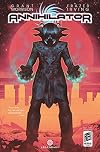
Ray Spass is a Hollywood scriptwriter who has squandered his earnings on the things Hollywood wunderkind usually squander their earnings on. He is a horrible person and he is trying to write a script about a haunted house in space. He buys a haunted house and holds a squalid black mass to summon the devil, and learns that he is dying. Then the mephistophlean main character from his screenplay turns up and asks him to write his story for him.
Max Nomax is a fugitive from a prison hovering on show more the event horizon of a massive black hole. The prison is haunted by the results of some dreadful experiment gone horribly wrong. How did Max escape to Earth? Ray has to write the story to find out, and hopefully stop the avenging space angel from recapturing Max and destroying the universe.
Look, yes, just the ploy alone is bonkers, but reading it, every panel is crammed with the bonkers, this s bonkers on a fractal level. It's also hilarious as Ray and Max are too dreadful, narcissistic, self-absorbed personalities playing off each other, and horrifying, as Max's space prison is basically hell. Completely, brilliantly bananas. show less
Max Nomax is a fugitive from a prison hovering on show more the event horizon of a massive black hole. The prison is haunted by the results of some dreadful experiment gone horribly wrong. How did Max escape to Earth? Ray has to write the story to find out, and hopefully stop the avenging space angel from recapturing Max and destroying the universe.
Look, yes, just the ploy alone is bonkers, but reading it, every panel is crammed with the bonkers, this s bonkers on a fractal level. It's also hilarious as Ray and Max are too dreadful, narcissistic, self-absorbed personalities playing off each other, and horrifying, as Max's space prison is basically hell. Completely, brilliantly bananas. show less
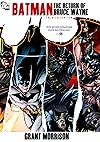
After wounding Darkseid with a bullet fired through time Bruce Wayne is struck down by a bolt of omega energy and thrown into the deep past where he must fight his way though amnesia and follow clues he left for himself, jumping from era to era, chased by something big and nasty with teeth and tentacle, first as a cave-man, then as a witchfinder, then as a pirate, then as a cowboy and so on until he gets to a station hanging over the heat death of the universe, while his superhero friends show more search for him to stop him because he's so soaked in omega energy when he returns to his his own time he'll destroy the whole world AND I MEAN COME ON.
Return Of Bruve Wayne is the culmination of a few years' worth of build-up and it's got the usual Morrisonian high mind-mending-concept-to-page rate and also Bruce Wayne as a cave-man, a prate, a cowboy, etcetera. Really, it's got everything, and it still feels fresh and mad and fun. show less
Return Of Bruve Wayne is the culmination of a few years' worth of build-up and it's got the usual Morrisonian high mind-mending-concept-to-page rate and also Bruce Wayne as a cave-man, a prate, a cowboy, etcetera. Really, it's got everything, and it still feels fresh and mad and fun. show less
I have read and enjoyed many comics written by Grant Morrison, and then I have read others that struck me as a kind of low-grade metaphysical action writing: a spew of cultural information thrown at the rough grid that is the basic foundation of comics, with the expectation that readers would make sense of it, and credit him with the ability to construct disparate connections between far-flung subjects.
This book fits fully into the latter group. For all the strengths of such Morrison books show more as We3, his Animal Man writing, his run on the X-Men, his excellent Superman -- well, this collection of stories about Bruce Wayne's return from the depths of time is perhaps the strongest evidence of what could be called the "deceitful claptrap" thread running through other of his work.
On the surface, the idea is strong: Batman is the least super-powered, the least supernatural, of superheroes in the DC pantheon. To have him barrel through time, from prehistoric mythology through sea-faring pirates and Salem-era witchcraft, is to have a study in contrasts. Morrison knows what he's doing. He knows that Batman is a myth of a man, and that no myth as strong as his could grow to the fore without slowly tossing seeds back in the timeline -- all myths build on pre-existing myths, and the stronger the new myth the more likely the older ones are to come to appear less as precedent and more as prefiguring.
But the thesis is where the book stops being enjoyable. Beyond that, it is a series of pastiche renderings of various period cliches, each garbled just enough to appear mysterious, but in truth the mystery is really just sloppiness benefiting from a very strong brain and some accomplished illustrating partners.
I always thought Morrison's best work was his work-for-hire, when he had to limit his fathomless penchant for mythmaking to the contours of a pre-existing character. It was true of his X-Men, and of his Superman, and quite recently of his Batman, but this time around his worst inclinations got the better of him. show less
This book fits fully into the latter group. For all the strengths of such Morrison books show more as We3, his Animal Man writing, his run on the X-Men, his excellent Superman -- well, this collection of stories about Bruce Wayne's return from the depths of time is perhaps the strongest evidence of what could be called the "deceitful claptrap" thread running through other of his work.
On the surface, the idea is strong: Batman is the least super-powered, the least supernatural, of superheroes in the DC pantheon. To have him barrel through time, from prehistoric mythology through sea-faring pirates and Salem-era witchcraft, is to have a study in contrasts. Morrison knows what he's doing. He knows that Batman is a myth of a man, and that no myth as strong as his could grow to the fore without slowly tossing seeds back in the timeline -- all myths build on pre-existing myths, and the stronger the new myth the more likely the older ones are to come to appear less as precedent and more as prefiguring.
But the thesis is where the book stops being enjoyable. Beyond that, it is a series of pastiche renderings of various period cliches, each garbled just enough to appear mysterious, but in truth the mystery is really just sloppiness benefiting from a very strong brain and some accomplished illustrating partners.
I always thought Morrison's best work was his work-for-hire, when he had to limit his fathomless penchant for mythmaking to the contours of a pre-existing character. It was true of his X-Men, and of his Superman, and quite recently of his Batman, but this time around his worst inclinations got the better of him. show less

After ten years away, James Robinson returns to Opal City and his greatest "creation"-- now clearly(?) set within the confines of the "New 52." Mikaal Thomas is Starman (again), and the series references the events of Cry for Justice but studiously avoids doing anything to indicate that superpowered beings existed in America prior to Superman. But it doesn't say they didn't, either, so you can interpret this story as taking place in the New 52 or the old continuity just fine. Now there's a show more masterclass. Anyway, speaking of Cry for Justice, I think it's awesome how all the cover blurbs basically boil down to "Maybe James Robinson still is a good writer."
Anyway, this is indeed pretty good. I think the post-reform Shade loses some of his spark, but Robinson otherwise delivers with a globe-trotting adventure, and that's what's cool here: we get to see Australia, Spain, and London, among other places, and I especially liked Robinson's invented superheroes of Spain, as well as the way this story draws into a perfect conclusion. The bits of backstory Robinson sprinkles in also work very well, as did his "Times Past" back in the Starman days.
The biggest kudos must go to Robinson's artistic collaborators. Darwyn Cooke, Jill Thompson, and Gene Ha each do a single issue, and each is great, of course, but Cully Hamner, Javier Pulido, and Frazer Irving each tackle a third of the main story, each taking a distinctive slice. Pulido takes the three issues in Spain, and his art is the definite highlight of the book, with thin lines, wonderful character design, and some cool layouts. Frazer Irving's use of lighting and color in the final part is perfect for a story so much about darkness and light, too. I wasn't familiar with the work of these three before, but I hope to see more in the future. show less
Anyway, this is indeed pretty good. I think the post-reform Shade loses some of his spark, but Robinson otherwise delivers with a globe-trotting adventure, and that's what's cool here: we get to see Australia, Spain, and London, among other places, and I especially liked Robinson's invented superheroes of Spain, as well as the way this story draws into a perfect conclusion. The bits of backstory Robinson sprinkles in also work very well, as did his "Times Past" back in the Starman days.
The biggest kudos must go to Robinson's artistic collaborators. Darwyn Cooke, Jill Thompson, and Gene Ha each do a single issue, and each is great, of course, but Cully Hamner, Javier Pulido, and Frazer Irving each tackle a third of the main story, each taking a distinctive slice. Pulido takes the three issues in Spain, and his art is the definite highlight of the book, with thin lines, wonderful character design, and some cool layouts. Frazer Irving's use of lighting and color in the final part is perfect for a story so much about darkness and light, too. I wasn't familiar with the work of these three before, but I hope to see more in the future. show less
Awards

You May Also Like


Associated Authors
Statistics
- Works
- 24
- Also by
- 33
- Members
- 855
- Popularity
- #29,931
- Rating
- 3.7
- Reviews
- 43
- ISBNs
- 29
- Languages
- 2
- Favorited
- 1