
Barbara Chase-Riboud
Author of Sally Hemings
About the Author
Image credit: Barbara Chase-Riboud
Works by Barbara Chase-Riboud
Associated Works
African American Poetry: 250 Years of Struggle and Song (2020) — Contributor — 234 copies, 4 reviews
New Daughters of Africa: An International Anthology of Writing by Women of African Descent (2019) — Contributor — 115 copies, 1 review
Slave Nation by Barbara Chase-Riboud (Afterword), Alfred W. Blumrosen (1-Jan-2007) Paperback (1600) — Afterword — 1 copy
Tagged
Common Knowledge
- Legal name
- Chase-Riboud, Barbara
- Birthdate
- 1939-06-26
- Gender
- female
- Education
- Temple University (Tyler Art School)
Yale University (MFA|1960 ) - Occupations
- novelist
poet
sculptor
visual artist - Awards and honors
- Carl Sandburg Medal for Poetry
Janet Heidinger Kafka Prize
Ordre des Arts et des Lettres (France, 1996) - Short biography
- While in Paris she had a successful career as an artist and won several awards.
- Nationality
- USA
- Birthplace
- Philadelphia, Pennsylvania, USA
- Places of residence
- Philadelphia, Pennsylvania, USA
Paris, France
Rome, Italy
Members
Reviews
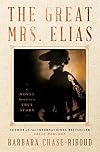
An intriguing novel that challenged my preconceptions from the first page (which includes a very unexpected murder). At times, I wondered if I was reading a novel or a history of a time that is vividly recreated on the page. For mystery fans, I would highly recommend this book.
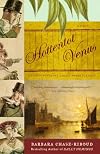
Poignant, disturbing, heart-wrenching novel based upon the real life of Saartjie Baartman, an 18th century South African woman who was displayed in the London freak show circuit as the "Hottentot Venus". Beautiful writing and compelling voices lead us through Saartijie's sad life during the Boer War, Dutch colonialism, Brititsh colonialism, and London after the *official* end of legalized slavery.
Hannah Elias is one of the richest black women in America in the early 1900's, but an unsolved murder reveals her real identity and thousands accuse her of stealing her fortune from whites.
The story is based on the real life Hannah Elias. I’m not sure how much is really true but it made for a good story. Hannah struggled her way from poverty to become very wealthy by being smart and a risk taker. She faced injustice from being a prostitute, black and a woman. This was a well told story.
The story is based on the real life Hannah Elias. I’m not sure how much is really true but it made for a good story. Hannah struggled her way from poverty to become very wealthy by being smart and a risk taker. She faced injustice from being a prostitute, black and a woman. This was a well told story.
This is a fictionalized account of the life of Sarah Baartman, the so-called Hottentot Venus. Sarah was born into the Khoekhoe people of South Africa, who were misnamed 'Hottentot' due to the sounds of their language by the Boer and English settlers.
In the Khoekhoe culture, steatopygia, or collection of fat on the buttocks of females, is highly desireable. Various techniques are used to encourage the swelling of the buttocks from the curve of the spine--12 inches or more.
Sarah was brought to show more Europe at about the age of 20 and was exhibited as a freak of nature, or as a sub-species between human and ape, for about 5 years, between 1810 and 1815, when she died. After her death, she was dissected. Her brain and sexual organs were removed and put on display, along with her skeleton and a cast made of her body. These remained on display in France until the early 1970's. In 2002, her skeleton and body parts were returned to South Africa where she is now buried.
This book vividly recreates Sarah's life, and psyche. Her pain and heartbreak are real; her conflicted emotions are well-portrayed (Sarah resisted efforts to 'rescue' her).
The only reason I am not rating the book higher is that I have problems with the author's style and manner of presentation of Sarah's story. For example, a large part of the story is told in the first person by Sarah. However, significant portions are narrated by one or the other of Sarah's 'keepers.' In those sections of the novel, the plot awkwardly requires the 'keeper' to overhear conversations between Sarah and her confidante such as 'If we try to get away now, where will we go and what will we do for money?'
Using the 'keepers' as narrators also requires them to be uncharacteristically self-aware. For example, Dunlop, her original exploiter, describes himself as not recognizing 'moral or physical limits,' as being 'blase,' 'cruel,' 'bored.'
In my view, the novel would have been better if narrated solely from Sarah's point of view.
The writer also sometimes uses language that abruptly yanked me from my immersion in the historical period and in Sarah's life, as when her keeper says to Sarah, 'You give me any more lip and I'll smash you one.' There are many other examples of clumsy writing that kept me from living totally in Sarah's world.
Because the subject matter is so important, and for the most part Sarah's character rings true, I can still recommend this book. show less
In the Khoekhoe culture, steatopygia, or collection of fat on the buttocks of females, is highly desireable. Various techniques are used to encourage the swelling of the buttocks from the curve of the spine--12 inches or more.
Sarah was brought to show more Europe at about the age of 20 and was exhibited as a freak of nature, or as a sub-species between human and ape, for about 5 years, between 1810 and 1815, when she died. After her death, she was dissected. Her brain and sexual organs were removed and put on display, along with her skeleton and a cast made of her body. These remained on display in France until the early 1970's. In 2002, her skeleton and body parts were returned to South Africa where she is now buried.
This book vividly recreates Sarah's life, and psyche. Her pain and heartbreak are real; her conflicted emotions are well-portrayed (Sarah resisted efforts to 'rescue' her).
The only reason I am not rating the book higher is that I have problems with the author's style and manner of presentation of Sarah's story. For example, a large part of the story is told in the first person by Sarah. However, significant portions are narrated by one or the other of Sarah's 'keepers.' In those sections of the novel, the plot awkwardly requires the 'keeper' to overhear conversations between Sarah and her confidante such as 'If we try to get away now, where will we go and what will we do for money?'
Using the 'keepers' as narrators also requires them to be uncharacteristically self-aware. For example, Dunlop, her original exploiter, describes himself as not recognizing 'moral or physical limits,' as being 'blase,' 'cruel,' 'bored.'
In my view, the novel would have been better if narrated solely from Sarah's point of view.
The writer also sometimes uses language that abruptly yanked me from my immersion in the historical period and in Sarah's life, as when her keeper says to Sarah, 'You give me any more lip and I'll smash you one.' There are many other examples of clumsy writing that kept me from living totally in Sarah's world.
Because the subject matter is so important, and for the most part Sarah's character rings true, I can still recommend this book. show less
Awards


You May Also Like


Associated Authors
Statistics
- Works
- 20
- Also by
- 4
- Members
- 1,064
- Popularity
- #24,196
- Rating
- 3.9
- Reviews
- 20
- ISBNs
- 89
- Languages
- 8