
Lynda Blackmon Lowery
Author of Turning 15 on the Road to Freedom: My Story of the 1965 Selma Voting Rights March
Works by Lynda Blackmon Lowery
Turning 15 on the Road to Freedom: My Story of the 1965 Selma Voting Rights March (2015) 524 copies, 17 reviews
Tagged
Common Knowledge
There is no Common Knowledge data for this author yet. You can help.
Members
Reviews
Turning 15 on the road to freedom : my story of the 1965 Selma to Montgomery March by Lynda Blackmon Lowery
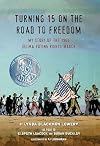
I enjoyed this memoir of the marches in Selma very much. It doesn't give much background information, so you'll need to get that elsewhere, but it's powerful to read her story. The artwork is a nice blend of art and historical photographs. It's a much shorter story than it appears, so it would work well as a read aloud in a classroom.
Turning 15 on the Road to Freedom: My Story of the 1965 Selma Voting Rights March by Lynda Blackmon Lowery
Powerful collaboration between Lynda Blackmon Lowery's first person narrative, the two writers and the excellent illustrator. Love the combination, the simple storytelling, the context. She has a way of communicating emotion that is both plainspoken and compassionate. She was beaten severely on Bloody Sunday and talks about the murders that surrounded the march, which I think is why it's aimed at 12 .
Turning 15 on the Road to Freedom: My Story of the Selma Voting Rights March by Lynda Blackmon Lowery
I was 28 when courageous black Alabama citizens and white sympathizers set forth March 21, 1965, across Selma’s Edmund Pettus Bridge to begin their successful march to Montgomery, the state capital, to demonstrate their determination to force the state of Alabama to allow all of its black citizens to register to vote. I, like many Americans, had watched on television the brutal acts committed by the local police and sheriff’s deputies to end demonstrators’ attempt March 7 to cross the show more bridge and march to Montgomery. Having lived in Tennessee for two years, having years later received a bachelor’s degree in history, and having thereafter become a public school teacher, I had not been naïve about racial prejudice prior to the Selma events. Nonetheless, I was shocked.
A week after recently watching the movie Selma, I read an excellent memoir (just published by Dial Books) about the Selma to Montgomery event written in retrospect (assisted by two professional writers) by a teenage participant, Lynda Blackmon Lowery. Unlike the movie, Selma, many parts of Turning 15 on the Road to Freedom; My Story of the 1965 Selma Voting Rights March stirred my emotions. Geared for readers in their teen years, the memoir reaches out as well to adults born after 1965 and to jaded seniors like me.
Here are my reasons for recommending this book especially to young people.
Turning 15 is a personal story. We experience vicariously the thoughts, emotions, and actions of an actual participant. We gain insight about the effects of racial hatred on actual African Americans. We learn of the sense of security felt by most black children growing up in segregated black communities. We understand better the need black Americans felt to right collectively racially-committed wrongs. Mrs. Lynda Lowery cites her grandmother’s advice: “… if you give someone or something control over you, then you’ve given up yourself.” We celebrate the realization experienced by thoroughly-segregated people like the young Lynda that white racists did not represent all white Americans. After the bloody attempt by early demonstrators to cross the Pettus bridge March 7, many white people traveled to Selma to exhibit their support. Lynda wrote: “It was a whole different feeling suddenly with white people living in your house. They marched with us and were willing to go to jail with us. They ate what we ate. We cooked collard greens and cornbread, and they ate it and enjoyed it as much as we did. They were happy to be with us, even if they had to sleep on the floor. … There was a whole new feeling in Selma.”
I especially appreciated the details Mrs. Lowery gave us about her experiences. Here are two examples of information I did not know and found fascinating. School children were used extensively to demonstrate and crowd the jails. Mothers who were maids took employers’ food home surreptitiously that their children ate the next day after they were arrested and put in jail. Twenty-one school girls, mostly high school students, were put in a steel cell (called the “sweatbox”) that had no windows, water, toilet, or lights and kept there until every girl had passed out. It is always the detail of individuals’ lives that make history especially interesting.
This memoir is written simply, but it touches upon all the important Selma/Montgomery subject matter events. Anybody who reads at or above the sixth grade level will have no difficulty finishing it in one sitting. Yet the reader will be informed about every topic or event an instructor would want a student of his to read about, examples ranging from the different instances of segregation existent in Selma to the deaths of three people murdered, one by the police and the other two by racist thugs. Mrs. Lowery also explains, quite simply, the Voting Rights Act passed in 1965 and how it has been degraded most recently by the United States Supreme Court.
Finally, I am concerned about what our young generation doesn’t but should know about our nation’s past. Racism in America persists. My grandchildren and friends their ages should be exposed to appealing sources of information that instruct them to recognize that no nation is a “shining city on the hill” and that those who proclaim such assertions should be looked upon with skepticism. Take nothing, therefore, for granted. Human history is a story of struggle for freedom and dignity against unwarranted control. Lynda learned from her experiences that “the person I wanted to be was a person who would stand up against what was wrong. I wanted not only to protect myself, but to protect others, not only to fight for myself, but to be out there fighting for others.”
Mrs. Lowery’s memoir is a worthwhile, appealing book. show less
A week after recently watching the movie Selma, I read an excellent memoir (just published by Dial Books) about the Selma to Montgomery event written in retrospect (assisted by two professional writers) by a teenage participant, Lynda Blackmon Lowery. Unlike the movie, Selma, many parts of Turning 15 on the Road to Freedom; My Story of the 1965 Selma Voting Rights March stirred my emotions. Geared for readers in their teen years, the memoir reaches out as well to adults born after 1965 and to jaded seniors like me.
Here are my reasons for recommending this book especially to young people.
Turning 15 is a personal story. We experience vicariously the thoughts, emotions, and actions of an actual participant. We gain insight about the effects of racial hatred on actual African Americans. We learn of the sense of security felt by most black children growing up in segregated black communities. We understand better the need black Americans felt to right collectively racially-committed wrongs. Mrs. Lynda Lowery cites her grandmother’s advice: “… if you give someone or something control over you, then you’ve given up yourself.” We celebrate the realization experienced by thoroughly-segregated people like the young Lynda that white racists did not represent all white Americans. After the bloody attempt by early demonstrators to cross the Pettus bridge March 7, many white people traveled to Selma to exhibit their support. Lynda wrote: “It was a whole different feeling suddenly with white people living in your house. They marched with us and were willing to go to jail with us. They ate what we ate. We cooked collard greens and cornbread, and they ate it and enjoyed it as much as we did. They were happy to be with us, even if they had to sleep on the floor. … There was a whole new feeling in Selma.”
I especially appreciated the details Mrs. Lowery gave us about her experiences. Here are two examples of information I did not know and found fascinating. School children were used extensively to demonstrate and crowd the jails. Mothers who were maids took employers’ food home surreptitiously that their children ate the next day after they were arrested and put in jail. Twenty-one school girls, mostly high school students, were put in a steel cell (called the “sweatbox”) that had no windows, water, toilet, or lights and kept there until every girl had passed out. It is always the detail of individuals’ lives that make history especially interesting.
This memoir is written simply, but it touches upon all the important Selma/Montgomery subject matter events. Anybody who reads at or above the sixth grade level will have no difficulty finishing it in one sitting. Yet the reader will be informed about every topic or event an instructor would want a student of his to read about, examples ranging from the different instances of segregation existent in Selma to the deaths of three people murdered, one by the police and the other two by racist thugs. Mrs. Lowery also explains, quite simply, the Voting Rights Act passed in 1965 and how it has been degraded most recently by the United States Supreme Court.
Finally, I am concerned about what our young generation doesn’t but should know about our nation’s past. Racism in America persists. My grandchildren and friends their ages should be exposed to appealing sources of information that instruct them to recognize that no nation is a “shining city on the hill” and that those who proclaim such assertions should be looked upon with skepticism. Take nothing, therefore, for granted. Human history is a story of struggle for freedom and dignity against unwarranted control. Lynda learned from her experiences that “the person I wanted to be was a person who would stand up against what was wrong. I wanted not only to protect myself, but to protect others, not only to fight for myself, but to be out there fighting for others.”
Mrs. Lowery’s memoir is a worthwhile, appealing book. show less
Turning 15 on the Road to Freedom: My Story of the Selma Voting Rights March by Lynda Blackmon Lowery
As the title states, this is a story of Lynda Blackmon who, as a teen was very involved in the Civil Rights movement. Before joining the Selma march to Montgomery, she was jailed nine times. Her vivid account of Bloody Sunday leaves no doubt that those who were beaten and abused on the first attempt to cross the Edmund Pettus bridge, were deeply traumatized.
Filled with courage and a drive to participate in the march for voting rights, Lynda overcame her fear by participating in the third show more and final successful march to Montgomery, Alabama. The third march was very different from the first. Now, instead of beating the marchers, the police were instructed to assist along the way to ensure safety. Still, Blackmon found that she had post traumatic stress and, at various times during the walk, had flash backs of her beating.
The third march, so different than the first, was filled with hope, singing, and a sense of accomplishment. Still bruised and bandaged from the many stitches in her head from the beating, Lowery was adamant about wanting then Governor of Alabama, George Wallace, an avid racist and segregationist, to see what racism did to her. Sleeping on the ground, eating what the marchers packed, or what kind people along the road provided, the marchers felt kinship and a great sense of purpose. Even when it rained on the third day, they kept marching and singing.
This is a testament to the bravery of the marchers and the fact that they were not going to turn around.
http://www.nps.gov/nr/travel/civilrights/al4.htm show less
Filled with courage and a drive to participate in the march for voting rights, Lynda overcame her fear by participating in the third show more and final successful march to Montgomery, Alabama. The third march was very different from the first. Now, instead of beating the marchers, the police were instructed to assist along the way to ensure safety. Still, Blackmon found that she had post traumatic stress and, at various times during the walk, had flash backs of her beating.
The third march, so different than the first, was filled with hope, singing, and a sense of accomplishment. Still bruised and bandaged from the many stitches in her head from the beating, Lowery was adamant about wanting then Governor of Alabama, George Wallace, an avid racist and segregationist, to see what racism did to her. Sleeping on the ground, eating what the marchers packed, or what kind people along the road provided, the marchers felt kinship and a great sense of purpose. Even when it rained on the third day, they kept marching and singing.
This is a testament to the bravery of the marchers and the fact that they were not going to turn around.
http://www.nps.gov/nr/travel/civilrights/al4.htm show less
Lists
Awards


You May Also Like


Associated Authors
Statistics
- Works
- 1
- Members
- 524
- Popularity
- #47,449
- Rating
- 4.2
- Reviews
- 17
- ISBNs
- 10