
David Slade
Author of Twilight Forever: The Complete Saga [movies 1-5]
About the Author
Image credit: David Slade
Works by David Slade
Metalhead [2017 Black Mirror TV episode] — Director — 1 copy
Associated Works
The Twilight Saga (Twilight / New Moon / Eclipse / Breaking Dawn, Part 1) — Director — 5 copies
Tagged
Common Knowledge
- Canonical name
- Slade, David
- Legal name
- Slade, David Aldrin
- Birthdate
- 1969-09-26
- Gender
- male
- Occupations
- film director
- Nationality
- UK
- Map Location
- England, UK
Members
Reviews
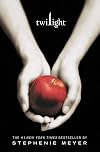
My wife tells me I'm a reading snob. I tell her I'm a writing snob. Either way, I've definitely been ruined in my expectations for fiction. I love a good story, but I've come to expect highly polished, sophisticated prose in everything I read; perhaps unfairly, I want a minute, perfectionist attention to the language itself. I'll grant you, Meyer has written a fairly compelling story, and she's building an interesting alternate mythology for the vampire (though the characters are still too show more "perfect," to use Bella's thin word, for me to really invest in them yet--even Edward's rough, borderline-abusive dominance of Bella is cause for her to swoon). But her prose is thin at best, unsophisticated and in some places just plain unpolished. I don't want to say this is a bad thing, not in itself. After all, the woman is published, getting rich, and about to watch a film version of her own first novel. She must have done something right. But I can say her style is not to my taste, for whatever that's worth. Her dialogue in particular is stiff and frequently redundant (eg: "'Shh," he shushed me"), and in this first book she's given to relatively juvenile passages, even considering the target audience and the teenage narrator.
On the other hand, given that same younger audience, her characters are distressingly underdeveloped: Edward is, on the one hand, an idealized romantic lover who desperately needs some humanizing flaws (Jane Austen knew this--go read about Darcy!), and on the other hand his one self-described "flaw"--his dangerous nature--expresses itself not as vampiric danger but as obessive, lustful danger: he sometimes comes off as a convicted rapist out on parole and trying to "control" his urges. It's genuinely unsettling, but worse is Bella's unblinking devotion to a man this dangerous. She becomes the very definition of an "at-risk" teenager, behaving in exactly the ways our society warns girls against behaving. I'm not the sort of guy who stands on soapboxes in the park and tells parents to lock up their daughters, but I am definitely disturbed by Bella's unquestioning devotion and dangerous behavior, most importantly her demure acceptance of--even expectation of--Edward's brusque, almost violent dominance. Case in point: I've been teaching teens to write fiction this summer, and one young girl brought in a story in which the romantic hero hits--actually punches in the face--his "leading lady." When I balked and asked her why she'd have her hero do something so terrible, she quietly explained, "I was trying to make him like Edward."
Still, Meyer does have some talent--she's imaginative, and when she gives herself over to descriptions of her home region in Arizona, the prose suddenly dips into beautiful, almost poetic language. I just wish her editors had pushed for more of that throughout the book. I wish we as readers demanded more out of our prose. show less
On the other hand, given that same younger audience, her characters are distressingly underdeveloped: Edward is, on the one hand, an idealized romantic lover who desperately needs some humanizing flaws (Jane Austen knew this--go read about Darcy!), and on the other hand his one self-described "flaw"--his dangerous nature--expresses itself not as vampiric danger but as obessive, lustful danger: he sometimes comes off as a convicted rapist out on parole and trying to "control" his urges. It's genuinely unsettling, but worse is Bella's unblinking devotion to a man this dangerous. She becomes the very definition of an "at-risk" teenager, behaving in exactly the ways our society warns girls against behaving. I'm not the sort of guy who stands on soapboxes in the park and tells parents to lock up their daughters, but I am definitely disturbed by Bella's unquestioning devotion and dangerous behavior, most importantly her demure acceptance of--even expectation of--Edward's brusque, almost violent dominance. Case in point: I've been teaching teens to write fiction this summer, and one young girl brought in a story in which the romantic hero hits--actually punches in the face--his "leading lady." When I balked and asked her why she'd have her hero do something so terrible, she quietly explained, "I was trying to make him like Edward."
Still, Meyer does have some talent--she's imaginative, and when she gives herself over to descriptions of her home region in Arizona, the prose suddenly dips into beautiful, almost poetic language. I just wish her editors had pushed for more of that throughout the book. I wish we as readers demanded more out of our prose. show less
An Addictive Marshmallow
Twilight is the story of the seemingly impossible love between an every day girl and a gorgeous mysterious stranger, who happens to be a 108 years old vampire. Although hardly an original premise, the huge success of this series shows how appealing the idea of forbidden love is, especially for young girls.
I must confess I was just as caught up as everybody else when reading it. Yet overall I found it deeply unsatisfying. Twilight glorifies a kind of romantic love that show more is not only unrealistic but sets the stage for abuse.
Literary speaking, Twilight is like a huge marshmallow. It is fluffy and sweet and addictive, yet hardly nutritious and, eaten in excess, bad for you. show less
Twilight is the story of the seemingly impossible love between an every day girl and a gorgeous mysterious stranger, who happens to be a 108 years old vampire. Although hardly an original premise, the huge success of this series shows how appealing the idea of forbidden love is, especially for young girls.
I must confess I was just as caught up as everybody else when reading it. Yet overall I found it deeply unsatisfying. Twilight glorifies a kind of romantic love that show more is not only unrealistic but sets the stage for abuse.
Literary speaking, Twilight is like a huge marshmallow. It is fluffy and sweet and addictive, yet hardly nutritious and, eaten in excess, bad for you. show less

C (Indifferent).
Vampires and werewolves prepare for a battle.
This movie completely misses the character arcs of the book, to the point where I had to write a new synopsis because What The Book Is About didn't happen here. What's left is teenagers whining about their feelings for no compelling reason. Typical Hollywood get-every-scene-on-screen-in-some-form-and-call-it-good approach to book adaptations - no style, no emotion, and no self awareness.
(Mar. 2025)
Vampires and werewolves prepare for a battle.
This movie completely misses the character arcs of the book, to the point where I had to write a new synopsis because What The Book Is About didn't happen here. What's left is teenagers whining about their feelings for no compelling reason. Typical Hollywood get-every-scene-on-screen-in-some-form-and-call-it-good approach to book adaptations - no style, no emotion, and no self awareness.
(Mar. 2025)
Since I'm generally a fan of vampire novels, and wanted to see what all the buzz was about, I decided to read 'Twilight.' I won't be reading any of the others in the series. This book is not just dull, but offensively dull.
The whole 'vampires in high school' theme was done very well by Buffy (the TV show). Buffy was exciting, clever, and portrayed believable interactions between teenagers with a good mix of action and humor. 'Twilight' takes the whole cute-boy-in-school-is-a-
vampire thing, show more and does it with hardly any action and no humor whatsoever - the whole thing is deadly, roll-your-eyes earnest. It's a romance, not a horror novel - but I was never convinced by either of the characters' feelings. I can very much enjoy love stories - but again, it's a romance, not a love story. It's also a romance with no sex whatsoever, not even implied. Now that's fine, if not very believable, when we're talking about a bunch of high school seniors. But my problem with the book is really the way in which Meyer uses vampirism as a metaphor for sex. Vampirism is, of course, pretty much always a metaphor for sex. But here, we have a 'vegetarian' vampire (he avoids feeding from people, hunting bears instead), who is attracted to a young woman pretty much only because of her scent. He is so attracted to her, he can barely keep himself from ravishing her. Since he wants to be 'good,' he refrains from ravishing her, even though she wants him to. On her part, she seems to be attracted to him pretty much because he's good-looking and dangerous. (Ah, the allure of the 'bad-boy'). The two don't seem to have anything in common, and compared to him, she is a completely powerless partner, passive except for continually putting herself in the way of danger, with what seems to be a deathwish. When a villain FINALLY shows up, 3/4 of the way through the book, he's one of those guys (uh, vampires) who doesn't really care about a girl at all, they just want to ravish her and leave (her dead). The very clear message running through all this is that Most Guys don't care about you and only want One Thing. Occasionally there might be a guy who does care about you, and can refrain from "taking" That One Thing, but Watch Out, because even the nicest guy (vampire) really does want That One Thing, which is just a step into untold disaster and could end up with You Dead. Personally, I feel this is a really terribly inaccurate and unhealthy (not to mention un-feminist) way of viewing relationships, yes, even teen relationships. Considering this, I'm finding the current popularity of the book (and movie) rather disturbing. show less
The whole 'vampires in high school' theme was done very well by Buffy (the TV show). Buffy was exciting, clever, and portrayed believable interactions between teenagers with a good mix of action and humor. 'Twilight' takes the whole cute-boy-in-school-is-a-
vampire thing, show more and does it with hardly any action and no humor whatsoever - the whole thing is deadly, roll-your-eyes earnest. It's a romance, not a horror novel - but I was never convinced by either of the characters' feelings. I can very much enjoy love stories - but again, it's a romance, not a love story. It's also a romance with no sex whatsoever, not even implied. Now that's fine, if not very believable, when we're talking about a bunch of high school seniors. But my problem with the book is really the way in which Meyer uses vampirism as a metaphor for sex. Vampirism is, of course, pretty much always a metaphor for sex. But here, we have a 'vegetarian' vampire (he avoids feeding from people, hunting bears instead), who is attracted to a young woman pretty much only because of her scent. He is so attracted to her, he can barely keep himself from ravishing her. Since he wants to be 'good,' he refrains from ravishing her, even though she wants him to. On her part, she seems to be attracted to him pretty much because he's good-looking and dangerous. (Ah, the allure of the 'bad-boy'). The two don't seem to have anything in common, and compared to him, she is a completely powerless partner, passive except for continually putting herself in the way of danger, with what seems to be a deathwish. When a villain FINALLY shows up, 3/4 of the way through the book, he's one of those guys (uh, vampires) who doesn't really care about a girl at all, they just want to ravish her and leave (her dead). The very clear message running through all this is that Most Guys don't care about you and only want One Thing. Occasionally there might be a guy who does care about you, and can refrain from "taking" That One Thing, but Watch Out, because even the nicest guy (vampire) really does want That One Thing, which is just a step into untold disaster and could end up with You Dead. Personally, I feel this is a really terribly inaccurate and unhealthy (not to mention un-feminist) way of viewing relationships, yes, even teen relationships. Considering this, I'm finding the current popularity of the book (and movie) rather disturbing. show less
Lists
Awards


You May Also Like


Associated Authors
Statistics
- Works
- 14
- Also by
- 2
- Members
- 1,876
- Popularity
- #13,728
- Rating
- 3.1
- Reviews
- 40
- ISBNs
- 9