
Heather Pringle
Author of The Mummy Congress: Science, Obsession, and the Everlasting Dead
About the Author
Heather Pringle is a journalist and writer who has written on archaeology and ancient cultures in numerous magazines including Discover, National Geographic Traveler, New Scientist, Science, and Geo
Works by Heather Pringle
Associated Works
Tagged
Common Knowledge
- Birthdate
- 1952
- Gender
- female
- Education
- University of Alberta
University of British Columbia - Agent
- Anne McDermid
- Nationality
- Canada
- Places of residence
- Vancouver, British Columbia, Canada
- Associated Place (for map)
- British Columbia, Canada
Members
Reviews
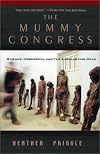
I really appreciate my colleague Tony thinking to loan me this book. I love detailed accounts of obsessive subcultures and the insular, scientific world of mummy specialists qualifies. This was a thought-provoking work. One of the controversies in the field is whether to do destructive autopsies on mummies. I had hoped for a middle ground: at most use the accurate, tiny tools of laparoscopic surgery and digital laparoscopes. However, a close look at the work of an avid dissector convinced show more me: tools for mushy bodies don't work in dessicated corpses hardened to resin. Not fully exploiting some corpses misses unique discoveries like the example of an entire workman's shirt hidden in the wrappings. Other myth's exploded: Twain probably made up mummies as locomotive fuel (I had thought as much) and there never was paper made from mummy linens. This despite its inclusion in multiple histories of paper making.
I never watched the TV documentary on "cocaine mummies", but the discovery of THC and cocaine traces in the hair of Peruvian and Egyptian mummies made me want to believe partying elite were sending brickes of coke and bales of marijuana to each other across the southern Atlantic. But, apparently such trips were not possible at the time and such assaying only tells us how littel we know about the chemical processes involved.
The title refers to a regular meeting of mummy experts and the author, a report for a magazine, attended and following the "threads" from one year to track down those active in the "fields" of bogs, Valley of the Kings, Incan repositories and more. A chapter near the end on the ruthless, police state tactics South American missionaires took to destroy Incan mummy culture, a culturally important form of ancestor worship, was among the most repulsive material of a work that goes for the visceral.
Finally, the chapter on Lenin's embalming and that of the other Communist world corpses it inspired it self inspired me to read more on these "Mausoleummists". show less
I never watched the TV documentary on "cocaine mummies", but the discovery of THC and cocaine traces in the hair of Peruvian and Egyptian mummies made me want to believe partying elite were sending brickes of coke and bales of marijuana to each other across the southern Atlantic. But, apparently such trips were not possible at the time and such assaying only tells us how littel we know about the chemical processes involved.
The title refers to a regular meeting of mummy experts and the author, a report for a magazine, attended and following the "threads" from one year to track down those active in the "fields" of bogs, Valley of the Kings, Incan repositories and more. A chapter near the end on the ruthless, police state tactics South American missionaires took to destroy Incan mummy culture, a culturally important form of ancestor worship, was among the most repulsive material of a work that goes for the visceral.
Finally, the chapter on Lenin's embalming and that of the other Communist world corpses it inspired it self inspired me to read more on these "Mausoleummists". show less
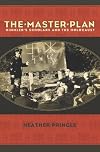
A semi-popular account of the Ahnenerbe, Himmler’s lethal racialist think tank, what Pringle does well is to link Himmler’s own cultural and racial obsessions to the course of myth-making (one hates to dignify the whole fraudulent enterprise as research) conducted by the agency. This is particularly in the pre-war period, when the Ahnenerbe looked nothing so much as a deranged mirror image of the National Geographic Society.
Somewhat less satisfactory is the accounting of the agency's show more wartime activities, when there was less emphasis on collecting supposed lost Aryan wisdom (though such activities never totally ceased) and more on providing intelligence for the SS killing teams out in the field. Though one imagines this is due to key documentation being lost or destroyed, not to mention that while there were participants who tried to justify their pre-war work as real science, activities such as the collection of human specimens and lethal lab experiments were (of course) hushed-up. It’s probably amazing that we know as much about these atrocities as we do.
As for the denouement of it all, in the process of examining the post-war fates of the participants Pringle wonders why so many of the actual scientists who were sucked into Himmler’s racialist enterprise didn’t recoil. This seems to be a particular reaction to Pringle’s encounter with Bruno Beger, the resident anthropologist on the 1939 expedition to Tibet, and a largely unrepentant believer in the Nazi racialist thinking of the time.
Part of the answer, as Michael Allen observed in "The Business of Genocide," is that there may well be a moral blind spot in the disinterested pose often found in the scientific and technological endeavor, which can slide into amorality. When combined with the ideological commitment that held the Nazi party together (and which Pringle probably doesn’t play up enough) and the sheer self-centered ambition of so many who joined the SS, it’s not a surprise one wound up with a lethal combination. show less
Somewhat less satisfactory is the accounting of the agency's show more wartime activities, when there was less emphasis on collecting supposed lost Aryan wisdom (though such activities never totally ceased) and more on providing intelligence for the SS killing teams out in the field. Though one imagines this is due to key documentation being lost or destroyed, not to mention that while there were participants who tried to justify their pre-war work as real science, activities such as the collection of human specimens and lethal lab experiments were (of course) hushed-up. It’s probably amazing that we know as much about these atrocities as we do.
As for the denouement of it all, in the process of examining the post-war fates of the participants Pringle wonders why so many of the actual scientists who were sucked into Himmler’s racialist enterprise didn’t recoil. This seems to be a particular reaction to Pringle’s encounter with Bruno Beger, the resident anthropologist on the 1939 expedition to Tibet, and a largely unrepentant believer in the Nazi racialist thinking of the time.
Part of the answer, as Michael Allen observed in "The Business of Genocide," is that there may well be a moral blind spot in the disinterested pose often found in the scientific and technological endeavor, which can slide into amorality. When combined with the ideological commitment that held the Nazi party together (and which Pringle probably doesn’t play up enough) and the sheer self-centered ambition of so many who joined the SS, it’s not a surprise one wound up with a lethal combination. show less
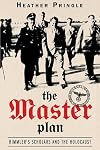
A duty read - a witness to evil. The book details some of the history of the Ahnenerbe, a Nazi-SS organization for "scientific" research. The first half of the book looks at some hilarious stuff the organization did; it could be lifted from the screen of an Indiana Jones movie. They looked for evidence of ancient Aryan empires in Tibet and in the centre of Scandinavia, all in an effort to prove that Aryans, who effectively never existed, were the smarter-than-the-average bear race destined show more to dominate the world. The Ahnenerbe looked for ways to define "Aryaness" and "Jewishness". The place was overrun with bozos, judging by the book. In the second half of the book, the humour ends. These same bozos subjected Jewish victims to medical experiments with chemicals, cold, and disease, killing most of their victims, usually in agony. Some eighty Jews were killed so that their bones could be studied to define Jewishness. Many of the "scientists" of the Ahnenerbe reached high SS rank, as they were favourites of Himmler. Sadly, virtually none of these murders and their assistants were brought to justice after the war. Some prospered. The memories of the National Socialist regime of Hitler have dimmed. We should never forget the evils that were perpetrated in his name, and by tens-hundreds of thousands of willing Germans and Austrians. This book is a little bit of their witness.
It could, however, have been better written. It is very loose in structure and tends to drift off every now and then until the author is seized with indignation at the evil of the Ahnenerbe staffers. show less
It could, however, have been better written. It is very loose in structure and tends to drift off every now and then until the author is seized with indignation at the evil of the Ahnenerbe staffers. show less
Exhaustively researched, this study of the German Ahnenerbe, Himmler's think tank created to support some of the more ludicrous Nazi ideology with archaeological or sociological study is a fascinating look at science gone wrong. Imagine what these scholars could have accomplished had they sought to advance learning rather than bend it to political ends.
Lists
Awards


You May Also Like


Associated Authors
Statistics
- Works
- 8
- Also by
- 2
- Members
- 1,057
- Popularity
- #24,365
- Rating
- 4.0
- Reviews
- 18
- ISBNs
- 51
- Languages
- 11