
Anthony A. Barrett
Author of Caligula: The Corruption of Power
About the Author
Anthony A. Barrett is Distinguished University Professor Emeritus at the University of British Columbia. His many books include Caligula: The Abuse of Power and Livia: First Lady of Imperial Rome.
Works by Anthony A. Barrett
Rome Is Burning: Nero and the Fire That Ended a Dynasty (Turning Points in Ancient History, 9) (2020) 94 copies, 4 reviews
Associated Works
The Cambridge Companion to the Age of Nero (Cambridge Companions to the Ancient World) (2017) — Contributor — 23 copies
William Golding: The Man and His Books - A Tribute on His 75th Birthday (1986) — Contributor — 18 copies
Roman Coins and Public Life under the Empire: E. Togo Salmon Papers II (Roman Theater & Society) (1999) — Contributor — 6 copies
Tagged
Common Knowledge
- Canonical name
- Barrett, Anthony A.
- Legal name
- Barrett, Anthony Arthur
- Birthdate
- 1941-07-30
- Gender
- male
- Short biography
- Born in 1941, Anthony Barrett is a classics professor at UBC. He co-authored the first major critical study of Yorkshire-born architect Francis Mawson Rattenbury (1867-1935), with Rhodri Windsor Liscombe, a UBC Fine Arts professor, in 1983, after co-writing a British version of Rattenbury's life and famous murder in 1980. Rattenbury's most famous architectural projects in British Columbia are the Legislative Buildings and the Empress Hotel. Anthony A. Barrett also wrote Caligula: The Corruption of Power (Yale University Press, 1998).
- Nationality
- UK
- Birthplace
- Worthing, Sussex, England, UK
- Associated Place (for map)
- England, UK
Members
Reviews
Rome Is Burning: Nero and the Fire That Ended a Dynasty (Turning Points in Ancient History, 9) by Anthony A. Barrett
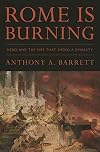
How you respond to this book will depend on how you split the difference between what the cover seems to promise, and what the author actually gives you.
While you might think that you're going to be getting a narrative history of the Rome's greatest fire of of 64 C.E., what you're really getting is a deep dive into what we know about the causes of the fire, how Nero responded, and the long-term impact of the event. The more general reader will probably be frustrated over how Barrett is show more mostly here to lower expectations of what we can really know on the basis of the evidence, as even archaeological work is not especially helpful.
Interwoven in the physical details of the event is Barrett's estimation of Nero's real place in all this, and this might take some readers aback. Being a student of the first dynasty of Imperial Rome, Barrett suggests that you have to start with the working assumption that Nero was actually rather more popular than the period historians would suggest, as they all had axes to grind. This is not to say that the Nero didn't become a menace over time, but he started out well, and his actual conduct during the fire itself was probably up to the best standards of imperial hands-on participation in confronting the crisis.
The real problem came with the clean-up, as between Nero's vision of urban redevelopment, and the costs of implementing that vision, this is what really tore apart the relationship between Rome's social and economic elite, and Nero, ultimately leading to Nero's premature end and a new-model Imperium where the reigning emperor was probably the most successful warlord.
In the final analysis, I found this book well-worth reading, assuming you're approaching it with a reasonable level of previously gained understanding of the period. show less
While you might think that you're going to be getting a narrative history of the Rome's greatest fire of of 64 C.E., what you're really getting is a deep dive into what we know about the causes of the fire, how Nero responded, and the long-term impact of the event. The more general reader will probably be frustrated over how Barrett is show more mostly here to lower expectations of what we can really know on the basis of the evidence, as even archaeological work is not especially helpful.
Interwoven in the physical details of the event is Barrett's estimation of Nero's real place in all this, and this might take some readers aback. Being a student of the first dynasty of Imperial Rome, Barrett suggests that you have to start with the working assumption that Nero was actually rather more popular than the period historians would suggest, as they all had axes to grind. This is not to say that the Nero didn't become a menace over time, but he started out well, and his actual conduct during the fire itself was probably up to the best standards of imperial hands-on participation in confronting the crisis.
The real problem came with the clean-up, as between Nero's vision of urban redevelopment, and the costs of implementing that vision, this is what really tore apart the relationship between Rome's social and economic elite, and Nero, ultimately leading to Nero's premature end and a new-model Imperium where the reigning emperor was probably the most successful warlord.
In the final analysis, I found this book well-worth reading, assuming you're approaching it with a reasonable level of previously gained understanding of the period. show less
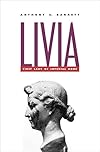
Livia is one of the few women of antiquity about whom we know enough for a book-length biography.
And still not the kind of biography that is written about modern figures. We don't have archival collections of letters, diaries, etc. by Livia and her contemporaries; much of what we know is entirely on the surface. The well-known Livia of Graves' I, Claudius is a conniving poisoner. There is little historical evidence for that, only gossip and innuendo from Tacitus. Barrett strips away the show more sensational fabrications to give a balanced account based on all the available sources. Livia was a survivor, living to almost 87 in an era when the average life expectancy was well below half of that and many of the Roman aristocracy did not survive the long civil wars. She spanned the end of the Republic and the formative years of the empire; much of that time she was enormously influential behind the scenes.
The book falls into three parts: a chronological narrative, a series of topical chapters (private life, L as wife of Augustus, L as mother of Tiberius, social and political relationships, etc.), and extensive appendices on the sources, chronological problems, etc. The narrative is very readable and Barrett clearly explains anything that a general reader likely wouldn't know. show less
And still not the kind of biography that is written about modern figures. We don't have archival collections of letters, diaries, etc. by Livia and her contemporaries; much of what we know is entirely on the surface. The well-known Livia of Graves' I, Claudius is a conniving poisoner. There is little historical evidence for that, only gossip and innuendo from Tacitus. Barrett strips away the show more sensational fabrications to give a balanced account based on all the available sources. Livia was a survivor, living to almost 87 in an era when the average life expectancy was well below half of that and many of the Roman aristocracy did not survive the long civil wars. She spanned the end of the Republic and the formative years of the empire; much of that time she was enormously influential behind the scenes.
The book falls into three parts: a chronological narrative, a series of topical chapters (private life, L as wife of Augustus, L as mother of Tiberius, social and political relationships, etc.), and extensive appendices on the sources, chronological problems, etc. The narrative is very readable and Barrett clearly explains anything that a general reader likely wouldn't know. show less
Rome Is Burning: Nero and the Fire That Ended a Dynasty (Turning Points in Ancient History) by Anthony A. Barrett
The great fire of Rome in 64 CE is one of those events that remains embedded in the Western cultural memory. Yet the irony that Anthony Barrett describes in this book is that the things we remember about it, such as Nero fiddling while his capital went up in flames, are false, while we overlook its true — and truly enormous — historical significance.
As Barrett explains, the burning of Rome was an event of lasting historical importance. Over the course of nine days, the blaze devastated show more the core of Rome itself, killing thousands and gutting numerous homes and public buildings. In its aftermath, Nero (who was not even in Rome when the fire started) began a massive rebuilding campaign that was still underway when he died four years later. Barrett details how it was the legacy of the fire that contributed to his demise, as the enormous expense of the effort led to the stripping of the provinces of the wealth and the devaluing of the currency. Faced with rebellion at his policies, Nero was killed by one of his secretaries on his orders; as Nero died without any surviving children, his demise brought an end to the Julio-Claudian dynasty and inaugurated a new era in Roman history.
As a longtime scholar of of the Julio-Claudian era, Barrett draws upon his familiarity with both the literary and archaeological record to provide his readers with a comprehensive history of the fire and its aftermath. Its coverage is impressive, ranging from his examination of the ancient city's longstanding experiences with fire to the modern-day representations of the event and what they reveal about its perpetuation. Generously illustrated with both photographs and drawings, it makes for an outstanding history of the Great Fire of Rome, one that should be on the reading list of anyone with even a passing interest in Roman history or the history of the great city for which the empire was named. show less
As Barrett explains, the burning of Rome was an event of lasting historical importance. Over the course of nine days, the blaze devastated show more the core of Rome itself, killing thousands and gutting numerous homes and public buildings. In its aftermath, Nero (who was not even in Rome when the fire started) began a massive rebuilding campaign that was still underway when he died four years later. Barrett details how it was the legacy of the fire that contributed to his demise, as the enormous expense of the effort led to the stripping of the provinces of the wealth and the devaluing of the currency. Faced with rebellion at his policies, Nero was killed by one of his secretaries on his orders; as Nero died without any surviving children, his demise brought an end to the Julio-Claudian dynasty and inaugurated a new era in Roman history.
As a longtime scholar of of the Julio-Claudian era, Barrett draws upon his familiarity with both the literary and archaeological record to provide his readers with a comprehensive history of the fire and its aftermath. Its coverage is impressive, ranging from his examination of the ancient city's longstanding experiences with fire to the modern-day representations of the event and what they reveal about its perpetuation. Generously illustrated with both photographs and drawings, it makes for an outstanding history of the Great Fire of Rome, one that should be on the reading list of anyone with even a passing interest in Roman history or the history of the great city for which the empire was named. show less
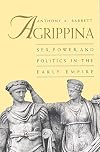
Barrett impresses readers again by capturing the life of this remarkable woman: Agrippina the Younger. As the mother of Emperor Nero, the readers will be astounded to learn about her younger life, especially when her crazy brother Caligula becomes emperor of Rome. Fearing for her life constantly, Barrett portrays an Agrippina that is cunning and devious, but also has a side to her that one can't help feeling sympathetic towards.
Lists
Awards

You May Also Like


Associated Authors
Statistics
- Works
- 19
- Also by
- 4
- Members
- 1,108
- Popularity
- #23,191
- Rating
- 3.7
- Reviews
- 20
- ISBNs
- 61
- Languages
- 5

