
Gilles Bachelet
Author of My Cat, the Silliest Cat in the World
About the Author
Works by Gilles Bachelet
Associated Works
Tagged
Common Knowledge
Members
Reviews
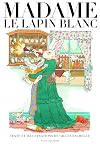
I confess that to my mind, the White Rabbit of Wonderland fame is clearly a bachelor. When Alice visits his home, there is only evidence of a maid-of-all-work and a couple of workmen. Gilles Bachelet's children's book about Mrs. Rabbit contains absolutely priceless illustrations -- scenes filled with Wonderland characters in unexpected contexts, like classrooms, shopping streets, and etc. But Mrs. Rabbit's complaints about her unending domestic tasks and her husband's neglect feel dismal and show more stereotypical. Her statement that she would like to be a writer, but how could the ordinariness of her life produce anything marvelous or extraordinary seems to be suggesting that the reader should find the wonder in his or her everyday life. But though I enjoyed this book as a collector of various Alice editions and related works, for the lovely artwork, I would not give it to an actual child, due to the limited role it provides for the female. show less
 This review was written for LibraryThing Early Reviewers.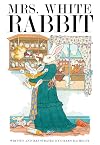
Mrs. White Rabbit is not the book for nitpickers who can't bear anachronisms even in fantasy humor. It's their loss. For the rest of us, particularly fans of Lewis Carroll's Alice books, it's a delight that kept this one chuckling from start to finish.
What makes the book are the wonderful, detailed illustrations. The peaceful scene in the sepia-toned family photograph at the beginning belies the chaos in the Rabbit household. Mrs. Rabbit is writing in her diary with her right hand while show more bottle-feeding baby Emily with her left. Little Eliot, the next-to-youngest, is crying and tugging on her skirt. Beatrix, the eldest, is sitting in a chair with a magazine, but she's obviously scolding the twins, Gilbert and George. They're dueling with improvised armor and weapons. Betty, the middle daughter, is scolding her doll. Through the window we can see dear old dad looking at his watch while he's legging it down the lane. Do pay attention to the room because we'll be seeing it again from another side later on and there will be new details/angles.
Mrs. White Rabbit describes her children. Loved Beatrix's eight ambitions. There are two pages of illustrations for the recipes in 100 Ways to Cook Carrots. We don't get the recipes themselves, but mothers should be prepared for their children requesting some of the shapes carrots get carved into. (I know we would have demanded numbers 21 and 100.)
Gilbert and George are shown with very different reading materials as they sit on their chamber pots. Their game of marbles made me wince.
The look on Betty's face as her mother takes her to school for the very first time made me laugh aloud. Hope you have a copy of the John Tenniel-illustrated Alice's Adventures in Wonderland and Through the Looking Glass and What Alice Found There handy. The two-page school scene and the later two-page street scene will amply reward you with examples of character cameos. Be sure to check out the top of Mrs. Hare's specimen cabinet in her classroom. (The rolled-up hedgehog on the floor does explain that roundish hole in one of the window panes...)
Little Eliot gets two panels showing two different aspects of his personality. Baby Emily is compared to her father. The Cheshire Cat merits two pages of his own. We cat lovers will recognize his characteristics.
Alice gets mentioned, although not by name. It's obviously the scene from chapter four in the first book, although there is no evidence of Mary Ann, the housemaid, or Pat and Bill. In fact, Mrs. White Rabbit seems to be stuck with all of the housework. (Ahem -- Beatrix is more than old enough to be helping instead of primping.) I do not blame Betty for the expression on her face as she watches what the twins are doing.
That street scene I mentioned before follows. We may glimpse part of Alice here. The photography studio, with its copy of Lewis Carroll's famous photo of Alice Liddell, was my favorite bit. My second favorite was the reaction of Mrs. Caterpillar. Don't miss the equipment in the window of the sports shop!
If Mrs. Rabbit could see the headline in her husband's newspaper, she might understand why he's not paying her any attention. Eek! (Oooh, I missed the changes to the pattern on Mrs. Rabbit's apron here the first time I read this book.)
The two pages of Mrs. Rabbit's fantasy will probably seem familiar to many mothers. (Note their version of Borax.)
The two-page spread of the palace when Mrs. Rabbit meets her husband after work are an even better example of the lady's gift for understatement than her opening paragraph. Heh!
Be sure to look for the toy sticking out of what is probably Betty's chamber pot near the end. I also liked the windup toy lying near that pot.
The last three pages gave me even more laughs!
I don't know why Mr. Bachelet bothered to apologize to Lewis Carroll in his dedication. I dare say this book has him smiling in his grave. I'm so glad I won a copy of it through the LibraryThing Early Reviewers program! I heartily recommend it! show less
What makes the book are the wonderful, detailed illustrations. The peaceful scene in the sepia-toned family photograph at the beginning belies the chaos in the Rabbit household. Mrs. Rabbit is writing in her diary with her right hand while show more bottle-feeding baby Emily with her left. Little Eliot, the next-to-youngest, is crying and tugging on her skirt. Beatrix, the eldest, is sitting in a chair with a magazine, but she's obviously scolding the twins, Gilbert and George. They're dueling with improvised armor and weapons. Betty, the middle daughter, is scolding her doll. Through the window we can see dear old dad looking at his watch while he's legging it down the lane. Do pay attention to the room because we'll be seeing it again from another side later on and there will be new details/angles.
Mrs. White Rabbit describes her children. Loved Beatrix's eight ambitions. There are two pages of illustrations for the recipes in 100 Ways to Cook Carrots. We don't get the recipes themselves, but mothers should be prepared for their children requesting some of the shapes carrots get carved into. (I know we would have demanded numbers 21 and 100.)
Gilbert and George are shown with very different reading materials as they sit on their chamber pots. Their game of marbles made me wince.
The look on Betty's face as her mother takes her to school for the very first time made me laugh aloud. Hope you have a copy of the John Tenniel-illustrated Alice's Adventures in Wonderland and Through the Looking Glass and What Alice Found There handy. The two-page school scene and the later two-page street scene will amply reward you with examples of character cameos. Be sure to check out the top of Mrs. Hare's specimen cabinet in her classroom. (The rolled-up hedgehog on the floor does explain that roundish hole in one of the window panes...)
Little Eliot gets two panels showing two different aspects of his personality. Baby Emily is compared to her father. The Cheshire Cat merits two pages of his own. We cat lovers will recognize his characteristics.
Alice gets mentioned, although not by name. It's obviously the scene from chapter four in the first book, although there is no evidence of Mary Ann, the housemaid, or Pat and Bill. In fact, Mrs. White Rabbit seems to be stuck with all of the housework. (Ahem -- Beatrix is more than old enough to be helping instead of primping.) I do not blame Betty for the expression on her face as she watches what the twins are doing.
That street scene I mentioned before follows. We may glimpse part of Alice here. The photography studio, with its copy of Lewis Carroll's famous photo of Alice Liddell, was my favorite bit. My second favorite was the reaction of Mrs. Caterpillar. Don't miss the equipment in the window of the sports shop!
If Mrs. Rabbit could see the headline in her husband's newspaper, she might understand why he's not paying her any attention. Eek! (Oooh, I missed the changes to the pattern on Mrs. Rabbit's apron here the first time I read this book.)
The two pages of Mrs. Rabbit's fantasy will probably seem familiar to many mothers. (Note their version of Borax.)
The two-page spread of the palace when Mrs. Rabbit meets her husband after work are an even better example of the lady's gift for understatement than her opening paragraph. Heh!
Be sure to look for the toy sticking out of what is probably Betty's chamber pot near the end. I also liked the windup toy lying near that pot.
The last three pages gave me even more laughs!
I don't know why Mr. Bachelet bothered to apologize to Lewis Carroll in his dedication. I dare say this book has him smiling in his grave. I'm so glad I won a copy of it through the LibraryThing Early Reviewers program! I heartily recommend it! show less
This review was written for LibraryThing Early Reviewers.This probably files under "Be careful what you wish for." I love the idea of this book. Except....
As a Lewis Carroll scholar, when this book showed up on LibraryThing Early Reviewers, I of course had to go for it. Unfortunately, I didn't really know what I was getting into. It wasn't a book for me. It's a diary entry from the wife of the White Rabbit from Alice in Wonderland, consisting largely of gripes about her husband and children. Some are quite funny, as when the wife talks about how show more her eldest daughter, who wants to be a supermodel, refuses to eat anything, even though the Wife has tried "all the recipes from 100 Ways to Cook Carrots." The amount of imagination required to illustrate a hundred carrot dishes is impressive.
But -- a supermodel rabbit wouldn't be thin and emaciated; it would fat and sassy and healthy.
There are many subtle Carrollian touches in the illustrations. For example, one shows a classroom at the school one of the rabbit children attends. Along with a portrait of a frowning Queen of Hearts, there is a portrait of John Tenniel, and an illustration clearly intended to be the Lobster Quadrille. A skeleton of a Jabberwock hangs from the ceiling. The students include Bill the Lizard, the Dormouse, a young Hatter, a young Humpty Dumpty, the Gryphon and Mock Turtle, a fish I assume will be the Fish Footman (sadly, the next critter is buried in the fold; I think it's the Frog Footman), the Dodo, the Walrus, a young Carpenter, two Live Flowers, and the Tweedle twins, plus a caterpillar (with teeth?!). And yet, a few pages later, in the street, we see a grown Walrus talking to a grown Dodo in front of... yes, C. L. Dodgson, Photographer. And his window displays Dodgson's famous "Beggar Maid" photo of Alice Liddell -- and, in an upstairs studio, we see a mock image from another Carroll poem, "Hiawatha's Photographing," of the photographer taking an exposure of (I think) the supermodel-wanna-be rabbit. Except -- the photographer isn't wearing black gloves. So it isn't Dodgson. And, a few pages after that, we see Humpty Dumpty on the wall of the Palace of the card royalty. Except -- Humpty Dumpty wasn't in Wonderland, he was in Looking Glass. And Mrs. White R. talks about Alice's visit as if Mr. White R. wanted to hire Alice as a babysitter. But Mr. White R. when he met Alice, called her "Mary Ann" -- so he assumed she was already a servant, and the whole book is about housework, and Mrs. White R. wouldn't have all these problems if she had a servant.
And, if the photographer is using an 1860s rosewood camera in the street scene, how can there be an electric iron on the frontispiece, and a rubber ducky, and a wall poster of a rabbit in a bikini, and an electric vacuum cleaner, and references to Jack the Ripper and the Titanic, and an electric mixer, and recycling logo? The anachronisms are impossible.
So: If you're a Carroll fan, you're likely to find this rather irritating. Of course, most people don't know their Alice that well. Problem is -- will this make sense to someone who doesn't know Alice? I rather doubt it; how do you explain Alice's gigantic foot sticking through the door if you haven't read Alice in Wonderland?
And it seems to me that this book targets a lower age group than Alice itself. Which implies a lot of confusion.
So, as a person who -- like Charles Dodgson ("Lewis Carroll") -- sees the world in logical terms, I don't think I can recommend this as a children's book. But as a collection of easter eggs to be sought by Carroll fans, it has a lot to recommend it.
Only... that is not the Cheshire Cat. It just isn't. Lose the cat, OK? show less
As a Lewis Carroll scholar, when this book showed up on LibraryThing Early Reviewers, I of course had to go for it. Unfortunately, I didn't really know what I was getting into. It wasn't a book for me. It's a diary entry from the wife of the White Rabbit from Alice in Wonderland, consisting largely of gripes about her husband and children. Some are quite funny, as when the wife talks about how show more her eldest daughter, who wants to be a supermodel, refuses to eat anything, even though the Wife has tried "all the recipes from 100 Ways to Cook Carrots." The amount of imagination required to illustrate a hundred carrot dishes is impressive.
But -- a supermodel rabbit wouldn't be thin and emaciated; it would fat and sassy and healthy.
There are many subtle Carrollian touches in the illustrations. For example, one shows a classroom at the school one of the rabbit children attends. Along with a portrait of a frowning Queen of Hearts, there is a portrait of John Tenniel, and an illustration clearly intended to be the Lobster Quadrille. A skeleton of a Jabberwock hangs from the ceiling. The students include Bill the Lizard, the Dormouse, a young Hatter, a young Humpty Dumpty, the Gryphon and Mock Turtle, a fish I assume will be the Fish Footman (sadly, the next critter is buried in the fold; I think it's the Frog Footman), the Dodo, the Walrus, a young Carpenter, two Live Flowers, and the Tweedle twins, plus a caterpillar (with teeth?!). And yet, a few pages later, in the street, we see a grown Walrus talking to a grown Dodo in front of... yes, C. L. Dodgson, Photographer. And his window displays Dodgson's famous "Beggar Maid" photo of Alice Liddell -- and, in an upstairs studio, we see a mock image from another Carroll poem, "Hiawatha's Photographing," of the photographer taking an exposure of (I think) the supermodel-wanna-be rabbit. Except -- the photographer isn't wearing black gloves. So it isn't Dodgson. And, a few pages after that, we see Humpty Dumpty on the wall of the Palace of the card royalty. Except -- Humpty Dumpty wasn't in Wonderland, he was in Looking Glass. And Mrs. White R. talks about Alice's visit as if Mr. White R. wanted to hire Alice as a babysitter. But Mr. White R. when he met Alice, called her "Mary Ann" -- so he assumed she was already a servant, and the whole book is about housework, and Mrs. White R. wouldn't have all these problems if she had a servant.
And, if the photographer is using an 1860s rosewood camera in the street scene, how can there be an electric iron on the frontispiece, and a rubber ducky, and a wall poster of a rabbit in a bikini, and an electric vacuum cleaner, and references to Jack the Ripper and the Titanic, and an electric mixer, and recycling logo? The anachronisms are impossible.
So: If you're a Carroll fan, you're likely to find this rather irritating. Of course, most people don't know their Alice that well. Problem is -- will this make sense to someone who doesn't know Alice? I rather doubt it; how do you explain Alice's gigantic foot sticking through the door if you haven't read Alice in Wonderland?
And it seems to me that this book targets a lower age group than Alice itself. Which implies a lot of confusion.
So, as a person who -- like Charles Dodgson ("Lewis Carroll") -- sees the world in logical terms, I don't think I can recommend this as a children's book. But as a collection of easter eggs to be sought by Carroll fans, it has a lot to recommend it.
Only... that is not the Cheshire Cat. It just isn't. Lose the cat, OK? show less
This review was written for LibraryThing Early Reviewers.First, let me say you HAVE to take time to enjoy the illustrations, or you're missing at least half the book! The story is funny and engaging, and would be a great read for people of all ages, whether or not they are already familiar with the Alice in Wonderland story. I love the new perspective on the story however - the perpetually late white rabbit's wife as narrator, with glimpses into their home life.
Advance review copy
Advance review copy
Lists
Awards


You May Also Like


Associated Authors
Statistics
- Works
- 30
- Also by
- 1
- Members
- 448
- Popularity
- #54,748
- Rating
- 4.0
- Reviews
- 33
- ISBNs
- 56
- Languages
- 10
