
Lewis Carroll (1832–1898)
Author of Alice's Adventures in Wonderland
About the Author
Charles Luthwidge Dodgson was born in Daresbury, England on January 27, 1832. He became a minister of the Church of England and a lecturer in mathematics at Christ Church College, Oxford. He was the author, under his own name, of An Elementary Treatise on Determinants, Symbolic Logic, and other show more scholarly treatises. He is better known by his pen name of Lewis Carroll. Using this name, he wrote Alice in Wonderland and Through the Looking Glass. He was also a pioneering photographer, and he took many pictures of young children, especially girls, with whom he seemed to empathize. He died on January 14, 1898. (Bowker Author Biography) show less
Disambiguation Notice:
**Please do not combine "Alicia in Terra Mirabili" and "Aliciae Per Speculum Transitus" with the modern-language versions of these books. They fall under the dead language exception to the usual combining of different translations. Thanks!
**Please exercise extreme caution in merging pop-up books with the main work: in most cases, they should not be combined.
**Please do not combine The Annotated Alice with any of the "normal" Alice editions, nor the Annotated Snark with the Hunting of the Snark.
**Please also do not combine The Annotated Alice with The Annotated Alice : The Definitive Edition as the latter contains both The Annotated Alice, More Annotated Alice, and additional material. Thanks!
Series
Works by Lewis Carroll
Alice's Adventures in Wonderland and Through the Looking-Glass (with Alice's Adventures Under Ground) (1998) 2,280 copies, 22 reviews
Alice in Wonderland and Through the Looking Glass (Illustrated Junior Library) (1946) 657 copies, 2 reviews
Alice's Adventures in Wonderland / Through the Looking Glass / The Hunting of the Snark (1901) 543 copies, 3 reviews
Alice's Adventures in Wonderland and Through the Looking-Glass (Penguin Classics) (1988) 534 copies, 3 reviews
The Annotated Alice: 150th Anniversary Deluxe Edition (150th Deluxe Anniversary Edition) (The Annotated Books) (2015) 347 copies, 6 reviews
Alice in Wonderland & Through the Looking-Glass [abridged - Classic Starts] (2009) 305 copies, 2 reviews
Jabberwocky and Other Nonsense: Collected Poems (Penguin Clothbound Classics) (2012) 277 copies, 3 reviews
More Annotated Alice: Alice's Adventures in Wonderland & Through the Looking Glass (1990) 258 copies, 2 reviews
Alice's Adventures in Wonderland and Through the Looking Glass: And What Alice Found There (Penguin Classics) (2015) 219 copies, 1 review
Lewis Carroll's Alice's Adventures in Wonderland: With Artwork by Yayoi Kusama (A Penguin Classics Hardcover) (2012) 148 copies, 2 reviews
The Universe in a Handkerchief: Lewis Carroll's Mathematical Recreations, Games, Puzzles, and Word Plays (1996) 143 copies, 1 review
The Wasp in a Wig: A Suppressed Episode of Through the Looking Glass and What Alice Found There (1977) 116 copies, 1 review
Alice in Wonderland [and] Peter Pan [Dandelion Library: Edited and Abridged] (1957) — Author — 105 copies
Alice's Adventures in Wonderland: A Coloring Book (Classic Coloring Book) (1980) 87 copies, 2 reviews
Alice's Adventures in Wonderland, Through the Looking-Glass and Other Writings (2000) 72 copies, 1 review
Through the Looking-Glass (Illustrated): The 1871 Classic Edition with Original Illustrations (2024) 72 copies
Alice's Adventures in Wonderland, Through the Looking-Glass, The Hunting of the Snark, Phantasmagoria and Other Poems (1984) 57 copies
The Philosopher's Alice: Alice's Adventures in Wonderland and Through the Looking-Glass (1974) — Author — 55 copies, 1 review
Alicia a traves del espejo & La caza del snark/ Through The Looking Glass & The Hunting of the Snark (Clasicos Juveniles/ Juvenile Classics) (Spanish Edition) (1993) — Author — 51 copies, 2 reviews
Aliciae Per Speculum Transitus: Through The Looking Glass and What Alice Found There in Latin (1966) 36 copies, 1 review
Alice's Adventures In Wonderland: The Classic Tale from the story by Lewis Carroll (Classic Tale) (2004) 35 copies
Alicia en el pais de las maravillas, fantasmagoria y otros poemas, un cuento enredado (Clasicos de la literatura series) (2004) 34 copies, 1 review
Alice's Adventures in Wonderland 34 copies
Alice's Adventures in Wonderland / The Adventures of Huckleberry Finn / The Adventures of Tom Sawyer (2015) 34 copies
Alice in Wonderland & Through the Looking-Glass (Illustrated): The Classic Edition with Original Illustrations (2023) 25 copies
Oakshot Complete Works of Lewis Carroll (Illustrated, Inline Footnotes) (Classics Book 2) (2016) 21 copies
Alice in wonderland 21 copies
Logical nonsense;: The works of Lewis Carrol [pseud.] now, for the first time, complete; (1942) 18 copies
The Collected Stories of Lewis Carroll: Alice in Wonderland/Through the Looking Glass/Phantasmagoria (1994) 17 copies
Complete Nonsense 15 copies
Alice's Adventures in Wonderland (Oxford Progressive English Readers ∙ Grade 1) (1980) 15 copies, 1 review
The Annotated Hunting of the Snark: The Full Text of Lewis Carroll's Great Nonsense Epic the Hunting of the Snark: 0 (Annotated Books) (1962) 14 copies
Vintage Fantasy: " Alice's Adventures in Wonderland " , " The Wind-up Bird Chronicle " (Vintage Classic Twins) (2008) 14 copies
Treasury of Children's Classics: Alice in Wonderland / Wizard of Oz / Black Beauty / Robinson Crusoe / Treasure Island / Peter Pan) (1998) 13 copies
Alice in Wonderland and Through the Looking Glass, Abridged Edition (Classic Reward) (1900) 13 copies
Alicia en el país de las maravillas 11 copies
Alicia en el país de las maravillas. A traves del espejo, La caza del Snark (Penguin Clasicos) (Spanish Edition) (2016) 9 copies
Werke (3 Bde.). Alice hinter den Spiegeln. Alice im Wunderland. Briefe an kleine Mädchen (2002) 9 copies
ALICE NEL PAESE DELLE MERAVIGLIE 9 copies
Alice in Wonderland, Through the Looking Glass, The Hunting of the Snark, and a Wonderful Miscellany of Poems, Letters, Games and Puzzles (1996) 9 copies
Lewis Carroll 8 copies
A travers le Jabberwocky de Lewis Carroll. Onze mots-valises dans huit traductions (1997) — Author — 8 copies
Alice in Wonderland, retold for younger readers (Tales retold for younger readers) (1960) 8 copies, 1 review
Alice's Adventures in Wonderland (Classic Literature with Classical Music) (1865) — Author — 7 copies
Lewis Carroll Box Set: Alice Adventures in Wonderland and Through The Looking Glass (includes the short film The Delivery) (2008) 7 copies, 1 review
The Pamphlets of Lewis Carroll: The Mathematical Pamphlets of Charles Lutwidge Dodgson and Related Pieces, Francine Abeles, Co: 2 (Volume 2) (1994) 7 copies
Alice in Wonderland and Through the Looking Glass (Wordsworth Classics) by Lewis Carroll (1999-12-05) (1656) 6 copies, 1 review
Elucidating Alice: A Textual Commentary on Alice's Adventures in Wonderland (2015) 6 copies, 1 review
Through the Looking Glass - And What Alice Found There: With original illustrations - annotated 6 copies
Junior Classic - Book 1 (Alice Adventure in Wonderland, What Katy Did, Rebecca of Sunnybrook Farm, The Secret Garden) - B (2016) 6 copies
The Aventures of Alys in Wondyr Lond: Alice's Adventures in Wonderland in Middle English (Middle English Edition) (2013) 6 copies
Alice in Wonderland (Illustrated): Alice’s Adventures in Wonderland, Through the Looking-Glass, and The Hunting of the Snark (Top Five Classics) (2018) 5 copies
Through the Looking-Glass and What Alice Found There - illustrated by John Tenniel (Alice's Adventures Book 2) (2011) 5 copies
Alice in Wonderland (Illustrated): The 1865 Classic Edition with Original Illustrations (2023) 5 copies
Alícia en terra de meravelles 5 copies
Project X Origins Graphic Texts: Dark Red Book Band, Oxford Level 18: Jabberwocky and other poems (2016) 5 copies
Alicia en el país de las Maravillas y A través del Espejo (Platino Clásicos Ilustrados) (Spanish Edition) (2020) 5 copies
Lewis Carroll and the Kitchins : containing twenty-five letters not previously published and nineteen of his photographs (1980) 5 copies
The Best Loved Classics-Alice in Wonderland, Huckleberry Finn, Gulliver's Travels, Treasure Island, Pride and Justice, T (1963) 5 copies
Alice No Pais Das Maravilhas 5 copies
Curiouser And Curiouser - Quotations From Alice's Adventures in Wonderland And Through The Looking Glass: Quotations from the Alice Books (1997) 5 copies
The Pamphlets of Lewis Carroll: The Logic Pamphlets of Lewis Carroll and Related Pieces (2010) 5 copies
Alice 5 copies
Alisi Ndani ya Nchi ya Ajabu: Alice's Adventures in Wonderland in Swahili (Swahili Edition) (2015) 4 copies
Alicia en el país de las maravillas / Alicia a través del espejo / La caza del Snark (Los mejores clásicos) (Spanish Edition) (2016) 4 copies, 1 review
Alisa u zemlji čuda 4 copies
Walt Disney's Alice in Wonderland 4 copies
Alice: edição comentada e ilustrada: Aventuras de Alice no País das Maravilhas & Através do espelho (Clássicos Zahar) (Portuguese Edition) (2013) 4 copies
Alice In Wonderland: German Learning Edition with Paragraph-By-Paragraph Translation (2009) 4 copies
Through the Looking Glass and What Alice Found There (The Great Classics for Children) (2010) 4 copies
ALICE NO PAIS DAS MARAVILHAS — Author — 4 copies
Sprīdīša Bibliotēka 5 "Alises piedzīvojumi brīnumzemē" "Pīters un Vendija" "Stāsts par Doktoru Dūlitlu" "Vinnijs Pūks un Viņa draugi" (1990) 4 copies
Well in the Rabbit Hole: A New and Closer Look at Alices Adventures in Wonderland, an Annotated Chinese Translation (Chinese Edition) (2010) 4 copies
Two Classics from Lewis Carroll: Adventures in Wonderland and Through the Looking-Glass and What Alice Found There (2020) 3 copies
Alis Advencha ina Wandalan: Alice's Adventures in Wonderland in Jamaican Creole (Gullah Edition) (2016) 3 copies
Select Classics: Alice in Wonderland: (Original, Unabridged Children's Classic with French Flaps) (2025) 3 copies
Alice's Adventures in Wonderland: Abridged Edition for Younger Readers (Palazzo Abridged Classics) (2018) 3 copies
Alice In Wonderland 3 copies
Alice's adventures in Wonderland-Alice nel paese delle meraviglie. Testo italiano a fronte (2022) 3 copies
Alice in Wonderland 3 copies
An Index to 'In Memoriam' 3 copies
Alices Äventyr i Sagolandet (Alice's Adventures in Wonderland in Swedish) (Swedish Edition) (2010) 3 copies
Alicia en el Pa de las Maravillas 3 copies
Smokey the Bear, First 'A' Edition 1955, a Little Golden Book Hardcover (A Little Golden Book) 3 copies
Phantasmagoria and Other Poems, The Hunting of the Snark, Through the Looking Glass: Lewis Carroll (2019) 3 copies
Alicia en el páis de las maravillas 3 copies
Circular Billiards: Rules, &c. 3 copies
Alice através do espelho 3 copies
The Fifth Book of Euclid, Treated Algebraically so far as it relates to Commensurable Magnitudes 3 copies
Alice's Advetnures in Wonderland & Alice Through the Looking-Glass, and What Alice Found There (1978) 3 copies
L's Aventuthes d'Alice en Êmèrvil'lie (Alice's Adventures in Wonderland in Jèrriais) (2011) 3 copies
Alice's Adventure under Ground 3 copies
Alice's Adventirs in Wunnerlaun: Alice's Adventures in Wonderland in Glaswegian Scots (2014) 3 copies
Alice in Wonderland (Read by Myself) 2 copies
Trans la Spegulo kaj kion Alico trovis tie: Through the Looking-Glass in Esperanto (Esperanto Edition) (2012) 2 copies
鏡の国のアリス 2 copies
Alice's Adventures Underground, The Original Alice in Wonderland by Lewis Carroll (Illustrated) 2 copies
ALICE'S ADVENTURES IN WONDERLAND. Illustrated by Arthur Rackham. With a Proem by Austin Dobson. (1907) 2 copies
Alicia en el pais de las maravillas 2 copies
Alice's Adventures in Wonderland 2 copies
Alice's Adventures in Wonderland 2 copies
Reading & Training : Lewis Carroll : Alice's adventures in Wonderland {Step 2 B1.1} [book + sound recording] (2008) — Writer — 2 copies
Companion Library 2-in-1 books set of 3: Kidnapped & Tom Sawyer, Detective; Alice in Wonderland and Through the Looking-glass & Five Little Peppers and How They Grew; Hans Brinker… (1960) — Author — 2 copies
Alis bu Cëlmo dac Cojube w dat Tantelat: Alice's Adventures in Wonderland in Surayt (Turoyo) (Aramaic Edition) (2015) 2 copies
Alice's Adventures in Wonderland and Through the Looking Glass (Barnes & Noble Signature Editions) by Carroll, Lewis (2013) Hardcover (1707) 2 copies
Alicia en el país de las maravillas : libro carrusel : basado en la edición original de Lewis Carroll y John Tenniel (2016) 2 copies
QelIS boqHarmey - Alice's Adventures in Wonderland (Klingon/English): A classic children's book in Klingon (2021) 2 copies
Tout Alice 2 copies
A Postal Problem 2 copies
The Alice In Wonderland Collection 2 copies
The diaries of Lewis Carroll. Vol. 2 2 copies
Alice's Adventures In Wonderland/Through The Looking-Glass/What Alice Found There (Japanese Edition) (2010) 2 copies
Alice's Adventures in Wonderland; Through the Looking-Glass; The Hunting of the Snark. Modern Library 79 (1950) 2 copies
Alice no país das maravilhas Literatura infanto juvenil — Author — 2 copies
Les aventures d'Alice au pays des merveilles, un livre à colorier (Alice in Wonderland Coloring Book) (French Edition) (2016) 2 copies
Alice in Wonderland Hardcover: The Original 1865 Edition With Illustrations By Sir John Tenniel (2021) 2 copies
Alice's adventures in Wonderland 2 copies
Lès-Aventûres d'Alice ô Pèyis dès Mèrvèy (Alice's Adventures in Wonderland in Borain Picard) (Romance Edition) (2012) 2 copies
La aventuras de Alisia en la pais de mervelias (Alice's Adventures in Wonderland in Lingua Franca Nova) (2012) 2 copies
A caça ao turpente — Author — 2 copies
أليس في بلاد العجائب 2 copies
A Tangled Tale (1885). By: Lewis Carroll, illustrated By: Arthur B. Frost (January 17, 1851 – June 22, 1928): (children's book ), Illustrated (2017) 2 copies
Alice's adventures in Wonderland, and, Through the looking-glass and what Alice found there 2 copies
Alicia's Adventuras en Wonderlandia: Alice's Adventures in Wonderland in Spanglish (Creole Edition) (2021) 2 copies
Alice au pays des merveilles - De l'autre côté du miroir [Version adaptée, Recueils universels, Auzou] (2021) — Contributor — 2 copies
آلیس در سرزمین عجایب - Âlis dar Sarzamin-e Ajâyeb: Alice's Adventures in Wonderland in Dari Persian (Persian Edition) (2015) 2 copies
Alice - As aventuras de Alice no país das maravilhas / Alice através do espelho e o que ela encontrou lá / Livro para colorir — Author — 2 copies
Alice Through the Looking Glass 2 copies
Alice 2 copies
Alice's Cabinet of Curiosities: “Alice's Adventures in Wonderland” and “Through the Looking Glass, and What Alice found there” (2017) 2 copies
Alice in Wonderland Books Inc. 2 copies
Alice nel paese delle meraviglie-Attraverso lo specchio e quello che Alice vi trovò. Ediz. illustrata (2015) 2 copies
Alice in Wonderland Coloring Book: Help Alice Back Through the Looking-Glass (Abridged) (Engage Books) (2010) 2 copies
Alice In Wonderland Re-told for children from the famous story by Lewis Carroll (Alice In Wondland) (1990) 2 copies
Snooki in Wonderland 2 copies
Alicia En El Pais de Las Maravillas y La Isla del Tesoro / Alice in Wonderland and Treasure Island (2009) 2 copies
ელისის თავგადასავალი საოცრებათა ქვეყანაში - Elisis t'avgadasavali saoc'rebat'a k'veqanaši: Alice's… (2016) 2 copies
Alicia en el País de las Maravillas ; A través del espejo ; La caza del Snark (2016) 2 copies, 1 review
Alice's Adventures in Wonderland. With: The King of the Golden River; or The Black Brothers (1920) 2 copies
Di Avantures fun Alis in Vunderland: Alice's Adventures in Wonderland in Yiddish (Yiddish Edition) (2015) 2 copies
Alicia en el País de las Maravillas 2 copies
Songs from Alice in Wonderland and Through the Looking-Glass - Primary Source Edition (2014) 2 copies
לאס אב׳ינטוראס די אליסייה אין איל פאיז די לאס מאראב׳ילייאס: Las Aventuras de Alisia en el Paiz de las Maraviyas : Alice's… (2016) 2 copies
Attraverso Lo Specchio E Quel Che Alice VI Trovò: Con Le Illustrazioni Originali Della Prima Edizione Inglese: Volume 9 (2015) 2 copies
The Poetry of Lewis Carroll 2 copies
The Garden of Live Flowers 1 copy
Looking-Glass House 1 copy
The hunting the snark 1 copy
Looking-Glass Insects 1 copy
Tweedledum and Tweedledee 1 copy
Äväntyrą̈ Alice i Underlandą̈: Alice's Adventures in Wonderland in Elfdalian (Älvdalska) (Germanic Languages Edition) (2022) 1 copy
The Complete Stories 1 copy
Alisa u Zemlji Čuda 1 copy
Queen Alice 1 copy
Wool and Water 1 copy
Crundle Castle 1 copy
Alice nel paese delle meraviglie. Ediz. integrale e illustrata. Con espansione online. (2020) 1 copy
"It's My Own Invention" 1 copy
The Lion and the Unicorn 1 copy
The 'Wonderland' Postage Stamp Case, invented by Lewis Carroll, with Words about Letter Writing 1 copy
Alice's Adventures in Wonderland. Illustrated by Arthur Rackham. With a Proem by Austin Dobson (1933) 1 copy
Symbolic Logic: Prospectus 1 copy
Alicia para nenos 1 copy
Alice's Evidence 1 copy
Who Stole the Tarts? 1 copy
Alice's Adventures in Wonderland with a poem by Austin Dobson by Lewis Carroll (1975) Hardcover (1975) 1 copy
Alice in Wonderland (Simplified Chinese): 05 Hanyu Pinyin Paperback B&w (Juvenile Picture Books) (Chinese Edition) (2015) 1 copy
Les aventures d'alice au pays des merveilles texte français par henri parisot in-8, broché, 189pp illustration de couverture de max ernst collection l'age d'or (1968) 1 copy, 1 review
Alice's adventures in Wonderland,and,Through the looking-glass (Prince Charming colour books for children) (1962) 1 copy
Aventurile lui Alice în Țara Minunilor: Alice's Adventures in Wonderland in Romanian (Romanian Edition) (2020) 1 copy
The White Queen 1 copy
Alice fl-art tal-meravilji 1 copy
Gardener's Song, The 1 copy
Lewis Carroll. Alice au pays des merveilles : EAlice's adventures in Wonderlande et Ce qu'Alice trouva de l'autre côté du miroir eThrough the looking-glasse. Traduction de… (1961) 1 copy, 1 review
The Lobster Quadrille 1 copy
Through the Looking-Glass, and What Alice Found There (Korean Edition) Kim Min Ji Illustrator (2015) 1 copy
The Walking Stick of Destiny 1 copy
Down the Rabbit-Hole 1 copy
The Pool of Tears 1 copy
Advice from a Caterpillar 1 copy
Pig and Pepper 1 copy
A Mad Tea-Party 1 copy
The Queen's Croquet-Ground 1 copy
The Mock Turtle's Story 1 copy
Eight or Nine Wise Words about Letter-Writing (Annotated) : Writing Style Guide by Lewis Carroll (2023) 1 copy
Alice in Wonderland (Illustrated): The 1865 Classic Edition with Original Illustrations (2023) 1 copy
Elisa di Negeri Ajaib 1 copy
Alice (Underground) 1 copy
AVENTURAS DE ALICE NO PAÍS DAS MARAVILHAS — Author — 1 copy
The New Belfry 1 copy
Resident Women-Students 1 copy
Responsions of Hillary Term 1 copy
THE LEWIS CARROLL BOOK 1 copy
An Elementary Treatise on Determinants - With Their Applications to Simultaneous Linear Equations and Algebraical Geometry (2014) 1 copy
История с узелками 1 copy
алиса в зазеркалье 1 copy
Сильвия и Бруно 1 copy
Alice în țara minunilor 1 copy
The New Examination Statute 1 copy
Examples of Arithmetic 1 copy
Condensation of Determinants 1 copy
Telegraph Cipher 1 copy
Приключения Алисы в Стране чудес, рассказанные для маленьких читателей самим автором 1 copy, 1 review
A New Puzzle 1 copy
Алиса в стране чудес 1 copy
লুইস ক্যারল রচনাবলী: ১ 1 copy
লুইস ক্যারল রচনাবলী: ২ 1 copy
ã?µã?—ã?Žã?®ã??ã?«ã?®アリス 1 copy
New Method of Scoring 1 copy
Приключения Алисы в стране чудес Сказка, рассказ. Б. Заходером : [Для сред. возраста] : [Пересказ с… 1 copy
לחשוב, להתבטל, לטייל 1 copy
Алиса в Стране чудес 1 copy
Alice in Wonderland 1 copy
Ludovici Carroll Fabella Lepida in Qua Aliud Aliciae Somniurn Narravit: Aliciae Per Speculum Transitus (Quaeque Ibiinvenit). (1966) 1 copy
The Two Brothers 1 copy
מבעד לראי ומה אליס מצאה שם 1 copy
Алиса для малышей 1 copy
Liza në botën e çudirave 1 copy
Alphabet Cipher [on card] 1 copy
Alice no país das maravilhas — Author — 1 copy
As aventuras de Alice no país das maravilhas - livro para colorir — Author — 1 copy
Alice no País das Maravilhas - Martin Claret — Author — 1 copy
Alice's Adventures in Wonderland, printed in the Intermediate Stage of Piman's Shorthand. (1939) — Author — 1 copy
Alice no país das maravilhas 69 — Author — 1 copy
Alice i Underlandet 1 copy
Alice’s Adventures in Wonderland — Author — 1 copy
Alicia en el Pais de las Maravillas, Alice in Wonderland — Author — 1 copy
Alice in tara minunilor — Author — 1 copy
Logique sans peine 1 copy
Alicinte Albhuthalokam — Author — 1 copy
The Children's classics 1 copy
Alice in Wonderland. Retold from the story by Lewis Carroll. Illustrated (Silver Torch Series. no. 50.) (1945) 1 copy
Alice's Adventures in Wonderland & Other Stories (Leatherbound Classics) by Lewis Carroll (2010) Hardcover (2010) 1 copy
Tea-Party Ludo (board game) 1 copy
Alimentar el intelecto 1907 — Author — 1 copy
ALICE NO PAÍS DAS MARAVILHAS - 2 — Author — 1 copy
Cartas às suas amiguinhas 1 copy
Easy Classics: Alice in Wonderland — Author — 1 copy
Matemáqtica demente — Author — 1 copy
Alice Através do Espelho — Author — 1 copy
The Superscope Story Teller Presents: Alice's Adventures Through the Looking Glass, Queen Alice 1 copy
Alice au pays des merveilles 1 copy
Alice In Wonderland 1 copy
Ls̕a litla ̕undralandi 1 copy
Alice in Wonderland 1 copy
alis harikalar diyarında 1 copy
Facts 1 copy
A Christmas Carol 1 copy
LE AVVENTURE DI ALICE 1 copy
Walrus & Carpenter 1 copy
The Walrus And The Carpenter 1 copy
Liza në Botën e Çudirave 1 copy
Alice Äventyr i Underlandet 1 copy
Una storia ingarbugliata 1 copy
Sylvie And Bruno. Together With Sylvie And Bruno Concluded. With Illustrations By Harry Furniss. (1893) 1 copy, 1 review
Alice Adventure in Wonderland 22 Books Collection Box Set Gift Pack By Lewis Carroll, Helen Oxenbury (2018) 1 copy
Rhyme? 1 copy
Study guide Alice's Adventures in Wonderland by Lewis Carroll (in-depth literary analysis and complete summary) (2020) 1 copy
Alice In Wonderland Re-told for children from the famous story by Lewis Carroll (Alice In Wondland) 1 copy
Haddocks' Eyes 1 copy
Ukrainian Book for Kids. Алiса в Дивокраї. Alice’s Adventures in Wonderland. Алиса в Стране чудес. Alisa v Strane chudes (2014) 1 copy
Алiса в Задзеркаллi. Through The Looking Glass and What Alice Found There. Алиса в Зазеркалье. Alisa v Zazerkal'ye (2014) 1 copy
Alice No Pais Do Espelho 1 copy
Alice au Pays des Merveilles – De l'autre côté du miroir Edition intégrale, illustrations originales de John Tenniel (2021) 1 copy
Alice in Wonderland: The Complete Collection (The Greatest Fictional Characters of All Time) (2017) 1 copy
Alice in Wonderland: The Complete Collection (Quattro Classics) (The Greatest Writers of All Time) (2019) 1 copy
Alice's Adventures in Wonderland and Through the Looking Glass by Carroll, Lewis (2012) Mass Market Paperback (1972) 1 copy
Treasury of Children's Classics: 'Alice in Wonderland', 'The Wizard of Oz' and 'Black Beauty' (1900) 1 copy
Alice Para os Mais Pequenos 1 copy
Nel paese delle meraviglie 1 copy
Alice in Wonderland. Adapted for the stage by E. Le Gallienne and F. Friebus from Lewis Carroll's Alice in Wonderland and Through the Looking Glass, etc 1 copy, 1 review
Alice's Adventures in Wonderland (Alice in Wonderland) [Annotated] [Illustrated] (2011) — Author — 1 copy
Priory Classics: Alice in Wonderland: Series One (Priory classics - series one) by Lewis Carroll (1844) 1 copy
Compete Works 1 copy
LEWIS CARROLL: VARIOUS BOOKS 1 copy
Alice's Adventures Under Ground: Turning the pages of Lewis Carroll's Original Manuscript (2005) 1 copy
Alice In Kammaland 1 copy
Alice's Adventures in Wonderland and Through the Looking Glass (Penguin English Library) by Carroll, Lewis (2012) Paperback (2012) 1 copy
Alice: Le avventure di Alice nel paese delle meraviglie ; Attraverso lo specchio e quello che Alice vi trovò (2004) 1 copy
ALICE'S ADVENTURES IN WONDERLAND (ILLUSTRATED) with the original John Tenniel Illustrations (2021) 1 copy
OBRAS SELECTAS 1 copy
Alicia en el país de las maravillas | A través del espejo | La caza del Snark (Spanish Edition) 1 copy
Alice's Adventures in Wonderland and Through the Looking-Glass - With Sixteen Full-Page Illustrations by Blanche McManus (2016) 1 copy
Aventuras de Alice no país das maravilhas ; Através do espelho e o que Alice encontrou por lá 1 copy
Alice Aynanin içinden 1 copy
Alice’s Adventures in Wonderland (Centaur Classics) [The 100 greatest novels of all time - #36] 1 copy
Alice's Adventures in Wonderland, and Through the Looking-Glass ... Illustrated by A. H. Watson (1957) 1 copy
Alice's Adventures in Wonderland (Collins Classics) Reprint edition by Carroll, Lewis (2010) Paperback (1707) 1 copy
ALICE'S ADVENTURES IN WONDERLAND By LEWIS CARROLL, ca. 1910 Illustrated by JOHN TENNIEL (1910) 1 copy
The Nursery Alice - A Children's Edition of Alice's Adventures in Wonderland (2019) 1 copy, 1 review
Alice's adventures in Wonderland ; with the original illustrations drawn by Sir John Tenniel. 1 copy
Alice au Pays des Merveilles (French edition of Alice in Wonderland) / Disney book and DVD package in French) (2002) 1 copy
Alice in Wunderland 1 copy
Alicia en el país de las maravillas. A traves del espejo, La caza del Snark (Penguin Clásicos) (Spanish Edition) (2013) 1 copy
Aventuras de Alice no país das maravilhas e através do espelho e o que Alice encontrou por lá 1 copy
Disney's Alice in Wonderland 1 copy
Lewis Carroll - Alice's Adventures in Wonderland & Through the Looking-Glass (Illustrated) (2020) 1 copy
De l´autre côté du miroir 1 copy
Cartas de Aniversário 1 copy
Alice in Wonderland Classic Book by Lewis Carroll with Illustrations by Sir John Tenniel (2021) 1 copy
The Three Voices 1 copy
Alice's Adventures in Wonderland and What the Tortoise Said to Achilles and Other Riddles (2012) 1 copy
Lettres à ses amies enfants 1 copy
Alice no País das Maravilhas — Author — 1 copy
Alice in Wonderland with COLOR ILLUSTRATIONS + Through the Looking-Glass (Includes Free Audio) (2012) 1 copy
Alice in Wonderland & Through the Looking Glass, and what Alice found there (The Reader's Library) 1 copy
Alica v čudežni deželi 1 copy
Lewis Carroll's Alice through the Looking-Glass, and What Alice Found There (Pennyroyal Edition) (2019) 1 copy
Doublets - A Word-Puzzle 1 copy
Alice’s Adventures in Wonderland: Collector’s edition, beautifully illustrated by Gwynedd M Hudson 1 copy
The silver torch series, no. 50, Alice in Wonderland, retold from the story by Lewis Carroll 1 copy, 1 review
By Lewis Carroll Alice's Adventures in Wonderland and Through the Looking Glass (Oxford Children's Classics) [Hardcover] (2011) 1 copy
ふしぎの国のアリス (こども世界名作童話) 1 copy
Through the Looking-Glass (Illustrated): The 1871 Classic Edition with Original Illustrations (2024) 1 copy
Smokey the Bear, First 'A' Edition 1955, a Little Golden Book Hardcover (A Little Golden Book) 1 copy
Alice's Adventirs in Wonderlaand (Alice's Adventures in Wonderland in Shetland Scots) (Scots Edition) (2012) 1 copy
Alicia a través del espejo 1 copy
Reading and Training. A set of graded readers: Alice's Adventures in Wonderland: Text adaption and activities by Gaia Ierace (1998) 1 copy
Alice's Adventures In Wonderland - Audio Book On CD Package Includes A Print Edition 1 copy, 1 review
A Snark Selection 1 copy
La magia di Lewis Carroll 1 copy
Alicia's Adventuras en Wonderlandia: Alice's Adventures in Wonderland in Spanglish (Creole Edition) 1 copy
La Vision des trois T: Thrénodie (Traduit de l'anglais par Pascaline et Alain Gheerbrant) (1945) 1 copy
adventures in wonderland 1 copy
De Aventure Alisu in Mirvizilànd: Alice's Adventures in Wonderland in Uropi (Artificial Languages Edition) (2018) 1 copy
Алиса в Стране Чудес - Alisa v Strane Chudes: ... in Wonderland in Russian (Russian Edition) (2022) 1 copy
Zoe's Adventures in Wonderland: The literary classic “Alice’s Adventures in Wonderland” with your child as the main character. (2015) 1 copy
Pocket Edition Alice's Adventures in Wonderland: Super Small-Size Edition 4" × 6" (Pocket Edition Classic Books) (Volume 2) (2018) 1 copy
Throwe the Keekin-Gless an Fit Ailice Funn There: Through the Looking-Glass in North-East Scots (Doric) (Scots Edition) (2021) 1 copy
The Alice in Wonderland Books - Alice in Wonderland (Illustrated) and Through the Looking Glass (2021) 1 copy
L'Aventuri di Alicia en Marvelia: Alice's Adventures in Wonderland in Ido (Ido Edition) (2020) 1 copy
rimas no país das maravilhas 1 copy
Alice's Adventures in Wonderland - With Audio Level 2 Oxford Bookworms Library: 700 Headwords (2014) 1 copy
Looking-Glass House: The Lost Manuscript of "Through the Looking-Glass" by Lewis Carroll (2016) 1 copy
Aventuras de Alicia en el país de las maravillas ; Al otro lado del espejo y lo que vio Alicia allí. 1 copy
Cara Alice 1 copy
Una storia intricata 1 copy
ALICE IN WONDERLAND [GIANT JUNIOR CLASSICS 51] — Author — 1 copy
Alice nel paese delle meraviglie — Author — 1 copy
Estuche Alicia en el país de las maravillas: Alicia en el país de las maravillas + A través del espejo (2021) 1 copy
The Mathematical Works of Lewis Carroll: Symbolic Logic, The Game of Logic & Feeding the Mind (2017) 1 copy
Into the Looking Glass 1 copy
Logique sans peine 1 copy
Alicia en el país de las maravillas -Edición ilustrada-: Ilustraciones originales de John Tenniel (Spanish Edition) (2021) 1 copy
Alice's Adventures in Wonderland (Complete and unabridged with illustrations by Sir John Tenniel ) 1 copy
Le avventure di Alice 1 copy
Alice im Wunderland (Mit Originalillustrationen): Der beliebte Kinderklassiker: Alices Abenteuer im Wunderland (2019) 1 copy
Alice hinter den Spiegeln 1 copy
Alisa-ney Aventuras in Divalanda: Alice's Adventures in Wonderland in Lingwa de Planeta (2014) 1 copy
Illustrating Alice 1 copy
'Alisi 'i he Fonua 'o e Fakaofo: Alice's Adventures in Wonderland in Tongan (Tonga Nyasa Edition) (2014) 1 copy
Lès-avirètes da Alice ô payis dès mèrvèyes (Alice's Adventures in Wonderland in Walloon) (2012) 1 copy
Alice,s adventures in Wonder 1 copy
Alice im Wunderland (Illustriert von John Tenniel): Alices Abenteuer im Wunderland (German Edition) (2014) 1 copy
Ludovici Carroll liber notissimus primum abhinc annis centum editus : Alicia in terra mirabili 1 copy
Ahlice's Adveenturs in Wunderlaant: Alice's Adventures in Wonderland in Border Scots (Scots Edition) (2015) 1 copy
Huntin of the Snark, The 1 copy
Alice in Wonderland & Jabberwocky by Lewis Carroll: With an Excerpt from The Life and Letters of Lewis Carroll (2016) 1 copy
Alices Adventures in Wonderland & Works (Fall River Classics) by Lewis Carroll (Box set, 7 Nov 2015) Hardcover (1600) 1 copy
Dee Erläwnisse von Alice em Wundalaund (Alice's Adventures in Wonderland in Mennonite Low German) (Germanic Languages Edition) (2012) 1 copy
Alice in Wonderland ETC. 1 copy
Der an Gweder Meras ha Myns a Gafas Alys Ena: Through the Looking-Glass in Cornish (Cornish Edition) (2015) 1 copy
Associated Works
The Best Poems of the English Language: From Chaucer Through Robert Frost (2004) — Contributor — 1,250 copies, 3 reviews
Alice's Adventures in Wonderland: A Pop-Up Adaptation of Lewis Carroll's Original Tale (2003) 1,161 copies, 28 reviews
Literature: An Introduction to Fiction, Poetry, and Drama (1995) — Contributor, some editions — 1,017 copies, 7 reviews
The Illustrated Treasury of Children's Literature, Volumes 1-2 (1955) — Contributor — 523 copies, 4 reviews
World Poetry: An Anthology of Verse from Antiquity to Our Time (1998) — Contributor — 499 copies, 2 reviews
The Norton Anthology of English Literature, 4th Edition, Volume 2 (1979) — Contributor — 271 copies, 1 review
The Graphic Canon, Vol. 2: From "Kubla Khan" to the Brontë Sisters to The Picture of Dorian Gray (2012) — Contributor — 213 copies, 2 reviews
The Children's Treasury: Best Loved Stories and Poems from Around the World (1987) — Contributor — 164 copies, 2 reviews
An American Album: One Hundred and Fifty Years of Harper's Magazine (2000) — Contributor — 146 copies, 1 review
Once Upon a Time: The Fairy Tale World of Arthur Rackham (1972) — Contributor — 136 copies, 5 reviews
The Sophisticated Cat: A Gathering of Stories, Poems, and Miscellaneous Writings About Cats (1992) — Contributor — 112 copies, 1 review
The Graphic Canon of Children's Literature: The World's Greatest Kids' Lit as Comics and Visuals (2014) — Contributor — 101 copies, 1 review
Alice in Wonderland (adapted ∙ Penguin Readers Level 2) (2000) — Original author — 67 copies, 23 reviews
The World of Law, Volumes I-II: The Law in Literature, The Law as Literature (1960) — Contributor — 54 copies
The Dedalus Book of British Fantasy: 19th Century (European Literary Fantasy Anthologies) (1991) — Contributor — 47 copies
Alice's Adventure in Wonderland: A Young Reader's Edition of the Classic Story by Lewis Carroll (Children's classics) (1992) 40 copies
Alice Illustrated: 120 Images from the Classic Tales of Lewis Carroll (Dover Fine Art, History of Art) (2012) — Contributor — 22 copies
20 Masterpieces of Fantasy Fiction Vol. 1: Peter Pan, Alice in Wonderland, The Wonderful Wizard of Oz, Tarzan of the Apes...... (2021) — Contributor — 21 copies
Grolier Classics: History of Tom Jones, Civilization of the Renaissance in Italy, Alice's Adventures in Wonderland, Leaves of Grass (1956) — Contributor — 18 copies
The Magazine of Fantasy and Science Fiction October 1957, Vol. 13, No. 4 (1957) — Contributor — 9 copies
Fantastic Imaginings: A Journey Through 3500 Years of Imaginative Writing, Comprising Fantasy, Horror, and Science Fiction (2012) — Contributor — 4 copies
Jan Himp und die kleine Brise / Alice's Adventures in Wonderland / Cry, the Beloved Country / The Merry Adventures of Robin Hood / Der Besuch im Karzer (1974) — Author — 3 copies
Classic Children’s Stories 1 copy
Josef Shaftel's Production of Alice's Adventures in Wonderland: Original Motion Picture Soundtrack (1972) — Original book — 1 copy
J'aime lire magazine. N° 398, Mars 2010 : Alice au pays des merveilles (2010) — Contributor — 1 copy
Garland of Rachel — Contributor — 1 copy
Tagged
Common Knowledge
- Canonical name
- Carroll, Lewis
- Legal name
- Dodgson, Charles Lutwidge
- Other names
- An Unendowed Researcher
C.L.D.
Oedipus - Birthdate
- 1832-01-27
- Date of death
- 1898-01-14
- Gender
- male
- Education
- Rugby School, Rugby, England, UK
Christ Church, Oxford - Occupations
- writer
mathematician
photographer
logician
cleric
artist - Organizations
- Church of England
Christ Church College, Oxford - Relationships
- Fox, Alice Wilson (cousin)
Collingwood, Stuart Dodgson (nephew)
Ruskin, John (friend)
Kitchin, G. W. (friend) - Short biography
- Charles Lutwidge Dodgson (27 January 1832 – 14 January 1898), better known by his pen name, Lewis Carroll, was an English writer, mathematician, logician, Anglican deacon and photographer. His most famous writings are Alice's Adventures in Wonderland, its sequel Through the Looking-Glass, which includes the poem "Jabberwocky", and the poem "The Hunting of the Snark", all examples of the genre of literary nonsense. He is noted for his facility at word play, logic, and fantasy.
- Cause of death
- pneumonia
- Nationality
- UK
- Birthplace
- Daresbury, Cheshire, England, UK
- Places of residence
- Oxford, Oxfordshire, England, UK
Whitburn Sands, Sunderland, Tyne and Wear, England, UK - Place of death
- Guildford, Surrey, England, UK
- Burial location
- Mount Cemetery, Guildford, Surrey, England, UK
- Map Location
- England, UK
- Disambiguation notice
- **Please do not combine "Alicia in Terra Mirabili" and "Aliciae Per Speculum Transitus" with the modern-language versions of these books. They fall under the dead language exception to the usual combining of different translations. Thanks!
**Please exercise extreme caution in merging pop-up books with the main work: in most cases, they should not be combined.
**Please do not combine The Annotated Alice with any of the "normal" Alice editions, nor the Annotated Snark with the Hunting of the Snark.
**Please also do not combine The Annotated Alice with The Annotated Alice : The Definitive Edition as the latter contains both The Annotated Alice, More Annotated Alice, and additional material. Thanks!
Members
Discussions
Alice's Adventures in Wonderland, The Press of A. Colish (1983) in Fine Press Forum (November 2024)
Signed versions of Alice in Wonderland in Folio Society Devotees (January 2024)
ALICE IN WONDERLAND DLE — Signed by the illustrator in Easton Press Collectors (May 2023)
New Alice in Wonderland DLE "Signed by the Illustrator" $395 in Easton Press Collectors (October 2022)
A. Colish "Alice's Adventures in Wonderland" in George Macy devotees (December 2021)
Lewis Carroll in Legacy Libraries (July 2013)
Book Discussion: Alice in Wonderland & Through the Looking-Glass CONTAINS SPOILERS in The Green Dragon (October 2008)
Book Discussion: Alice in Wonderland & Through the Looking-Glass SPOILER FREE in The Green Dragon (June 2008)
Reviews
Alice's Adventures in Wonderland and Through the Looking Glass and What Alice Found There by Lewis Carroll
Strangely enough, despite growing up on L. Frank Baum's Oz novels, I'd never ever read this other early masterpiece of children's fantasy. I'm sorry I missed it as a child; there's a lot to enjoy here, as Lewis Carroll's imagination is prolific and various; I especially enjoyed the mad tea party. Actually, I enjoyed all the bits where Alice runs up against arbitrary social conventions she doesn't understand. Some critics have described the book as showing the madness of childhood, but if you show more ask me, it shows the madness of adulthood-- Alice has been given all of this education which she's been told will be of use, but absolutely none of it is, and whenever she tries to apply it, she gets laughed at. In the end, all she can do is retreat to the safety of tea parties and older sisters, escaping back into childhood, where everything is still sheltered and logical; in "wonderland", logic is just another form of madness (though one Carroll was an expert in, of course).
Carroll's books are often compared to The Wizard of Oz, and I can see why, as both feature rather determined young female protagonists in strange lands, but that's really where the similarity ends. Oz is portrayed as a real place, with a real geography, and real inhabitants that follow strange, but comprehensible principles. There's no comprehension in Wonderland, however; the logic there is purely one of a dream (as it should be), and it can never be deciphered by the dreamer. They're very different places, with very different approaches to fantasy. And of course, Alice and Dorothy themselves are quite different; Alice has a tendency to disbelieve and argue with everyone she meets, which doesn't get her very far, whereas Dorothy calmly listens to people and then decides to help them (her only malignant action the entire novel is undertaken by accident). Is it noteworthy that Alice, living in the middle classes near Oxford, was probably much more educated than Dorothy, a Kansan farm girl living in the middle of nowhere with her wards? I don't know, and though comparing them seems somewhat facile, I do have to admit that I like Dorothy much better. show less
Carroll's books are often compared to The Wizard of Oz, and I can see why, as both feature rather determined young female protagonists in strange lands, but that's really where the similarity ends. Oz is portrayed as a real place, with a real geography, and real inhabitants that follow strange, but comprehensible principles. There's no comprehension in Wonderland, however; the logic there is purely one of a dream (as it should be), and it can never be deciphered by the dreamer. They're very different places, with very different approaches to fantasy. And of course, Alice and Dorothy themselves are quite different; Alice has a tendency to disbelieve and argue with everyone she meets, which doesn't get her very far, whereas Dorothy calmly listens to people and then decides to help them (her only malignant action the entire novel is undertaken by accident). Is it noteworthy that Alice, living in the middle classes near Oxford, was probably much more educated than Dorothy, a Kansan farm girl living in the middle of nowhere with her wards? I don't know, and though comparing them seems somewhat facile, I do have to admit that I like Dorothy much better. show less

Through a glass, darkly.
It was Paul who originally wrote that phrase (or, rather, the Greek that was translated into that phrase), but if you think about it, it was Charles Dodgson who actually sent his character through the glass. And that is perhaps a fitting description of this book, because Charles Dodgson was one of the most opaque characters in history. Although we have many, many of his writings, and many, many descriptions of him from child-friends and others, we have very little show more emotional insight into him. He did not reveal his deepest secrets, even in his diaries, and as a single man with no close adult friends, he rarely talked about his emotional life.
So what is there left as a means of learning about him? What but, obviously, his letters. His thousands upon thousands of letters. Close to a hundred thousand, according to his letter register, but most of these are gone. That still left enough to fill two fat volumes, of which this is a distillation.
It still doesn't reveal all that much. Oh, there are clear instances of Dodgson's incredible fussiness (several of his letters to his illustrators reveal his whining). There are also signs of a certain defensiveness. But much of what is here is simply letters to his young friends, clever, funny, peculiar -- but not personal.
Also, the context is sometimes lacking. Take page 148, a letter from 1885 to E. Gertrude Thomson. Thomson, although he met her as an adult, was very important to him -- she illustrated some of his works; she quite frankly went on dates with him; she chaperoned some of his photo sessions; she made a portrait of him and eulogized him after his death. To understand the letters to her, you need to know some of that. But the letter on p. 148 -- the first letter to her in the collection -- doesn't say anything about her or who she is. In the case of Thomson, I know the answer. But what about his hundreds of other correspondents? This lack of information is a real defect.
Of course, if all you want to do is enjoy Dodgson's funny prose, it isn't an issue. But most people read authors' letters to learn about the author. This particular collection isn't much help in that regard. show less
It was Paul who originally wrote that phrase (or, rather, the Greek that was translated into that phrase), but if you think about it, it was Charles Dodgson who actually sent his character through the glass. And that is perhaps a fitting description of this book, because Charles Dodgson was one of the most opaque characters in history. Although we have many, many of his writings, and many, many descriptions of him from child-friends and others, we have very little show more emotional insight into him. He did not reveal his deepest secrets, even in his diaries, and as a single man with no close adult friends, he rarely talked about his emotional life.
So what is there left as a means of learning about him? What but, obviously, his letters. His thousands upon thousands of letters. Close to a hundred thousand, according to his letter register, but most of these are gone. That still left enough to fill two fat volumes, of which this is a distillation.
It still doesn't reveal all that much. Oh, there are clear instances of Dodgson's incredible fussiness (several of his letters to his illustrators reveal his whining). There are also signs of a certain defensiveness. But much of what is here is simply letters to his young friends, clever, funny, peculiar -- but not personal.
Also, the context is sometimes lacking. Take page 148, a letter from 1885 to E. Gertrude Thomson. Thomson, although he met her as an adult, was very important to him -- she illustrated some of his works; she quite frankly went on dates with him; she chaperoned some of his photo sessions; she made a portrait of him and eulogized him after his death. To understand the letters to her, you need to know some of that. But the letter on p. 148 -- the first letter to her in the collection -- doesn't say anything about her or who she is. In the case of Thomson, I know the answer. But what about his hundreds of other correspondents? This lack of information is a real defect.
Of course, if all you want to do is enjoy Dodgson's funny prose, it isn't an issue. But most people read authors' letters to learn about the author. This particular collection isn't much help in that regard. show less
“To seek it with thimbles, to seek it with care;
To pursue it with forks and hope,
To threaten its life with a railway-share;
To charm it with smiles and soap!”
What does it all mean? No one seems to know. Not even Lewis Carroll, apparently. He claimed to have no more idea on what the poem was about than anybody else, although he did mention at one point, "...the whole book is an allegory on the search for happiness." Carroll's acme of Nonsense poetry, The Hunting of the Snark: An Agony in show more Eight Fits is an experience to read. Does it make any sense? Not at all. Did I enjoy it all the same? Absolutely.
This was a Christmas gift from Sarah as I'm a huge fan of Carroll's Alice's Adventures in Wonderland and Through the Looking-Glass. However, I'll admit that my reading experience with Carroll stops there, so this was a real treat to receive as I had not even heard of this book before!
The poem opens with the captain of the hunt gathering his traveling companions for the voyage that will take them to the Snark, so that they may hunt it. As the poem progresses, I was left in mind of Chaucer's The Canterbury Tales, as we get to hear tales from most of the traveling companions. Each tale leads on to the continuing hunt for the Snark, which leaves its mark on several of the traveling companions. There are several plays on words in the poem, and we even meet a couple of familiar faces from Carroll's earlier works, such as the Bandersnatch and the Jubjub Bird.
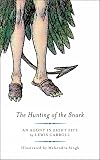
Mahendra Singh's illustrations are simply amazing. In his afterword, he explains how he used a Surrealist technique to illustrate this version of The Hunting of the Snark, a technique which I think fits the theme and tone of the poem perfectly. Singh hides jokes and visual puns in his illustrations that go along with the poems stanzas, just as Carroll hides puns, plays on words and puzzles in his poem. As I read through the poem, I would become equally involved looking at the illustrations as I was trying to figure out what it all means. I eventually gave up, and enjoyed the entire book exactly for what it is: Nonsense!
Even though it took me a couple nights to read, The Hunting of the Snark is a very fast read. In fact, I read through the entire poem a second time in one sitting, making sure I was able to follow what was happening. Even though there really isn't much rhyme (no pun intended!) or reason to the flow of the story, it still makes some sort of absurd sense and follows a natural progression to its ending. What you'll get out that ending, however, will differ from person to person. Personally, I think Carroll had it right about his poem: it has something to do with the elusiveness of that one thing in life that will make you perfectly happy. You search and hunt and may never quite find it, but it's the searching and hunting that turns the journey into an adventure.
Highly recommended. show less

Of course I had read Alice in Wonderland. I mean, surely I have. Right? Long time ago. I feel sure I did. Didn't I?
Turns out, I had merely been exposed to its wacky world by way of movies, cartoons, and vast cultural references. Upon my actually reading it and to my pleasant surprise, there is a lot more wackiness in it I never knew about. My favorite new wackadoodle being Bill the Lizard, poor put-upon character Bill that I don't recall ever showing up when being movie-ized.
It's much more show more delightful than just all those odd talking creatures. As a Math fan, I loved the correct assessment Alice makes that she would never reach 20 while doing her multiplication self-test. (Carroll was a mathematics professor.) And so many puns and word play I was completely unaware of. I mean, a Mock Turtle turtle? That just strikes my funny bone.
Maybe it's because we never outgrow that heeby-jeeby feeling that the world is teetering toward illogical strangeness and could tumble into full blown madness at any moment that Alice resonates over the years and to all ages (I'm 61). Rightly so, too. I mean, there's young Alice -- fallen into a world of livery-wearing fish, flamingos as not-very-cooperative croquet mallets, and schools that teach Laughing and Grief (another funny bone strike!) -- and she plays right along. She faces all manner of disorientation and possible danger with aplomb and curiosity. It's no wonder Alice has lasted so long and in so many ways. show less
Turns out, I had merely been exposed to its wacky world by way of movies, cartoons, and vast cultural references. Upon my actually reading it and to my pleasant surprise, there is a lot more wackiness in it I never knew about. My favorite new wackadoodle being Bill the Lizard, poor put-upon character Bill that I don't recall ever showing up when being movie-ized.
It's much more show more delightful than just all those odd talking creatures. As a Math fan, I loved the correct assessment Alice makes that she would never reach 20 while doing her multiplication self-test. (Carroll was a mathematics professor.) And so many puns and word play I was completely unaware of. I mean, a Mock Turtle turtle? That just strikes my funny bone.
Maybe it's because we never outgrow that heeby-jeeby feeling that the world is teetering toward illogical strangeness and could tumble into full blown madness at any moment that Alice resonates over the years and to all ages (I'm 61). Rightly so, too. I mean, there's young Alice -- fallen into a world of livery-wearing fish, flamingos as not-very-cooperative croquet mallets, and schools that teach Laughing and Grief (another funny bone strike!) -- and she plays right along. She faces all manner of disorientation and possible danger with aplomb and curiosity. It's no wonder Alice has lasted so long and in so many ways. show less
Lists
Ambleside Books (5)
1870s (1)
Out of Copyright (1)
The "A" List (1)
First Novels (1)
bound (1)
Magic Realism (1)
Boeken. (1)
BBC Top Books (1)
Victorian Period (1)
1860s (1)
BBC Big Read (1)
DELETE (1)
. (1)
Pageturners (1)
BitLife (1)
A Novel Cure (1)
Short and Sweet (1)
Kilobook (1)
Folio Society (5)
Ambleside Year 3 (2)
Best Satire (2)
BBC Big Read (2)
1970s (2)
One Day (2)
Favourite Books (3)
19th Century (4)
Five star books (3)
4th Grade Books (3)
Ambleside Y3 (2)
Books (1)
Poetry Corner (1)
Sonlight Books (1)
Unread books (2)
Reading LIst (2)
el (1)
Read (2)
Read (1)
Awards


You May Also Like


Associated Authors
Statistics
- Works
- 1,473
- Also by
- 139
- Members
- 108,563
- Popularity
- #80
- Rating
- 4.1
- Reviews
- 1,428
- ISBNs
- 5,493
- Languages
- 76
- Favorited
- 372


