

Jane Carruth
Author of Lewis Carroll's Alice in Wonderland
About the Author
Series
Works by Jane Carruth
My book of Cinderella 4 copies
My Very First Story Time: Jack and the Beanstalk: Fairy Tale with picture glossary and an activity (2017) 3 copies
Dois irmãos e um papagaio 2 copies
A nova irma de Toquinho 1 copy
A boa ação de Bebeto 1 copy
Laurinha vai a praia 1 copy
Os oculos da sorte 1 copy
Um montão de amigos 1 copy
My Book of Puss in Boots 1 copy
Robin Hood and His Merry Men 1 copy
Richard the Lion-Heart 1 copy
Animais 1 copy
Laurinha muda de ideia 1 copy
A present for Dougal 1 copy
Bontje en haar pop 1 copy
Three Favorite Fairytales 1 copy
Julie and the Duckling 1 copy
Heirloom Classics - 3 Book Set - Hansel and Gretel - Little Red Riding Hood - Puss in Boots (1980) 1 copy
Best of the Brothers Grimm 1 copy
Associated Works
Tagged
Common Knowledge
Members
Reviews
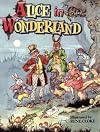
So, I finally got around to reading the book, and by god, I was missing out on a lot! I'd seen the movie, read the abridged version as a child, but I'd never realized the complete version was so... different.
My edition of the book came with an introduction by Michael Irwin, an English Lit professor at University of Kent. His introduction helped me a lot in understanding the themes and symbolism, among other things, of the story. But most importantly, he pointed out how the story was framed show more and conjured over the course of one afternoon for the delight of a young girl named Alice.
And that shows in the story. A lot.
While a lot of polishing and structuring has been done since the initial telling of the story, it still feels like an oral narrative, something that has the quality of being made up on the spot. That's not a bad thing, mind you, because the illogical, irrational nature of the story is what makes it so charming and delightful. I loved the zany characters, kooky locations, and the totally bonkers fantasy.
What can I say, it sparked the 'childish' imagination in me. show less
My edition of the book came with an introduction by Michael Irwin, an English Lit professor at University of Kent. His introduction helped me a lot in understanding the themes and symbolism, among other things, of the story. But most importantly, he pointed out how the story was framed show more and conjured over the course of one afternoon for the delight of a young girl named Alice.
And that shows in the story. A lot.
While a lot of polishing and structuring has been done since the initial telling of the story, it still feels like an oral narrative, something that has the quality of being made up on the spot. That's not a bad thing, mind you, because the illogical, irrational nature of the story is what makes it so charming and delightful. I loved the zany characters, kooky locations, and the totally bonkers fantasy.
What can I say, it sparked the 'childish' imagination in me. show less

Carole Hall
American Literature
Mrs. Clark-Evans
Alice in Wonderland
Written by Lewis Carroll
I know I’m a little old to be reading this for the first time, but that’s the truth of it. Yes, I had seen many of the movies based on this tale, enjoyed them and never read the original story itself. Now having read it, I understand where many of the memorable lines in those movies come from. (E.g. “Off with her head!”)
Reading the book has now spurred new questions to pop up in my mind about show more the story. First off, why is the book divided into two? (Alice in Wonderland and Through the Looking Glass) After doing some research I found that the stories were written, or at least published, at different times, Alice in Wonderland in 1865 and Through the Looking Glass in 1872. Now I wondered, did Carroll have ideas he expressed in the first and then expanded on in the second? My theory on this is that if he did have anything to say it would refer to royalty. The characters that were the royalty and their court first appeared as cards. I believe this symbolizes how the royal persons had many underlings all in a hierarchy. I also think the card appearance of the royal court and majesties is symbolic of how the court could be ‘shuffled’ with each new king and queen. Then in Through the Looking Glass the royalty were chess pieces. This could be a symbol for how the royalty is being used by a greater force or mocking the royalty’s ability to control others. However what I found most interesting was how the queen in both stories was more overbearing and in command than the king. Most likely this was reflecting how England was being ruled by women, since these books were written during the Victorian Era.
I noticed that, other than Alice and the royal court, all of the other characters in the story were animals. My automatic response is that this shows a great division between the upper class and the lower class. I think this because most people would say humans are superior to animals. Granted the royal court was inanimate objects but they have human faces and other human characteristics. However the animal characters tended to be more courteous to Alice throughout both stories in comparison to the upper class. It would seem Carroll believed the lower class were better people than the upper class. show less
American Literature
Mrs. Clark-Evans
Alice in Wonderland
Written by Lewis Carroll
I know I’m a little old to be reading this for the first time, but that’s the truth of it. Yes, I had seen many of the movies based on this tale, enjoyed them and never read the original story itself. Now having read it, I understand where many of the memorable lines in those movies come from. (E.g. “Off with her head!”)
Reading the book has now spurred new questions to pop up in my mind about show more the story. First off, why is the book divided into two? (Alice in Wonderland and Through the Looking Glass) After doing some research I found that the stories were written, or at least published, at different times, Alice in Wonderland in 1865 and Through the Looking Glass in 1872. Now I wondered, did Carroll have ideas he expressed in the first and then expanded on in the second? My theory on this is that if he did have anything to say it would refer to royalty. The characters that were the royalty and their court first appeared as cards. I believe this symbolizes how the royal persons had many underlings all in a hierarchy. I also think the card appearance of the royal court and majesties is symbolic of how the court could be ‘shuffled’ with each new king and queen. Then in Through the Looking Glass the royalty were chess pieces. This could be a symbol for how the royalty is being used by a greater force or mocking the royalty’s ability to control others. However what I found most interesting was how the queen in both stories was more overbearing and in command than the king. Most likely this was reflecting how England was being ruled by women, since these books were written during the Victorian Era.
I noticed that, other than Alice and the royal court, all of the other characters in the story were animals. My automatic response is that this shows a great division between the upper class and the lower class. I think this because most people would say humans are superior to animals. Granted the royal court was inanimate objects but they have human faces and other human characteristics. However the animal characters tended to be more courteous to Alice throughout both stories in comparison to the upper class. It would seem Carroll believed the lower class were better people than the upper class. show less
A half scary story of a world where all rules of ordinary logic have ceased to exist. The young girl being the only rational character tries to handle the situation as best as she can by resorting to her common sense and her upbringing, not that it makes much of an impact on her surroundings. What makes it scary is that this is no fantasy; it is a very realistic account of how growing up in a confused and dysfunctional family feels for a kid. A family can be so far out that it more than show more matches any excursion down the rabbit hole. Interestingly enough the book has a very clever modern analogy in the tv show South Park where the kids represent integrity and sanity in a world characterized by bigotery, ignorance and hypocrisy. A brilliant series in the true spirit of Lewis Carroll. show less
When I was a kid, this book scared me - shrinking and growing, getting stuck in a small house made me feel claustrophobic, the queen shouting "Off with their heads!" all the time terrified me, the mad conversations confused me. Re-reading this as an adult, the same scenes annoy me, and the rudeness and meannesss of many conversations bothers me. How is this scary drug-induced hallucination a children's classic? Two stars for the occasional witty word play.
Lists
You May Also Like


Associated Authors
Statistics
- Works
- 183
- Also by
- 2
- Members
- 4,895
- Popularity
- #5,132
- Rating
- 3.9
- Reviews
- 79
- ISBNs
- 260
- Languages
- 7
- Favorited
- 1