
Bao Phi
Author of A Different Pond
About the Author
Image credit: photo by Michael Tran
Works by Bao Phi
Associated Works
Octavia's Brood: Science Fiction Stories from Social Justice Movements (2015) — Contributor — 799 copies, 13 reviews
Ink Knows No Borders: Poems of the Immigrant and Refugee Experience (2019) — Contributor — 90 copies, 1 review
We Are Meant to Rise: Voices for Justice from Minneapolis to the World (2021) — Contributor — 32 copies, 2 reviews
Tagged
Common Knowledge
- Birthdate
- 1975
- Gender
- male
- Education
- Macalester College (BA)
- Occupations
- Program Director, The Loft Literary Center
Spoken-word artist/performer - Awards and honors
- Two-time Minnesota Grand Poetry Slam winner
Kay Sexton Award (2024) - Birthplace
- Ho Chi Minh City, Vietnam
- Places of residence
- Minneapolis, Minnesota, USA
Members
Reviews
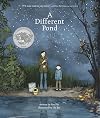
:Afishing trip is not just a fishing trip in this poignant, semiautobiographical tale.
As a young boy growing up in a Vietnamese refugee family in Minneapolis, Phi would wake up “hours before the sun comes up” to go fishing with his dad. Right from the start, he hints at his family’s dire straits: “In the kitchen the bare bulb is burning.” Readers learn they are up so early because his dad got a second job. And Phi asks innocently, “If you got another job, why do we still have to show more fish for food?” At the pond, father and son share moments of tenderness. A nod here—when Phi lights a fire with one strike of a match; a warning there—to avoid “the spicy stuff” in his bologna sandwich. Father and son also bond through stories. “I used to fish by a pond like this one when I was a boy in Vietnam,” says Dad. “With your brother?” Phi asks. Dad nods and looks away, a clue to the unspeakable devastation of the war. When they catch enough fish for dinner they head home, Phi dreaming about the landscape of Dad’s home country. Together, Phi’s gentle, melodic prose and Bui’s evocative art, presented in brushy and vividly colored panels and double-page spreads, rise above the melancholy to tell a powerful, multilayered story about family, memory, and the costs of becoming a refugee.
Spare and simple, a must-read for our times. (Picture book. 5-9): www.kirkusreviews.com, A Kirkus Starred Review show less
As a young boy growing up in a Vietnamese refugee family in Minneapolis, Phi would wake up “hours before the sun comes up” to go fishing with his dad. Right from the start, he hints at his family’s dire straits: “In the kitchen the bare bulb is burning.” Readers learn they are up so early because his dad got a second job. And Phi asks innocently, “If you got another job, why do we still have to show more fish for food?” At the pond, father and son share moments of tenderness. A nod here—when Phi lights a fire with one strike of a match; a warning there—to avoid “the spicy stuff” in his bologna sandwich. Father and son also bond through stories. “I used to fish by a pond like this one when I was a boy in Vietnam,” says Dad. “With your brother?” Phi asks. Dad nods and looks away, a clue to the unspeakable devastation of the war. When they catch enough fish for dinner they head home, Phi dreaming about the landscape of Dad’s home country. Together, Phi’s gentle, melodic prose and Bui’s evocative art, presented in brushy and vividly colored panels and double-page spreads, rise above the melancholy to tell a powerful, multilayered story about family, memory, and the costs of becoming a refugee.
Spare and simple, a must-read for our times. (Picture book. 5-9): www.kirkusreviews.com, A Kirkus Starred Review show less
Thanks Capstone Editions/NetGalley for the gifted DRC book.
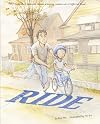
While teaching his child to ride a bike, a father reminisces about learning to ride himself. This gorgeous bilingual picture book in English and Vietnamese explores the conflicting excitement and worry of learning a new skill, how letting go requires a leap of faith, and the love between parent and child.
The format and color schemes of the illustrations are very striking. The present day story told in English uses blue tones, show more whereas the story of years ago told in Vietnamese and set in Vietnam uses sepia tones. The illustration is soft and intimate yet also powerful. The stories run parallel to each other, thought the translation isn’t direct. Telling the story twice is a wonderful choice as it allows each narrator to speak independently, highlighting the importance of uplifting immigrant voices.
There’s a lot of opportunity to open up conversation with a child while reading about family, culture, memories, and supporting one another.
This is a simple yet deeply meaningful story full of heart, nostalgia, and emotion. As much as this is a children’s book, it’s also for parents/grandparents/caregivers, maybe even more so. show less
While teaching his child to ride a bike, a father reminisces about learning to ride himself. This gorgeous bilingual picture book in English and Vietnamese explores the conflicting excitement and worry of learning a new skill, how letting go requires a leap of faith, and the love between parent and child.
The format and color schemes of the illustrations are very striking. The present day story told in English uses blue tones, show more whereas the story of years ago told in Vietnamese and set in Vietnam uses sepia tones. The illustration is soft and intimate yet also powerful. The stories run parallel to each other, thought the translation isn’t direct. Telling the story twice is a wonderful choice as it allows each narrator to speak independently, highlighting the importance of uplifting immigrant voices.
There’s a lot of opportunity to open up conversation with a child while reading about family, culture, memories, and supporting one another.
This is a simple yet deeply meaningful story full of heart, nostalgia, and emotion. As much as this is a children’s book, it’s also for parents/grandparents/caregivers, maybe even more so. show less

Vietnamese-American poet Bao Phi makes his children's book debut with A Different Pond, a poignant autobiographically-inspired picture-book about a young boy and his early morning fishing trip with his hard-working father. As the father-son pair make their way to a local pond to fish - something they do for sustenance, rather than sport - the boy-narrator reflects both on his immediate physical experiences and on his relationship with his immigrant father. Holding the bait, setting up a show more little fire on shore, and listening to his father's stories about his youth in Vietnam, he has a quiet but deeply felt experience.
Meant, according to the author's afterword, at least partially as a tribute to Bao Phi's immigrant parents, this lovely book features a gentle narrative that incorporates some un-gentle realities, from poverty to the trauma of war and leaving one's homeland. The loving nature of the relationship between the boy and his father, and between them and the rest of their family, is captured throughout, as the deceptively simple text depicts the father carefully waking his son, so as not to disturb the mother, or smiling in understanding, when the young boy doesn't want to put the minnows on a hook. The artwork by Thi Bui, herself a childhood immigrant from Vietnam, is beautifully expressive, with a subtle but deep color palette that captures the enchantment of the early morning adventure. There are visual elements here that suggest a graphic novel, particularly the artist's use of at least one square inset panel on each two-page spread, which makes sense, as Bui's previous work includes a graphic novel memoir about her family.
All in all, a lovely, poetic, deeply felt picture-book debut from Phi and Bui, one I would recommend to anyone looking for children's stories about family, about immigrants, or about the Vietnamese-American experience. show less
Meant, according to the author's afterword, at least partially as a tribute to Bao Phi's immigrant parents, this lovely book features a gentle narrative that incorporates some un-gentle realities, from poverty to the trauma of war and leaving one's homeland. The loving nature of the relationship between the boy and his father, and between them and the rest of their family, is captured throughout, as the deceptively simple text depicts the father carefully waking his son, so as not to disturb the mother, or smiling in understanding, when the young boy doesn't want to put the minnows on a hook. The artwork by Thi Bui, herself a childhood immigrant from Vietnam, is beautifully expressive, with a subtle but deep color palette that captures the enchantment of the early morning adventure. There are visual elements here that suggest a graphic novel, particularly the artist's use of at least one square inset panel on each two-page spread, which makes sense, as Bui's previous work includes a graphic novel memoir about her family.
All in all, a lovely, poetic, deeply felt picture-book debut from Phi and Bui, one I would recommend to anyone looking for children's stories about family, about immigrants, or about the Vietnamese-American experience. show less
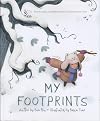
Thuy (in color) leaves two classmates in front of their school (black and white) and tromps home through new snow, leaving different kinds of footprints according to the animals she sees or remembers seeing (cardinal, deer). When she reaches home, her mommas are both out front shoveling snow. They can tell something is wrong, but Thuy doesn't want to talk about it at first, so they all play together ("I wonder what creature we can pretend to be together, because we're stronger together"). show more Momma Arti reminds Thuy of the Sarabha, "an unexpected combination of beautiful things." On the final page of the story, Thuy holds hands with Momma Arti and Momma Ngoc and they jump in the snow, leaving behind a trail of heart-shaped footprints.
Back matter includes a page each on the phoenix and the sarabha, and an author's note ("Perhaps one way to help advance a better world is to have these difficult conversations with our children rather than dismissing them or pretending they don't hurt").
Beautiful endpapers show all kinds of footprints in the snow. A helpful pronunciation guide precedes the text, on the copyright page.
Thuy (Twee)
Arti (AR-tee)
Ngoc (Ynyow)
Sarabha (sa-ra-BA) show less
Back matter includes a page each on the phoenix and the sarabha, and an author's note ("Perhaps one way to help advance a better world is to have these difficult conversations with our children rather than dismissing them or pretending they don't hurt").
Beautiful endpapers show all kinds of footprints in the snow. A helpful pronunciation guide precedes the text, on the copyright page.
Thuy (Twee)
Arti (AR-tee)
Ngoc (Ynyow)
Sarabha (sa-ra-BA) show less
Lists
Awards


You May Also Like


Associated Authors
Statistics
- Works
- 8
- Also by
- 6
- Members
- 1,012
- Popularity
- #25,473
- Rating
- 4.0
- Reviews
- 104
- ISBNs
- 44
- Languages
- 1