
Derrick Barnes
Author of Crown: An Ode to the Fresh Cut
About the Author
Image credit: Derrick Barnes at BookExpo 2019 By Rhododendrites - Own work, CC BY-SA 4.0, https://commons.wikimedia.org/w/index.php?curid=79387542
Series
Works by Derrick Barnes
Awe no ta mi dia! 1 copy
Stop, Drop and Chill 1 copy
Associated Works
Tagged
Common Knowledge
- Birthdate
- 1986
- Gender
- male
- Education
- Jackson State University (BA|1999)
- Occupations
- children's book author
greeting card writer - Agent
- Regina Brooks (Serendipity Literary)
- Nationality
- USA
- Places of residence
- Kansas City, Missouri, USA
New Orleans, Louisiana, USA
Charlotte, North Carolina, USA
Jackson, Mississippi, USA - Associated Place (for map)
- USA
Members
Reviews
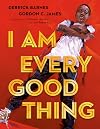
I was a huge fan of the author-illustrator team's Crown, so am thrilled to see the new title is just as beautiful. James' paintings are full of expression and life; joyful and kinetic. Barnes' text (poetry, really) has subtle rhyme and rhythm that just WORKS, and his imagery adds another layer, even beyond the illustrations. This is an ode to Black boys, an unequivocal declaration that they are valuable, lovable, worthy, and contain multitudes. Fantastic.
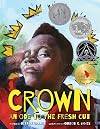
The barbershop is where the magic happens. Boys go in as lumps of clay and, with princely robes draped around their shoulders, a dab of cool shaving cream on their foreheads, and a slow, steady cut, they become royalty. That crisp yet subtle line makes boys sharper, more visible, more aware of every great thing that could happen to them when they look good: lesser grades turn into As; girls take notice; even a mother’s hug gets a little tighter. Everyone notices.
A fresh cut makes boys show more fly.
This rhythmic, read-aloud title is an unbridled celebration of the self-esteem, confidence, and swagger boys feel when they leave the barber’s chair—a tradition that places on their heads a figurative crown, beaming with jewels, that confirms their brilliance and worth and helps them not only love and accept themselves but also take a giant step toward caring how they present themselves to the world. The fresh cuts. That’s where it all begins. show less
A fresh cut makes boys show more fly.
This rhythmic, read-aloud title is an unbridled celebration of the self-esteem, confidence, and swagger boys feel when they leave the barber’s chair—a tradition that places on their heads a figurative crown, beaming with jewels, that confirms their brilliance and worth and helps them not only love and accept themselves but also take a giant step toward caring how they present themselves to the world. The fresh cuts. That’s where it all begins. show less
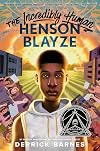
Henson Blayze lives in Great Mountain, Mississippi, where his family has lived for generation upon generation. They are black Americans, but they did not descend from slaves. They have property and are successful. The city reveres Henson because he is the best football player to ever come out of Great Mountain. There are t-shirts sold with his likeness on them, a separate section of the cafeteria is set aside for him with a throne, and everyone wants to know him. Get this--he's still an 8th show more grader. He's magical on the field, playing varsity. His father, Deacon Blayze, never discusses football with Henson. Instead, he has high expectations toward taking care of who Henson is as a person, being home for dinner at 6:30, and having responsibility toward the family homestead. Deacon says little, expects a lot, and loves Henson and the black people in Mississippi. He lets Henson handle himself.
Henson's life lessons come during his first game. He's amazing. The crowd loves him. At half time the score is 56-3 and Hansen scored the 3 points for the other team when they let him kick the field goal. Henson can do anything on the field. He finds his dad in the locker room grim-faced. His dear friend, a ten-year old, has been severely beaten by white men, white officers. Henson tells everyone that he has to leave. No one cares for Menkah, the 10-year old. They only care about the football game. They turn rabid. They yell; they villify, they threaten. Henson leaves anyway.
Henson stays by Menkah's side for three days, taking care of him in the hospital. Henson seems to have some magic in him. Menkah miraculously heals under Henson's care. Meanwhile, the crowds continue to gather outside the hospital, saying absolutely horrible things. All they care about is football. Henson's love interest and some other ladies in town have been telling Henson to be careful and not let fame go to his head. If he's treated well by white people, they'll want something in return. Henson sees this reality come true. Everyone completely turns on him. If he won't be the person they tell him to be, he has no value as a person. They want to know if he will play again. He better! He says he'll make an announcement at school.
The novel ends with Henson learning about his family responsibilities and heritage from Deacon, his father. Deacon lets Henson handle the town's anger. In the end, you find out what decision Henson makes and why.
The novel really made me think. I wonder how true this situation really is? Are all people, regardless of color treated the same--with their own expectations determining the worth of the person? Is it different for a black athlete/entertainer? Society is reflected as selfish--MY interests are more important than another's humanity. Sad statement on civilization. The hope lies in Deacon, who finds his faith in God and believes that helping one another is important to one's own identity. Give people the humanity they deserve, which is a great message no matter. show less
Henson's life lessons come during his first game. He's amazing. The crowd loves him. At half time the score is 56-3 and Hansen scored the 3 points for the other team when they let him kick the field goal. Henson can do anything on the field. He finds his dad in the locker room grim-faced. His dear friend, a ten-year old, has been severely beaten by white men, white officers. Henson tells everyone that he has to leave. No one cares for Menkah, the 10-year old. They only care about the football game. They turn rabid. They yell; they villify, they threaten. Henson leaves anyway.
Henson stays by Menkah's side for three days, taking care of him in the hospital. Henson seems to have some magic in him. Menkah miraculously heals under Henson's care. Meanwhile, the crowds continue to gather outside the hospital, saying absolutely horrible things. All they care about is football. Henson's love interest and some other ladies in town have been telling Henson to be careful and not let fame go to his head. If he's treated well by white people, they'll want something in return. Henson sees this reality come true. Everyone completely turns on him. If he won't be the person they tell him to be, he has no value as a person. They want to know if he will play again. He better! He says he'll make an announcement at school.
The novel ends with Henson learning about his family responsibilities and heritage from Deacon, his father. Deacon lets Henson handle the town's anger. In the end, you find out what decision Henson makes and why.
The novel really made me think. I wonder how true this situation really is? Are all people, regardless of color treated the same--with their own expectations determining the worth of the person? Is it different for a black athlete/entertainer? Society is reflected as selfish--MY interests are more important than another's humanity. Sad statement on civilization. The hope lies in Deacon, who finds his faith in God and believes that helping one another is important to one's own identity. Give people the humanity they deserve, which is a great message no matter. show less
Amuch-needed book for Black children when society demonstrates otherwise.
The Kirkus Prize–, Coretta Scott King Honor–, Newbery Honor–, and Caldecott Honor–winning team behind Crown: An Ode to the Fresh Cut (2017) return for another celebration of Black excellence. In a text brimming with imagination and Black-boy joy, Barnes lays the foundation for young Black readers to go forth into the world filled with confidence and self-assurance: “I am brave. I am hope. / I am my show more ancestors’ wildest dream. / I am worthy of success, / of respect, of safety, of kindness, of happiness.” Simultaneously, he opens a window for non-Black readers to see Black boys’ humanity. They have dreams, feel pain, are polite and respectful—the list of qualities goes on. Barnes also decides to address what is waiting for them as they experience the world. “I am not what they might call me.” With this forceful statement, he provides a tool for building Black resilience, reassuring young Black readers that they are not those names. James supplies his customarily painterly art, his brushy oils painting Black boys of every shade of brown playing, celebrating, achieving, aspiring, and loving. Through every stroke readers will see that Black boys are “worthy / to be loved.” (This book was reviewed digitally with 11-by-17-inch double-page spreads viewed at 35% of actual size.)
The title says it all: Black boys are “every good thing.” (Picture book. 4-8)
-Kirkus Review show less
The Kirkus Prize–, Coretta Scott King Honor–, Newbery Honor–, and Caldecott Honor–winning team behind Crown: An Ode to the Fresh Cut (2017) return for another celebration of Black excellence. In a text brimming with imagination and Black-boy joy, Barnes lays the foundation for young Black readers to go forth into the world filled with confidence and self-assurance: “I am brave. I am hope. / I am my show more ancestors’ wildest dream. / I am worthy of success, / of respect, of safety, of kindness, of happiness.” Simultaneously, he opens a window for non-Black readers to see Black boys’ humanity. They have dreams, feel pain, are polite and respectful—the list of qualities goes on. Barnes also decides to address what is waiting for them as they experience the world. “I am not what they might call me.” With this forceful statement, he provides a tool for building Black resilience, reassuring young Black readers that they are not those names. James supplies his customarily painterly art, his brushy oils painting Black boys of every shade of brown playing, celebrating, achieving, aspiring, and loving. Through every stroke readers will see that Black boys are “worthy / to be loved.” (This book was reviewed digitally with 11-by-17-inch double-page spreads viewed at 35% of actual size.)
The title says it all: Black boys are “every good thing.” (Picture book. 4-8)
-Kirkus Review show less
Lists
Awards


You May Also Like


Associated Authors
Statistics
- Works
- 34
- Also by
- 1
- Members
- 4,366
- Popularity
- #5,742
- Rating
- 4.3
- Reviews
- 143
- ISBNs
- 119
- Languages
- 3
- Favorited
- 1